

One of the finest Chinese dishes, Xiao Long Bao is famous for its delicate skin and scrumptious soupy filling. Follow my tips & tutorial to make it to a restaurant standard.
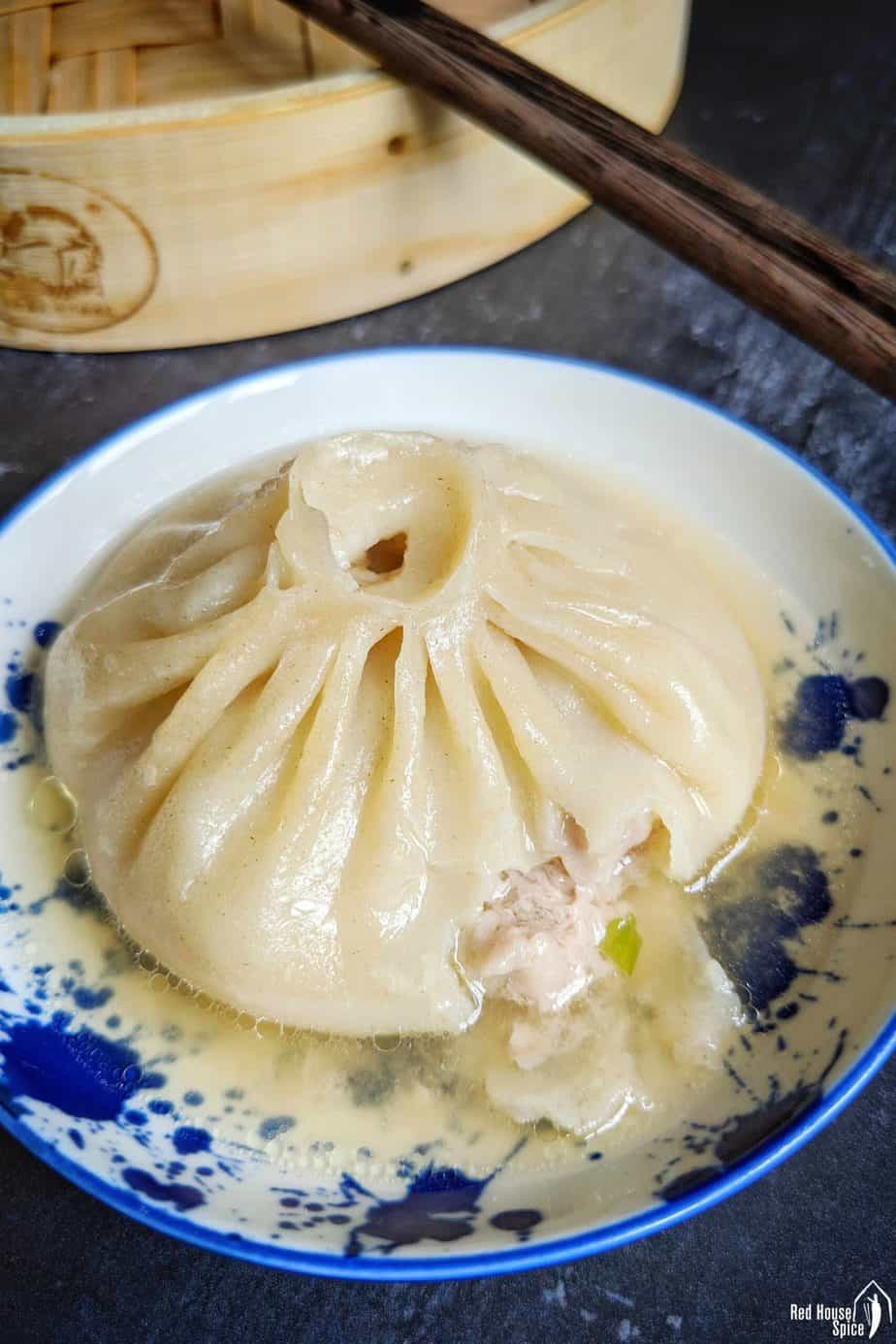
What is Xiao Long Bao
Xiao Long Bao, literally meaning “small basket buns”, is a type of steamed bun originating from Jiangsu province, China. Known as soup dumplings in English, they are a hybrid of Baozi (包子) and Jiaozi (饺子): having the shape of Baozi but using non-leavened wrappers like Jiaozi.
What makes Xiao Long Bao stand out is its super delicate, thin wrapper and the delicious “soup” inside.
Making Xiao Long Bao isn’t an easy task. But it isn’t impossible to produce restaurant standard ones at home. Please read my tips & tricks if you are up for the challenge.
The soup mystery
My children love eating Xiao Long Bao and they find the eating process fun: first, slurp up the soup, then enjoy the tender wrapper and the tasty filling. One day seeing me pleating, my 8-year-old suddenly asked: “Mummy, how do you put the soup inside?” Did you have the same question in mind the first time you eat Xiao Long Bao?
As you can imagine, it’s impossible to wrap liquid with a dough wrapper. So I don’t put any soup inside the dumpling. But where does the soup come from? Here is the trick: Add aspic (gelatinised meat broth) to the filling! Once steamed, the high temperature forces the aspic to transform into liquid.
How to make the aspic
The common technique
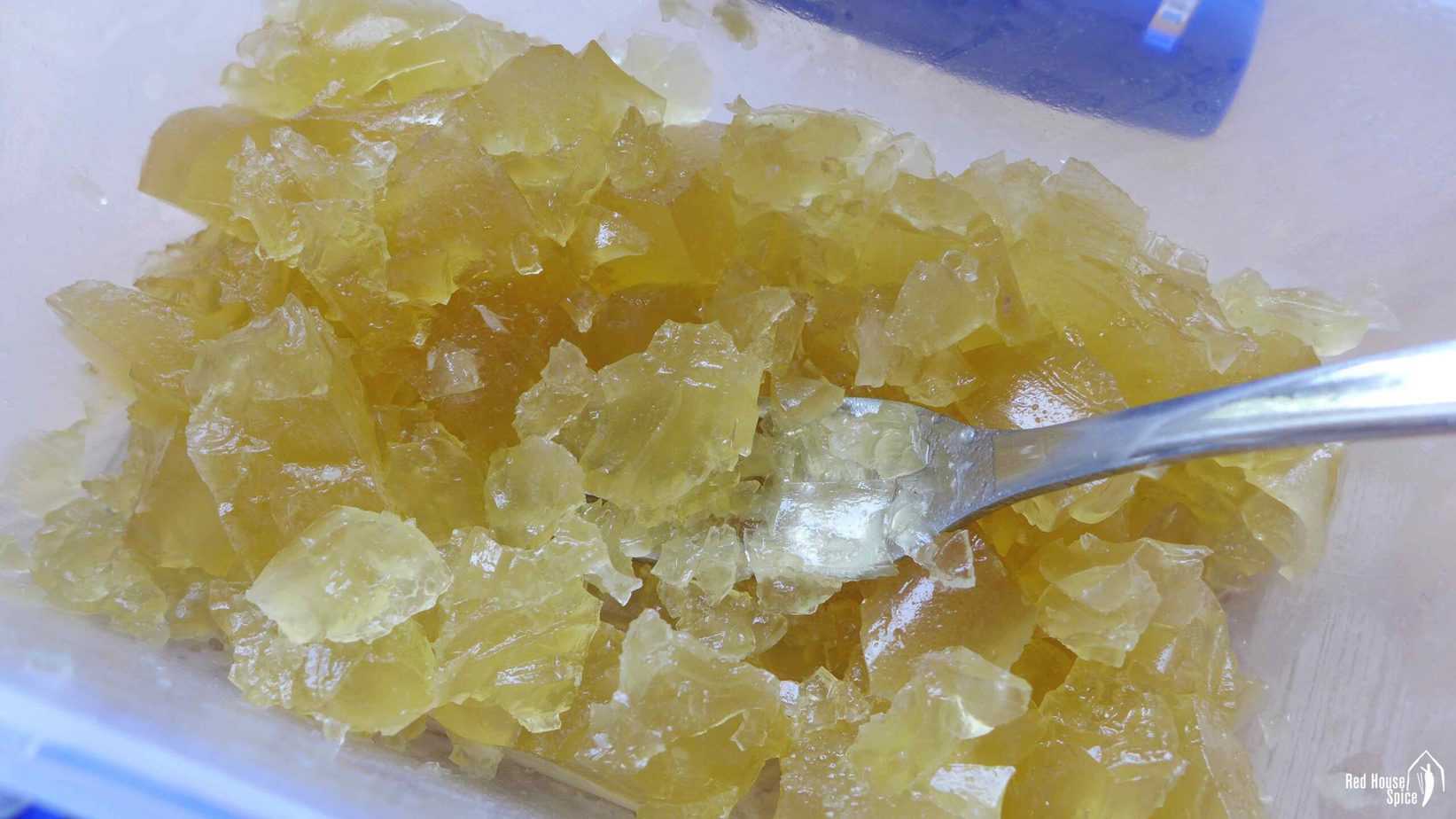
Let’s first talk in general about how aspic is made. Through lengthened boiling in water, the natural gelatin found in meat thickens the stock. Once cooled completely, the stock congeals then turns into a jelly-like block. Pork rind or chicken feet are popular choices as they have a high gelatin content(I’ve written a recipe for Pork Rind Aspic). Some recipes use commercial gelatin and chicken stock as a quick solution which I don’t recommend.
My special method
I have a different approach to make aspic for my soup dumplings:
- Use a whole chicken, preferably free-range or organic for a better taste.
- Put it into a well-sealed ovenware, then roast in the oven for about 1 hour. A dutch oven pot works very well. Alternatively, use a regular roasting tray then cover tightly with tin foil).
- Afterwards, you will find a pool of liquid extracted from the chicken which will turn into aspic after refrigeration.
Why use my method?
There are two good reasons:
- Compare to pork rind and chicken feet, a whole chicken is much more accessible.
- There is no water involved in the cooking process (the liquid comes purely from the chicken itself) so the aspic has a much more concentrated taste of chicken which adds wonderful flavour to the dumpling filling.
How to use the leftover chicken
I often use the leftover chicken to make Sichuan Mouthwatering Chicken, Bang Bang Chicken, as an alternative topping for Dan Dan noodles/Chongqing Noodles, or as a topping for congee.
Mix the filling
Apart from the aspic which turns into “soup”, Xiao Long Bao is stuffed with well-seasoned pork filling. Here is what you need:
Pin this now to find it later!
Pin It- Minced pork. Many Chinese chef & home cooks believe that hand-minced pork tastes better than a ready-made shop version. Lean meat and pork fat are chopped with a cleave (sometimes two for better efficiency) into a fine consistency. No matter which type, I recommend that the fat content of the mince should be no lower than 20 %.
- Finely chopped scallions & minced ginger. They are classic ingredients for meat-based dumpling filling.
- Light soy sauce. It adds aromatic, umami saltiness to the filling.
- Shaoxing rice wine. It’s used to reduce the gamey taste of the meat.
- Ground white pepper. This can be replaced by Chinese five-spice powder or ground Sichuan pepper.
- Salt & sugar. Like many other classic Jiang Nan style dishes, sugar is added to balance the saltiness and to enhance the umami taste (Ti Xian/提鲜). Please feel free to adjust to suit your own taste.
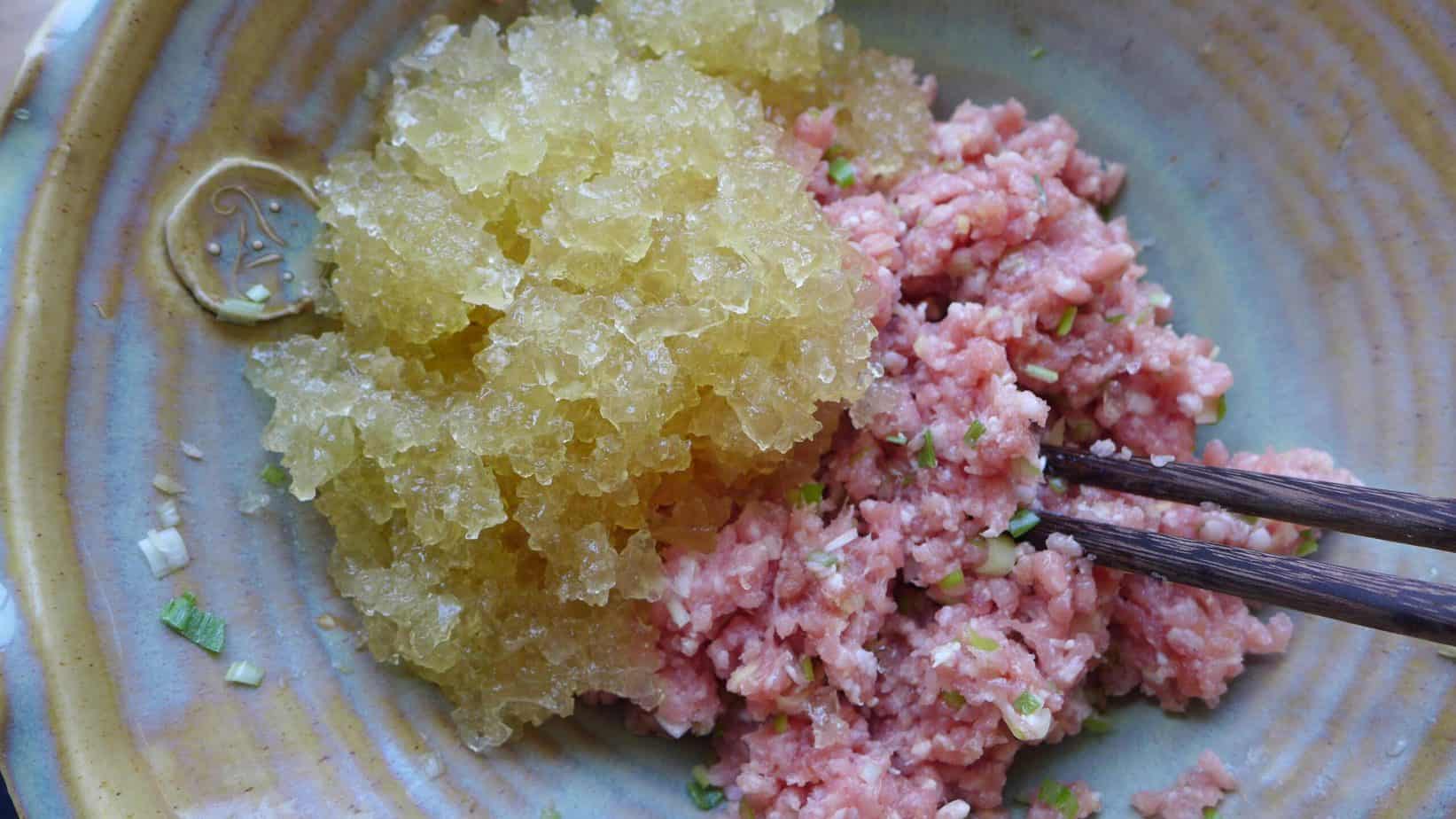
After you mix all the ingredients above, it’s time to add the aspic. You will see a layer of chicken fat on top of the aspic. Remove it with a spoon. Then use a fork to break the aspic into tiny pieces. Add to the pork filling and mix well.
Remember to keep the prepared filling in the fridge and don’t bring it out until the moment you are ready to assemble. This is to keep the filling as “solid” as possible thus making the wrapping task less messy.
Make thin wrappers
Apart from the tasty soup inside, what makes Xiao Long Bao different from other types of dumplings and bao is its super delicate skin: thin, a little elastic yet soft and almost semi-transparent. As you can imagine, getting the wrappers right is the most challenging part of the entire process. In this section, I will explain a few tips to help you succeed.
What type of flour?
When searching for the ideal flour, you need to check two aspects:
- What is the protein content? This is about the gluten level of the flour. The higher the protein, the higher the gluten level and the more elastic the dough will be. For Xiao Long Bao, flour with medium gluten level works the best. The cooked wrapper has certain elasticity (doesn’t tear easily) yet it’s not too chewy. You can find the protein content on the nutrition label of your flour package. It should be around 10g per 100g flour.
- How finely is it milled? This refers to the texture of the flour. Finely milled flour, such as Chinese dumpling flour, Italian type 00 flour, produces smoother, more slippery wrappers. Restaurant-style Xiao Long Bao is usually made with this type of flour.
Here is my conclusion: Considering these two factors and their importance, I recommend you use all-purpose flour (medium gluten level but not finely milled) if it’s more accessible to you. Want to achieve a more refined look? Use special dumpling flour (be aware that it’s heavily bleached) or type 00 flour with medium gluten level.
How to make the dough
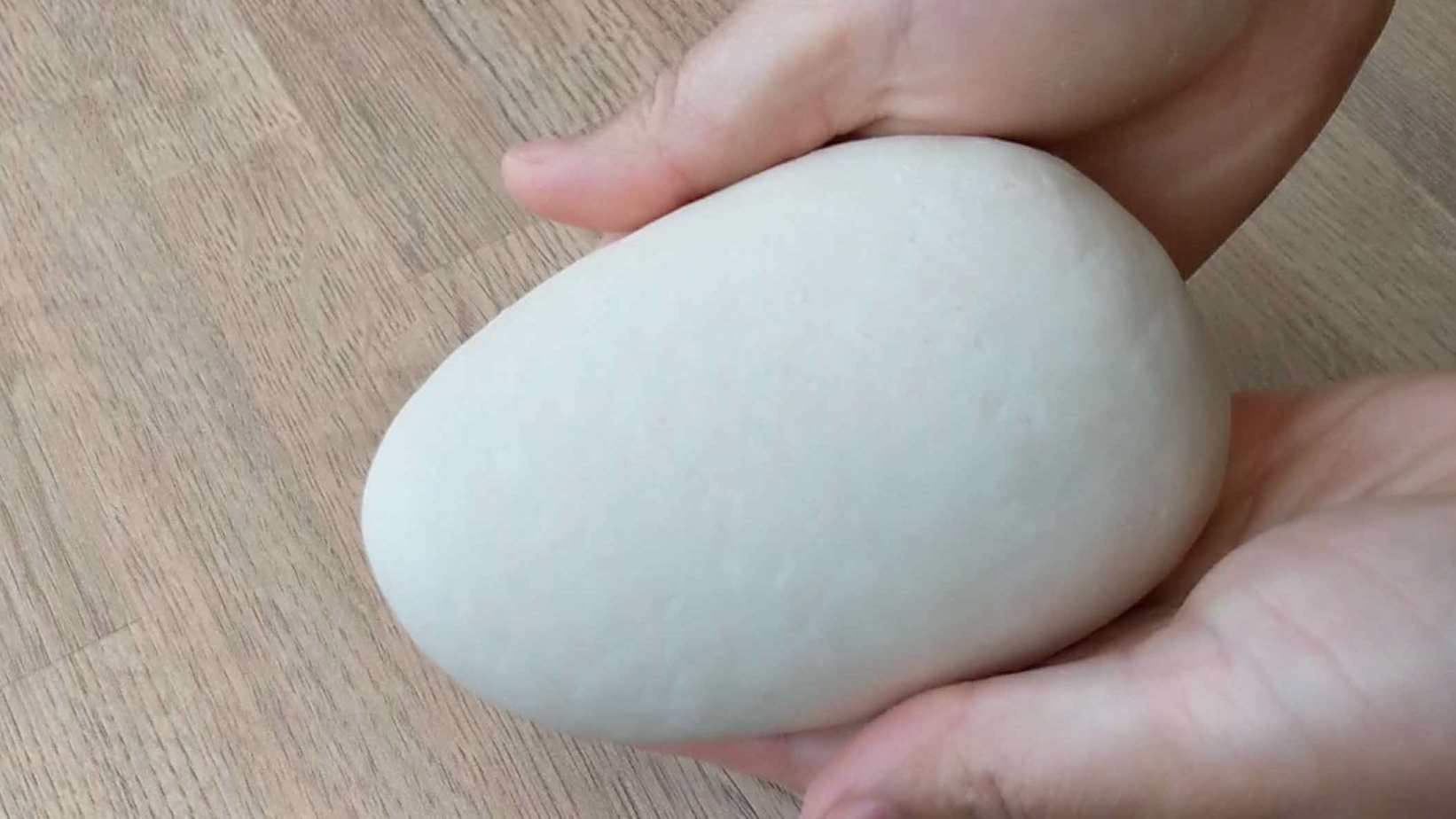
Unlike regular dumpling wrapper dough, I use “hot water dough” for my soup dumplings (the same as my chicken potstickers with a crispy skirt). To make about 20 wrappers, here is the suggested quantity & procedure:
- Firstly mix 180g flour with 60g hot water
- Then add 35g tap water
- Combine to form a rough dough then rest for 10 mins
- Knead again until very smooth
- Cover and rest for a further 30-60 minutes until it becomes soft.
Please be aware that flour of different brands have slightly different water absorption capacities. The humidity and room temperature can also affect the ratio. So you might need to adjust the tap water by increasing/decreasing 5g-10g. The dough should be soft but not sticky.
How to roll them thin
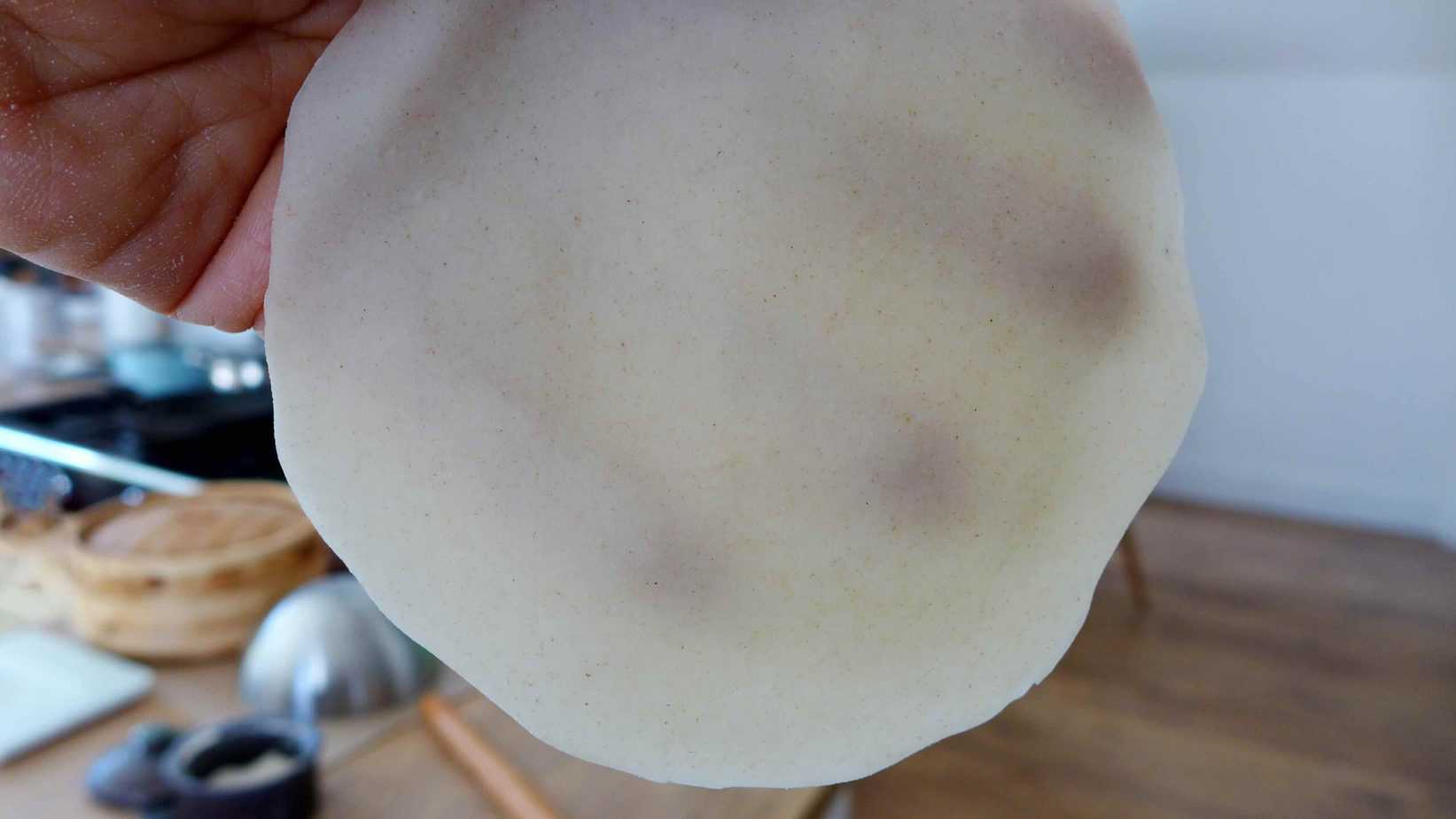
No doubt that rolling wrappers for Xiao Long Bao is a tricky task. It requires lots of patience and great attention to detail. To produce super thin wrappers, I suggest you follow two tips:
- Use the roll & turn technique to flatten the wrappers (please refer to the tutorial video in the recipe card below). This way the wrappers are thicker in the middle and thinner on the edge.
- Always remember to dust the surface and your rolling pin with a little flour to prevent sticking as thin wrappers tear easily. If available, you could use cornstarch to dust. It has a finer texture and works even better.
How thin is enough? For a dough piece of 13g, the wrapper should measure about 12cm in diameter. At this ratio, they look almost semi-transparent.
Folding method
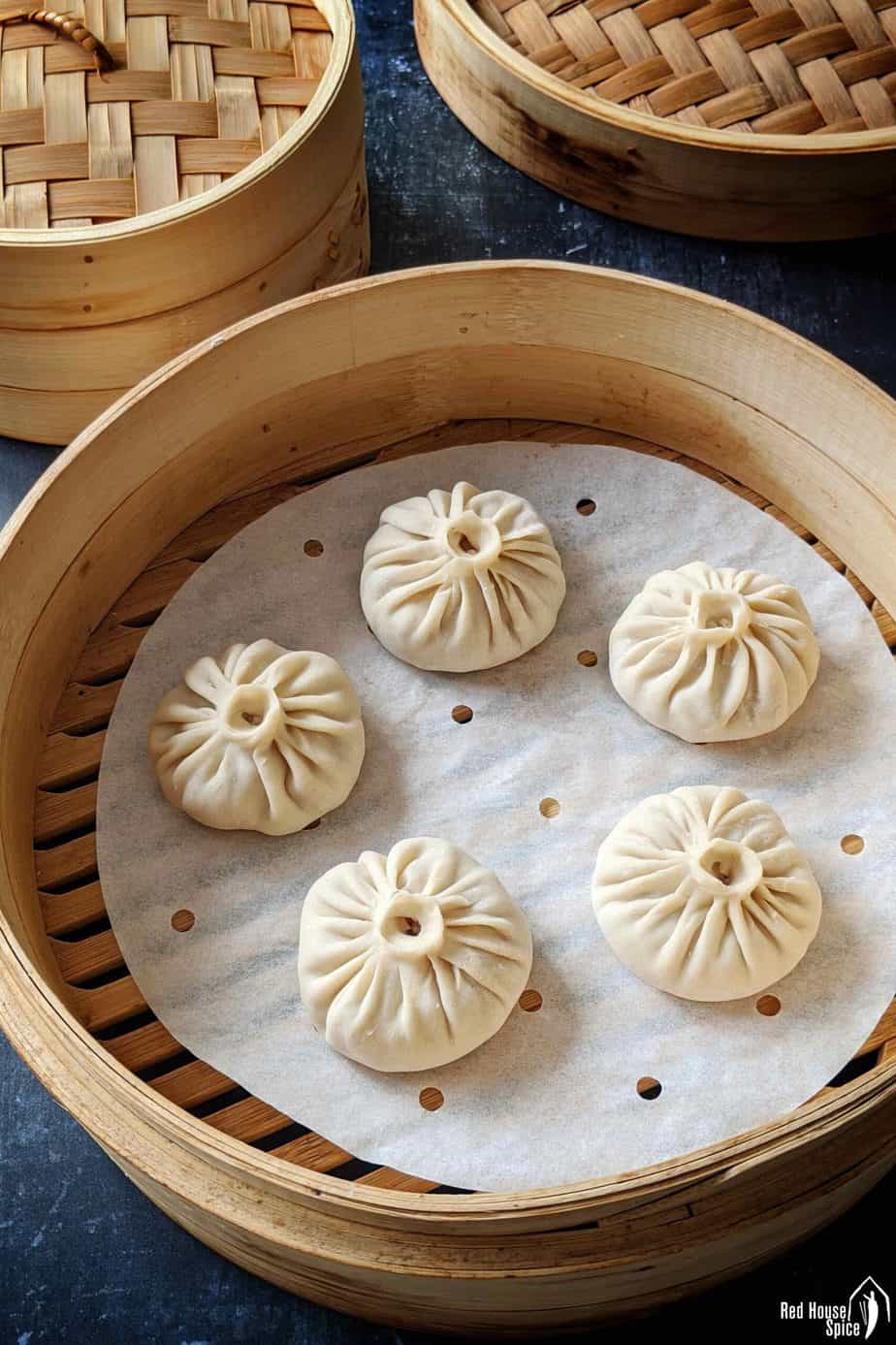
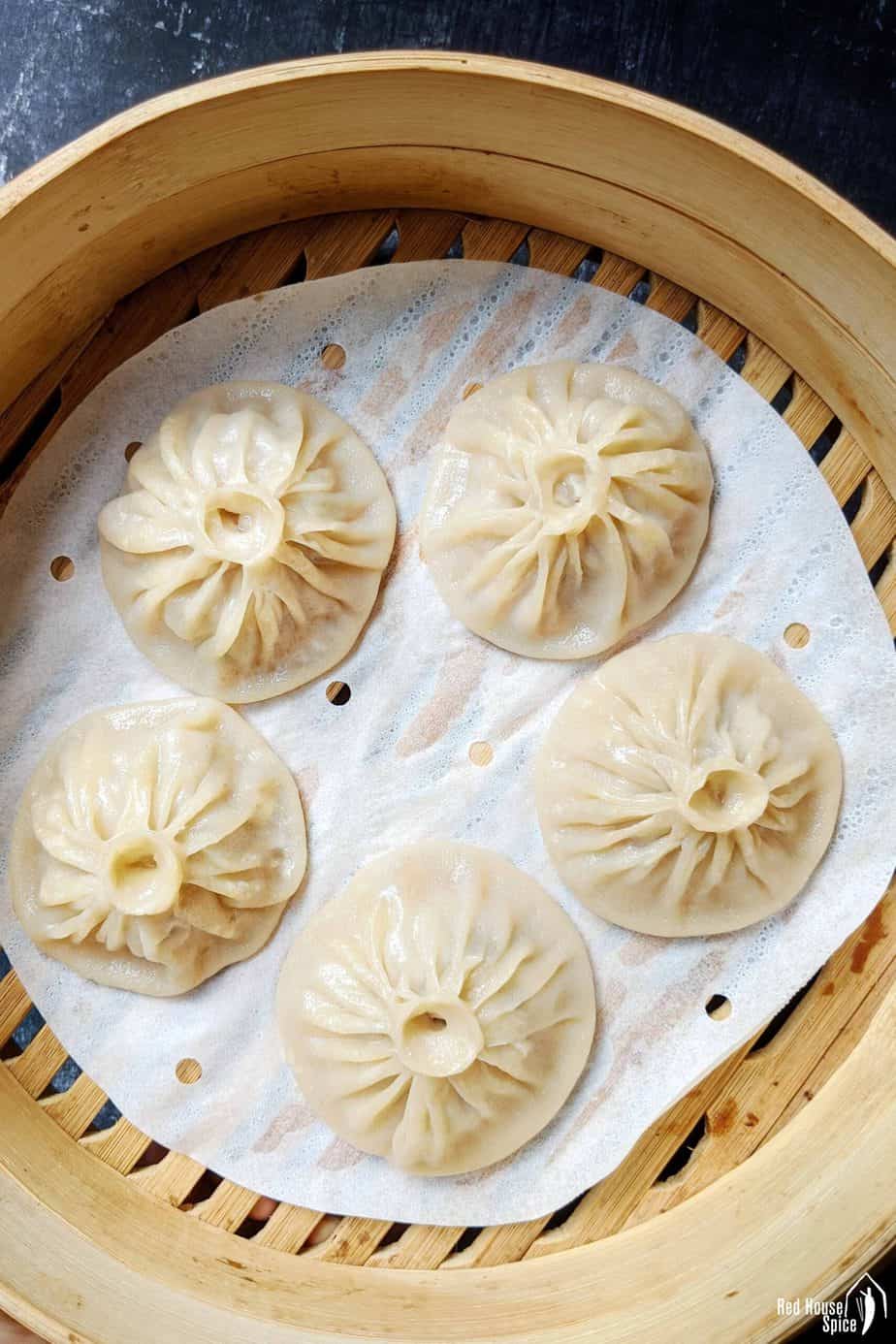
Words can’t really explain very well how a Xiao Long Bao is pleated. My tutorial video in the recipe card below shows how your hands coordinate. It should look pretty good if you manage to make 15-20 folds. You can completely seal it or leave an opening in the middle as shown in my images. Both work fine.
One important thing to remember: Always assemble the dumpling one by one as you roll out each wrapper. Unlike what you’d do when making regular dumplings, it’s not a good idea to stock up Xiao Long Bao wrappers as they are very thin, thus dry out very easily.
How to steam
It takes only 8-10 mins to cook Xiao Long Bao in a steamer. No special technique required. There is one thing I’d like to draw your attention to: prepare your steamer basket properly to avoid sticking. Otherwise, the wrapper can be easily torn and you’ll end up with a broken, “soupless” Xiao Long Bao.
- If using a bamboo steamer (which I highly recommend), lay a piece of steamer parchment paper underneath the dumplings. You may also use regular parchment paper and cut it into small circles for each dumpling (they should be slightly bigger than the uncooked dumplings.)
- If using a metal steamer, brush a thin layer of oil on the steamer basket. Also, don’t forget to wrap the lid with a piece of cloth/tea towel to stop any condensation falling onto the dumplings during cooking.
How to eat it neatly
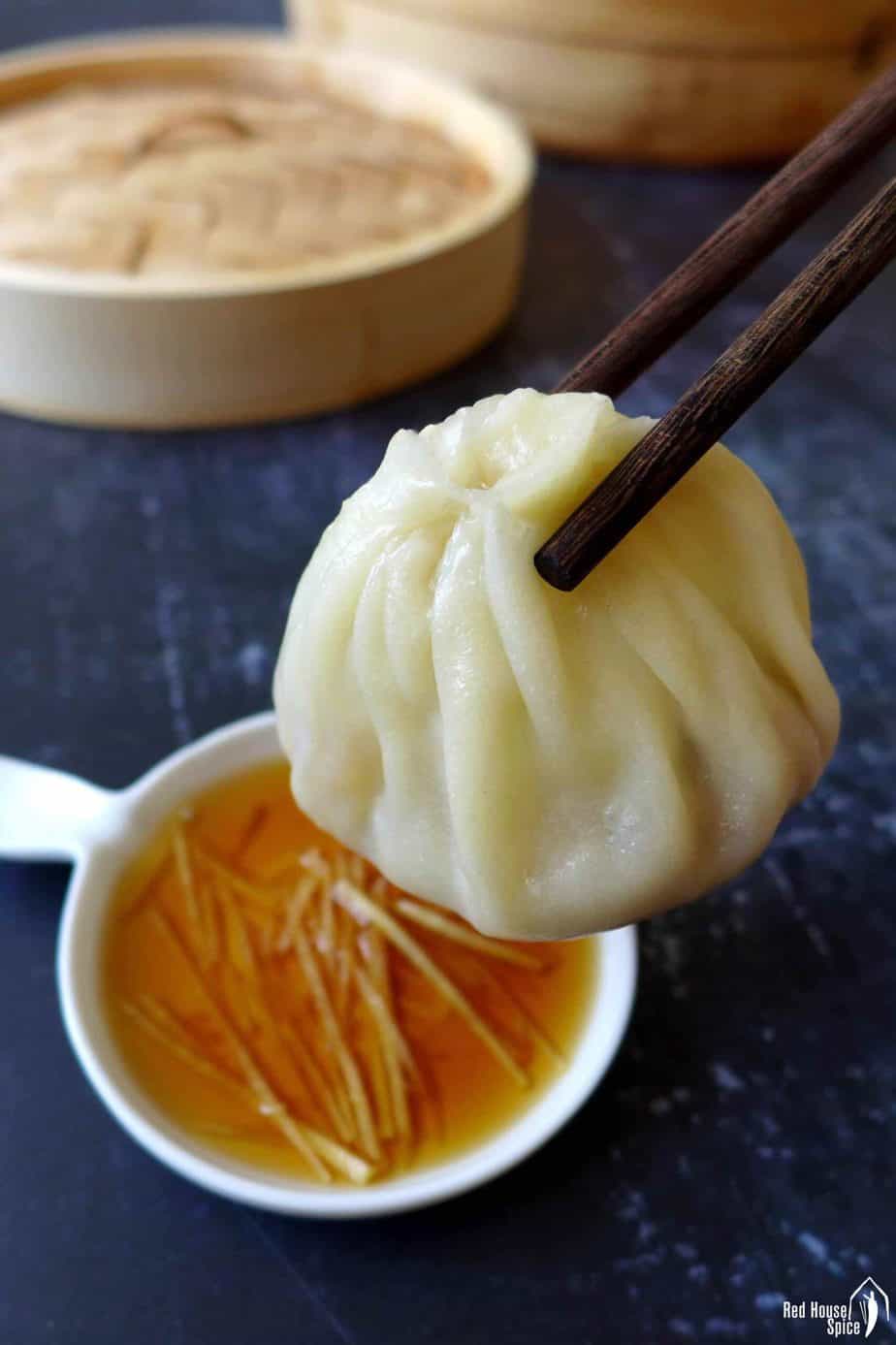
Now it’s time to enjoy the fruit of your labour! For the best taste and texture, take the steamer basket to the table without delay (no need to transfer the dumplings to a plate).
Hold the top part of the dumpling with a pair of chopsticks. Pick up then place onto a soup spoon or a small saucer. Poke a small hole with the chopsticks to let the soup flow out. Slurp up! You may directly bite a small hole and suck out the soup but be careful not to burn your tongue!
The classic dipping sauce for Xiao Long Bao consists of two simple ingredients: Chinese rice vinegar and julienned fresh ginger. Red rice vinegar (红醋) from Jiang Nan region of China is a popular choice. But you can replace it with black rice vinegar (陈醋) which is more commonly available.
Please feel free to use other condiments if you wish. Homemade Chinese chilli oil works well on its own. Or you can find some inspiration in my post on “Six dumpling dipping sauces”.
Other dumpling recipes
Want to discover more in the world of Chinese dumplings? Check out other delicious recipes on my blog:
- 15 Best Chinese Dumpling Recipes
- Classic Pork & Cabbage Dumplings
- Dim Sum Crystal Shrimp Dumpkings
- Vegan Pan-Fried Dumplings
- Hot and Sour Dumpling Soup
📋 Recipe card
Love this recipe? Please leave a 🌟🌟🌟🌟🌟 rating and a comment. Thank you!
How to make Xiao Long Bao (小笼包, Soup Dumplings)

Video
Ingredients
For the aspic
- 1 medium-sized whole chicken, see note 1
- 3 stalks scallions, cut into halves
- 6 slices ginger
For the wrappers
- 180 g all-purpose flour, see note 2 for other options
- 60 g hot water
- 35 g tap water, see note 3
For the filling
- 450 g minced pork
- 3 stalks scallions, finely chopped
- 1 tablespoon minced ginger
- 1 tablespoon light soy sauce
- 1 tablespoon Shaoxing rice wine
- ¼ teaspoon ground white pepper
- ¼ teaspoon salt
- ½ teaspoon sugar
For the dipping sauce
- Red rice vinegar , or black rice vinegar
- Ginger, julienned
Instructions
Make the aspic
- Preheat the oven at 390°F/200°C/Gas 6 (Fan-assisted 360°F/180°C)
- Place chicken in an oven-proof pot/pan/baking tray. Put scallions and ginger inside the chicken. Cover TIGHTLY with a lid/tin foil.
- Cook in the oven for 1 hour. Then leave to cool (covered).
- Keep the chicken for other dishes. Pour the liquid into a container. Refrigerate for at least 4 hours until it turns into a piece of jelly-like aspic (about 250g).
Prepare the dough
- In a mixing bowl, add hot water to the flour. Mix with chopsticks/spatula. Then add tap water.
- Combine and knead into a dough. Leave to rest (covered) for 10 minutes then knead again until very smooth.
- Cover and rest for a further 30-60 minutes until it becomes soft.
Mix the filling
- Mix minced pork with all the seasoning until well combined.
- Use a spoon to remove the layer of chicken fat on top of the aspic. Then use a fork to break it into tiny pieces. Add to the pork then mix well.
- Keep refrigerated for at least 30 mins. Don’t take out until you are ready to assemble the dumplings.
Roll the wrappers
- Roll the dough into a rope. Divide into 20 pieces. Then press into discs with the palm of your hand. Cover at all times when not using (with cling film/in a plastic bag/with an upside-down bowl, etc.).
- With a rolling pin, use the “roll and turn” technique to flatten it into a very thin disc, about 12cm/4.7inch in diameter (Please refer to my tutorial video below). Dust the surface with flour if it sticks (see note 4).
- N.B. Assemble the dumpling one by one as you roll out each wrapper (Do not stock up as they are very thin thus dry out very easily).
Assemble
- Place a spoonful of the filling (about 35g) in the middle of the wrapper.
- Pleat into a round dumpling with about 15-20 folds (Please refer to my tutorial video below). You may leave the middle part open or sealed.
Steam
- Line the steamer basket with steamer parchment paper, or cut regular parchment paper into squares (see note 5 if you are using a metal steamer).
- Place dumplings in (leave at least 3cm/1inch space between them).
- Bring water to a full boil in a wok/pot. Then put the steamer basket on top. Turn the heat to medium-low. Steam for 8 mins (if cooking over 10 dumplings at a time, increase to 10 mins).
Serve & eat
- Bring the steamer basket to the table to serve.
- Hold the top part of the dumpling with a pair of chopsticks. Pick up then place onto a soup spoon or a small saucer. Open a small hole with the chopsticks to let the “soup” flow out. Slurp up! (You may directly bite a small hole and suck out the soup but be careful not to burn your tongue)
- Gently dip the dumpling into the dipping sauce (mix vinegar with julienned ginger) then eat in 1-2 bites.
Store
- You may store leftover dumplings in the fridge for up to 2 days. Steam for 3 mins to reheat. However, you may not get any soup as the liquid is absorbed by the wrapper over time.
- Since soup dumplings are very delicate, I don’t recommend you make them in advance or freeze.
Notes
Your Recipe Notes
Nutrition information is automatically calculated, so should only be used as an approximation.











Hi Wei – I made your XLB recipe last night but made a couple of changes to take advantage of things I had on hand. I recently made Tonkotsu ramen broth which turns very jelly-like in the fridge so I used that in place of the aspic. It took me a while to roll out the wrappers thin enough and the folding took me a long time as I was going slow, so maybe the ramen jelly was starting to liquify a little bit as well. The dumplings looked great going into the steamer, but they flattened out a LOT and most of the bottoms got soggy and deteriorated so the soup all leaked out. Any idea if this was due to using the ramen jelly instead of the aspic, or if it’s because the filling was coming to room temp? I want to try again!
Thank you for trying my recipe, Matt! Using ramen broth jelly is actually fine, so that part shouldn’t be a problem. It’s more likely that the assembled dumplings sat for a bit too long before steaming. As the filling warms up, the liquid can start to soften the dough, which makes the bottoms weaken and leak during steaming.
This recipe is great, but the website is so terrible with ads and constant reloading that I had to take screenshots of every screen in order to follow the recipe.
Also, cooking an entire chicken just for the aspic is way too much work! The second time, I just used gelatin in warm chicken broth, and didn’t notice any difference.
Thanks for the feedback. I’m sorry to hear about the reloading issue. The page shouldn’t behave like that, so I’ll pass this on to my tech team to look into it. As for the aspic, if gelatin works well for you, please feel free to do so.
When you post things like this I think you are a genius angel of Chinese food come to bless us with your knowledge. Thank you for answering every question I could have had even on tricky recipes like this! Your posts make things I’ve never attempted so approachable.
That’s the sweetest message. Thank you so much, Jackie! I’m really touched and so glad the recipes feel approachable. It makes me so happy to share and see others enjoying Chinese cooking!
Love the recipe! I’ve gotten pretty good at pleating them and rolling the dough super thin (hopefully thin enough?). Only issue I’m having now, is when they’re cooked, they become stiff. They hold their spread-out slightly pancake-like shape when picked up. Any ideas what might be going on?
Thank you Kyle for trying my recipe! It sounds like you’re doing great with pleating and rolling the dough. If they’re becoming stiff, it might be that the dough is still a little too thick. Also, they tend to get stiffer as they cool, so it’s best to enjoy them right after steaming. Hope that helps!”
I used this as a base, but had turkey bones and a pint of homemade chicken stock. Roasted the frozen bones for 30 minutes then added them to the pot with a quart and a half of water and the chicken stock and simmered for 1.5 to two hours. Whewwww weeeee did I have aspic. And only about 250 mls by the end.
Going to reuse the bones.
Then I didn’t have black vinegar, sorry 😞. Did 50/50 malt and rice wine.
Just offering up some ideas for making these with what y’all might have on hand! Super worth it!
Thanks for sharing your creative take on the recipe, Cheryl! It sounds like you made an incredible aspic, and your vinegar substitute is a great idea. Love seeing how you adapted it—super resourceful!
Hello, Wei! When I look back at all the comments on this recipe, I think I’m the very first person who posted a comment several years ago! We’ve made soup dumplings quite a few times since then (including last night!) and while I can’t say our dough techniques have improved much, your recipe is STILL absolutely stellar. We truly love it, still the closest thing to any Xiao Long Bao we’ve had in restaurants…. and often even better. We make a mess of the kitchen each time we make them, but it’s a fun kind of togetherness, and an exceptionally tasty dinner for us. Thank you again, from the bottom of our hearts, you made us very happy during the Covid years when we were afraid we’d never enjoy XLB again, and you continue to make us happy today. Very best wishes from our house to yours.
What a heartwarming comment! Thank you for taking the time to write such a thoughtful message. It means the world to me to hear how my recipe has become such a cherished part of your lives over the years. Your kind words about the recipe being close to—or even better than-restaurant quality truly made my day! Very best wishes back from my kitchen to yours!
Wonderful clear explanation of each step, concise and easy to understand. Complete directions.
So happy to hear you find my recipe helpful, Aimee!
In einer so schnelllebigen Zeit wie heute, sollten einfache und schnell zubereitete Gerichte wie diese, auch in deutschen Küchen vorhanden sein.
Your posts are a staple in my reading list for good reason.
Thanks for your appreciation Charla!
Would it be possible to substitute the pork for beef? I want to make some xlb my muslim friend could have too
Yes you can, Michelle. For a better taste, use minced beef that has a high-fat content (20%). Happy cooking!
Hi do I really need the rice wine or no? Also for the ground white pepper I’m not sure if you can find some in the Philippines, so is it ok to use ground black pepper instead?
Yes, you can skip the rice wine and replace white pepper with finely ground black pepper. Happy cooking!