
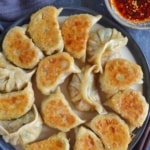
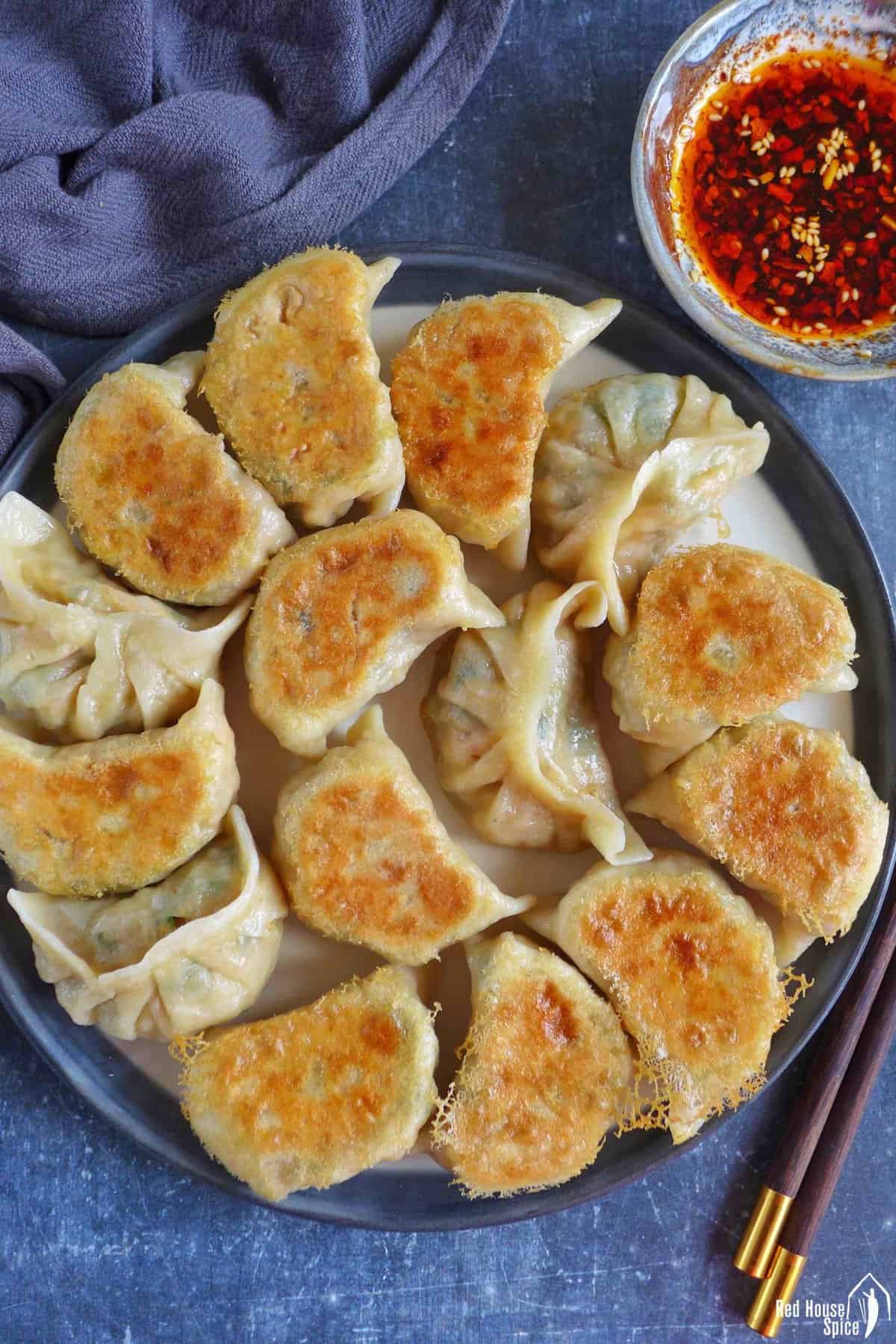
Intensely flavorful with a crispy crust, pan-fried kimchi dumplings are totally worth trying. This recipe comes with clear instructions, helpful tips, and a tutorial video.
Pin this now to find it later!
Pin ItTable of Contents
Why this recipe
Dumpling recipes are the most popular category on my blog. Having grown up making and eating this delicacy with my family, my passion for it continues to grow year after year. Today, I’m excited to share yet another one: Pan-Fried Kimchi Dumplings.
Here are the reasons why it’s a share-worthy recipe:
- It requires minimum seasonings, allowing the natural flavors of each ingredient to shine.
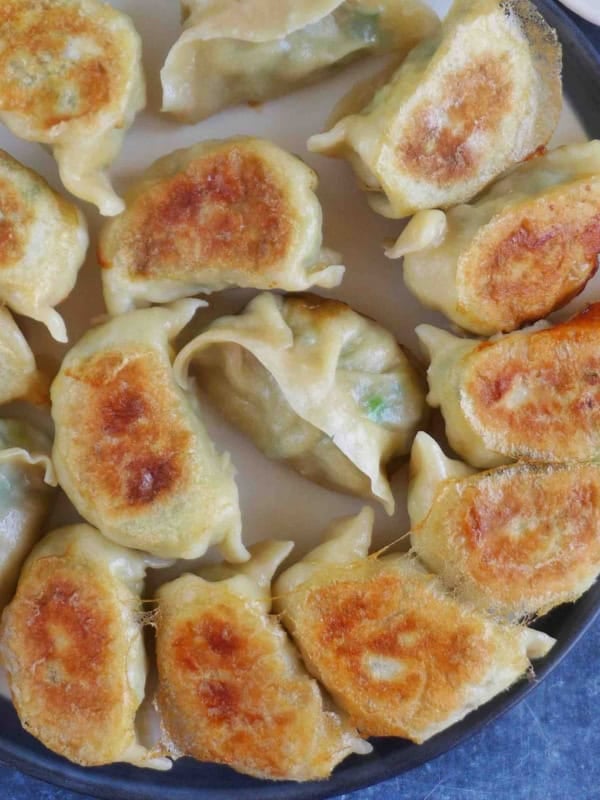
- The easy “fry-steam-fry” method creates a crispy crust that’s incredibly appetizing.
- It’s vegan adaptable if using vegan kimchi that doesn’t contain seafood elements.
Whether this is your first attempt at making dumplings, or you’re already a seasoned master, I hope you’ll enjoy this recipe!
Ingredients for the filling
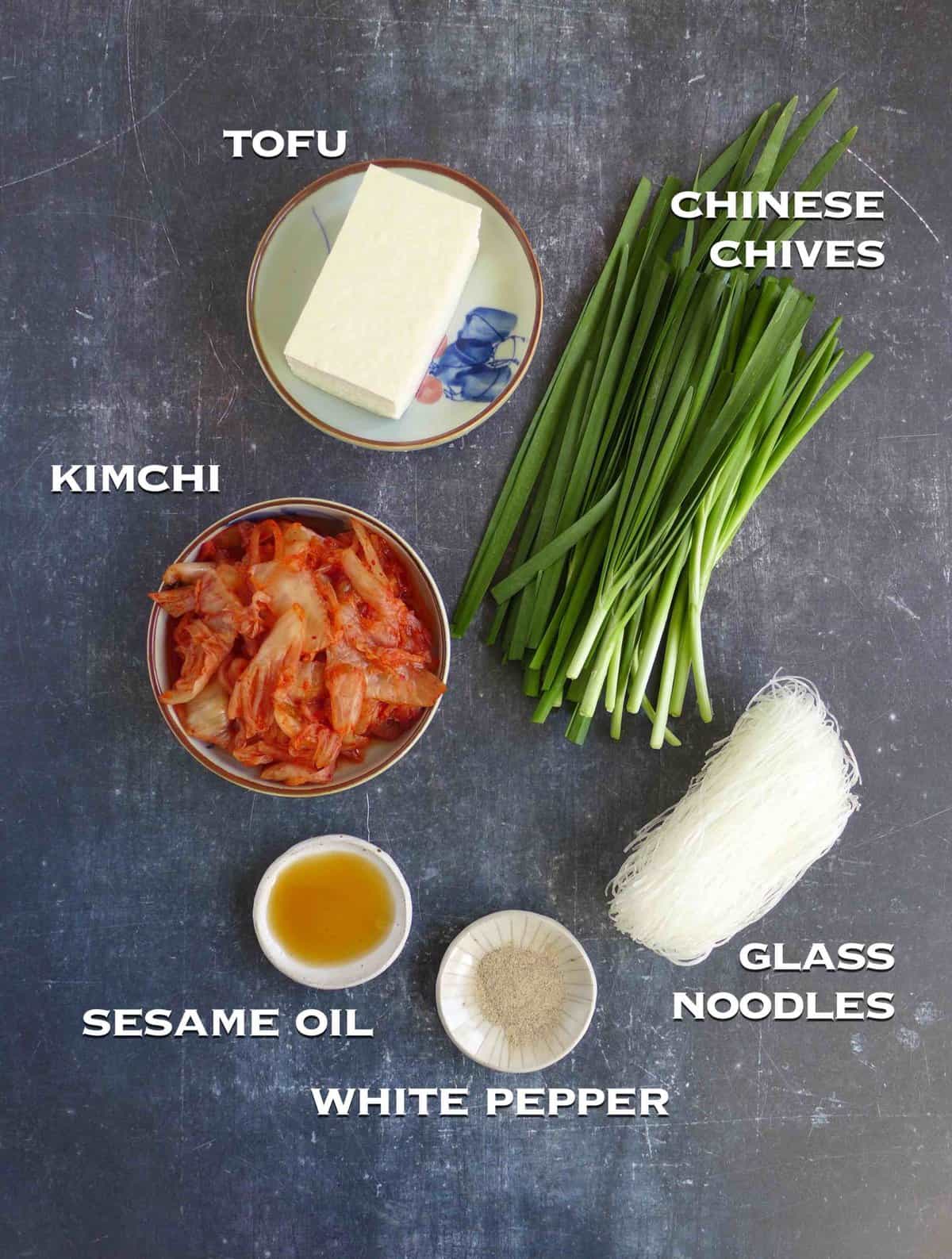
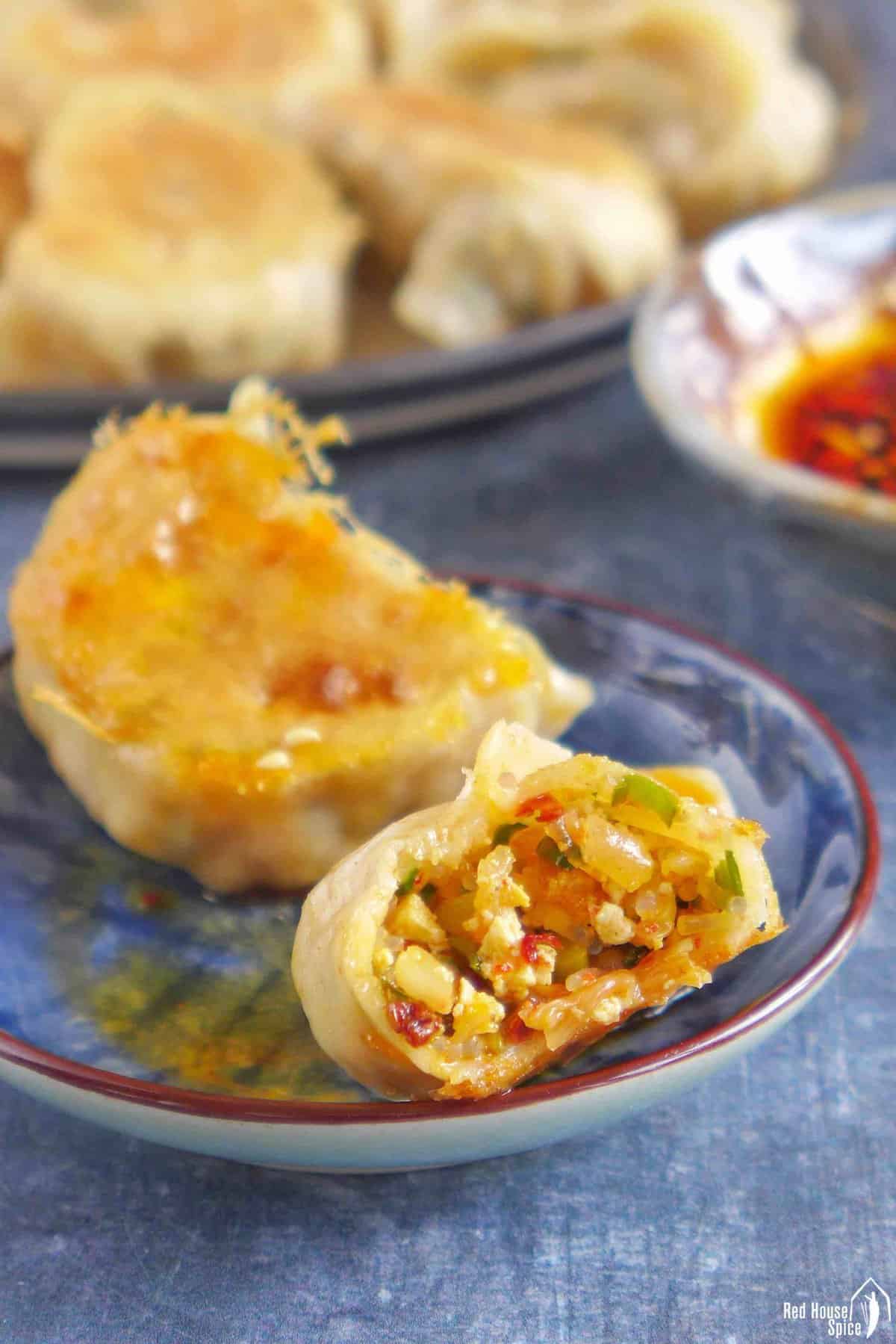
The filling for this dumpling recipe is a blend of intense flavors and interesting textures. Here are what you need:
– Kimchi
A type of fermented vegetables (commonly made with napa cabbage and radish), kimchi is a specialty in Korea and within the ethnic Korean community in China. It offers a sophisticated array of flavors: briny, umami, garlicky, oniony, winey, sweet, mildly hot, and with a hint of seafood-scent.
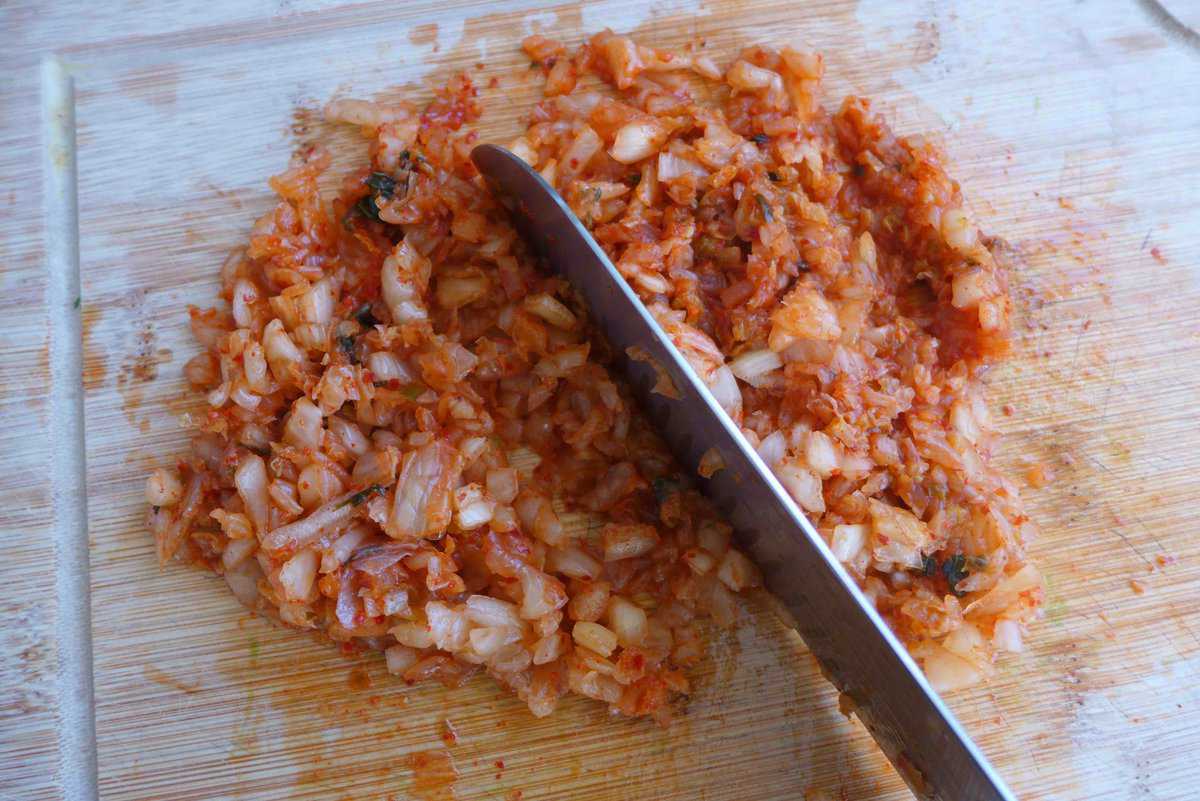
When preparing kimchi for the filling, squeeze out most of the liquid, and chop it into small pieces. You don’t need to mince it too finely, though, as it’s nice to retain some crunchy bites in the filling.
– Chinese chives
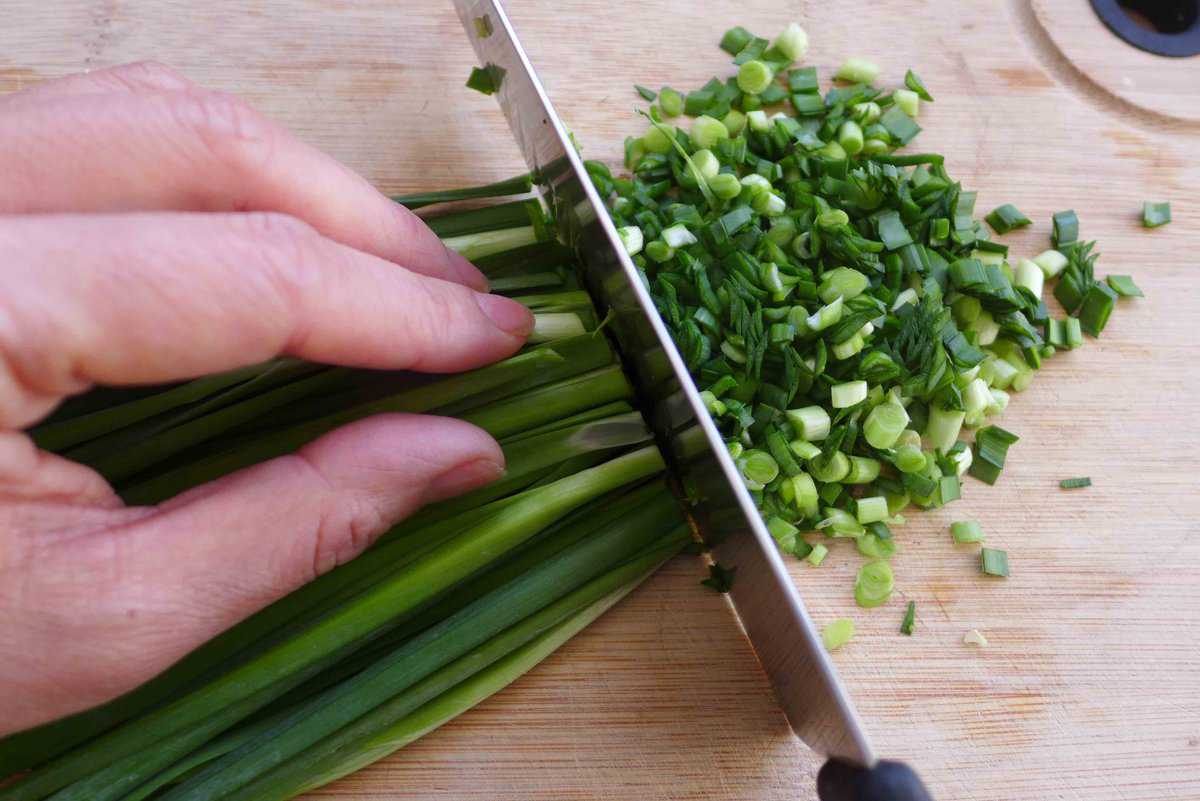
Also known as garlic chives, Chinese chives are one of the most popular ingredients for dumpling fillings in China (think Chinese Chive Pockets), appreciated for their intense garlicky aroma. However, they don’t taste as hot as regular garlic.
– Tofu (the firm type)
Tofu adds healthy proteins to the filling, and its crumbly texture helps to combine the other ingredients.
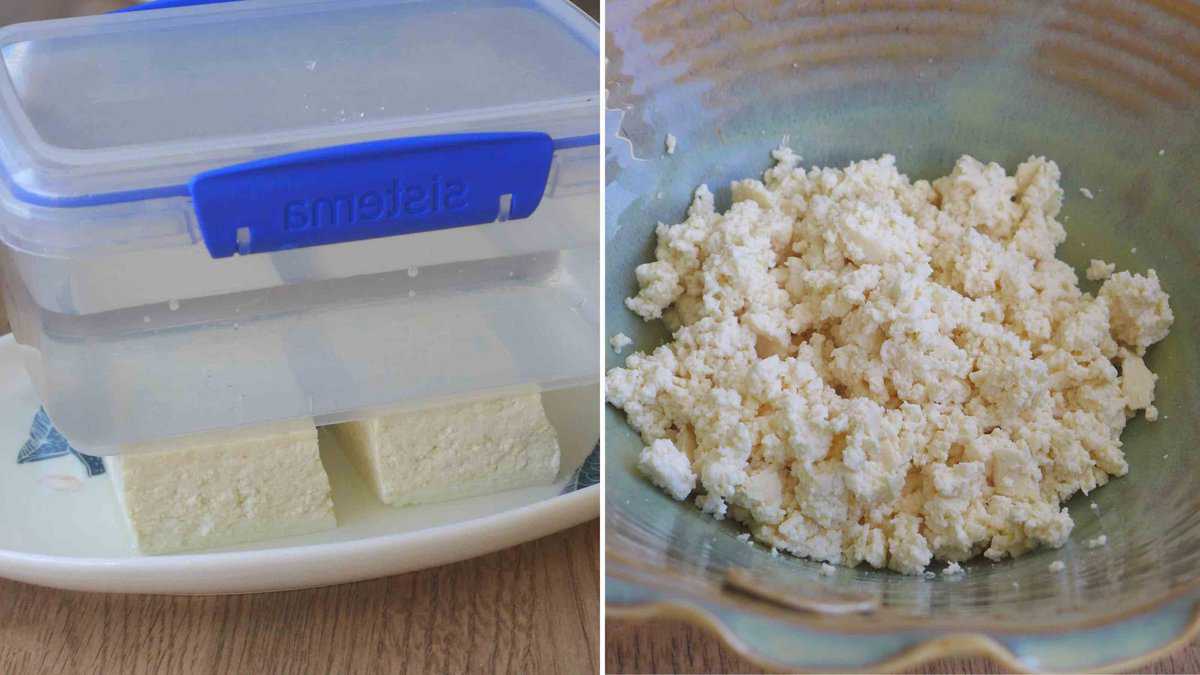
Before adding tofu to the filling, I suggest pressing it for 10 minutes or so to remove excess water. I usually place a plastic container filled with water on top of it. You may use other heavy objects that have flat bottoms. After that, simply use your hands to crumble the tofu into small pieces.
– Glass noodles
As I explained in my post on Dumpling Fillings, glass noodles are commonly used in vegetable-based fillings. They add a springy texture, and more importantly, help to absorb excess moisture so the filling isn’t overly wet.
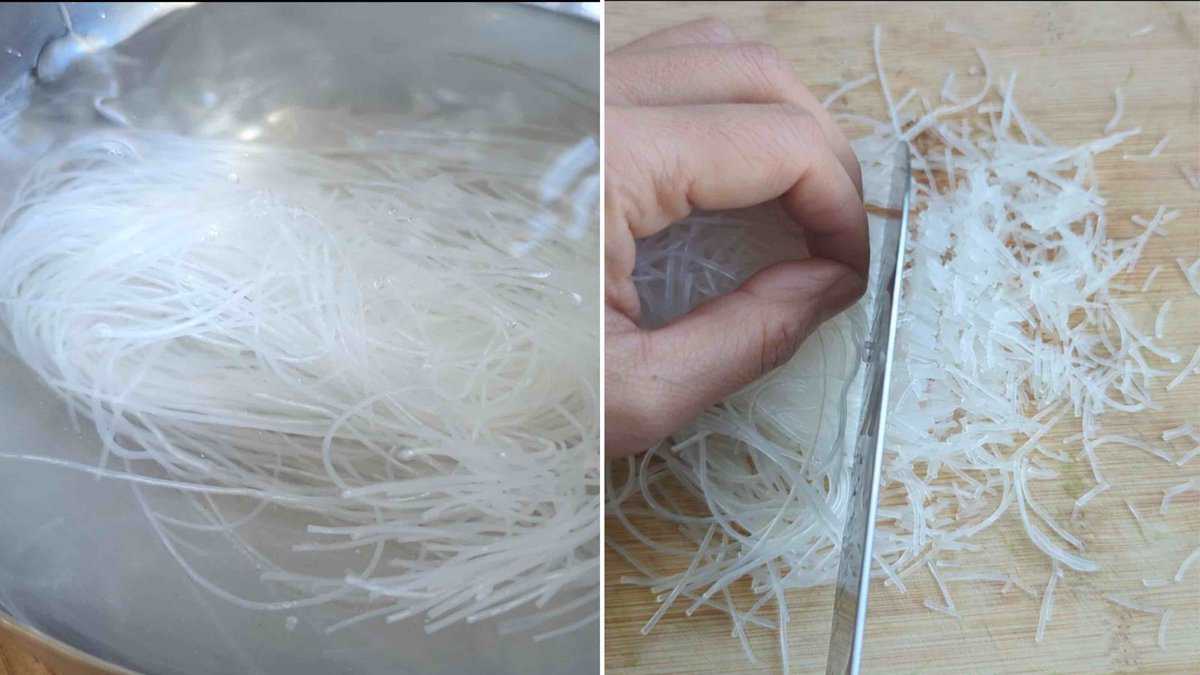
I used mung bean vermicelli (Fen Si/粉丝), a variety of glass noodles, for this recipe. Soak it in warm water for 10 minutes until pliable then chop it into short strands.
– Seasonings
Sesame oil and white pepper are all you need to season this vegan filling. If available, add a dash of Sichuan pepper oil too for an extra kick.

After mixing all the ingredients, give it a taste to see if you need a little extra salt.
Wrapper choices
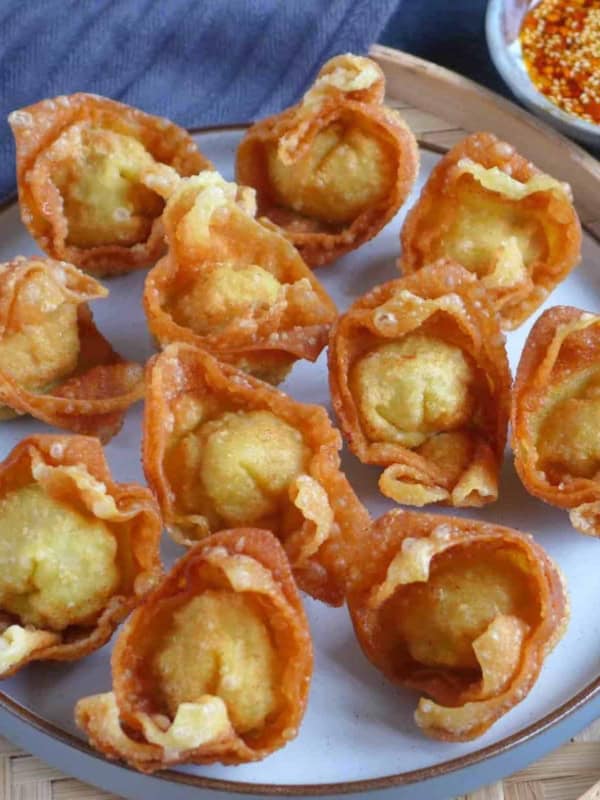
You may use either homemade dumpling wrappers or shop-bought ones, which can be found in the frozen section of Chinese/Asian stores. Don’t confuse them with wonton wrappers which are square and thinner.
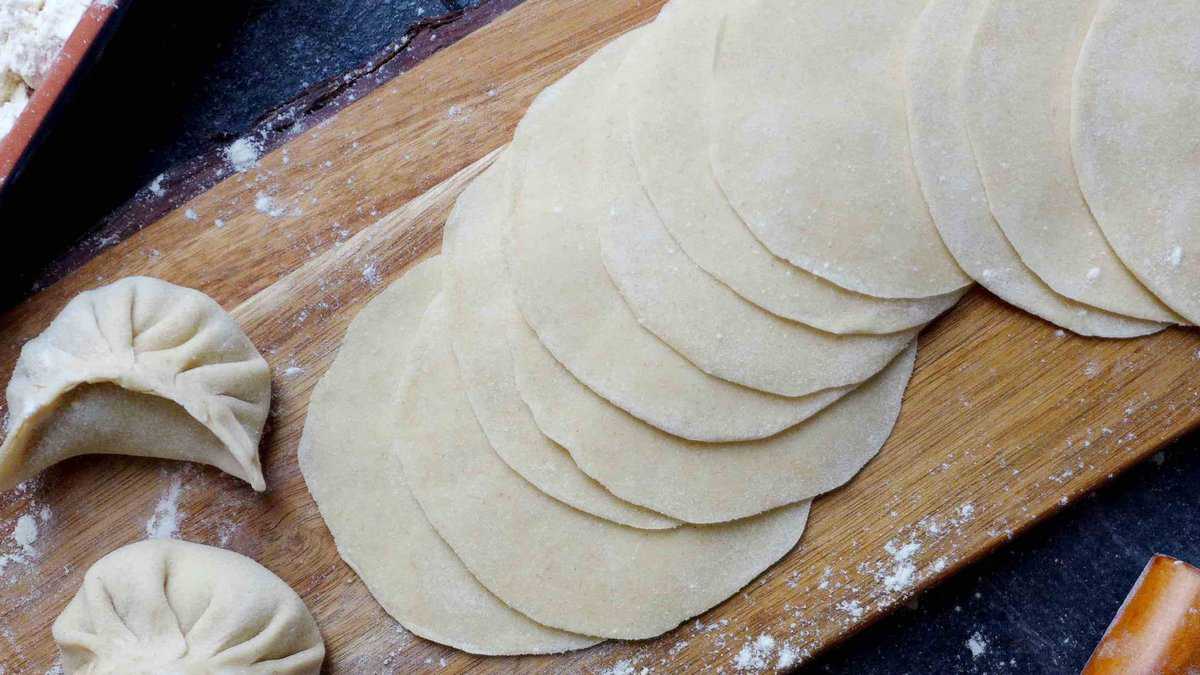
Obviously, ready-to-use wrappers are a great time saver. However, I encourage you to try making them yourself for improved texture and taste whenever time permits. Involve family and friends in rolling out wrappers and folding dumplings. After all, this is part of the fun of dumpling-making!
Folding methods
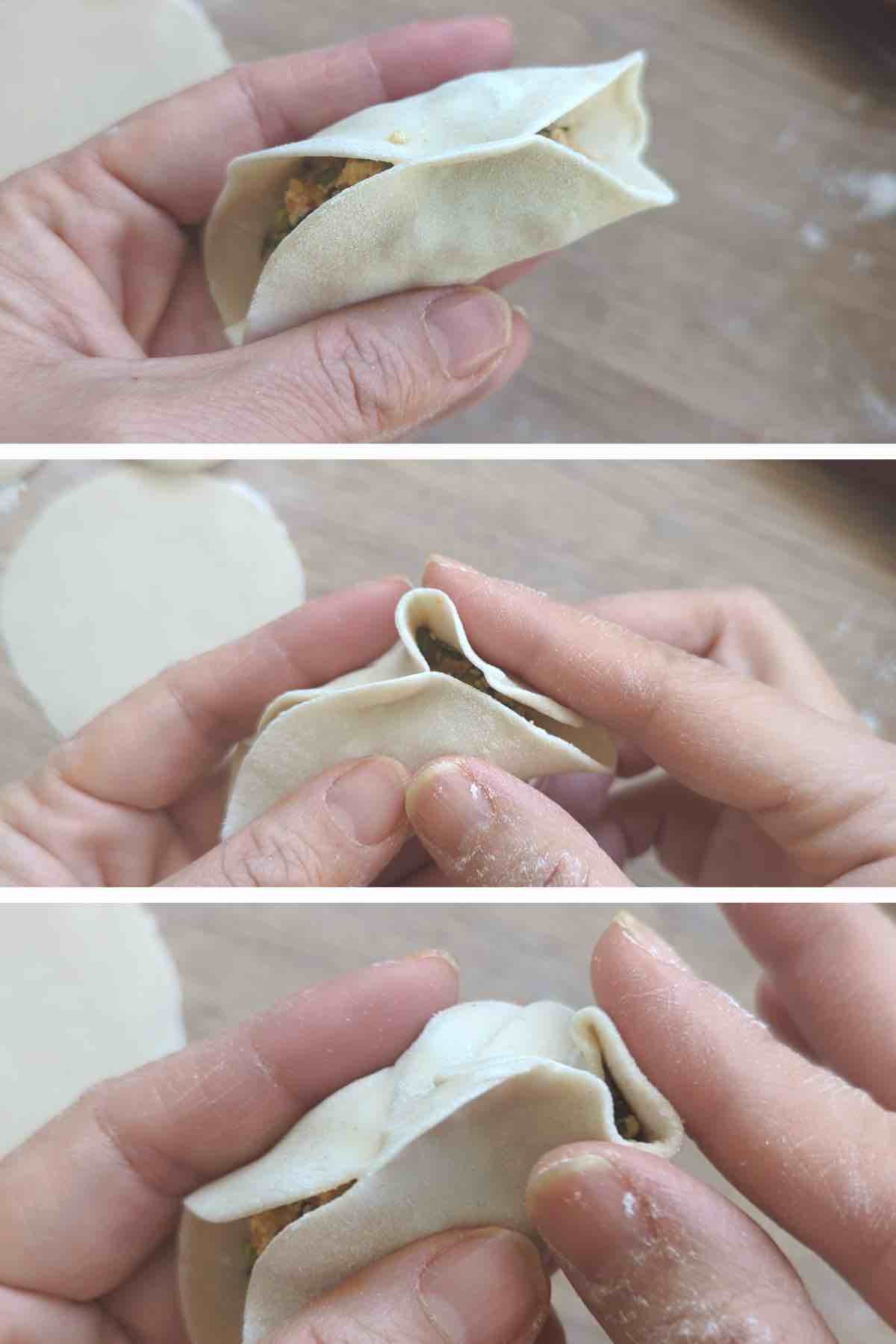
Half-moon with pleats is the most typical shape of Chinese dumplings. The folding technique I used for kimchi dumplings is simple to master. Please refer to the image or the video (inside the recipe card below) to see how it works.
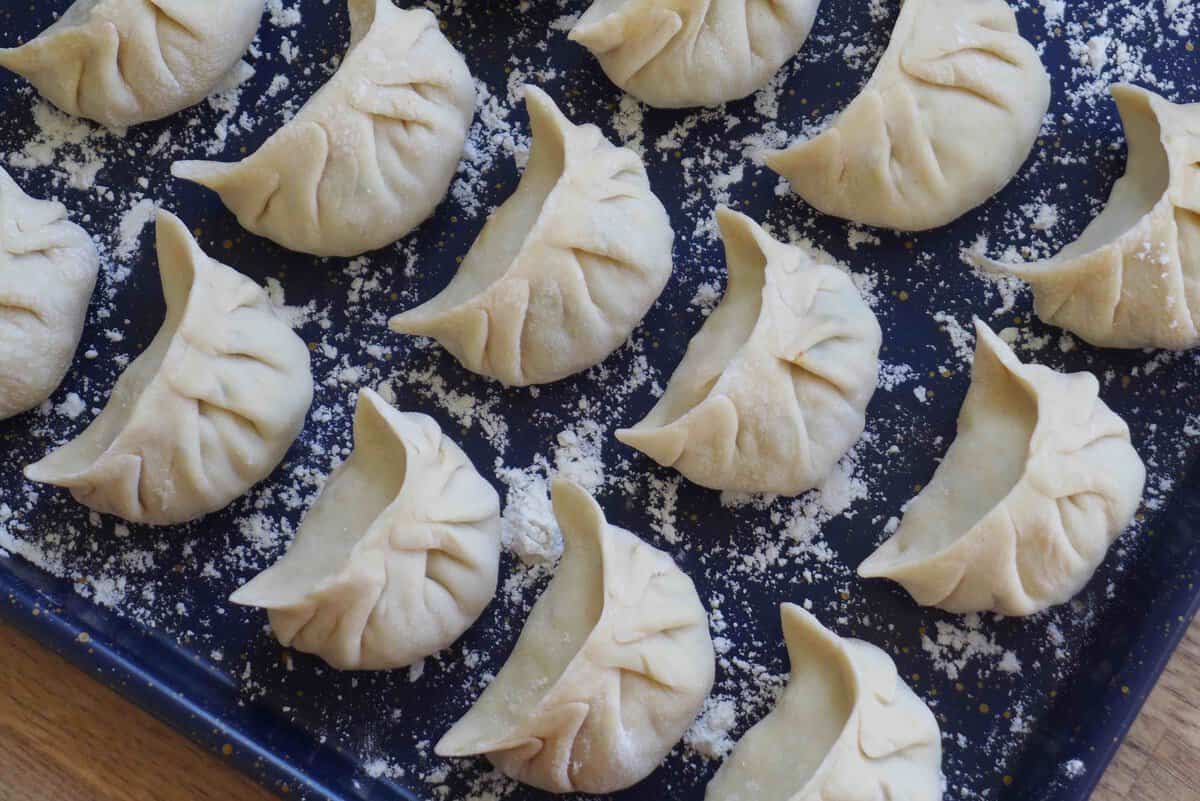
If you wish to try out other looks, check out my post on 10 Ways to Fold Dumplings which also comes with a video tutorial.
No matter which technique you apply, bear in mind these tips:
- Try not to stuff the wrapper with too much filling if you’re new to dumpling folding.
- If using shop-bought wrappers, you may need to moisten the edge to ensure proper sealing.
- If using homemade wrappers, remember to place assembled dumplings on a surface dusted with flour. Otherwise, they might stick.
- Do not let assembled dumplings sit for long. If you plan to cook them later, freeze them and pan-fry before serving (Find detailed make-ahead tips in later sections).
How to pan-fry
There are three ways to cook Chinese dumplings: pan-frying, boiling, and steaming. I chose to pan-fry them while shooting this recipe, which is an approach involving a process of “fry-steam-fry”. Here is exactly how it works:
Step 1: Golden
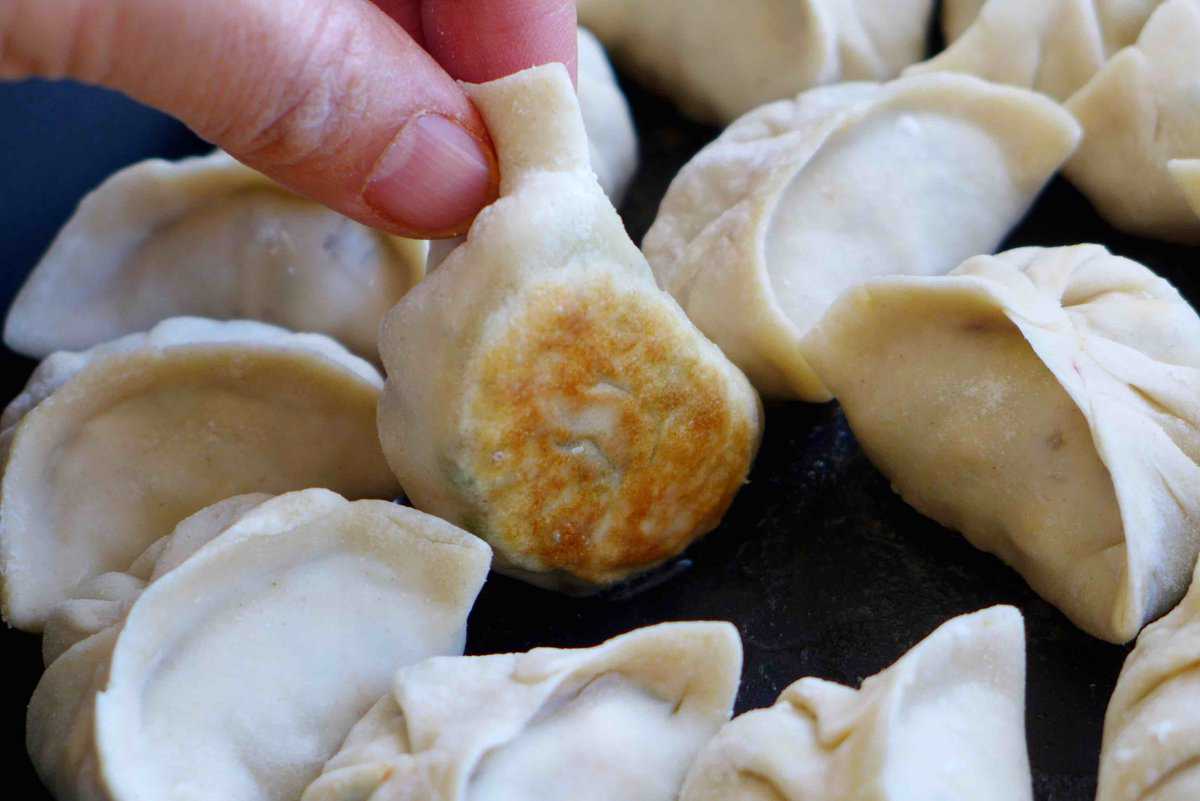
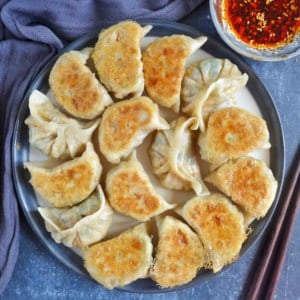
In a skillet/fry pan (ideally thick-bottomed), heat oil just enough to cover the surface of the cookware. Put in the dumplings and leave to sizzle over high heat until they turn golden on the bottom. You’ll need to gently lift up one or two dumplings to check the doneness. As soon as they reach the optimal color, move on to the next step.
Step 2: Steam
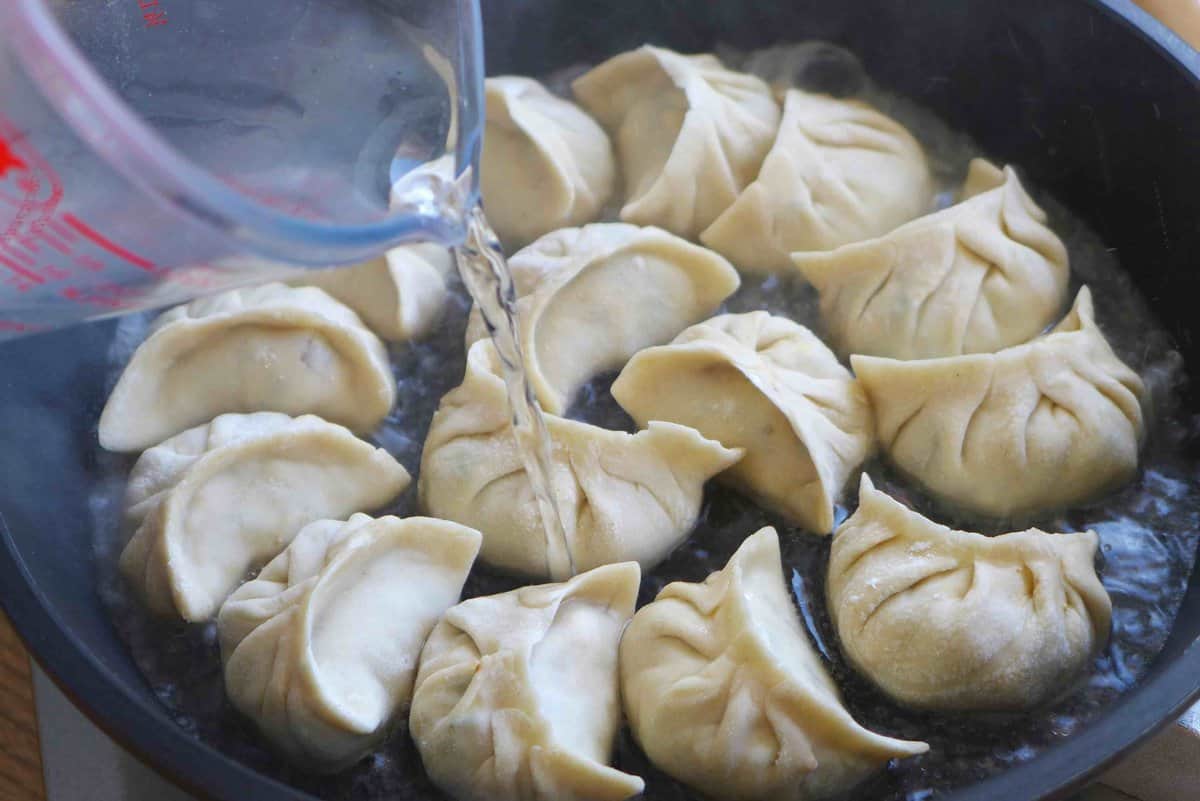
Pour cold water into the skillet, deep enough to immerse about ⅓ of the height of the dumplings.
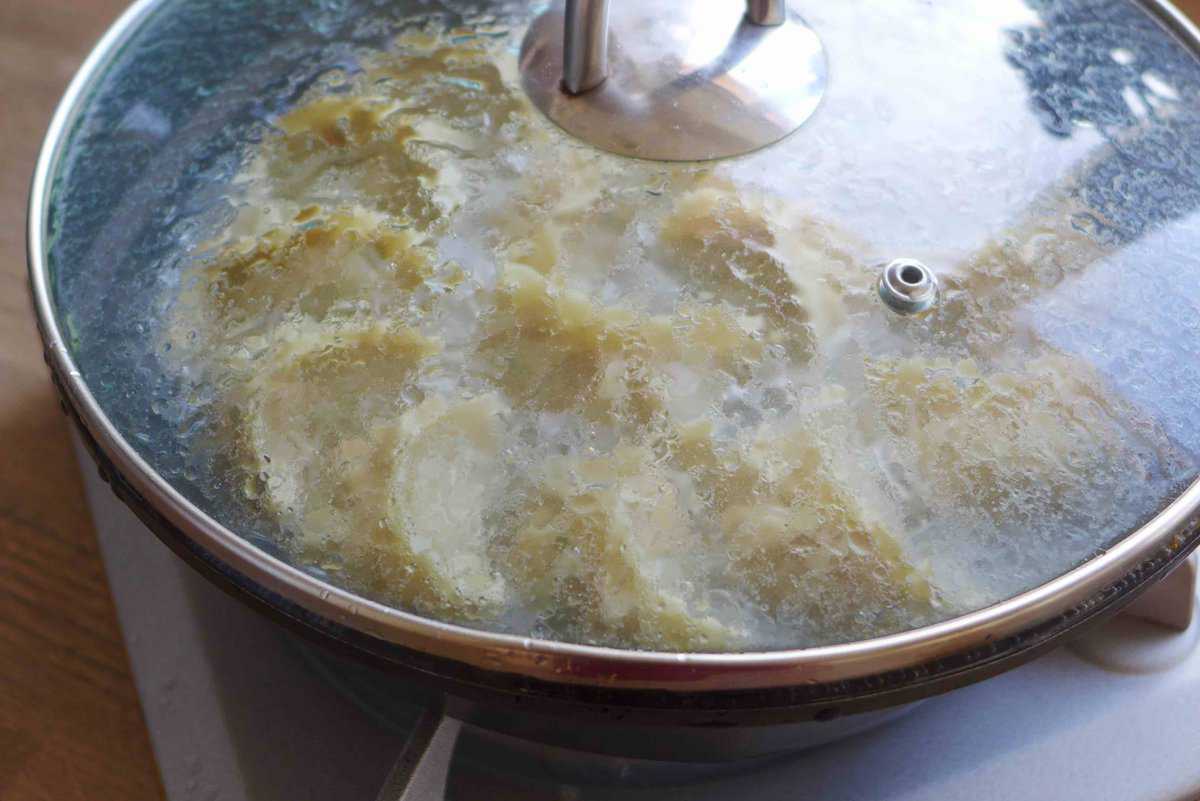
Cover with a lid immediately and leave to steam over high heat. Keep a close eye on this process. As soon as the water has fully evaporated, remove the lid.
Step 3: Crisp
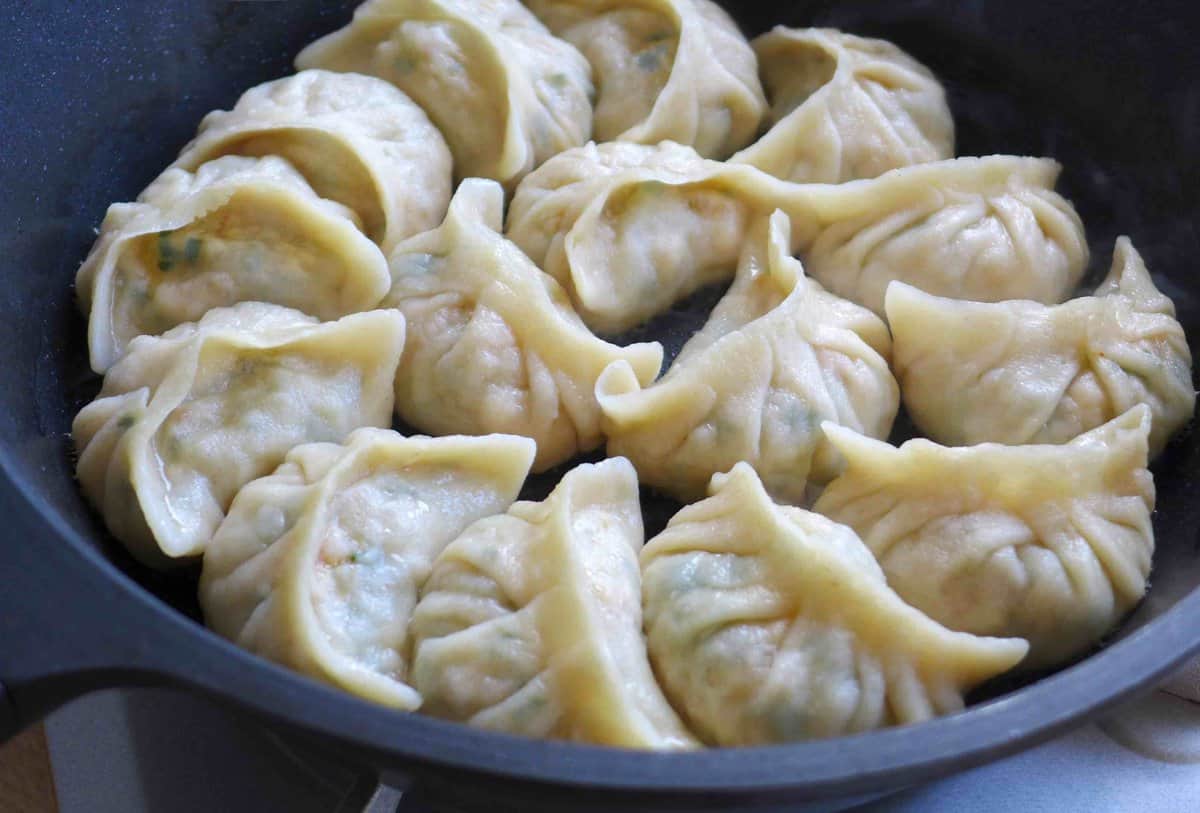
Let the dumplings sit on the burner for a further 20 to 30 seconds to further crisp the bottom. Be careful not to burn them though.

Once done, transfer the dumplings out. I usually put a plate, slightly smaller than the skillet, over the dumplings, then flip over the skillet while holding the plate with my other hand (as shown in the video below). This way, the beautifully golden, crispy side of the dumplings will be displayed.
Other cooking methods
These kimchi dumplings also taste great when boiled or steamed. If you’d like to reduce oil consumption, try these two alternative methods following my guide to Three Ways to Cook Dumplings.
How to serve
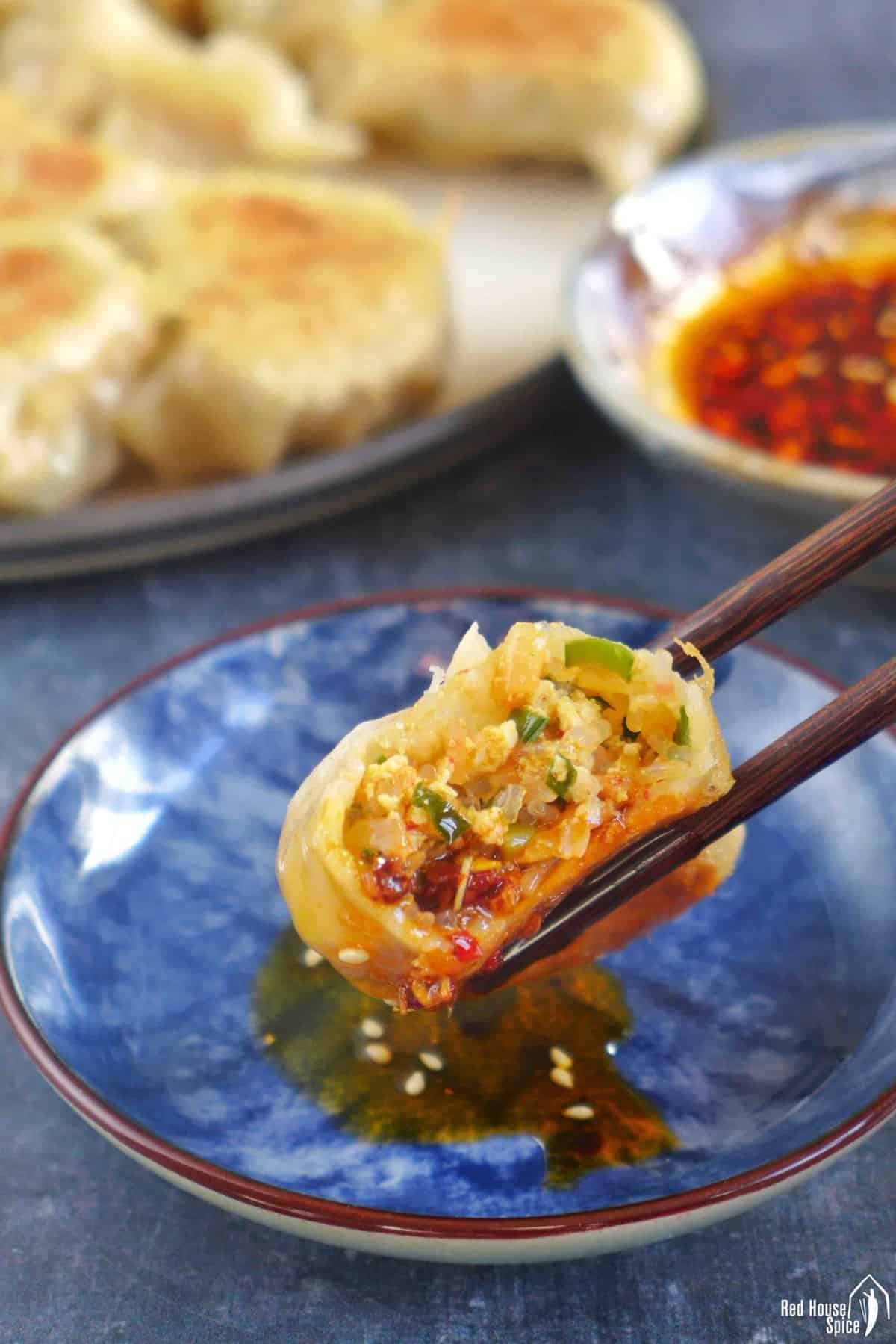
Savor your freshly cooked kimchi dumplings right away and do not let them go cold (that said, I’m almost certain they’ll disappear quicker than you’d imagine).
Since the dumpling filling is well seasoned, a dipping sauce isn’t compulsory. However, a simple mixture of Classic Chili Oil or Chiu Chow Chili Sauce and a dash of black rice vinegar always gives me extra joy on the palate.
You can find other inspiration in my post on Six Dumpling Sauces. Or, use your own favorite condiment to accompany these dumplings.
Make ahead
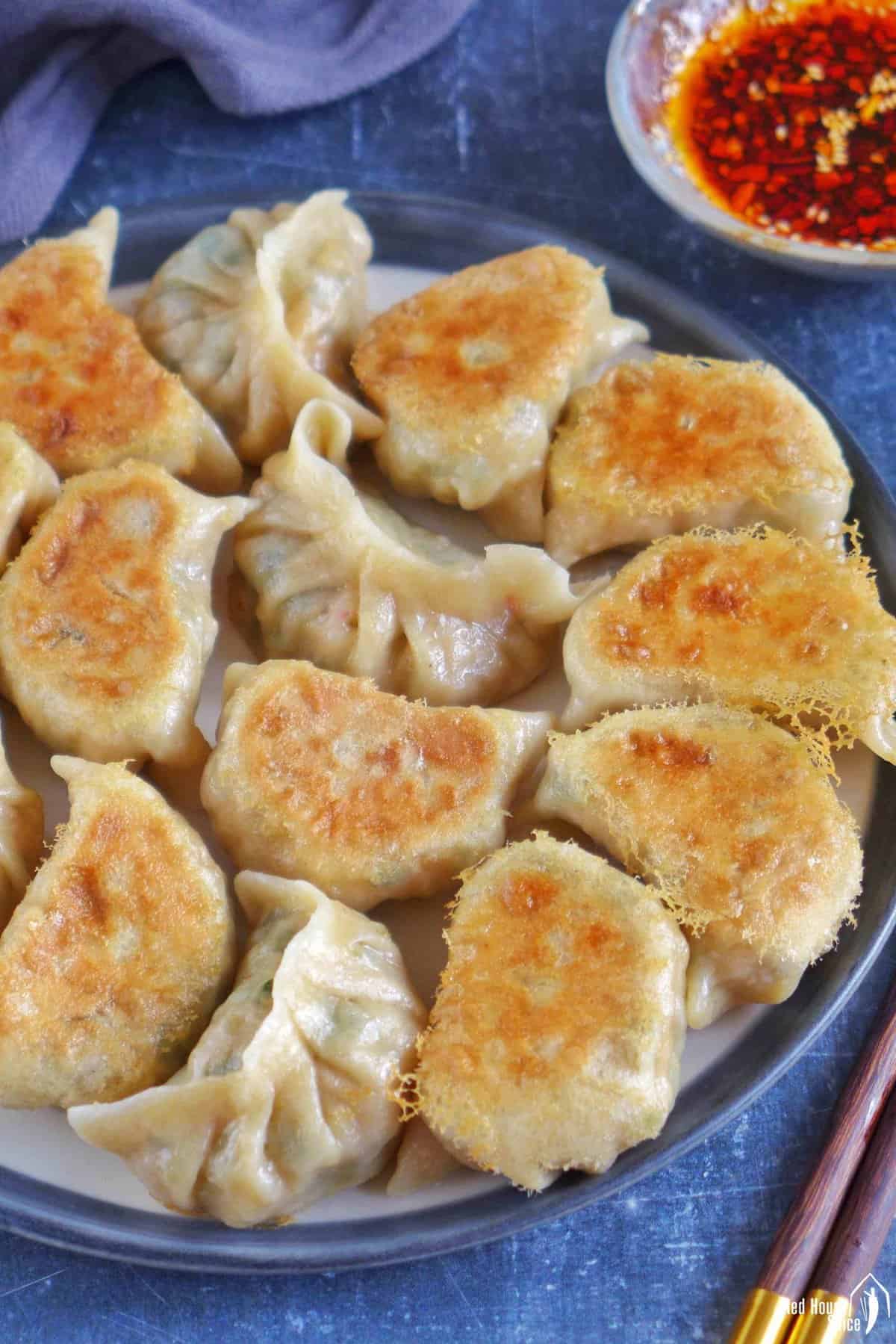
I always have dumplings and wontons in my freezer. They’re a lifesaver when you’re short on time but crave something substantial and delicious. Here is how you make them in advance:
- Right after assembly, place uncooked dumplings over a tray lined with parchment paper, making sure they don’t touch each other. Store them in the freezer until completely frozen.
- Transfer frozen dumplings to airtight bags or containers. Keep in the freezer for up to 3 months.
Take out the amount you plan to serve, and pan-fry the usual way without defrosting.
Other dumpling recipes
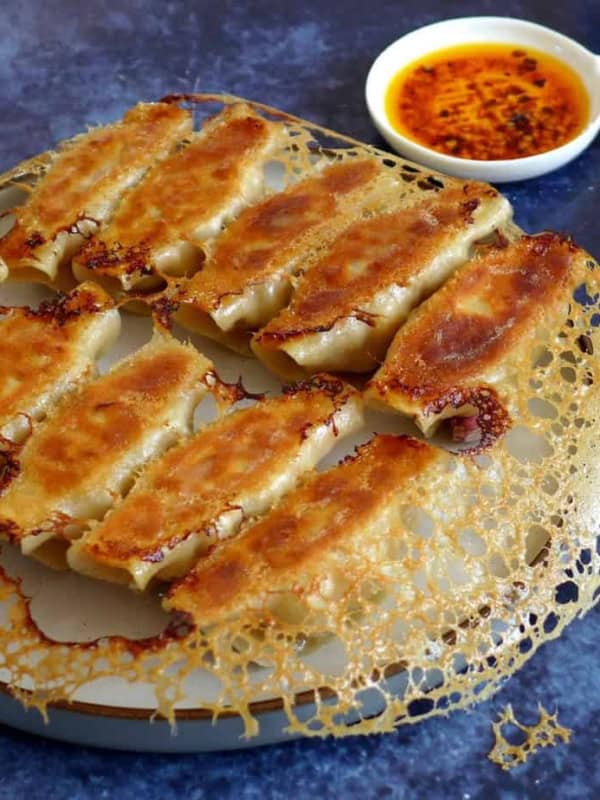
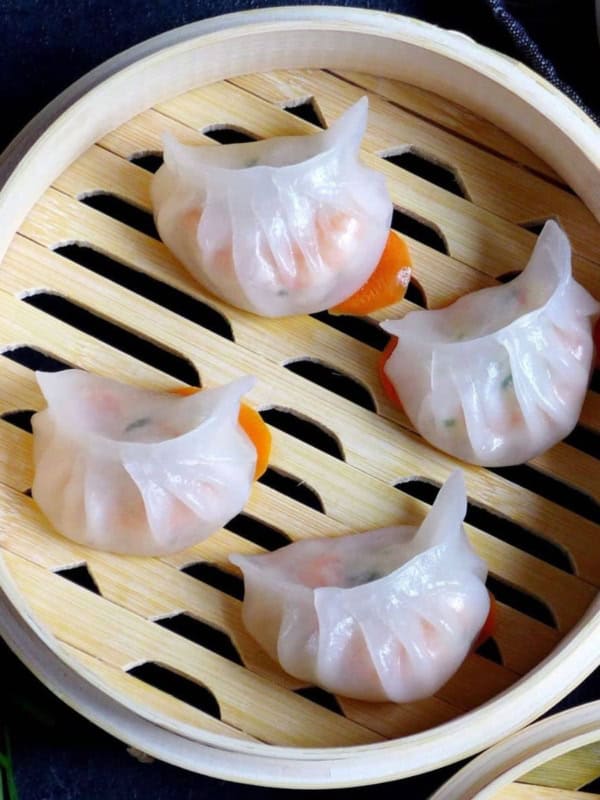
Looking for more inspiration for making dumplings? Check out these popular ones:

📋 Recipe
Love this recipe? Please leave a 🌟🌟🌟🌟🌟 rating and a comment. Thank you!
Kimchi Dumplings

Video
Ingredients
- 30 pieces dumpling wrappers, shop-bought or homemade
- 7 oz firm tofu
- 1.7 oz glass noodles, see note 1
- 7 oz kimchi
- 3 oz Chinese chives
- 2 teaspoon sesame oil
- ½ teaspoon Sichuan pepper oil, optional
- ¼ teaspoon ground white pepper
- Salt, to taste
- Neutral cooking oil, for pan-frying
- Chili oil & black rice vinegar, for dipping, optional
Instructions
Prepare the wrappers
- If using shop-bought wrappers, defrost them in the fridge. Do not open the packaging until you’re ready to assemble.
- For fresh wrappers, please follow my Dumpling Wrapper recipe. Allow about 1 hour 20 minutes for making, resting the dough, and rolling individual wrappers.
Mix the filling
- Put tofu blocks on a deep plate, then place something heavy over the tofu to help squeeze out some of the water. Let it sit for 10 minutes or so. Over a mixing bowl, crumble the pressed tofu into small pieces.
- Soak glass noodles in warm water until they become pliable. Chop them into small strands, then add to the mixing bowl.
- Finely chop kimchi and Chinese chives, then add them to the mixture, along with sesame oil, Sichuan pepper oil if using, and white pepper. Mix well then give the filling a taste. Stir in a little salt if necessary.
Fold the dumplings
- Place a portion of the filling in the middle of a wrapper (moisten the edge with a little water if using shop-bought ones). Fold the wrapper into a half-moon shape, adding a few pleats as you go. Place the assembled dumplings on a tray dusted with flour to prevent sticking.
Pan-fry (see other methods in note 2 & 3)
- In a large skillet/frying pan, heat oil just enough to cover the surface. Put in dumplings. Leave to fry over high heat until the bottom of the dumplings turns golden (lift one to check).
- Pour cold water into the skillet, deep enough to cover ⅓ of the height of the dumplings. Cover with a lid immediately.
- Leave to steam over high heat until the water has fully evaporated. Remove the lid, then keep the skillet on the burner for another 20-30 seconds to further crisp the dumplings.
- Serve immediately with a mixture of Chinese chili oil and black rice vinegar, or dipping sauces of your choice.
Make ahead
- Put uncooked dumplings over a tray lined with parchment paper. Store in the freezer until fully frozen. Transfer them into airtight bags. Keep in the freezer for up to 3 months.
- Pan-fry frozen dumplings, without defrosting, following the same method.
Notes
Your Recipe Notes
Nutrition
Nutrition information is automatically calculated, so should only be used as an approximation.












Hi WEI.
YOU ARE SO INNOVATIVE AND CREATIVE WITH YOUR RECIPES. I THINK YOU ARE A GENIUS. THANK YOU.
Thank you so much for the generous compliment. I’m really glad the recipes resonate with you.
Wonderful recipe the whole family enjoys preparing and eating together. we especially love making colorful dumplings
For thickening of the filling especially when you use veggies like cabbage, we sometimes use non-oil pan roasted channa dhal which can be then powdered and added to the filling mix which adds extra protein. Thank you for sharing the recipe and the folding.
Thank you so much for sharing that tip! Roasting and powdering channa dal is such a smart way to thicken the filling and boost the protein. I love that idea.
Thank you for introducing me to the world of dumpling making. It’s not as complicated as I expected and lots of fun too!
You’re so welcome! I’m thrilled you enjoyed the process—dumpling making really is such a fun and rewarding experience. Happy cooking and enjoy your dumplings!