

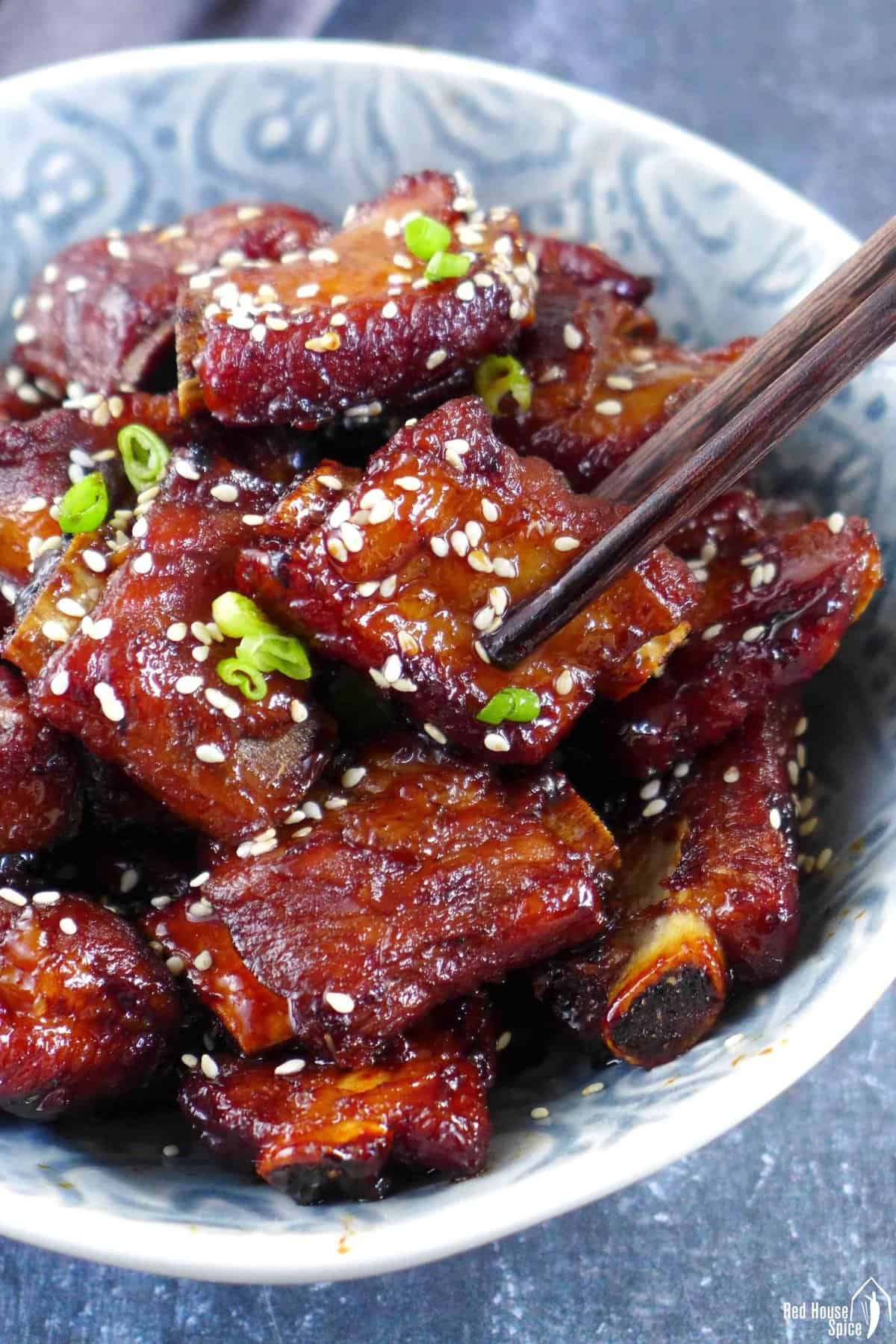
A beginner-friendly recipe for Chinese sweet and sour ribs. It provides a well-balanced condiment ratio, an approachable cooking method and delivers a restaurant standard result.
Pin this now to find it later!
Pin ItWhat is Sweet and Sour
Table of Contents
There is no doubt that sweet and sour is one of the most famous flavour combinations of Chinese cuisine. Dishes labelled with this adjective are particularly popular in overseas Chinese restaurants.
The English name sweet and sour describe the taste (Tian/甜 and Suan/酸), while the Chinese name mentions the two key condiments, Tang/糖 (sugar) and Cu/醋 (vinegar), that create the flavour.
Of the many sweet and sour dishes I’ve had the pleasure of tasting, sweet and sour ribs (Tang Cu Pai Gu, 糖醋排骨) are my absolute favourite. It’s partly because I always enjoy meat with bones (Have you tried my recipe for Steamed Ribs with Black Beans?). Also, I like how simple it is to prepare. Unlike sweet and sour pork, there is no deep-frying required.
This dish exists in many regional cuisines of China, such as Shandong cuisine (Lu Cai), Shanghai cuisine (Ben Bang Cai), Sichuan cuisine (Chuan Cai), Jiangsu cuisine (Su Cai), etc. Home cooks usually have their own twists and taste preferences.
if you love the taste of “sweet & sour”, don’t forget to check out my recipe for Sweet and Sour Whole Fish, Sweet and Sour Meatballs, and Sweet and Sour Salmon.
A simplified method
Most traditional recipes for sweet and sour ribs involves a particular cooking process called Chao Tang Se/炒糖色, which refers to melting sugar in oil (or water) until it becomes sticky and amber to coat the meat. This technique can be tricky to master as it would lead to burnt sugar if not controlled perfectly. Also, you’d expect lots of splatters.
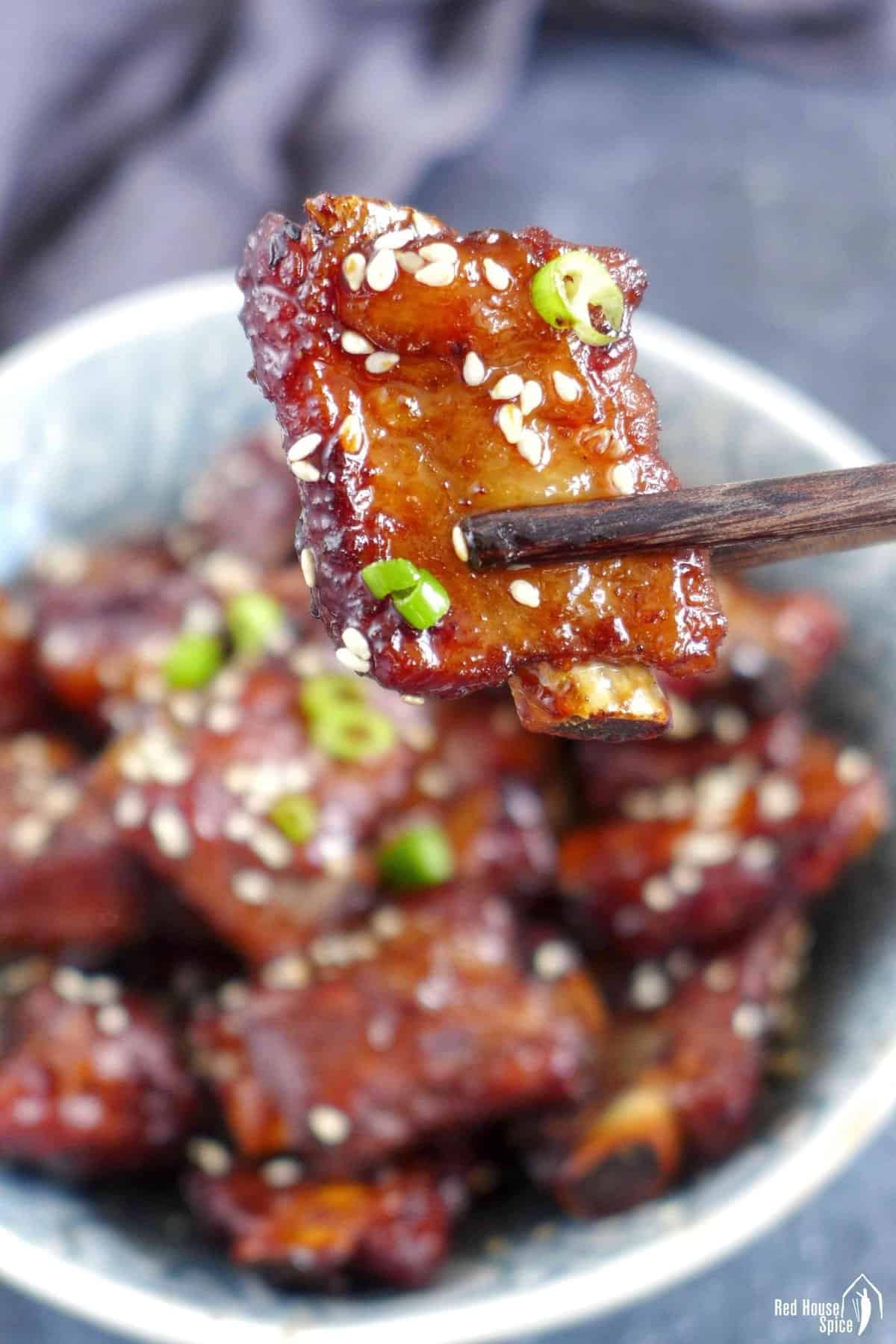
Today’s recipe skips this old-school method and introduces a fail-proof approach that any home cook can manage. Sugar is added during the braising process and lightly caramelised in the end when thickening the sauce by boiling down the liquid.
I’ve applied the same twist to my recipe for Red Braised Pork Belly and the feedback from my readers is very positive. Believe me! It works perfectly and the result is just as satisfying.
Ingredients
Only a few common Chinese condiments are required for making sweet and sour ribs. Here is the list:
Pork ribs
If you’ve had this dish in Chinese restaurants, you must have noticed how small the pork ribs look. Instead of using regular-sized ones which measure around 10 cm/3 in, Chinese prefer chopping them into small chunks which can be easily picked up by chopsticks. That said, please feel free to cook this dish with whichever sized ribs are available to you.
Sugar and vinegar
The combination of sugar and vinegar creates the iconic sweet and sour taste. Different from the formula used in my Sweet and Sour Fish recipe, this rib dish doesn’t require tomato ketchup. Also, black rice vinegar, instead of white rice vinegar, is used for its more complex flavour. Choose the most popular variety Chinkiang vinegar (镇江香醋) if available.
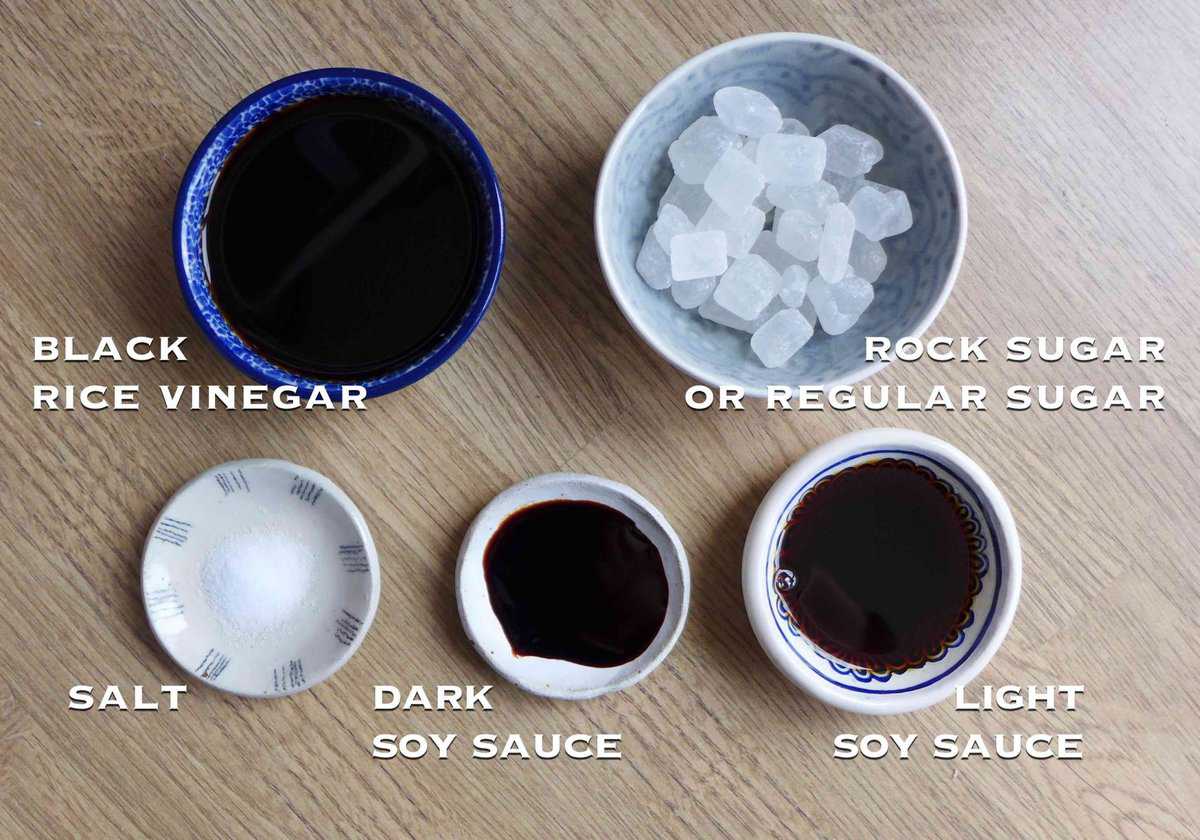
Not only does sugar provide sweetness and a hint of caramelised taste to the dish, it also helps to make the sauce sticky enough to coat the ribs very well (so no cornstarch is required). Traditional recipes usually calls for rock sugar. However, regular white sugar does the same job.
Through experiments, I found that the ideal sugar and vinegar ratio is about 5: 4 by VOLUME. For example, for 5 tablespoons of sugar, you need 4 tablespoons of black rice vinegar to match.
Light and dark soy sauce
They provide the dish with saltiness and umami taste. Also, the dark version enhances the appetising brown colour of the cooked ribs.
Garlic, ginger and scallions
Collectively, these three aromatics lend a subtle aroma to the pork during the braising process.
Cooking process
The process of making sweet and sour ribs can be broken down into three steps: blanching, braising and broth reduction. Although it’s a lengthy process, it is straightforward. I’d say it’s beginner-friendly. Here are the instructions:
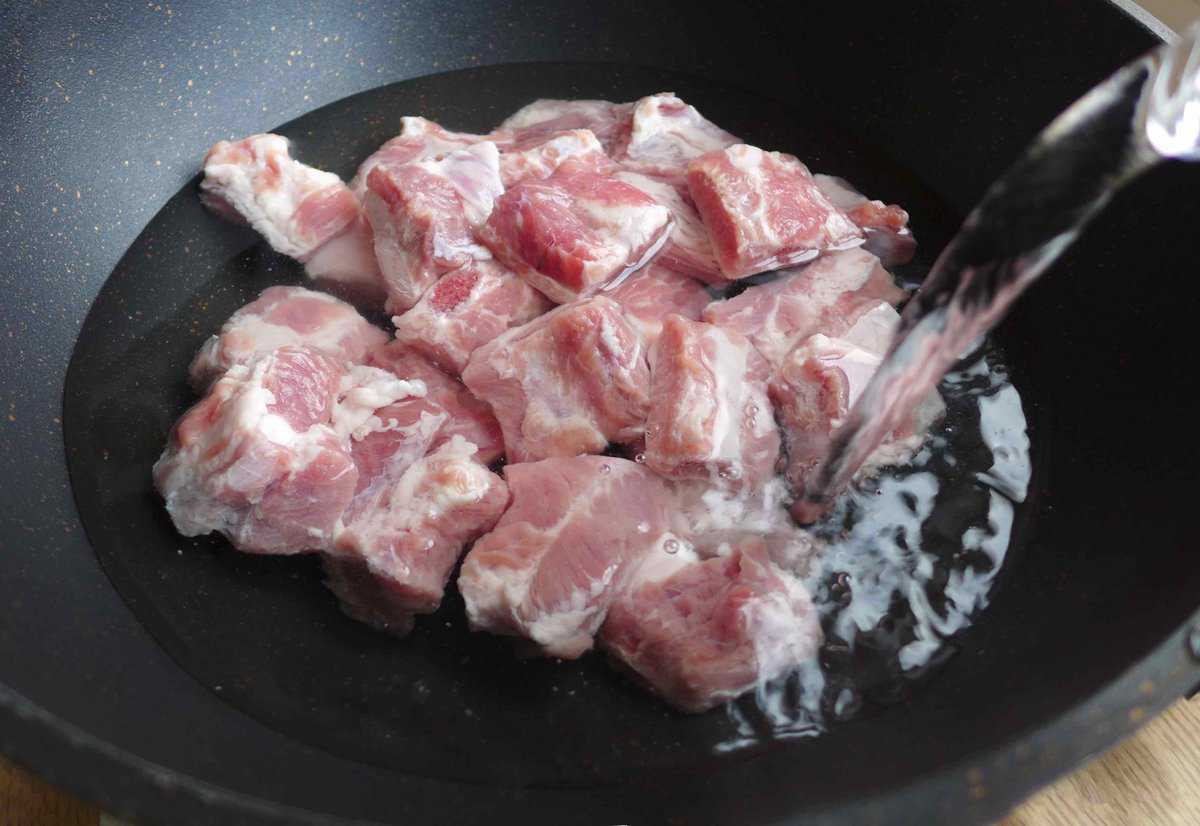
Step 1: Blanch the ribs
Blanching meat before braising is a common practice in Chinese cooking. It’s to remove excess blood and impurities from the meat and to reduce its gamey taste.
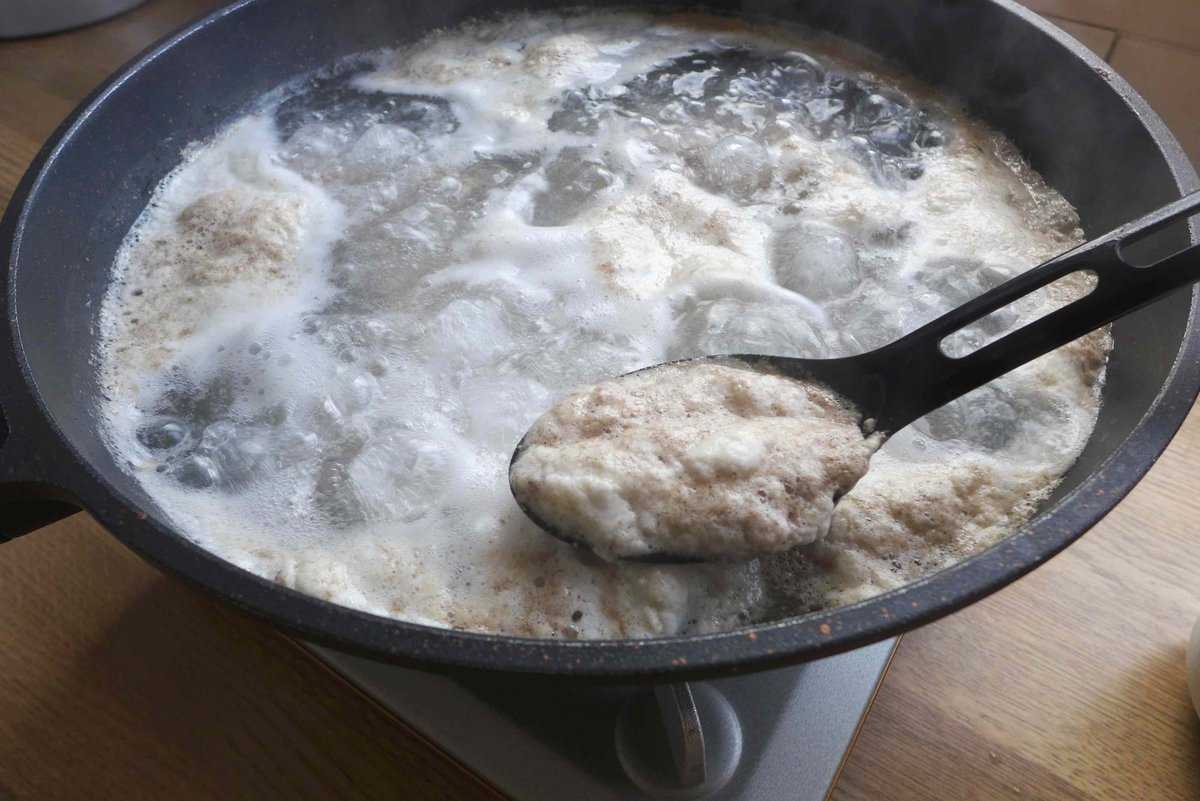
Put pork ribs into large cookware. Add plenty of tap water to fully immerse all the ribs. Turn on the heat to bring the water to a gentle boil (uncovered). Leave to simmer for about 3 minutes. During this process, you’ll see greyish foam accumulating on the surface. Use a spoon to frequently skim it off. Drain the ribs in a colander.
🛎TIP: Unlike how you’d blanch vegetables, make sure you start the process with cold water instead of hot water.
Step 2: Braise the ribs
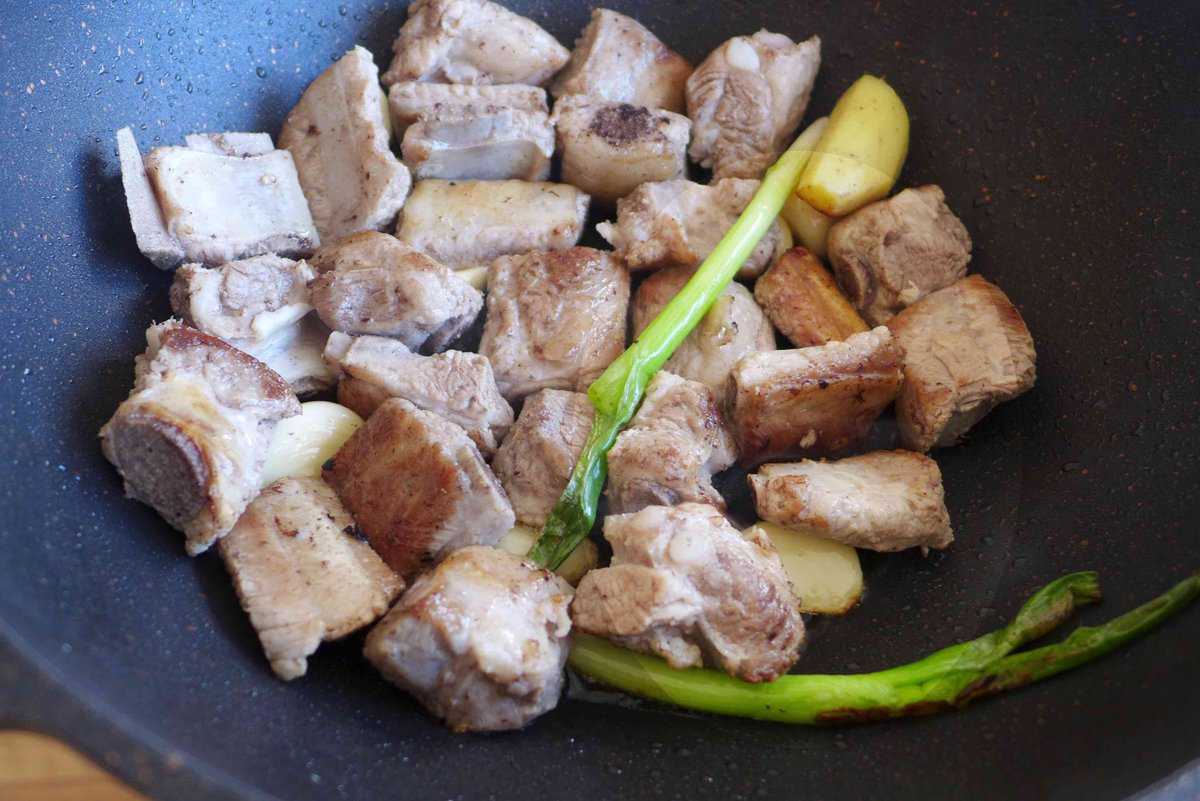
In a clean non-stick or stainless steel wok or skillet (frying pan), heat up a little oil and add the drained ribs, along with whole garlic cloves, a piece of ginger and sections of scallions. Stir fry over medium heat until the surface of the ribs becomes lightly golden.
Note: This recipe uses a large amount of vinegar and long braising time, so avoid carbon steel or cast iron cookware, as the acidity can damage the patina built upon the surface.
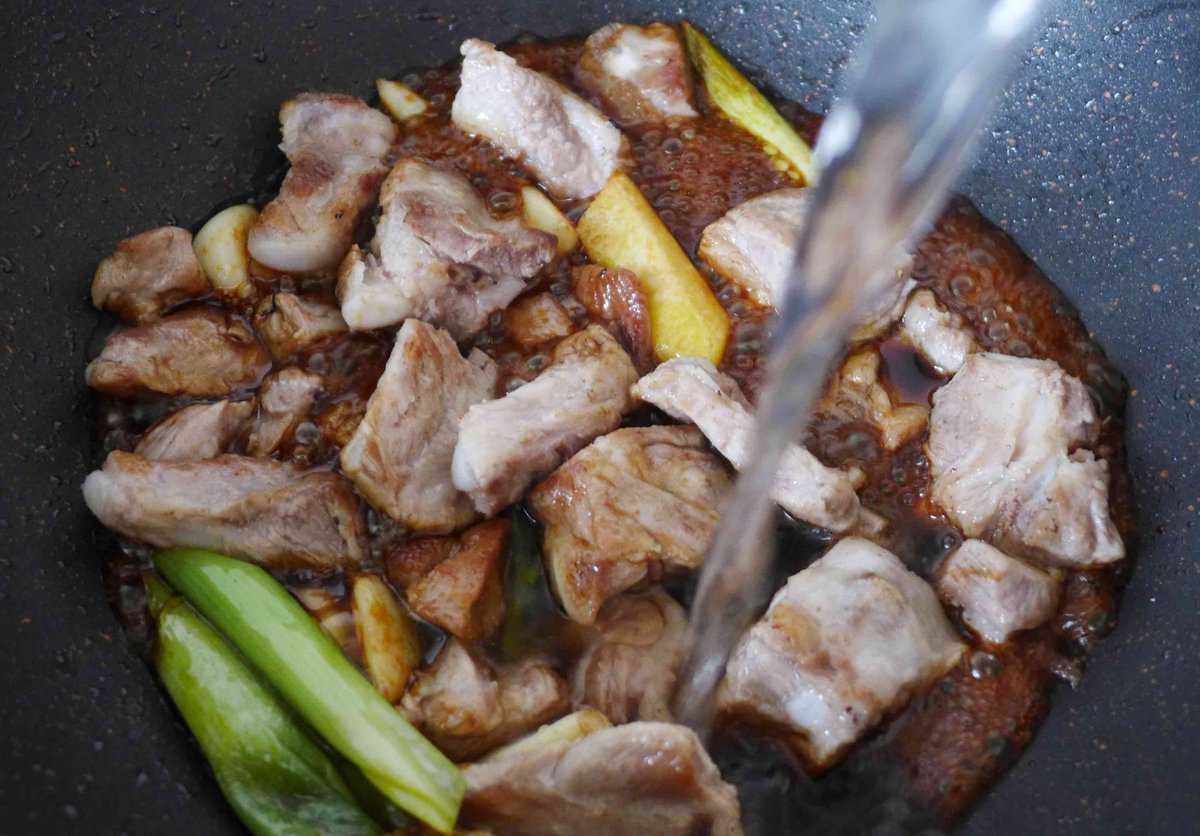
Add all the condiments, namely sugar, black rice vinegar, light soy sauce, dark soy sauce and a little salt. Then pour in hot water just enough to level with the ribs. Bring to a full boil then cover with a lid. Leave to simmer over low heat for about 50 minutes until the meat becomes tender (but not falling off the bones).
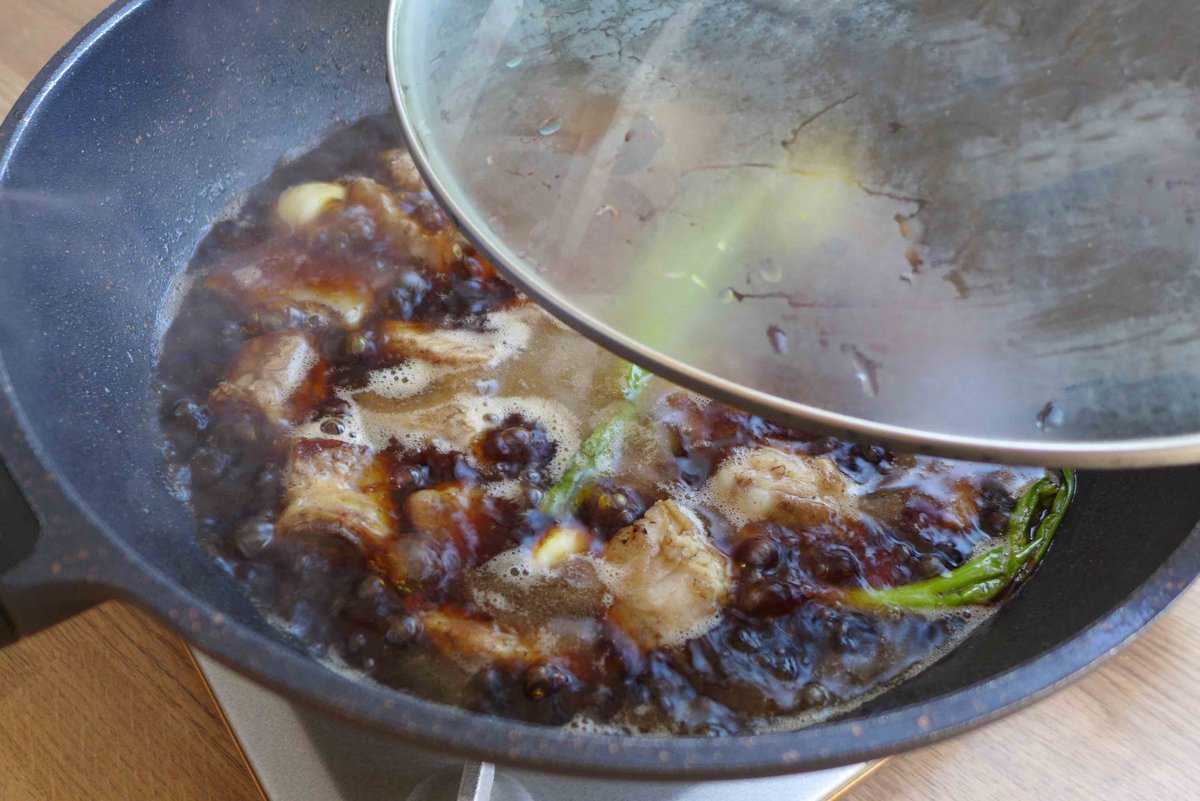
🛎TIP: If your lid isn’t tightly fitted, too much water might evaporate during this process. I suggest you check the water level halfway through and top up a little if necessary.
Step 3: Thicken the sauce
The last step involves reducing the remaining broth and turning it into a thick and sticky sauce. Remove the lid and pick out all the garlic, ginger and scallions. Turn the heat up to high and leave to boil vigorously.
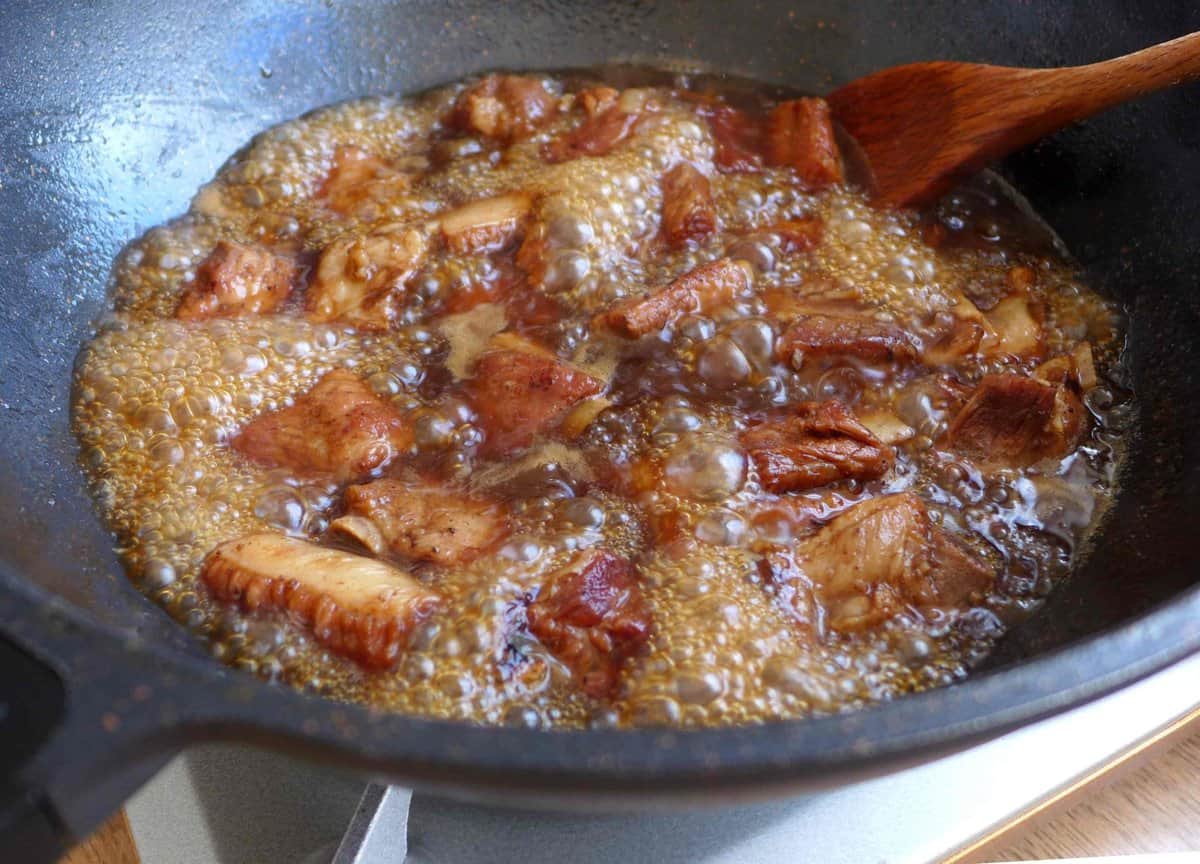
During this process, don’t forget to add a little more black rice vinegar to enhance the sourness since previously added vinegar has lost some of its tangy flavour during the prolonged simmering.
Be attentive and stir the ribs from time to time. As the liquid reduces its volume, it thickens. It’s very important that you stop cooking at the right moment. If too early, the broth isn’t sticky enough to coat the ribs. But if too late, the sugar in the liquid will be overly caramelised thus getting a burnt taste.
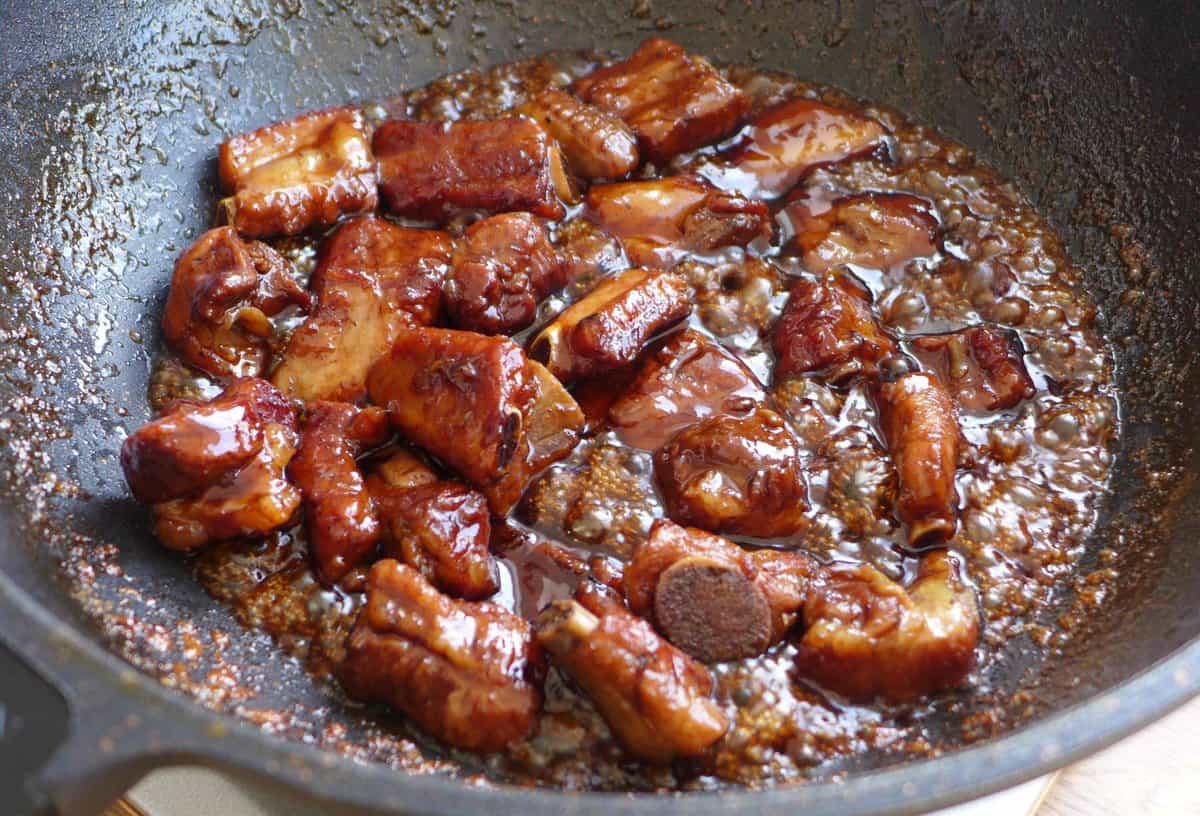
🛎TIP: Remember that the sauce will become thicker as it cools down, so you should turn off the heat a little before the sauce reaches the perfect consistency (see video below for reference). It took me about 8 minutes from the beginning of this step. But it may vary in your case as we use different heat sources and cookware.
Serve and store
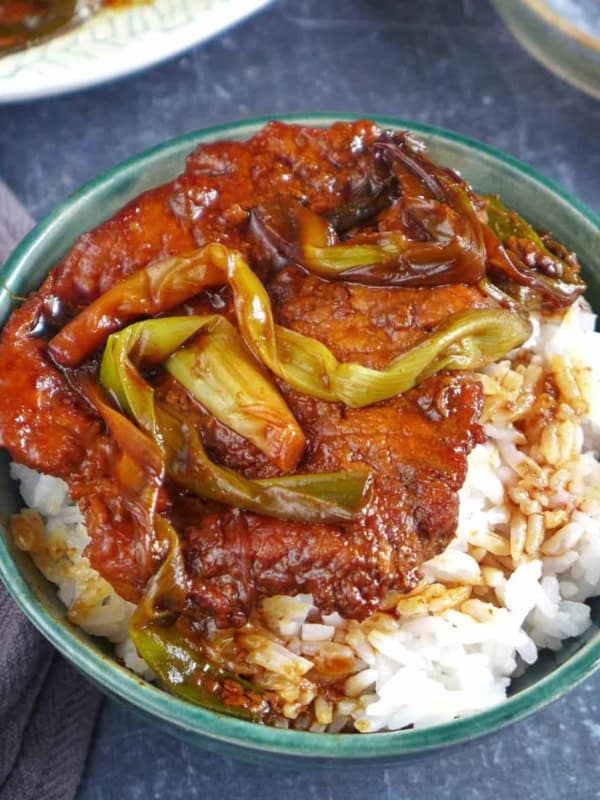
Finally, sprinkle some toasted sesame seeds and chopped scallions over the ribs to garnish. Now you’ve got a bowl of delicious, appetising sweet and sour ribs that taste just as good, if not better, as those you’d get from a restaurant!
Devour them warm over steamed rice, along with a refreshing vegetable dish, such as cucumber salad, spinach salad, stir-fried Chinese broccoli, etc. Alternatively, serve them at room temperature. They make wonderful nibbles at snack time or an appetiser at parties.
Sometimes I make a big batch and freeze some for later consumption. Simply defrost them then reheat with a little water until piping hot.
Other pork dishes
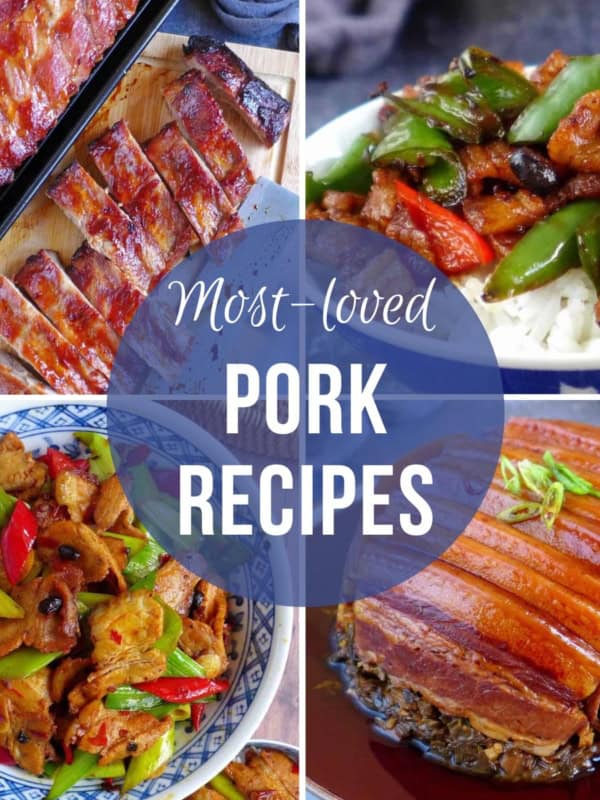
Looking for other delicious pork recipes? Check out these popular ones:


📋 Recipe card
Love this recipe? Please leave a 🌟🌟🌟🌟🌟 rating and a comment. Thank you!
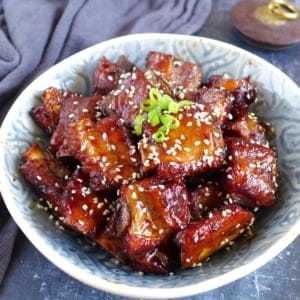
Sweet and Sour Ribs (Tang Cu Pai Gu, 糖醋排骨)

Video
Ingredients
- 700 g pork ribs, about 1½ lb, see note 1
- 1 tablespoon neutral cooking oil
- 10 cloves garlic
- 1 thumb-sized ginger
- 2 stalks scallions, cut into halves
- 5 tablespoon white sugar, or 70 g/2½ oz rock sugar
- 4 tablespoon black rice vinegar, divided
- 1 tablespoon light soy sauce
- 1 teaspoon dark soy sauce
- ⅛ teaspoon salt
- Toasted sesame seeds, for garnishing
- Scallions, finely chopped, for garnishing
Instructions
Blanch the ribs
- Put pork ribs into a large cookware. Fill it with plenty of room temperature water. Bring it to a boil then leave to simmer.
- Skim off the foam appearing on the surface with a spoon. After about 3 minutes, drain the ribs.
Braise the ribs
- Pour oil into a non-stick or stainless steel wok or skillet/frying pan (see note 2) then add the drained ribs, garlic, ginger, and scallions. Stir fry over medium heat until the ribs become a little golden on the surface.
- Add sugar, black rice vinegar (keep 1 tablespoon for later use), light soy sauce, dark soy sauce and salt. Top up with hot water enough to just level with the ribs (I used about 400ml/1¾ cups).
- Bring to a full boil then turn the heat to low. Cover and leave to simmer for about 50 minutes (see note 3).
Reduce the broth
- When the time is up, uncover and pick out all the garlic, ginger and scallions. Add the remaining 1 tablespoon of black rice vinegar. Turn the heat up to high to boil down the liquid.
- Stir from time to time. Once the liquid becomes just thick enough to coat the ribs. Remove from the heat immediately. Be attentive not to overcook as it’ll cause the sugar to burn. It took me about 8 minutes but it may vary in your case.
Garnish and serve
- Transfer the ribs to a serving bowl/plate. Sprinkle sesame seeds and scallions over to garnish.
- They may be eaten while warm or at room temperature. Serve them with plain rice and vegetable dishes.
Notes
Your Recipe Notes
Nutrition
Nutrition information is automatically calculated, so should only be used as an approximation.












Can we replace pork ribs with chicken ?
Yes, chicken wings or drumsticks would work very well. Adjust the cooking time accordingly. Happy cooking!
Has to be one of my favorite recipes. Easy and so very flavorful. Will now become one of my go to recipes and a family favorite.
So happy to hear that Vanessa!
Perfect recipie super easy and tasty. Let the water absorb at the end bugger batch takes a bit longer be patient with it
Thanks for trying out my recipe and providing a helpful advice.
My family loved these ribs
That’s great to hear!
If you want to make double the portion or triple the portion, how can this be done?
You can increase all the ingredients proportionally. The cooking time may need to be slightly longer, so check for doneness and adjust as needed. It’s also a good idea to toss or stir a few times during braising to ensure even cooking.
This looks amazing and simple enough, putting in on my to make list!!
Just a question, is there something else i can use instead of black rice vinegar and dark soy sauce? Where i live i’m not really able to buy these things, i only ever see the “regular” soy sauce which i assume is the light one. So, instead of dark soy sauce, do i use more light soy sauce or something else?
As for black rice vinegar, i only have regular white rice vinegar, and even that took a while to find… Is using that okay? And should i add something else to make up for the taste or?
Hi Irena! I understand your frustration with sourcing the desired ingredients. Yes, you can use regular soy sauce to replace the combination of light and dark soy sauces. In this case, the ribs won’t look equally brown, but the taste won’t be too far off. Regarding black rice vinegar, it’s quite different from white rice vinegar, as the latter is more acidic and less aromatic. If you wish to substitute, I suggest you use 2/3 of the recommended quantity. Also, have you tried my recipe for Sweet & Sour Fish, which uses white rice vinegar?
This is definitely one for the books! Lots of flavour, the meat was tender but you could still pick it up. Delicious! I’ll probably reduce sugar next time but that’s totally a personal preference.
So happy to know you enjoyed the dish, Greg! Yes, please feel free to alter the taste.
Easy and absolutely delious definitely be one of my regular dishes
Thanks Loretta for sharing your feedback!
Great simple recipe. Added more vinegar at the end as my family love the vinegar. Do you have the recipe for Suan cai yu?
Wonderful to hear you enjoyed the recipe. I haven’t shared a recipe for Suan Cai Yu (Fish with pickled vegetables). I’ll add it to my to-write list.
I made these for dinner last night. I didn’t have black rice vinegar, thank God for the local Chinese restaurant I went down there an he gladly gave me some. This was hands down the most delicious pork ribs I’ve ever had. An ive made a lot of Different ribs. I already ordered a bottle of black rice vinegar on Amazon will be making this recipe time an time again!
Love your story and thumbs up to your local Chinese restaurant. So happy to know you enjoyed the dish and I wish you a fun time cooking with black rice vinegar.
Loved it! Thank you!