

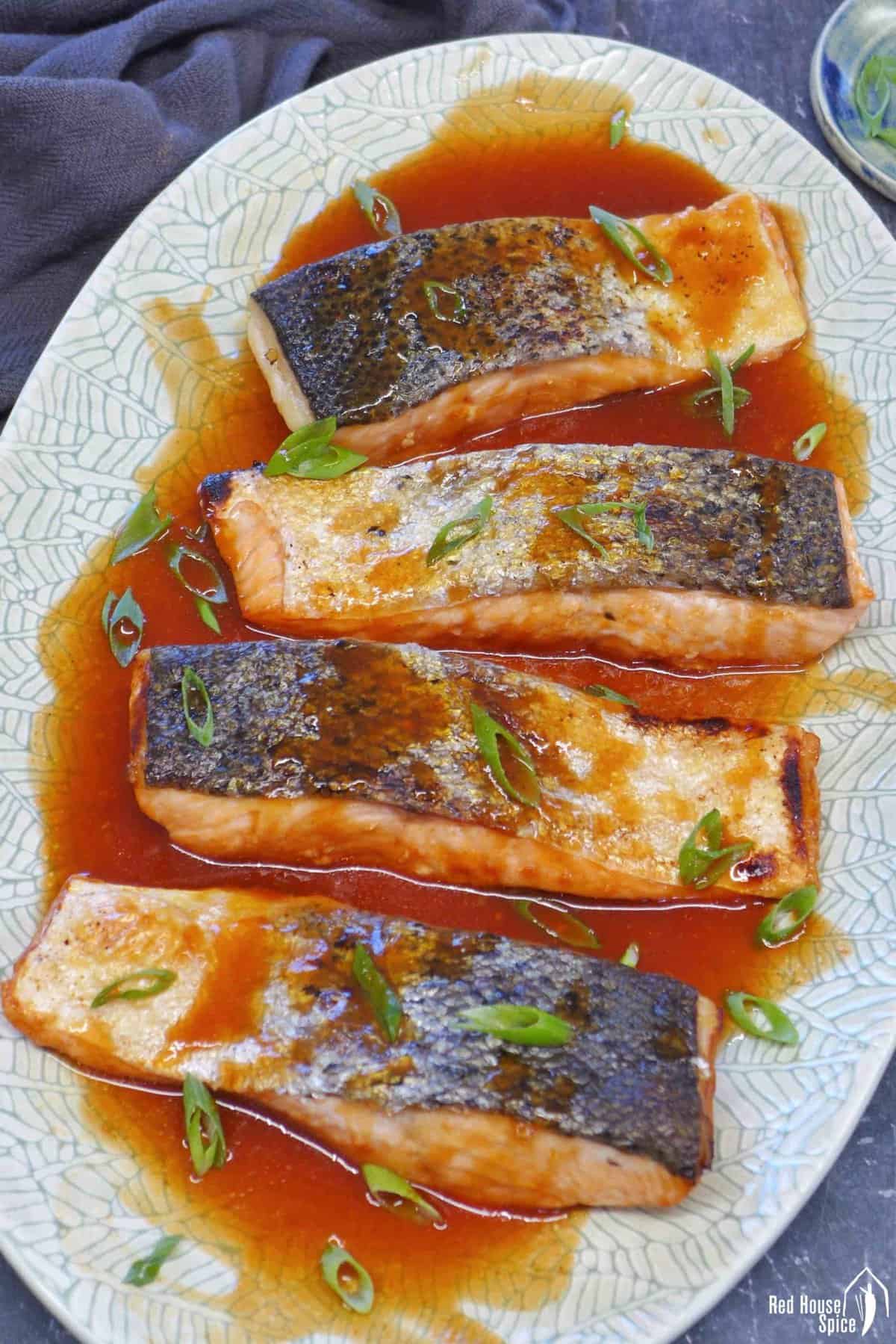
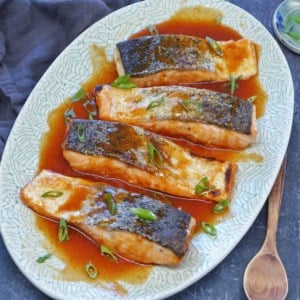
Beautifully flavored with a pleasant contrast in texture, this sweet and sour salmon recipe is perfect for both weekday meals and special feasts.
Pin this now to find it later!
Pin ItAbout sweet and sour
Table of Contents
Since my recipe for Scallion Ginger Salmon has attracted many readers, I’ve been thinking about another way to cook salmon that incorporates a Chinese element. Then, the iconic “sweet and sour” flavor combination came to mind.
While sugar lends sweetness, the sourness in sweet and sour dishes can originate from two distinct methods. For instance, I use Chinese black rice vinegar to impart a tangy flavor to my Sweet and Sour Ribs. Whereas in my recipe for Sweet and Sour Whole Fish and Sweet and Sour Meatballs a blend of rice vinegar and tomato ketchup provides the acidic kick.
Today’s sweet and sour salmon (糖醋三文鱼) recipe utilizes the latter approach, which has been proven to be a better choice through multiple testing. I love its refreshing tanginess and vibrant color, which adds extra appeal.
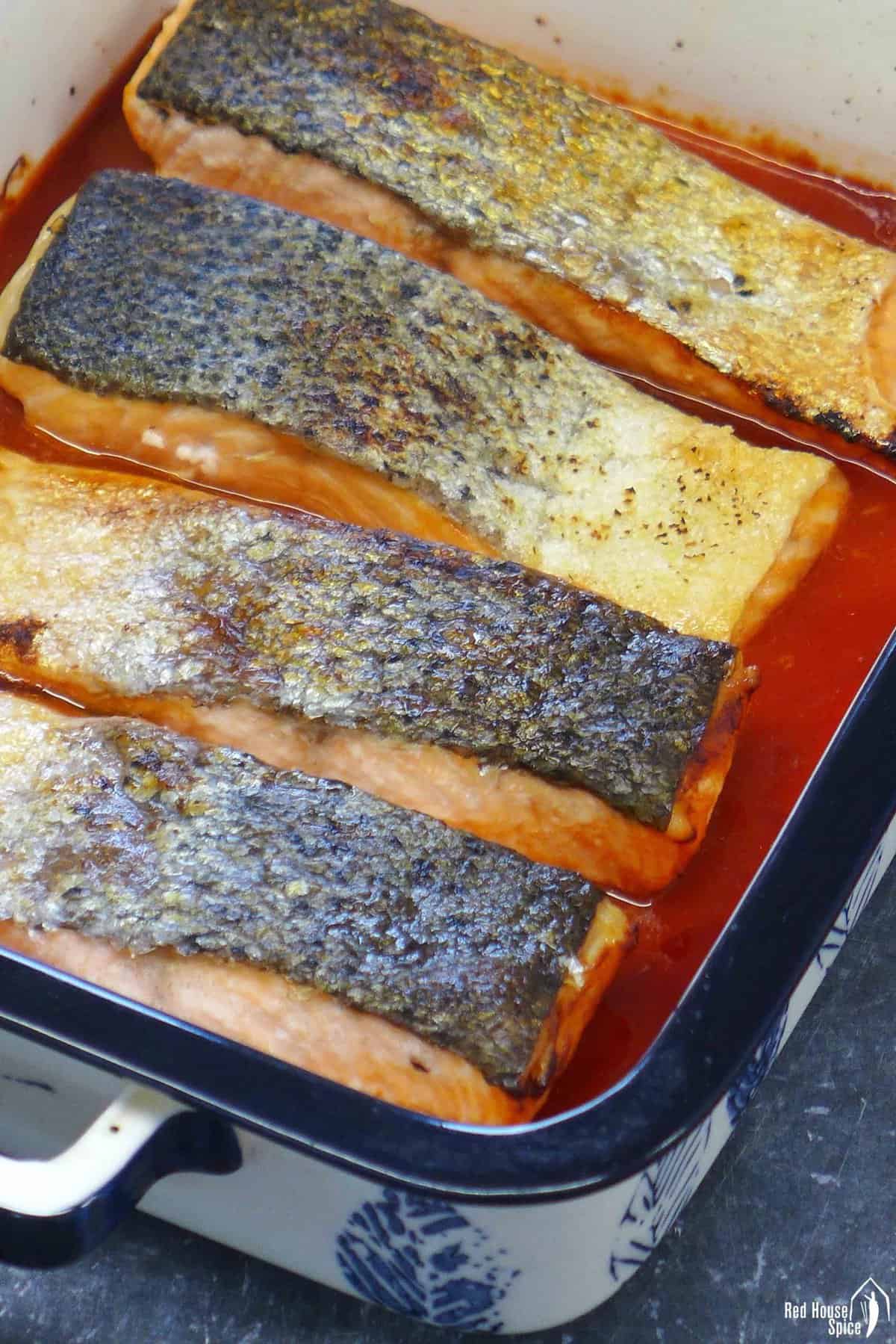
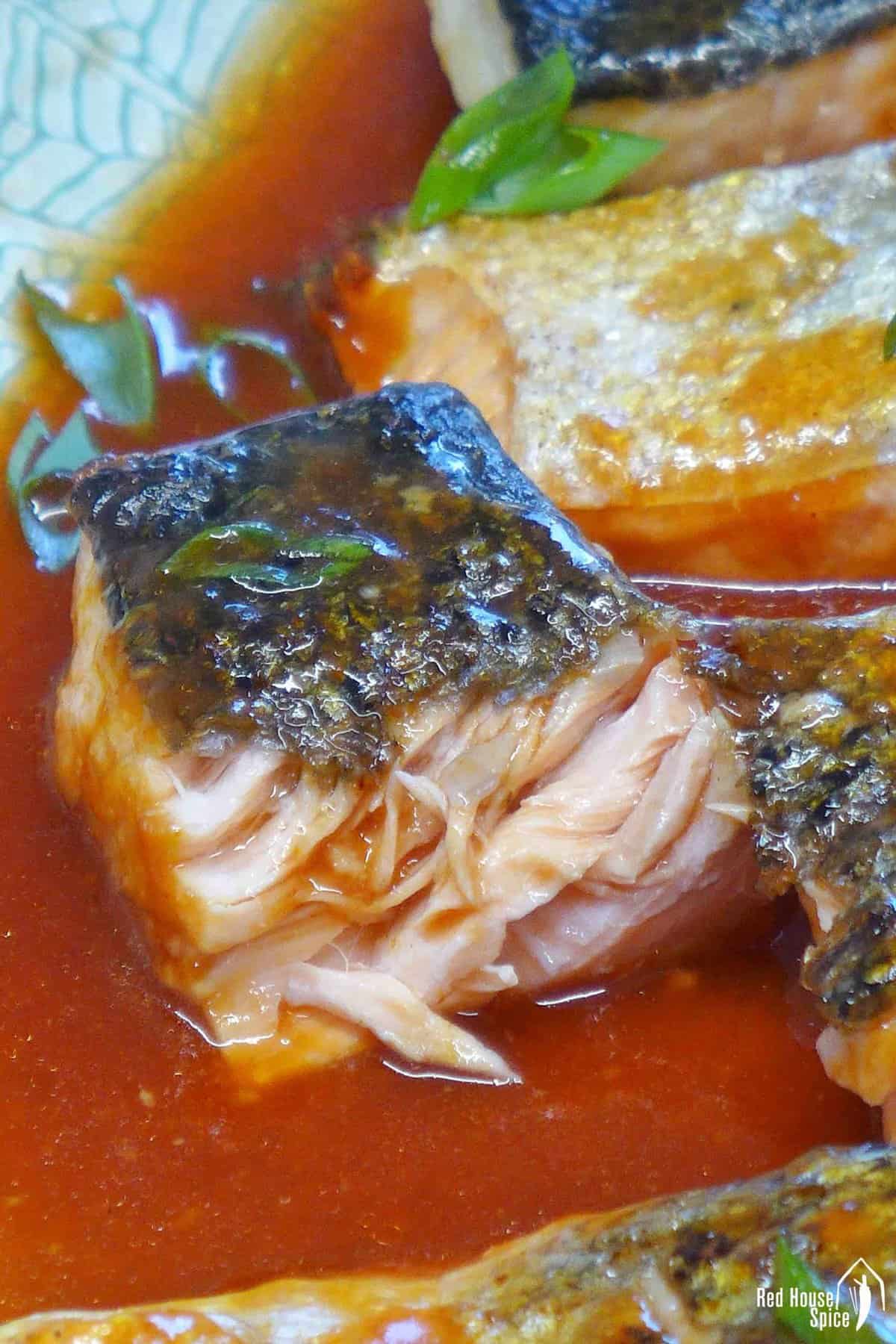
The cooking is simple: just lay salmon filets over the sauce mixture and bake them in the oven for 10 minutes. Voilà! Additionally, this recipe features a delightful bonus: the salmon skin bakes to a perfect crisp, creating a satisfying contrast to the succulent flesh.
Top Tips
To ensure the best result, here are some top tips to bear in mind:
- Marinate the salmon briefly for a better taste
- Oil and salt the skin for optimal crispiness
- Use the correct oven setting
- Adjust the cooking time based on the size of the filets
Ingredients & substitutes
Here is a short list of ingredients for making sweet and sour salmon:
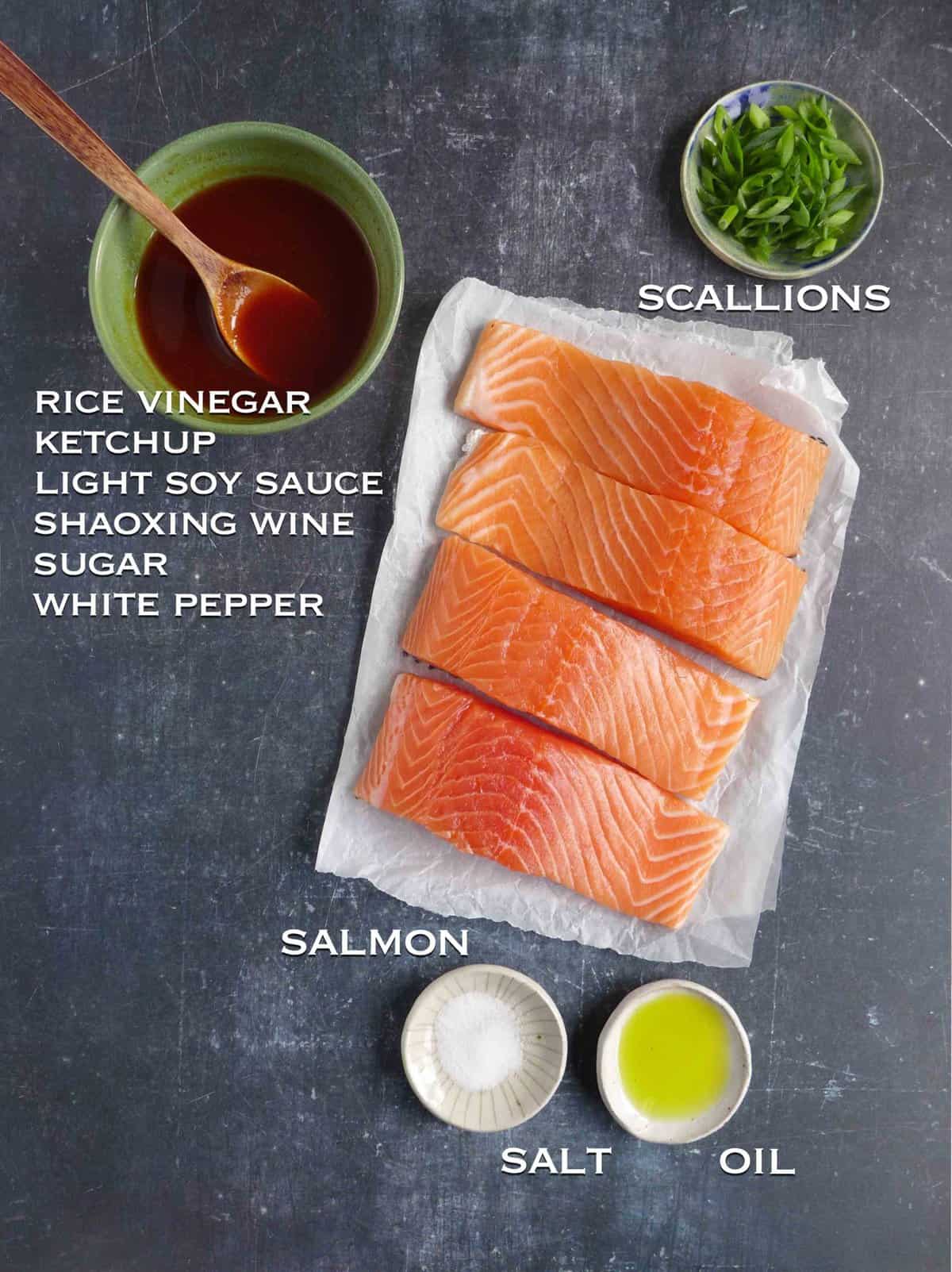
- Salmon. I used filets for shooting this recipe. You may also use a large piece of salmon and cut it up to share after cooking.
- The sweet & sour sauce. It consists of white rice vinegar, tomato ketchup, light soy sauce, Shaoxing rice wine, sugar, and white pepper (see substitutes below).
- Oil and salt. They’re for coating the skin and making it extra crispy.
- Scallions, for garnishing
Substitutions:
- White rice vinegar (Chinese or Japanese version) can be replaced by cider vinegar.
- To make the dish alcohol-free, substitute Shaoxing rice wine with dry sherry or white wine.
Cooking procedure
Step 1: Mix the sauce

Add white rice vinegar, tomato ketchup, light soy sauce, Shaoxing rice wine, sugar, and white pepper to a microwave-safe bowl. Mix then heat in the microwave for 20 seconds to fully dissolve the sugar. Pour the sauce into a roasting pan or oven dish.
Step 2: Marinate the salmon
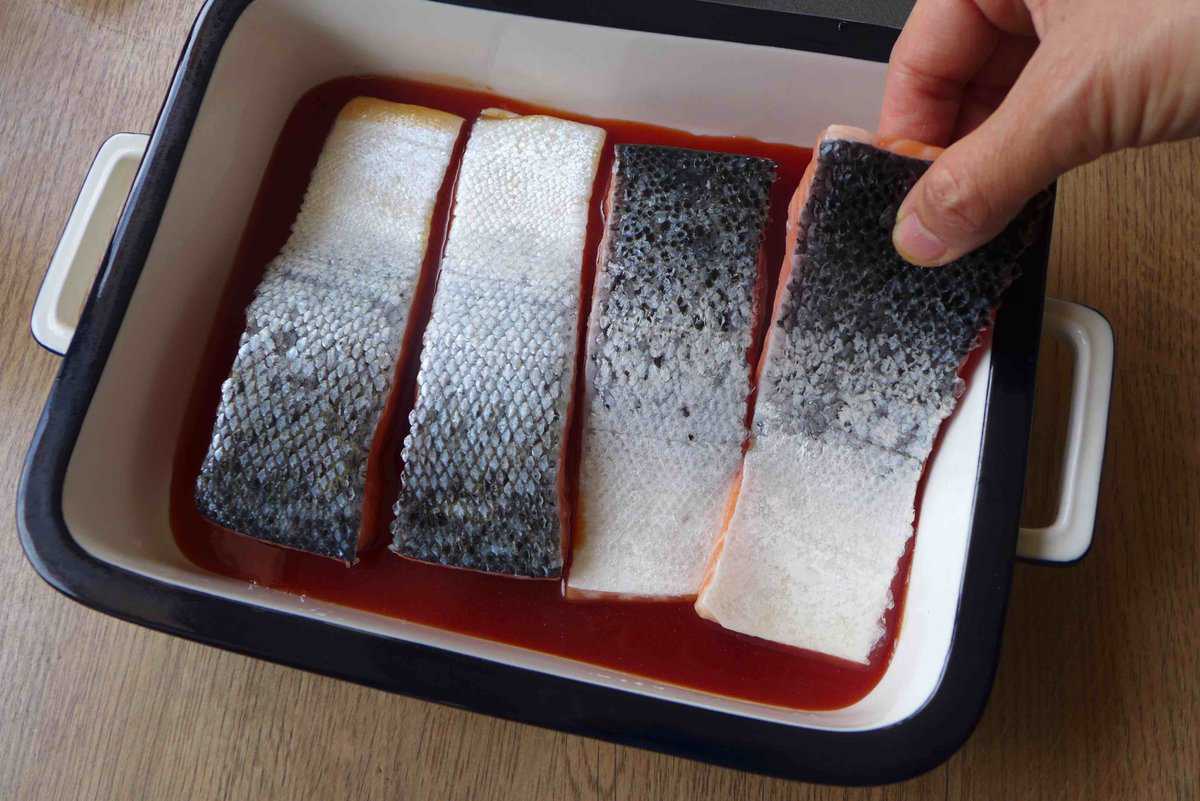
Use a paper towel to pat dry the surface of the salmon filets. Place them over the sweet and sour sauce with the skin side facing upwards. Leave to marinate for about 10 minutes.
Step 3: Preheat the oven
In order to achieve the crispiness of the skin, you need to place the salmon about 4 in/10cm below the top element. So before preheating the oven, make sure you move the rack to the correct position.
Set the oven to the fan broil (fan grill) mode and preheat it to 425°F/220°C. The symbol for this setting includes a zigzag at the top and a fan symbol below.
Step 4: roast the dish
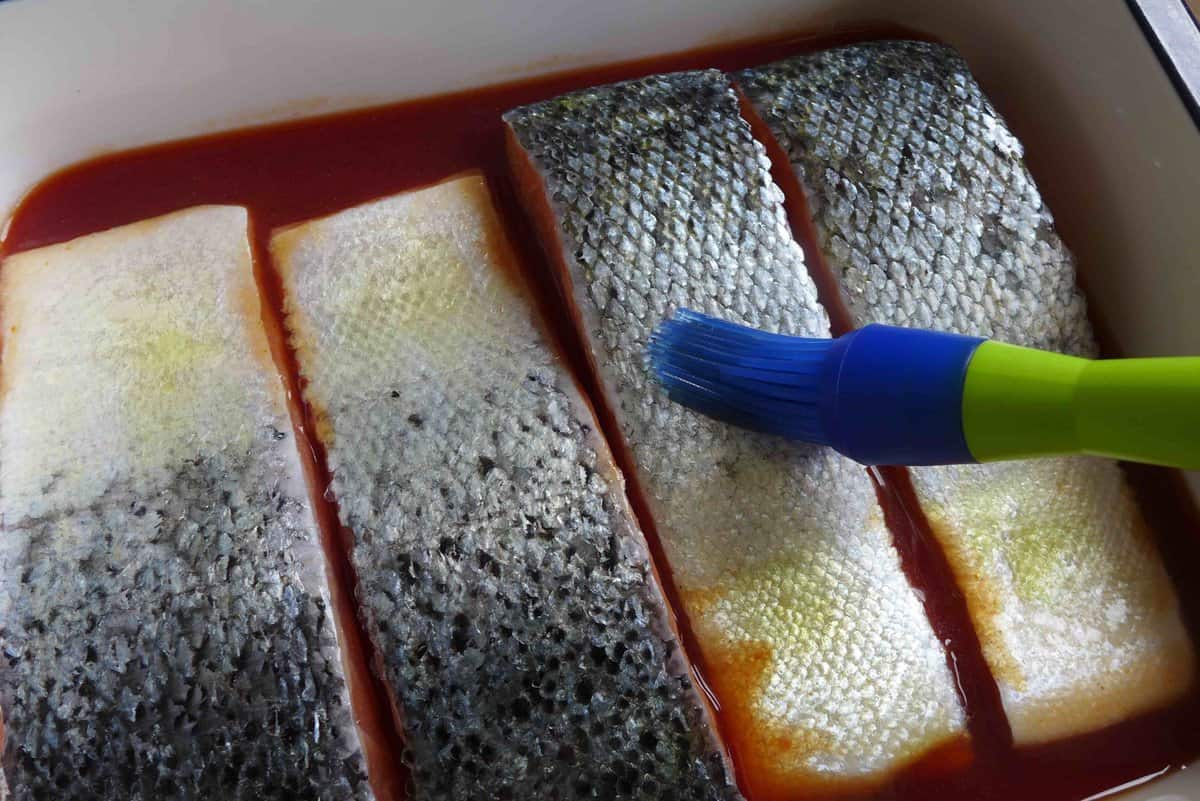
Before putting the salmon into the oven, brush a thin layer of oil on the skin and sprinkle a light dust of fine salt. Salt helps to draw out moisture, aiding in the crisping process. However, use it sparingly to avoid making the dish overly salty.
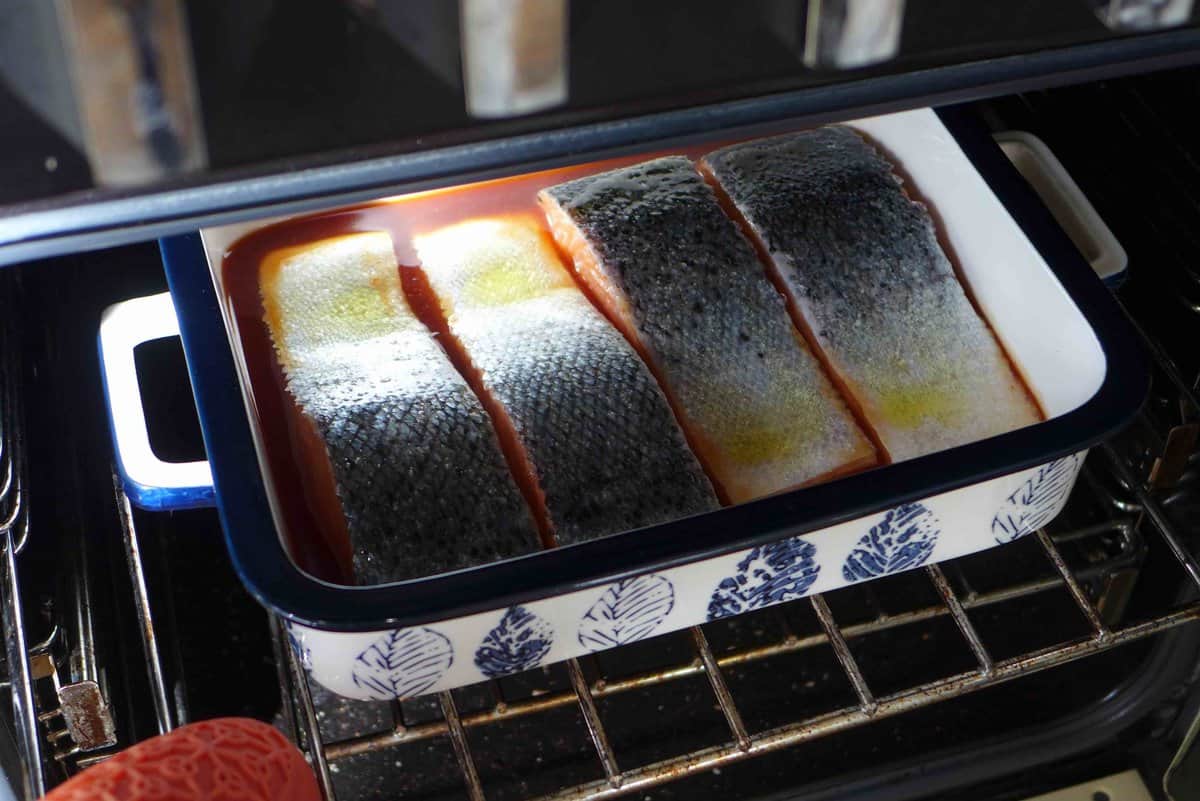
Cook the salmon in the oven for about 10 minutes. The exact time required may vary depending on the size of your filets and the performance of your oven. Pay close attention and begin checking at 8 minutes. Then add a couple of minutes at a time until it’s done.
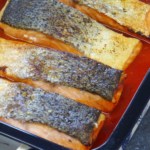
The perfectly cooked salmon should have lightly golden, crispy skin and flaky, moist flesh. If you own a meat thermometer, insert it into the thickest part of the salmon. The internal temperature should read above 145°F/63°C.
Serving suggestions
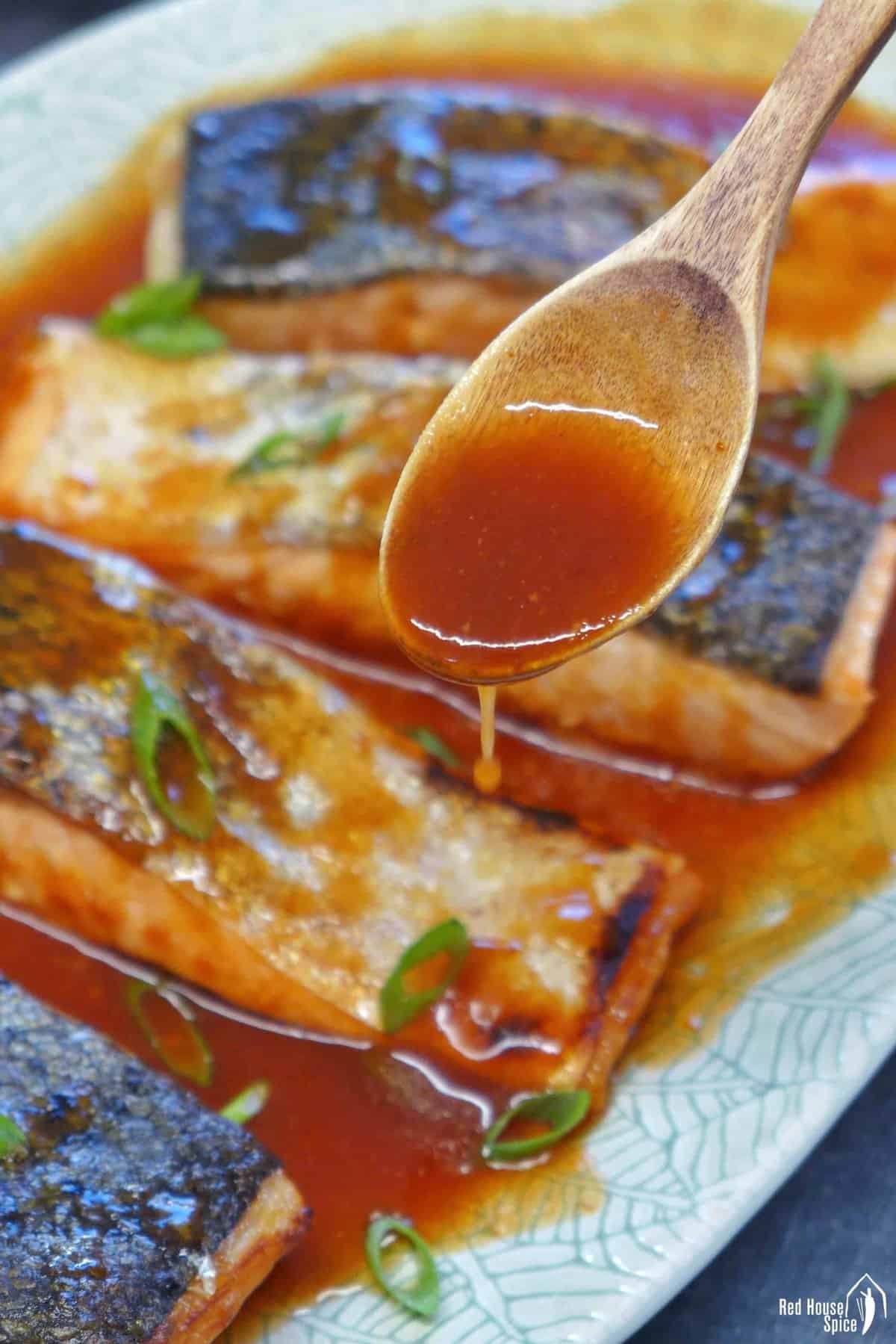
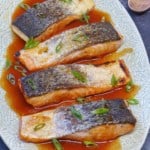
Use a spatula to transfer the filets onto serving plates, then drizzle the sticky sauce all over. Garnish with chopped scallions. Pair it with any vegetable dishes and starches of your choice, such as Five-Spice Potatoes.
Personally, I enjoy eating sweet and sour salmon over plain steamed rice. First, I’d munch the crispy skin, then break the tender flesh into flakes, and stir the intensely-flavored sauce into the rice.
I’d also include a quick-to-make vegetable dish on the side, such as Smashed Cucumber with spicy dressing, Garlic Bok Choy Stir-fry, or Steamed Enoki Mushrooms, to complement the meal.
Other fish & seafood dishes
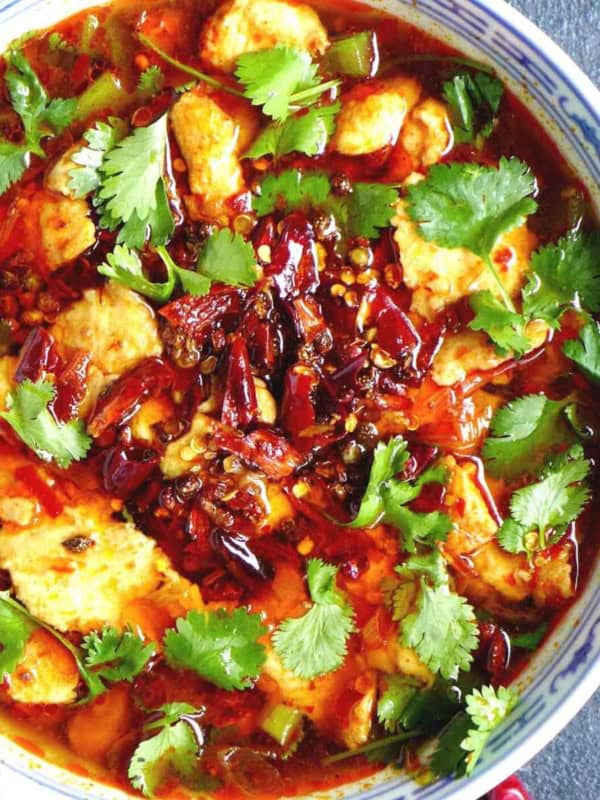
Looking for more recipes using fish and seafood? Check out these popular classics:



📋 Recipe card
Love this recipe? Please leave a 🌟🌟🌟🌟🌟 rating and a comment. Thank you!
Sweet and Sour Salmon

Video
Ingredients
- 4 piece salmon filets
For the sauce
- 3 tablespoon white rice vinegar, see note 1
- 3 tablespoon tomato ketchup
- 1 tablespoon light soy sauce
- 1 tablespoon Shaoxing rice wine, see note 2
- 1½ tablespoon white sugar
- ¼ teaspoon ground white pepper
For the skin
- 1 teaspoon olive oil
- 1 pinch fine salt
For the garnish
- Scallions, finely chopped
Instructions
- Pat dry the salmon filets with kitchen paper to remove any moisture on the surface.
- In a microwave-safe bowl, mix all the ingredients for the sauce until well incorporated. Microwave for 20 seconds so that the sugar is fully dissolved.
- Pour the sauce into a roasting pan/oven dish. With the skin side facing up, lay the salmon filets over the sauce. Leave to marinate for 10 minutes or so.
- While waiting, prepare the oven by moving the rack up so that the salmon will be placed about 4 in/10 cm below the top heat element (not closer than that though). Preheat the oven to 425°F/220°C using the broil with fan setting (aka grill with fan).
- When the oven is preheated, brush a thin layer of olive oil over the skin, then sprinkle a little fine salt on top (do not overdo it).
- Put the pan/dish onto the oven rack. Leave to cook for about 10 minutes until the skin becomes crispy and the flesh is cooked (see note 3 for adjustment). Garnish with chopped scallions and serve immediately.
Notes
Your Recipe Notes
Nutrition
Nutrition information is automatically calculated, so should only be used as an approximation.












Wonderful and quick
That’s great to hear, Anita!
Wei
The scaled up version of this recipe worked a treat at the potluck lunch today! Your suggestions for how to prepare and transport were so helpful! Those who were there extolled the recipe as excellent!
That’s wonderful to hear SteveF!
Wei
As I said the other night. I like the look of this recipe!
I’ve now cooked it for two. It was superb! As I’ve said before, my ratings are based on others reactions.
I am now happy to scale it up and take as a potluck contribution this weekend
That’s wonderful to hear SteveF. Have a fun time at the potluck!
Hello Wei
This recipe sounds fantastic and I will try it out soon at home!
My reason is that I want to take it to a “potluck dinner” in a couple of weeks.
Is there a point in the recipe where I can pause things, transport it and then complete?
If you have access to an oven at the potluck dinner venue, I recommend taking the marinated salmon there and baking it on the spot. It only takes about 10 minutes.
Hello Wei.
Thank you for that advice. It makes total sense!
We will have tested the recipe before that day 🙂
Hello, I will like to try this recipe but my stove doesn’t have a fan broil (fan grill) mode. It’s just the regular broil setting. How or what temperature would you recommend for cooking this dish?
Thanks so much for wanting to try the recipe, Christine! If your oven doesn’t have a fan broil setting, just use the regular broil mode. You can increase the temperature slightly to around 450°F/230°C, or simply keep it under the broiler a bit longer. Every oven behaves a little differently, so watch closely to get that nice finish without overcooking.