

An informative guide to homemade scallion pancakes, a layered Chinese flatbread loved for its super crispy, flaky texture and oniony, aromatic taste.
Pin this now to find it later!
Pin ItTable of Contents
What are scallion pancakes
Scallion pancakes, aka green onion pancakes/spring onion pancakes, are a type of pan-fried pastry flavoured with chopped scallions, salt and spices. They are a traditional home-cooked dish in northern China and are also widely available in restaurants and street stalls nationwide.
Although referred to as pancakes in English, they are very different from Western-type pancakes. Instead of a batter, they’re made from a simple flour-water dough with a savoury filling between the layers. For me, “scallion oil flatbread” would be a better translation for its Chinese name Cong You Bing/葱油饼.
Like Shanghai scallion oil noodles and steamed scallion flower rolls, these pancakes are scallion-flavoured and oil-enriched. With a distinctively fragrant and savoury taste, they make a great staple to accompany any dishes, or an eat-alone snack at any time of the day.
Pro Tips
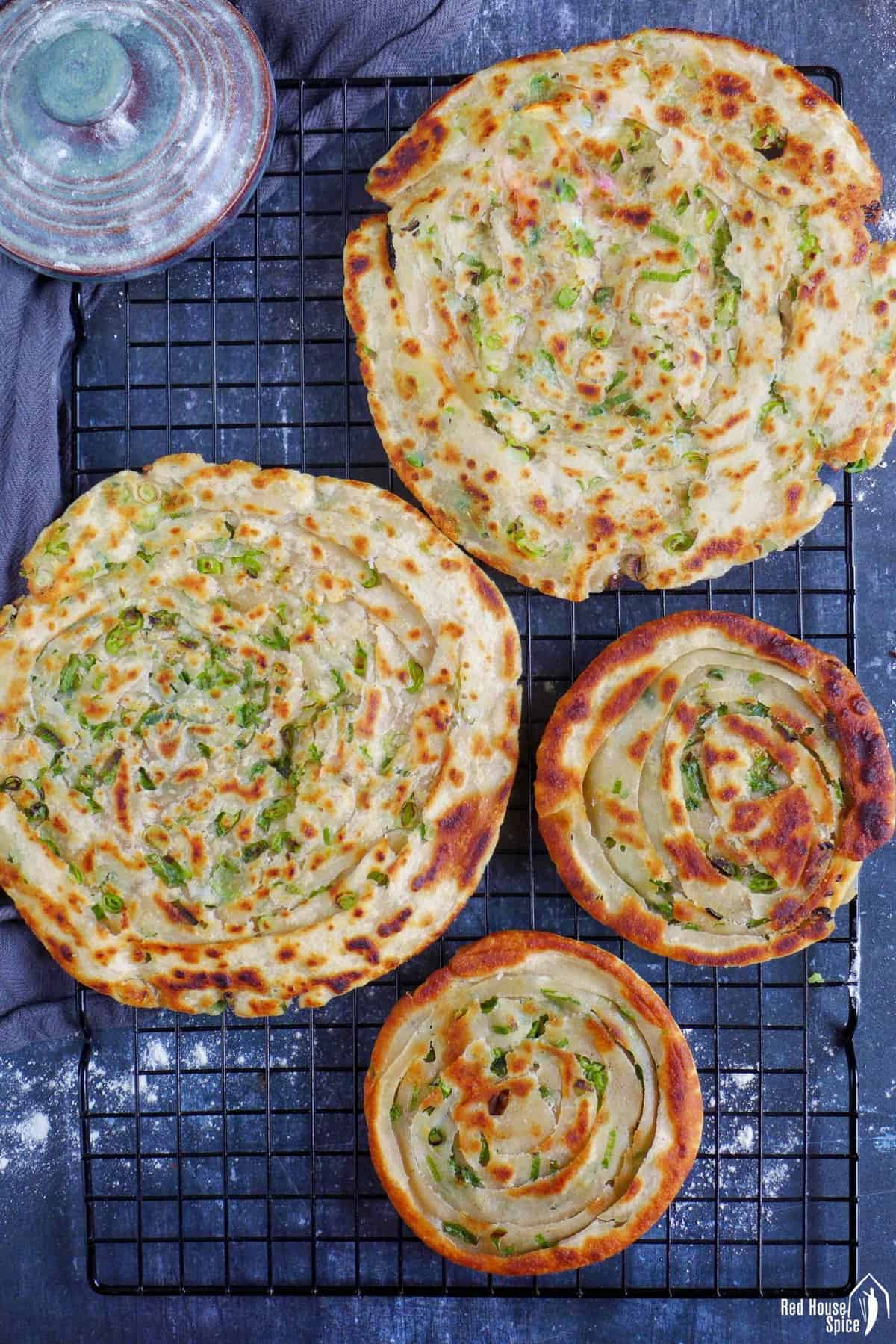
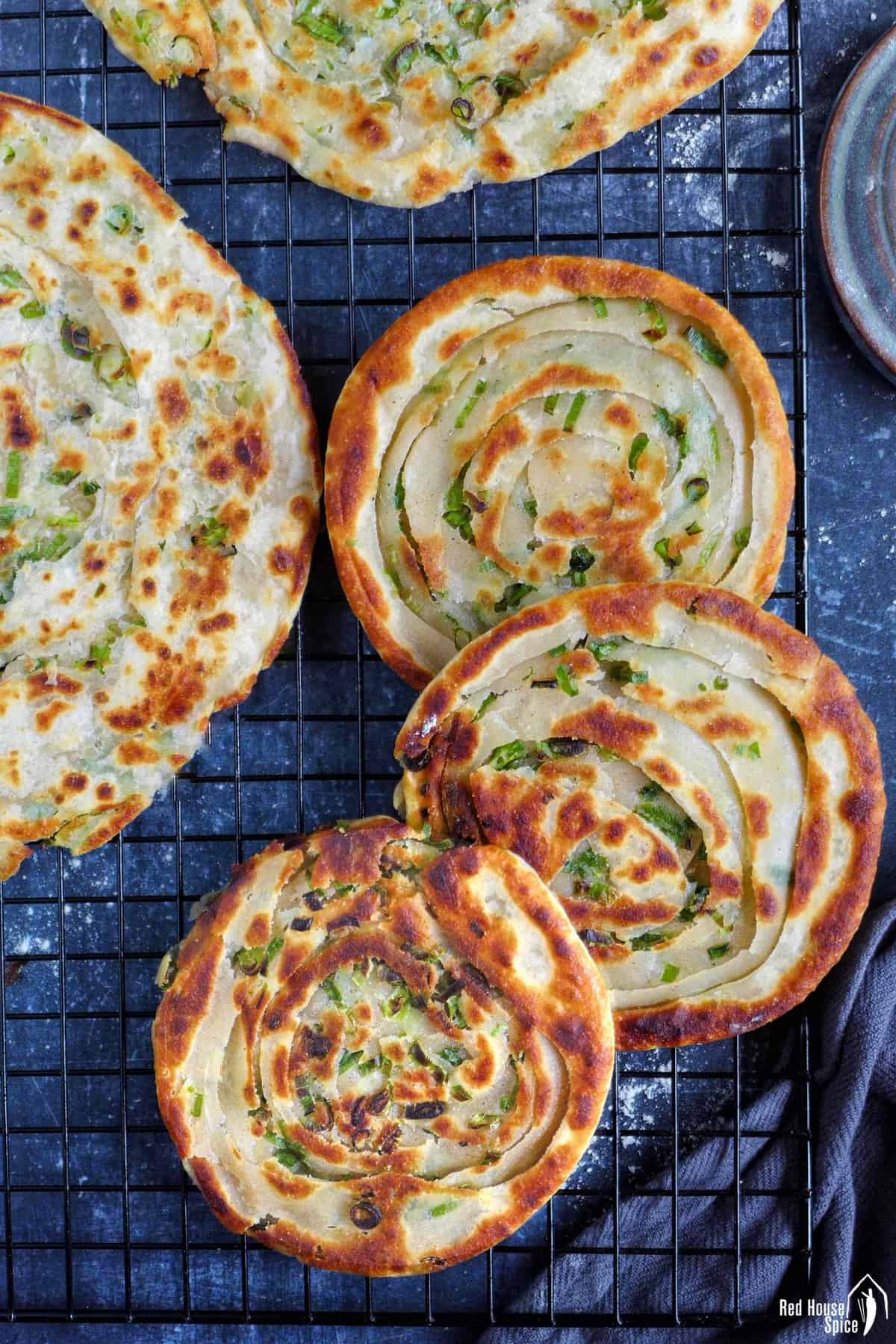
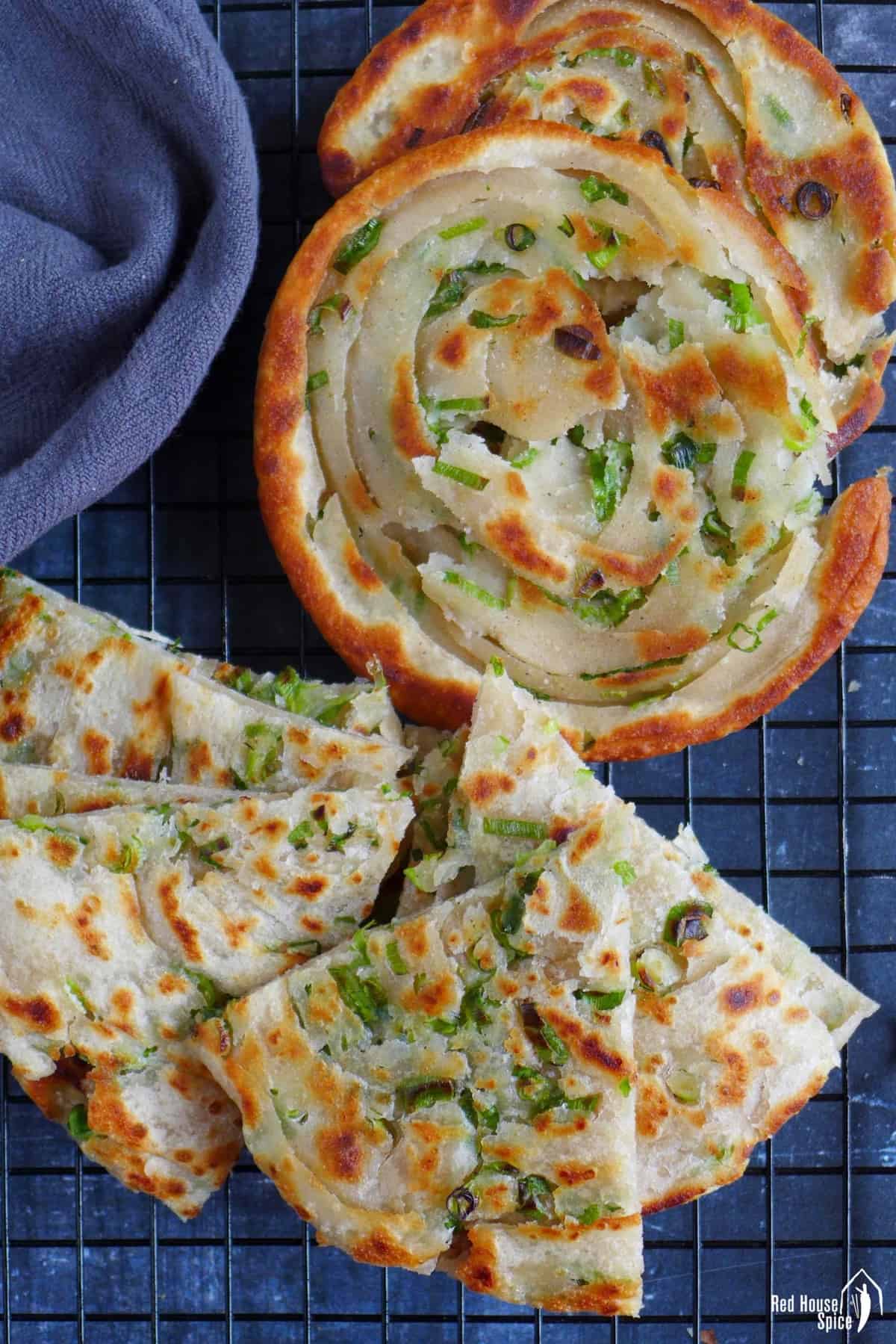
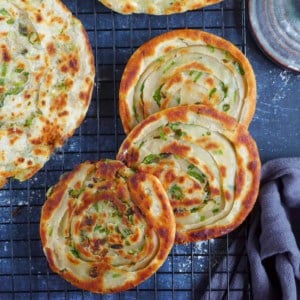
As shown in the image above, scallion pancakes can be made thin or thick. Both versions share the same features: crispy, flaky and tasty. Before explaining the recipe in detail, let me summarise a few key tips for achieving the best result.
- Make it crispy by regulating the heat properly. Start with a hot pan then cook over medium heat.
- Make it flaky by brushing a good layer of flour oil paste in between layers and rolling up loosely.
- Make it tasty by using a generous amount of fresh scallions and your favourite spice.
Make the dough
Compared to the dough for dumplings or steamed buns, the dough for scallion pancakes is simpler in all respects. So it’s totally novice-friendly.
Flour type
You can use any type of white, wheat-based flour. I list all-purpose flour in the recipe simply for its accessibility. Wholemeal flour isn’t suitable for this recipe but you can mix it with white flour. I recommend a ratio of 3:7.
Use hot water
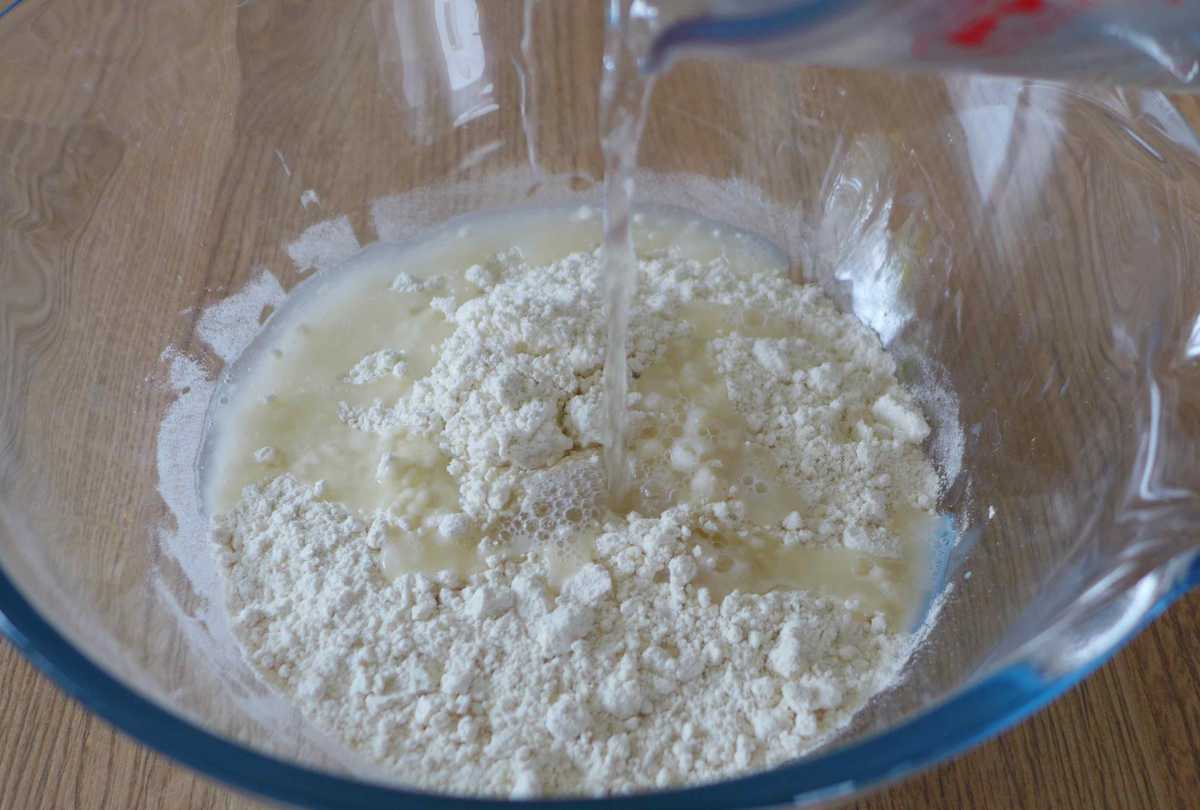
Flour and water are the only ingredients you need for the dough. Instead of room temperature water typically used in the non-yeast dough (e.g. regular dumpling dough), boiling water is added to the flour in this case.
The protein of the flour is “cooked” so the gluten network is not as tight as that of the cold water dough. This results in a more forgiving and less elastic texture thus making kneading and shaping as easy as they can be.
The ideal ratio
I recommend a flour to water ratio of around 3:2 by WEIGHT. For example, to make 4 pieces of scallion pancakes, you’d need 250g flour and 160g hot water.
I always recommend novice cooks measure with a scale to achieve the desired result. That said, if you have to use measuring cups, the above quantity could translate to 2 cups of flour and ⅔ cup of hot water.
The dough should be on the soft side but not sticky. Please feel free to adjust if necessary as the type and brand of your flour may affect the optimal ratio.
Combine and rest
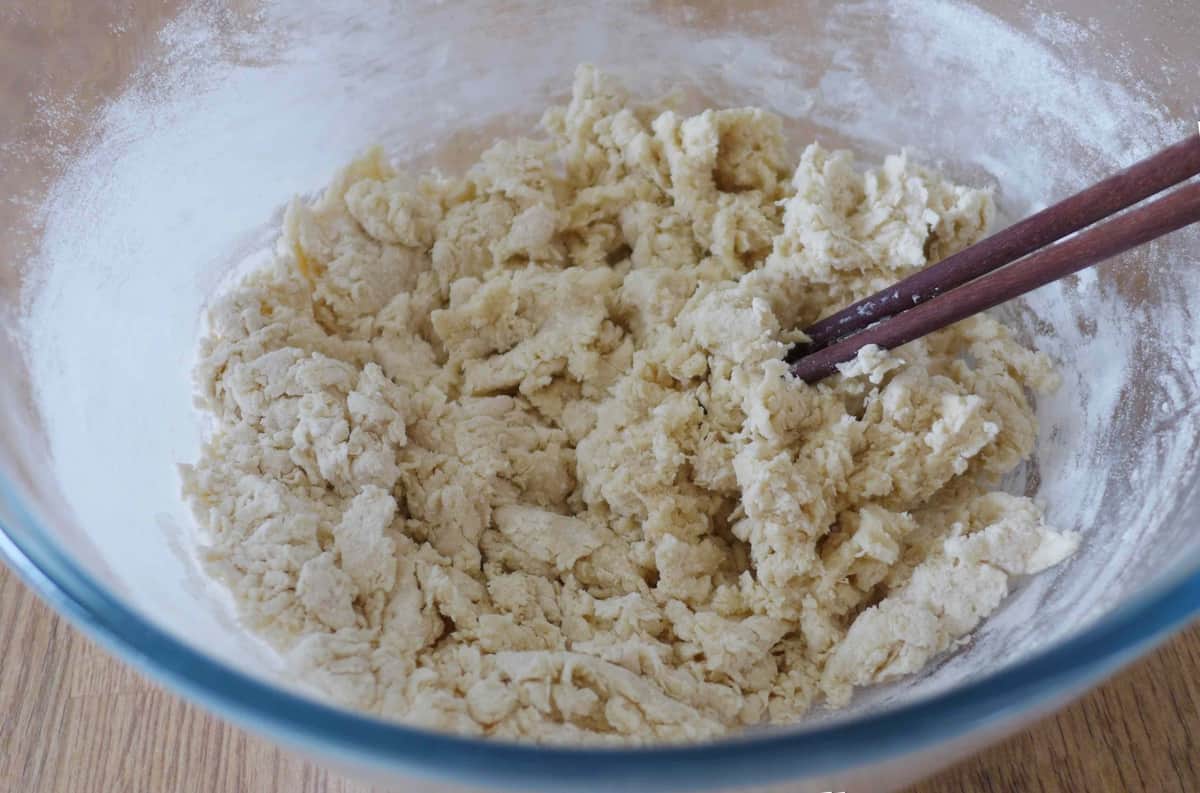
In a bowl, stir and mix flour and hot water with chopsticks until there is no more loose flour. Then combine by hand to form a rough-looking dough. At this stage, it isn’t necessary to overly knead to make it smooth.
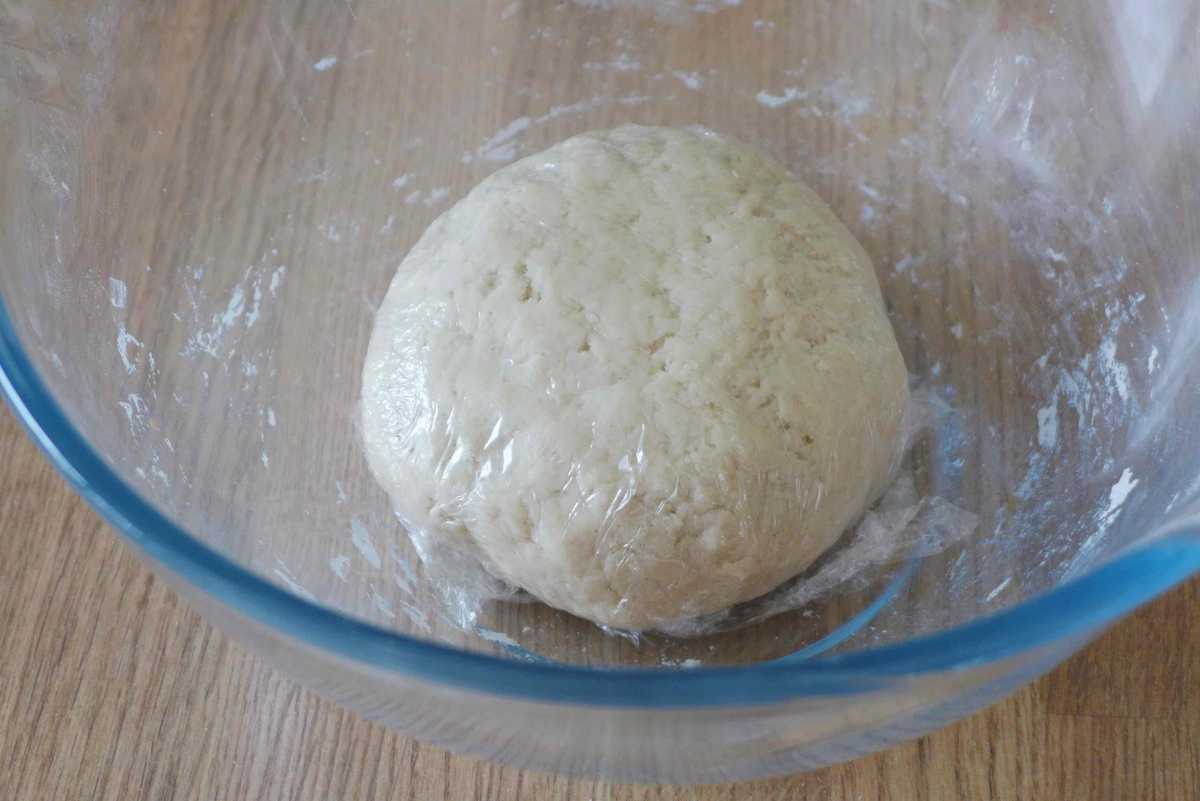
Cover the dough tightly with a piece of cling film. This is to prevent the moisture from evaporating since it’s a warm dough. Leave to rest on the counter for 15 minutes or so.
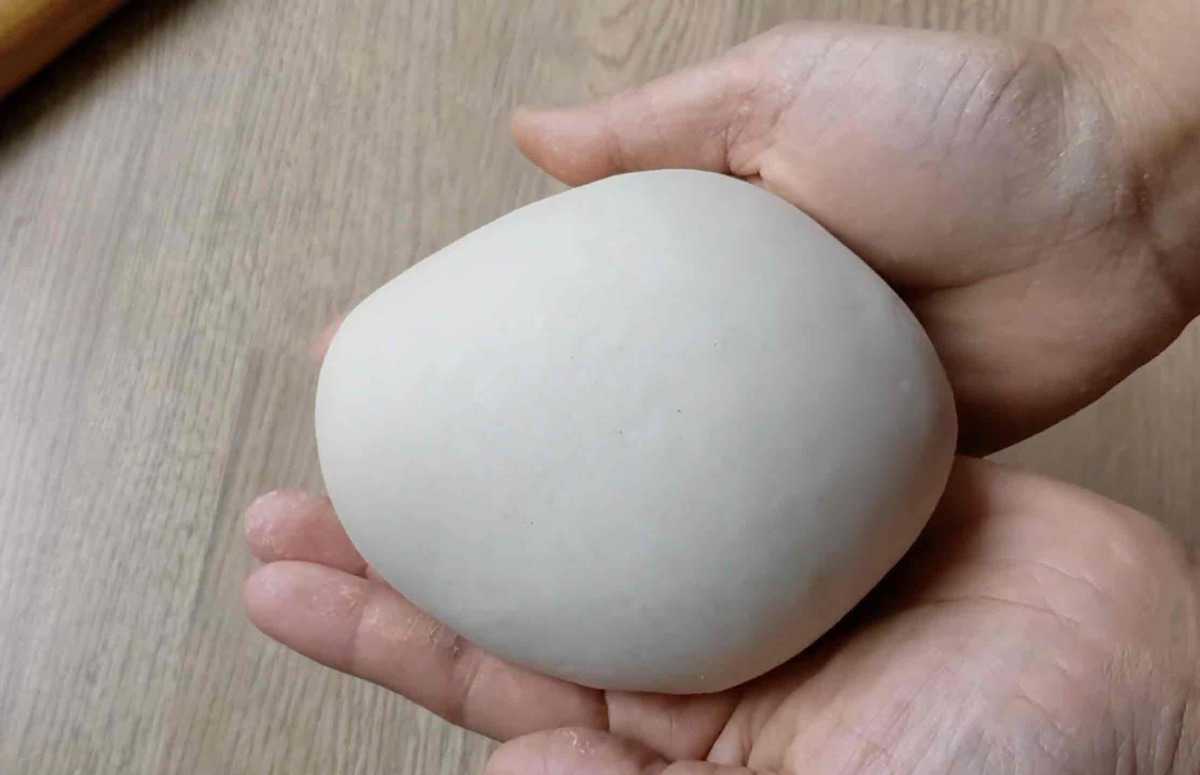
Then knead again until it becomes very smooth. Unlike working with other types of dough which require lengthy kneading, you’ll be surprised how fast this process is. It only takes 10-15 strokes to make it completely creaseless.
Prepare the filling
While waiting for the dough to rest, prepare the filling ingredients.
Scallions
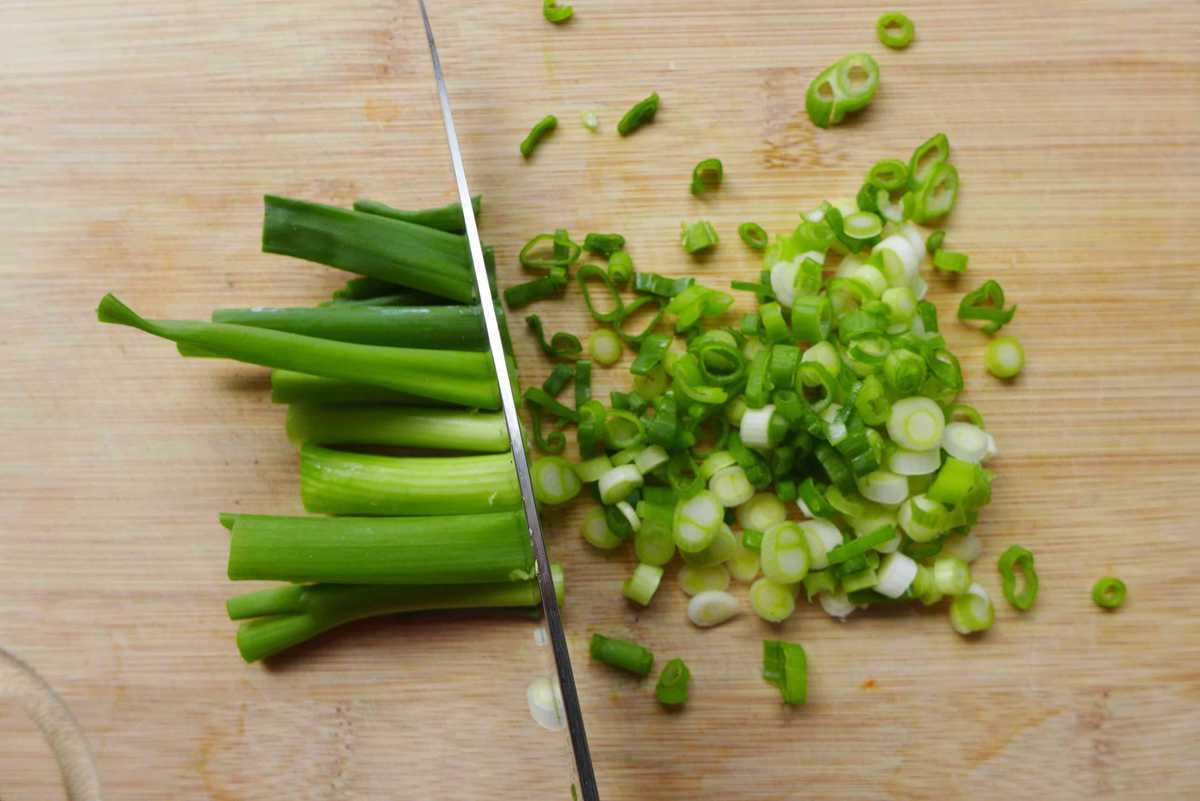
Chop scallions into fine pieces. If they’re quite thick, halve lengthwise then cut. Don’t stint on the quantity. The more the merrier. You may use both the white part and green part, or only the green saving the white for other dishes (e.g. make Chinese scallion oil).
A type of fat
Traditional scallion pancakes call for lard (rendered pork fat) for its thick consistency and flavour. Rendered chicken or duck fat would work too.
For a vegan diet, use coconut oil instead. Alternatively, use any oil available, such as peanut, canola, sunflower, olive, vegetable oil, etc. Sesame oil is an option too but I suggest you reduce the quantity as it has a very strong aroma.
Flour
It’s mixed with the lard/oil to form a paste which helps to laminate layers of the dough.
Salt & a type of spice
My family love using ground Sichuan pepper for the tingling sensation it creates on the palate. Five-spice powder, cumin powder, and ground black pepper are good choices too.
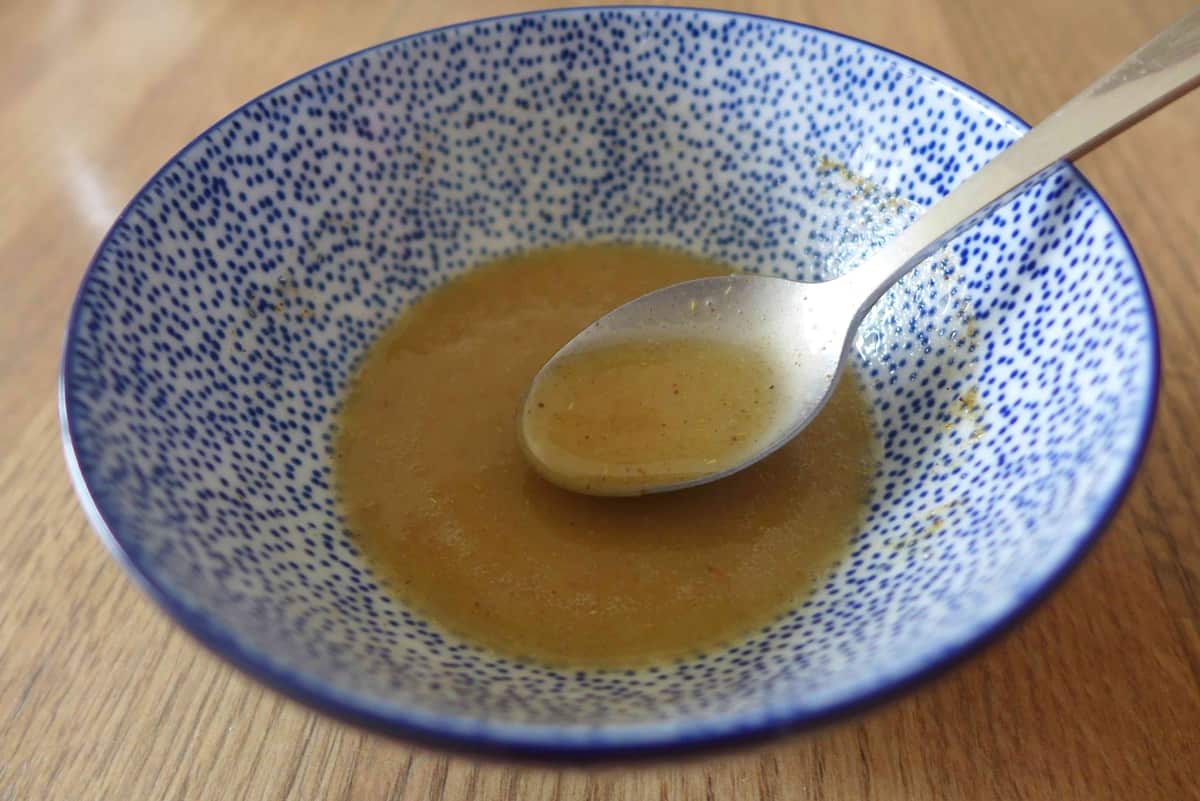
In a small bowl, combine the fat/oil, flour, salt and spice into a smooth paste. If using lard or coconut oil, melt it first then mix.
Assemble
Now it’s time to assemble the pancakes.
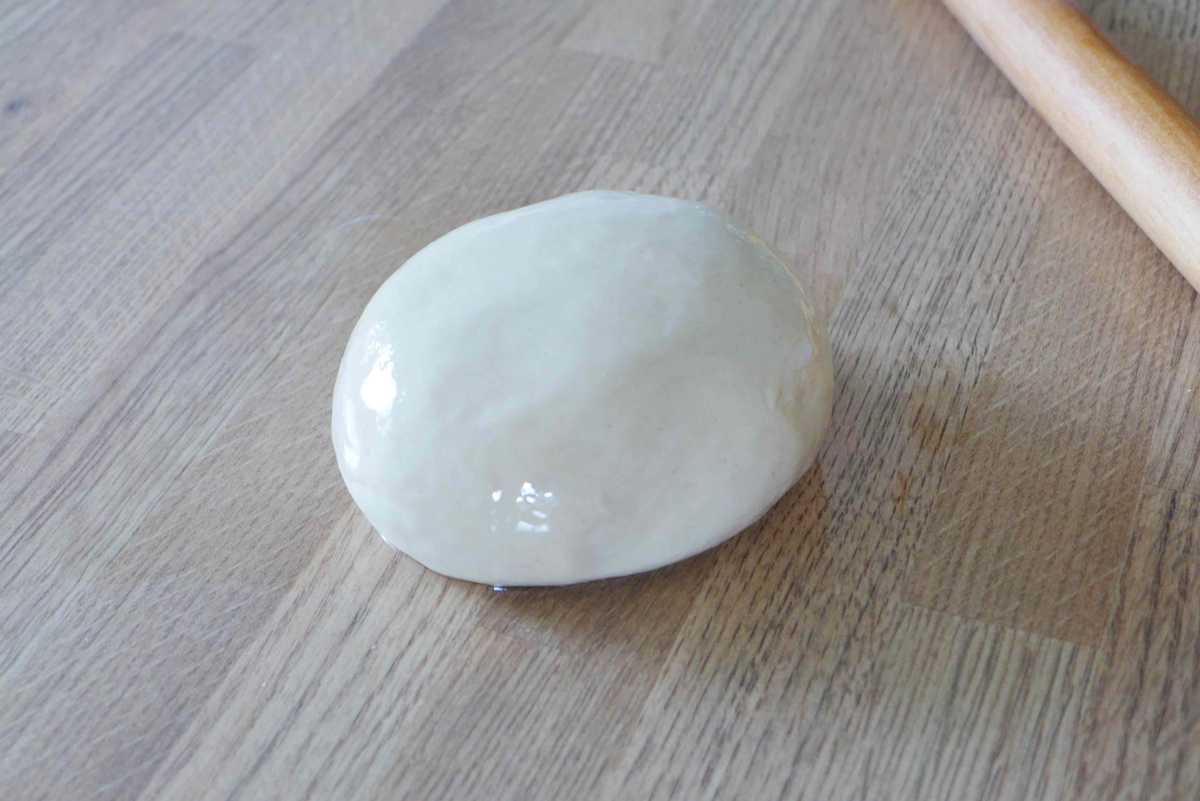
To prevent the dough from sticking, apply a thin layer of oil over the entire dough and the board/work surface you’re using (The same technique used for Crispy Stuffed Flatbread). Dusting with flour could serve the same purpose but I find it often makes the dough drier.
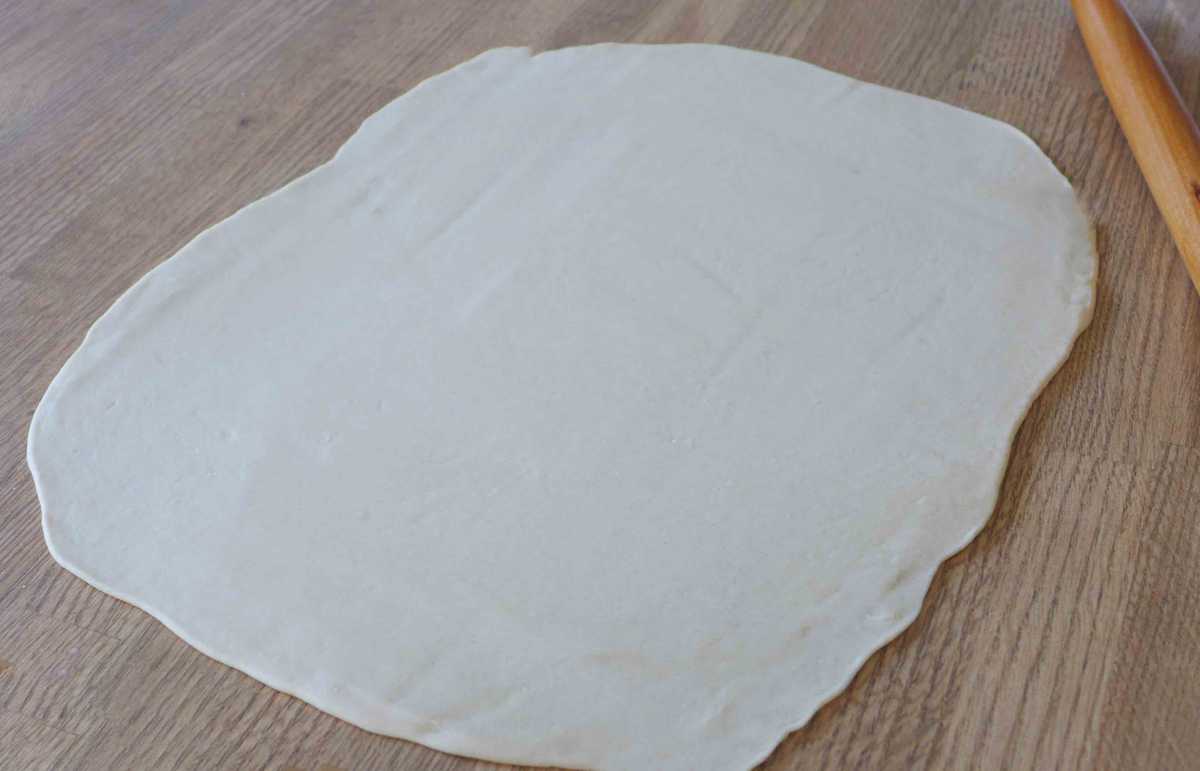
With a rolling pin (any type), press the dough, then gently push it in all directions to flatten it into a thin rectangle piece. For your reference, mine measures about 43cm(17″) by 33cm (13”).
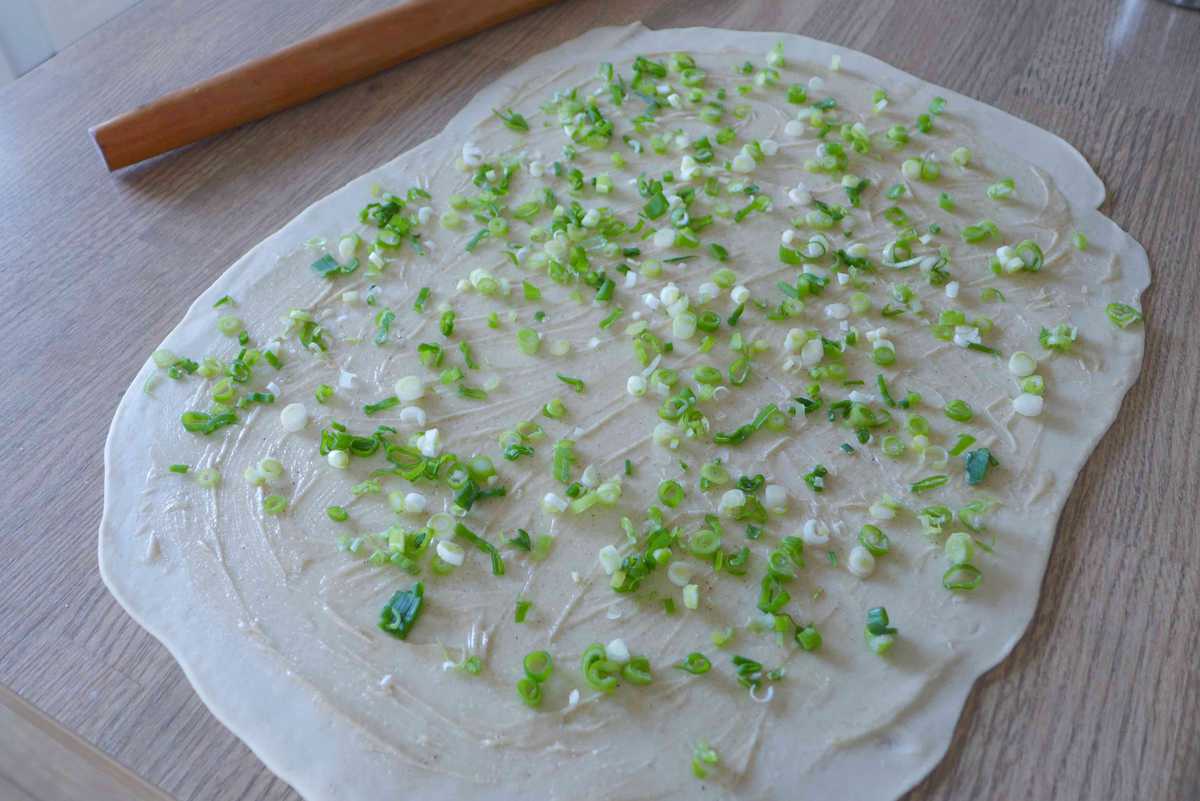
Use the back of a spoon or a brush to evenly spread the filling mixture over the dough. Sprinkle the chopped scallions on top.
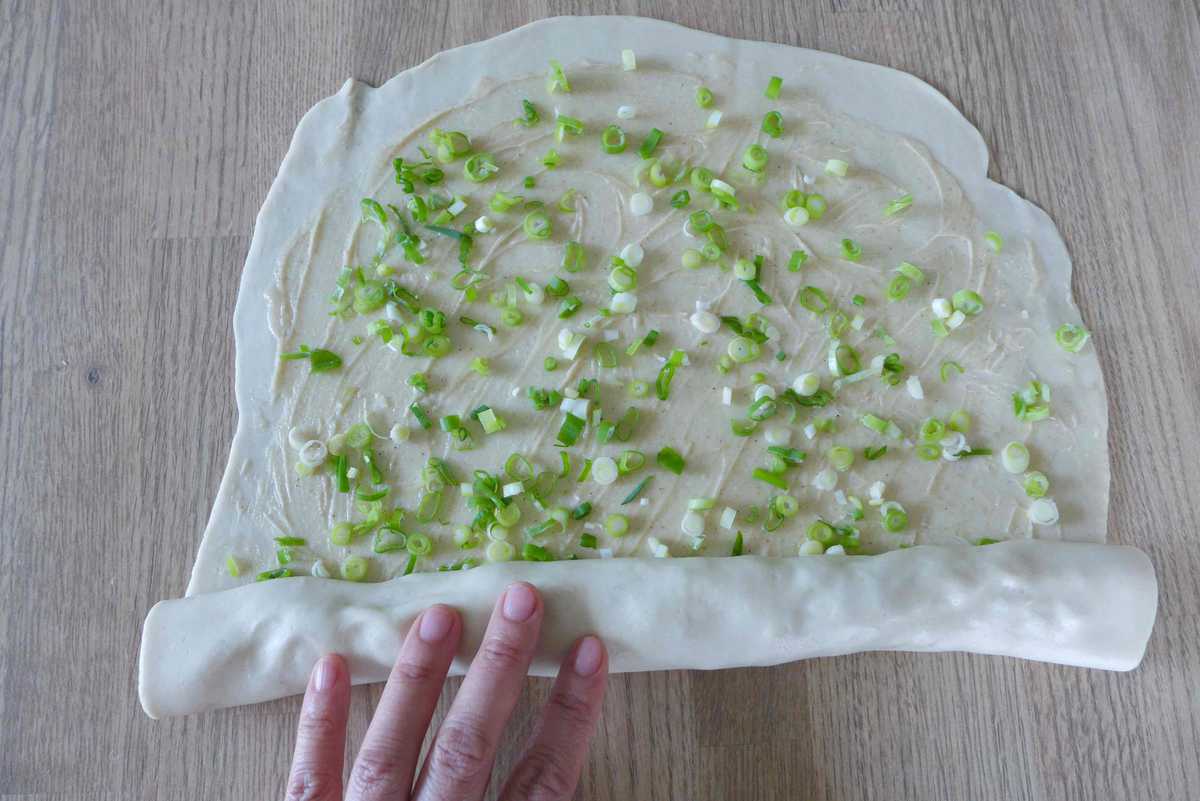
From the shorter side of the dough, loosely roll the dough into a rope.
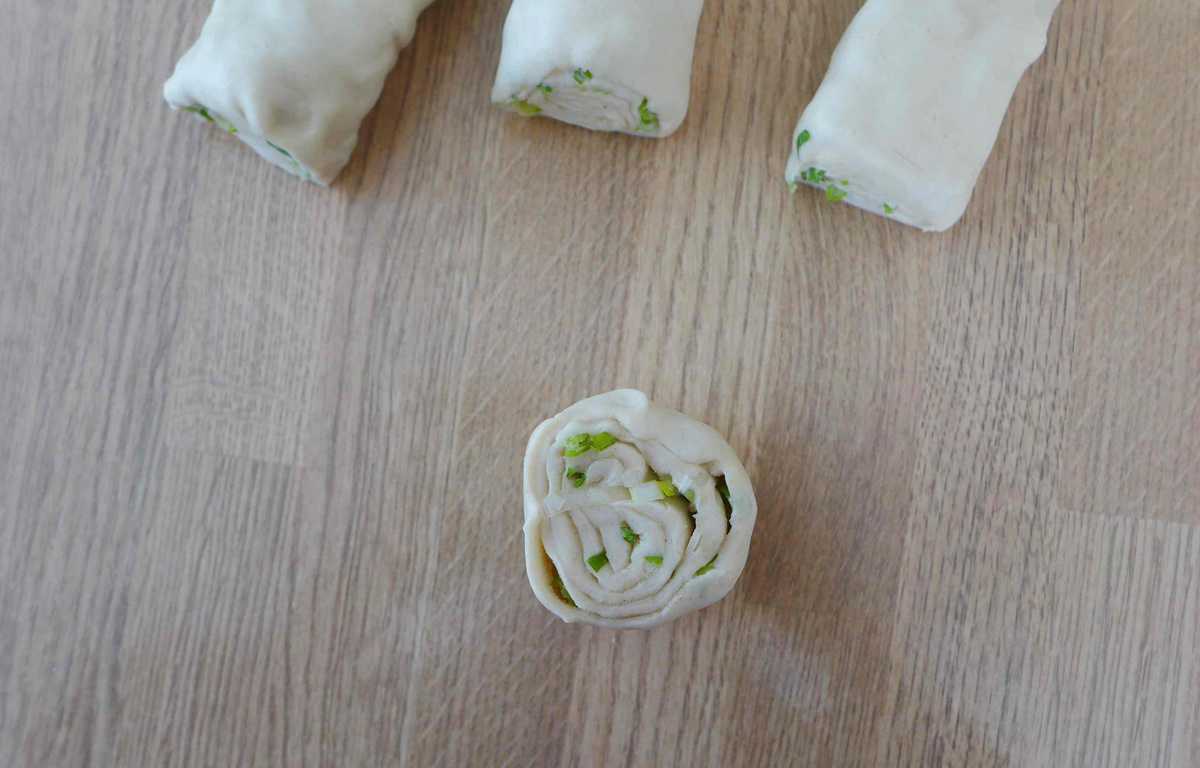
Then cut it into sections. Stand up one piece with the cut side facing up.
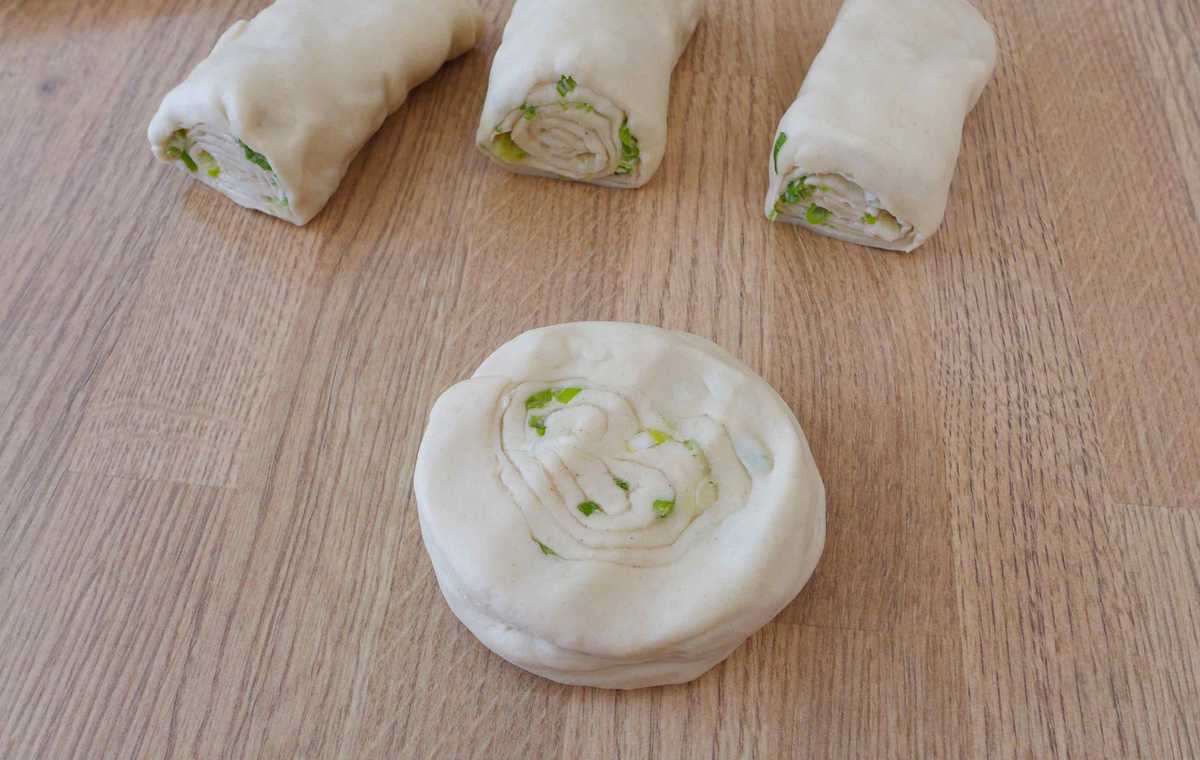
Press with your fingers then roll it flat with the rolling pin.
Thick or thin?
How thin should I roll my pancakes? You may ask. I showcase two options in this recipe. Choose whichever you fancy!
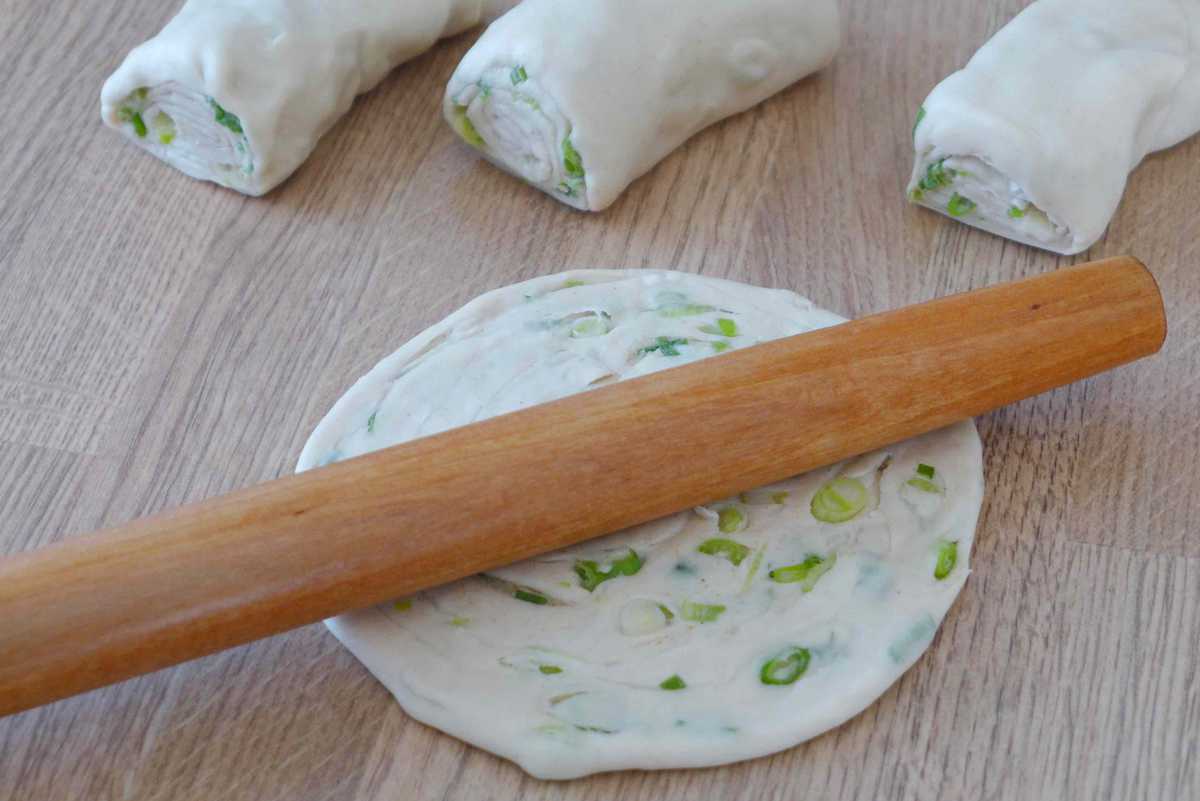
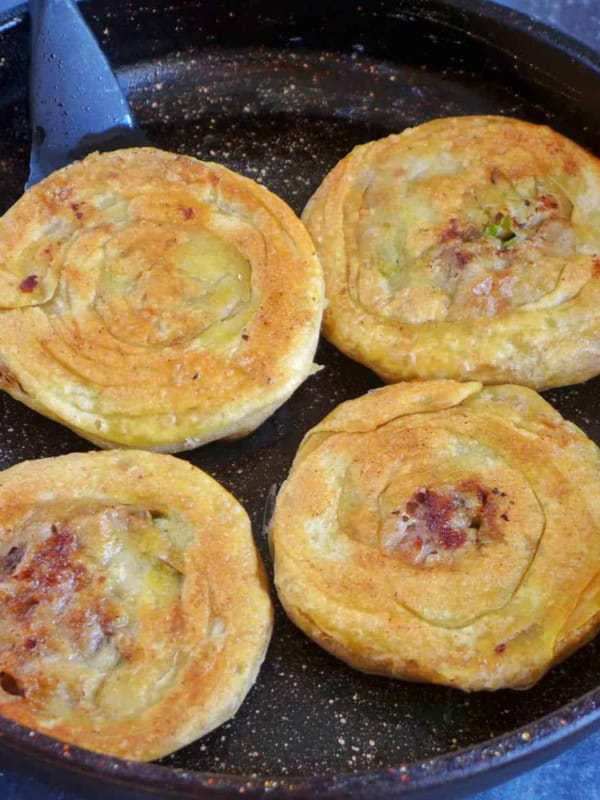
- The thick version: Divide the rolled dough into 4 sections. Each flattened pancake measures about 13cm/5″ in diameter and ½ cm/ ⅕” thick. Four pieces fit in a large frying pan so you can cook all at once. They’re crispy on the surface but soft in the middle, so you get a contrasting texture in every bite.
- The thin version: Divide the rolled dough into 3 sections. Flatten each piece as thin as possible (Mine measures about 23cm/9” in diameter). This is a more traditional look (my parents always make them this way). Compared to the thick version, they offer a pleasant chewier texture.
Pan-fry
Similar to how you cook Chinese Meat Pies, it’s easy to pan-fry scallion pancakes. But to achieve the perfect texture, crispy but not dry, you’d need to pay attention to three things: control the temperature, cover the pan and watch the timing.
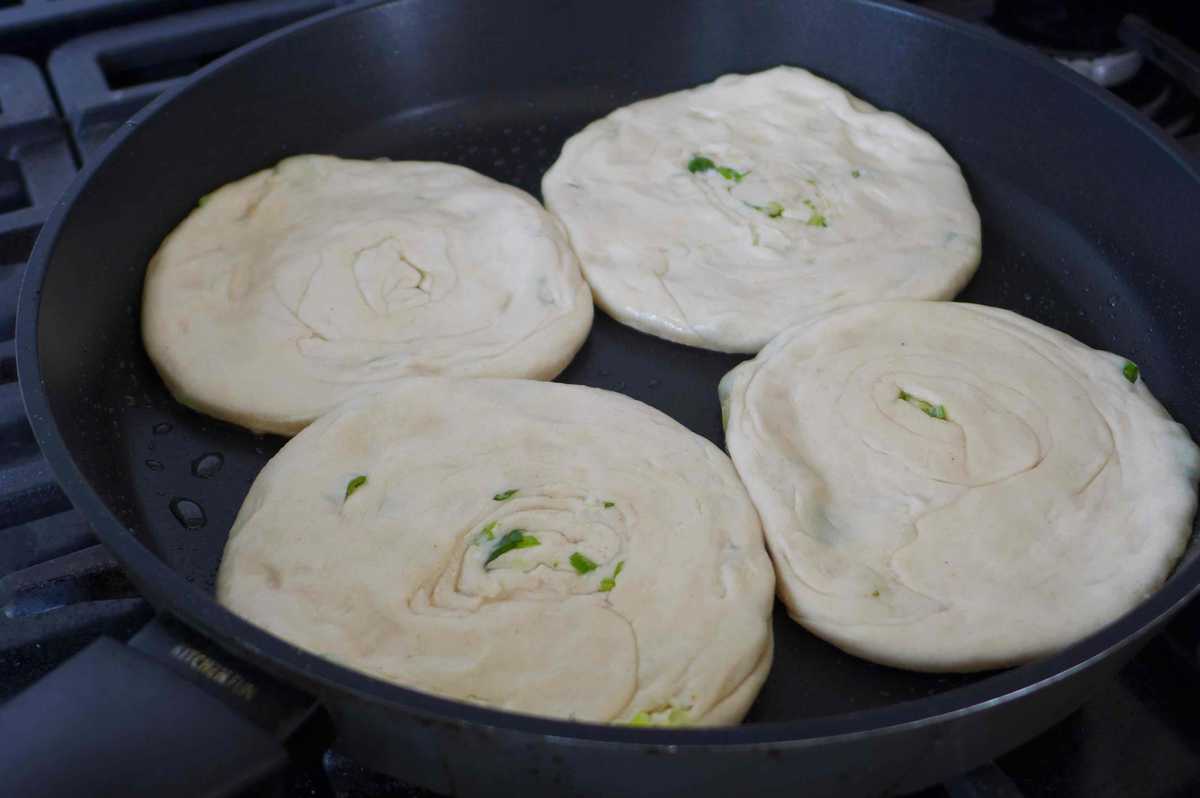
Heat oil in a frying pan/skillet over high heat until hot. It’s important to have a hot pan when you place the pancakes in. Otherwise, the dough tends to soak up more oil resulting in a greasy taste. Drop a piece of scallions, or a sesame seed, to test. If it sizzles, the oil is hot enough.
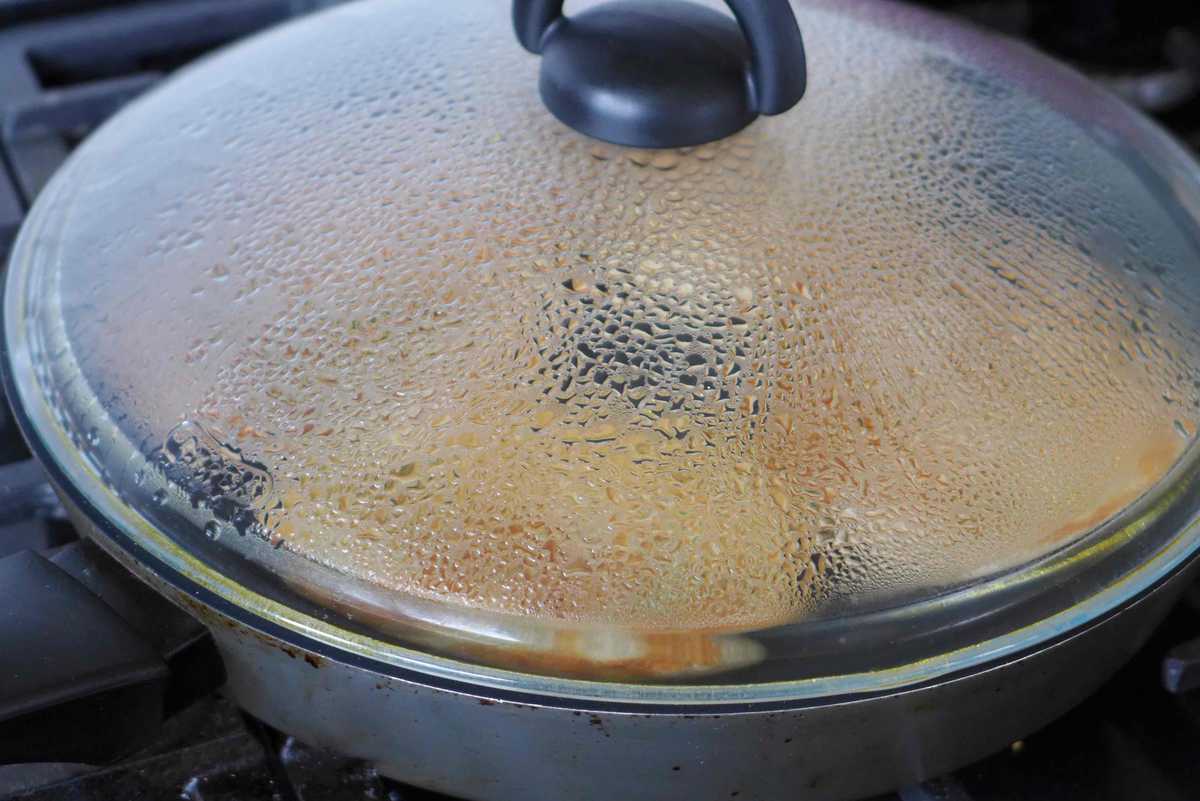
Once you put the pancakes in, remember to adjust to medium-high heat. Then cover the pan with a tight lid. This helps to cook them evenly without losing much moisture. If the temperature remains high, the outer layer will get burnt before the inner part is fully cooked.
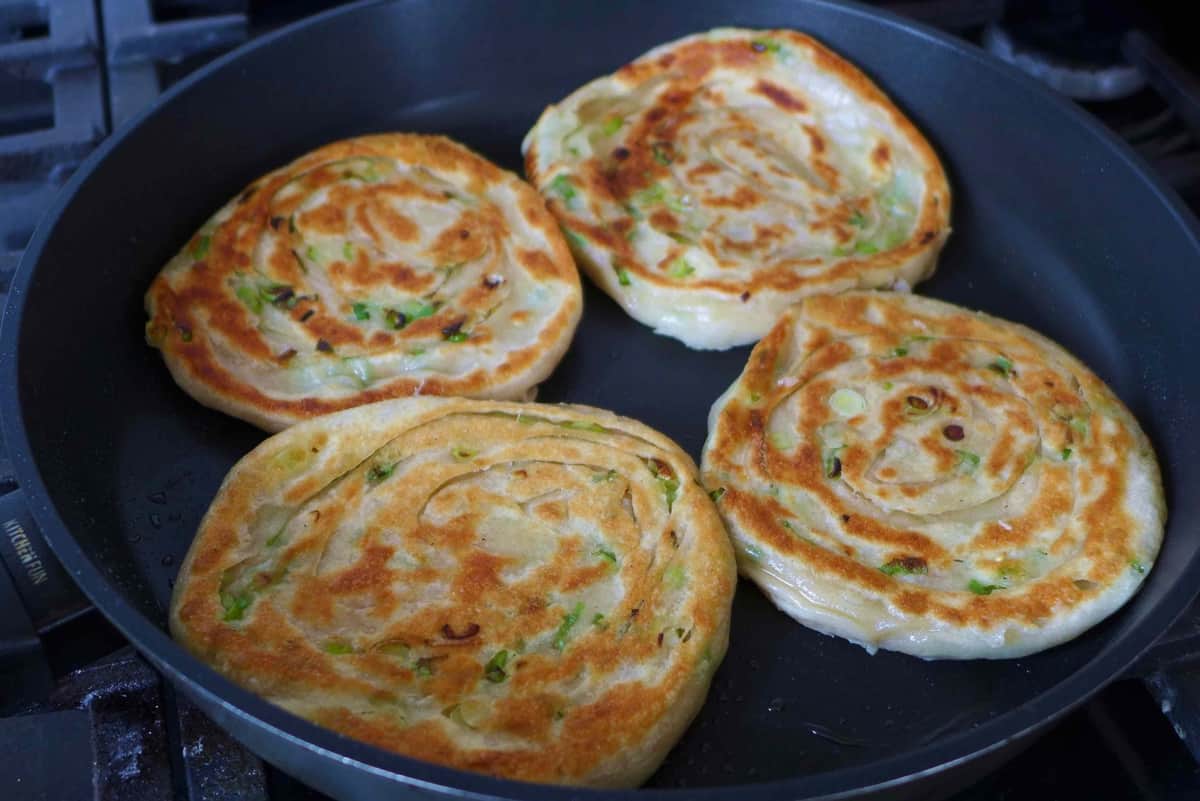
When the first side becomes golden brown, flip over to cook the other side (always have the lid on). It took me about 4 minutes to cook both sides for thick pancakes. Thin pancakes would take less time. But the cooking time may vary in your case. Check the donees more often if unsure.
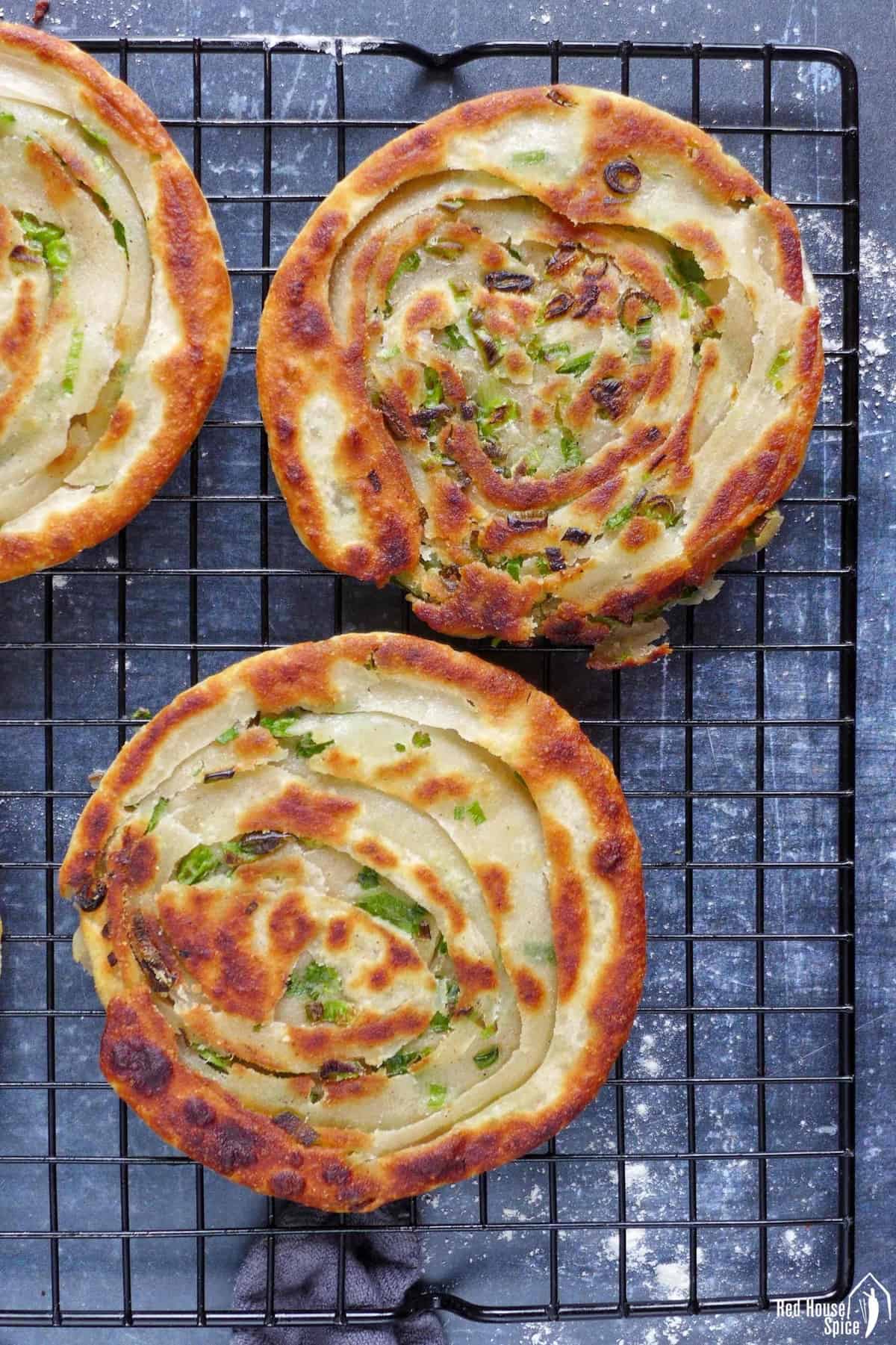
If available, use a wire rack to rest the pancakes for a short while before serving. If placed on a plate right away, condensation will form making them soggy. Also, if your pancakes are thick, the remaining heat cooks the inside further.
🛎 TIP: It’s fine to cook these pancakes without oil (I often do so to reduce oil intake), like how I pan-bake the flatbread for Rou Jia Mo (Chinese pork burger).
Serving ideas
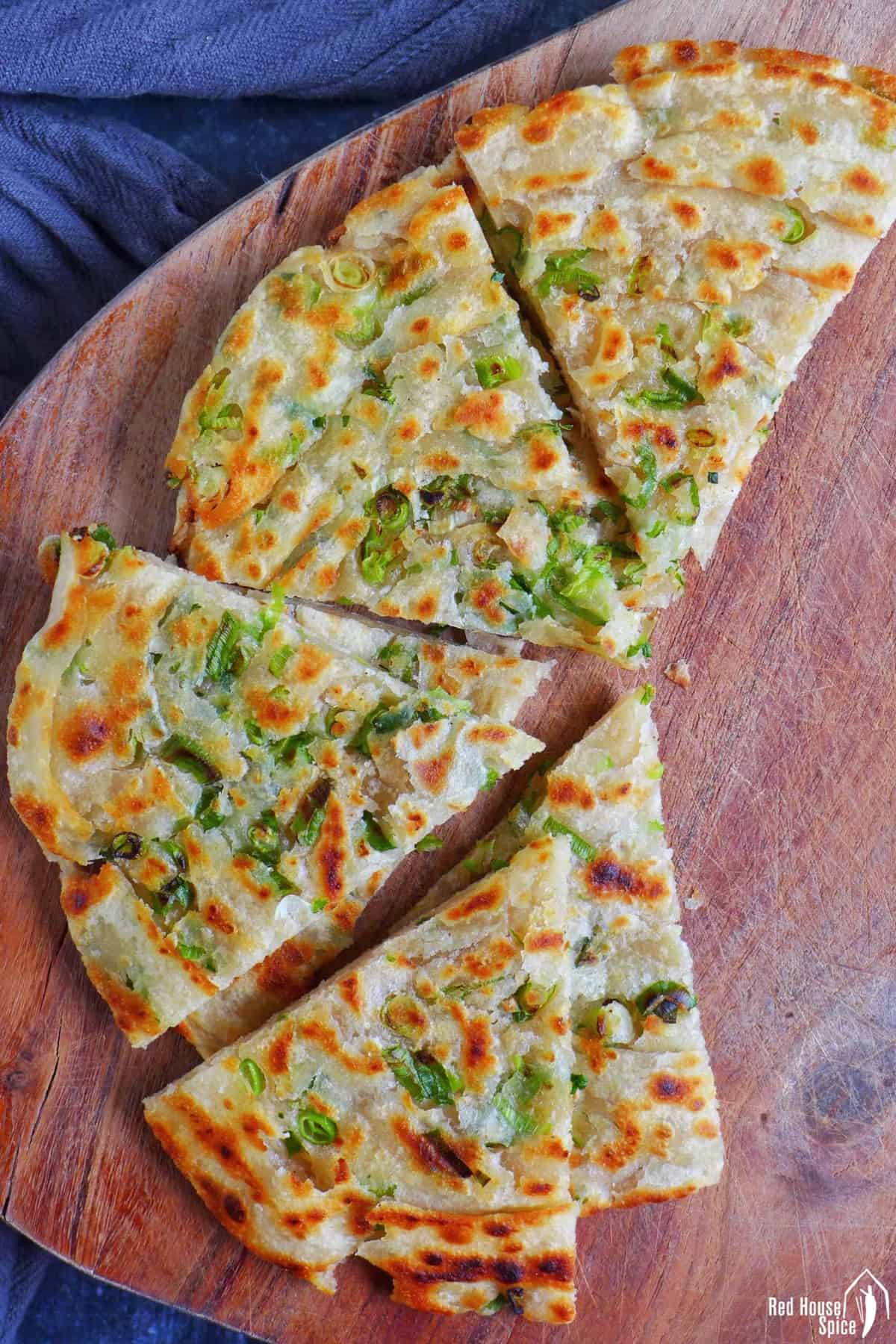
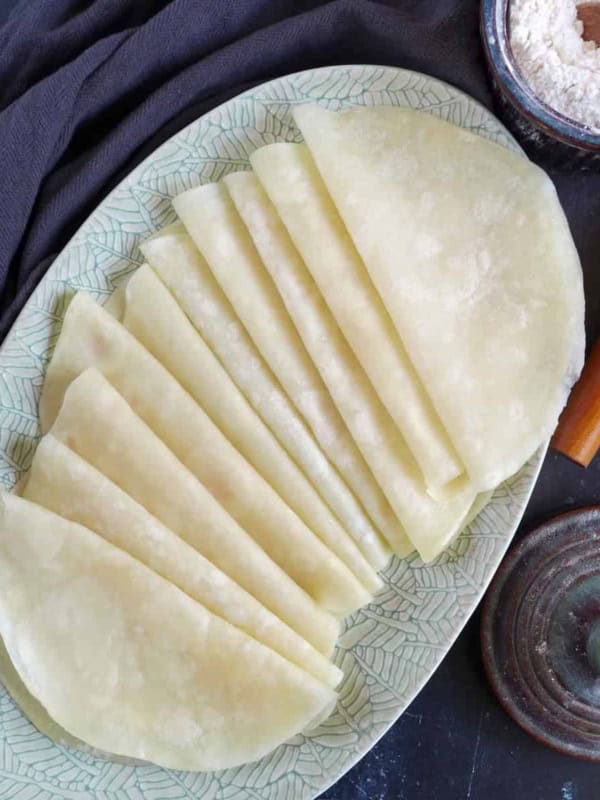
If you’ve made thick pancakes, tear them into pieces to eat. Whereas the thin version is often sliced into wedges, just like how you cut a pizza (see image below).
I grew up eating scallion pancakes as part of a multi-dish meal when we weren’t having steamed rice as a staple. It was usually paired with a few savoury dishes and congee or soup. We also ate them as breakfast or afternoon snacks.
Scallion pancakes sold in Chinese restaurants sometimes come with a dipping sauce. If this is what you prefer, you can get inspiration in my post on dumpling sauces. Alternatively, just dip them in Classic Chinese chilli oil or Chiu Chow chili oil, with or without the company of black rice vinegar, light soy sauce, etc.
Make ahead
Do you know that uncooked scallion pancakes freeze well? If you plan to eat them regularly, I suggest you make a big batch at once following these steps:
- Multiply the quantity of the ingredients proportionally.
- Make the dough then stuff and shape the pancakes.
- Pile them up using parchment paper to separate each piece to prevent sticking.
- Put them in airtight bags and store in the freezer.
Whenever you fancy a piece, simply pull out one and pan-fry following the same method without defrosting. If your pancakes are on the thick side, add a little water to the pan before you put the lid over the pan. The steam will help cook the middle part thoroughly, just like how you make pan-fried Chinese dumplings.
Recipe FAQs
A: There are a few things that could cause doughy, dense texture. Make sure:
1) The pancakes aren’t too thick; 2) The heat isn’t too high or too low. If too high, they’re cooked unevenly. If too low, it takes too long to cook so they become dry; 3) The lid is tight so there isn’t too much steam escaping from the pan.
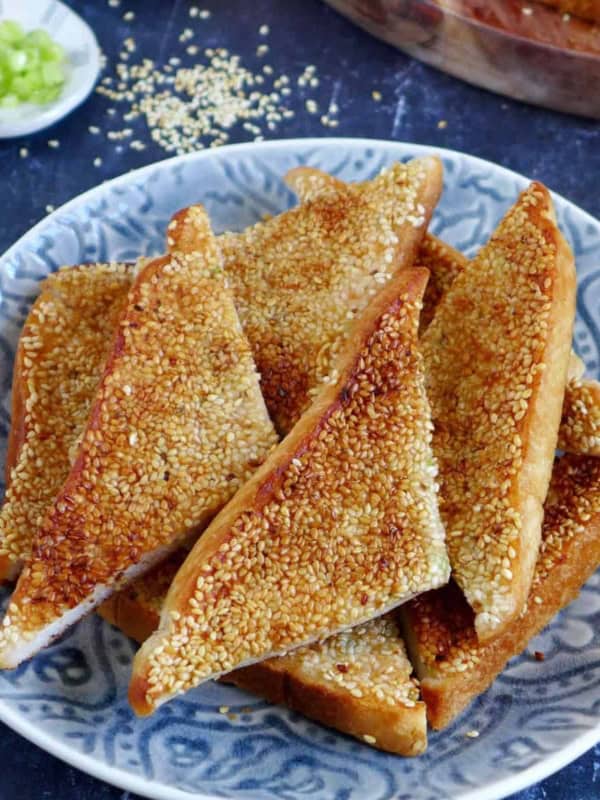
A: You can easily adapt this recipe with yeast-leavened dough. Try my recipe for Pan-baked Scallion Flatbread and Oven-baked Scallion Bread (see image below). They’re equally delicious!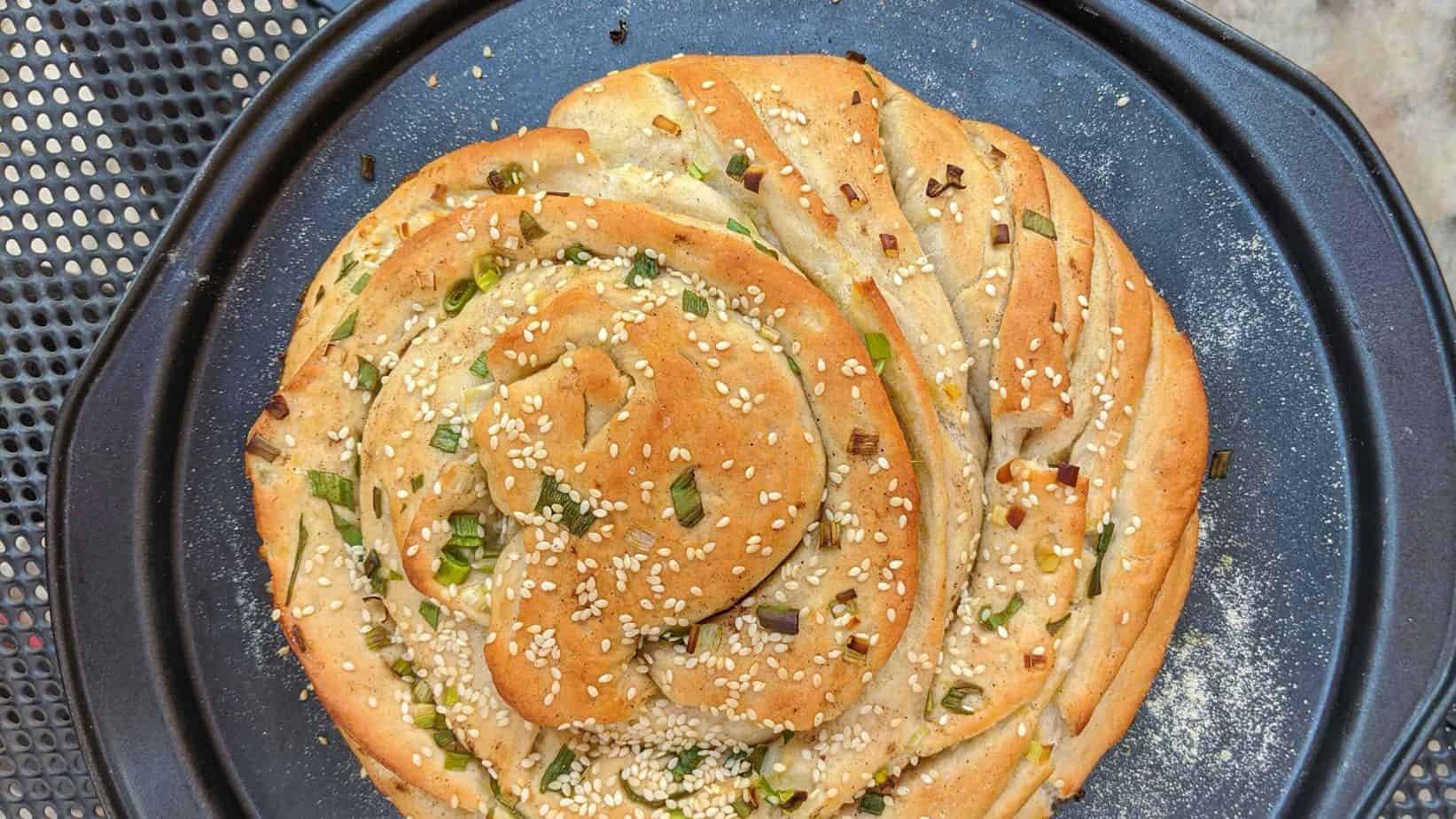
A: Yes, you can either refrigerate or freeze the dough. Coat with a thin layer of oil and wrap tightly with cling film. Store in air-tight bags/containers. Defrost and bring to room temperature before shaping.
Other classic staples


📋Recipe card
Love this recipe? Please leave a 🌟🌟🌟🌟🌟 rating and a comment. Thank you!
Scallion Pancakes (Cong You Bing, 葱油饼)

Video
Ingredients
For the dough
- 250 g all-purpose flour (plain flour), about 2 cups (see note 1 for substitutes)
- 160 g hot water, about ⅔ cup
- Cooking oil, for coating
For the filling
- 2 tablespoon melted lard, or coconut oil, see note 2 for other substitutes
- 2 tablespoon all-purpose flour (plain flour)
- ¼ teaspoon ground Sichuan pepper, or Chinese five-spice powder
- ¼ teaspoon salt
- 40 g finely chopped scallions (green onion/spring onion), about ½ cup
For frying
- 1 tablespoon neutral cooking oil
For serving (optional)
Instructions
Make the dough
- Put flour into a heatproof bowl. Pour in hot water. Stir with chopsticks until no more loose flour or water can be seen. Use your hands to combine the mixture into a rough-looking dough (see note 3).
- Tightly cover the dough with cling film and leave to rest for 15 mins.
Prepare the filling
- While waiting, add melted lard (or other oil), flour, Sichuan pepper (or five-spice) and salt to a small bowl. Mix until it becomes a smooth paste.
Shape the pancakes
- Uncover the dough then knead until it becomes very smooth. Rub a thin layer of oil around the dough, as well as the work surface.
- With a rolling pin, flatten the dough into a thin, rectangular piece. For your reference, mine measures about 43cm(17") by 33cm (13").
- Brush the filling mixture over the dough, then sprinkle finely chopped scallions on top.
- From the shorter side of the dough piece, roll the dough into a rope (don’t make it too tight).
- Cut the rope into 4 cylinders. Stand a piece on one end. Press down with your hand, then flatten it with the rolling pin into a pancake that measures around 13cm/5” in diameter. Alternatively, cut the rope into 3 parts and roll each into a thinner pancake which measures about 23cm/9”.
Fry the pancakes
- In a skillet/frying pan, heat oil over high heat until hot. Drop a piece of scallions in to test. If it sizzles, the oil is hot enough.
- Turn the heat down to medium and put in the pancakes (the top side facing down). You may cook 4 thick pancakes all at once in a large pan (28cm/11"), or 1 thin pancake at a time.
- Cover the skillet with a lid and leave to cook for about 2 minutes until the side facing down becomes golden brown (adjust the cooking time if necessary). Flip the pancakes over, then cover again to cook the other side. Remove them from the pan once the second side turns golden too.
- For the best result, rest the pancakes on a wire rack for a minute or two before serving (condensation will form if placed on a plate straightaway). Also, the remaining heat will cook the inside further during the resting time.
Serve
- The thick version can be served as it is and torn apart to eat. The thin version is often cut into triangular pieces.
- Although they are tasty on their own, a dipping sauce would make a great accompaniment, e.g. a simple mixture of homemade chilli oil, black rice vinegar and light soy sauce.
- Store leftover pancakes in airtight bags in the fridge for up to 3 days. Reheat in a pan/oven/air-fryer.
Make ahead
- To make a big batch and cook later, double or triple the recipe proportionally. Freeze uncooked pancakes right after they’re rolled out. Pile them up with parchment paper in between and store in sealed plastic bags.
- Cook frozen pancakes without defrosting following the same method. If they’re thick ones, add a little water while cooking with the lid on (like how you make pan-fried dumplings).
Notes
Your Recipe Notes
Nutrition
Nutrition information is automatically calculated, so should only be used as an approximation.
Note: This is a revised version of my blog post published in 2017. It provides more tips, substitute ideas, FAQs, and a video.











I had been buying these and was thrilled to find your recipe. It makes delicious, flakey “pancakes”. I make them on the thinner side and then once cooked I put soft taco fixings on top and roll it up and use it like a soft taco…. yummmm!
That sounds amazing, Bren! I love your idea of enjoying them with taco fillings. So creative and delicious. Thanks for sharing!
Everything I make from your website turns out perfectly. This was no exception. Delicious.
Thank you so much Natacia for your kind words. Hope you’ll find more to try!
I want to cook it very much but can I triple amount of onions? My garden is over productive on greens this year.
Yes! More scallions = more intense flavor. The extra scallions might tear the dough but that’s not a problem.
Did 2 cups of hard fall green onion. Absolute delight. Will absolutely cook again. Likely increase seasoning (I used 5 spice mix).
Only warning: they make some smoke when cooked. Have a fan on.
Five stars.
Delicious and very good description and tips. Thank you❣️❣️❣️
So happy to hear that, Sabine!
My dough using whole wheat flour came out rock hard..
What adjustments to make? Maybe use warm water is better?
Whole wheat flour absorbs more water and has less gluten, which can make the dough tough. If you’d like to try it, you can use about 30% whole wheat and 70% all-purpose flour, along with a bit more water to improve hydration. The texture will be different from the classic scallion pancakes though. Happy cooking, Judy!
I’ve made this fried a few times and it was amazing, but I prefer not to fry foods.
While I know they won’t be as cripsy, can these be baked?
Thanks!
So happy to hear you enjoy it! This recipe isn’t suitable for baking. However, I have another two recipes using the same ingredients: Oven-baked Scallion Bread, Pan-baked Scallion Flatbread. Have a try!
Amazing, thank you!
I accidently wrote wrong e- mail
now i’ll write the right one, sorry
looks really good
going to make your version in a minute 🙂
what do you serve with it usually?
Thank you, Noga! Scallion pancakes are so versatile! I grew up enjoying them with savory dishes for dinner, congee at breakfast, or as a snack. They’re delicious on their own, but dipping them in chili oil, black vinegar, or soy sauce adds extra flavor. Hope you love it!
Love this recipe simple instructions and easy-to-use. Can’t wait to make it ! I also discovered your 5spice powder. Store bought ones are so salty and bland. Question do you have a recipe for teriyaki sauce and one for sweet and sour sauce?? My son’s and I appreciate your recipes and can’t wait to try them out
So happy to hear you enjoy my recipes, Lynne! I don’t have a teriyaki sauce recipe (You can find a good one in Just One Cookbook by Japanese blogger Namiko). Regarding sweet and sour sauce, have a look these recipes I’ve shared: Sweet and Sour Meatballs, Sweet and Sour Ribs, Sweet and Sour Salmon, and Sweet and Sour Whole Fish. Happy cooking!
Delicious and very easy to follow recipe 🙂 Thank you!
That’s wonderful to hear, Jude!
Hi! I tried to make these pancakes today and it really did not work for me. I wanted to make the thin kind and they stuck to the chopping board, even though I oiled it – I ended up having to scrape them off piece by piece and frying them in little scraps, which was not ideal. (I also tried making the thick ones but the middle was undercooked.) Do you have any advice on how to avoid this issue with the thin pancakes? I really want to love this recipe but it just did not work at all!
Hi Laura! Thank you for trying the recipe and sharing your experience. I’m sorry to hear it didn’t work out as expected, but I’d love to help! For the thin pancakes, when rolling out the dough, try lifting it up and rotating it a few times instead of rolling it all the way to the desired shape in one go. Dusting your surface lightly with flour can also help prevent sticking.
For the thick pancakes being undercooked in the middle, it’s usually a matter of heat control. After initially heating the oil over high heat, reduce the heat to medium before adding the pancakes. Covering the skillet is also essential, as the steam that builds up inside will cook them through. I hope these tips make your next attempt smoother. Don’t hesitate to ask if you have more questions. Happy cooking!”