


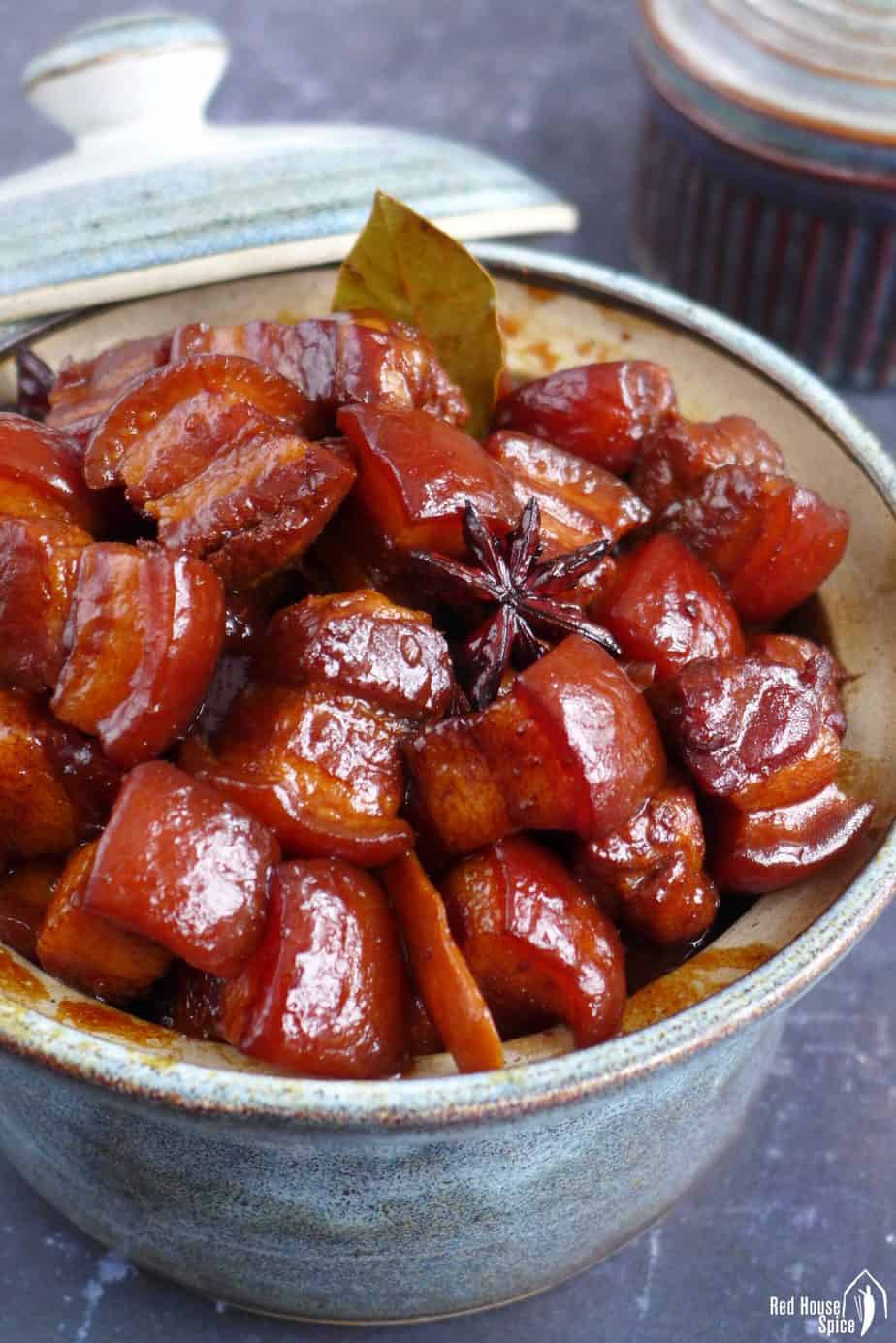
Tender, gelatinous and aromatic, Chinese red braised pork belly is scrumptious and comforting. This recipe shows you how to cook it effortlessly.
Pin this now to find it later!
Pin ItTable of Contents
What is Hong Shao Rou
A popular cut of meat, pork belly is treasured by many great cuisines around the world. Containing a high percentage of fat, it needs to be cooked in a particular way to reduce its greasy taste. In China, the most loved pork belly dish has to be Hong Shao Rou/红烧肉, known in English as red braised pork belly or red-cooked pork belly.
Pork belly chunks are braised with soy sauce, rice wine, sugar and spices to create a complex taste: salty, sweet, aromatic and umami. The skin and fat become gelatinous, not greasy and melt easily in your mouth.
“This is my Go To recipe… I have made this several times, and every time it brings out that nostalgic flavouring that I love and miss.“
Regional variations
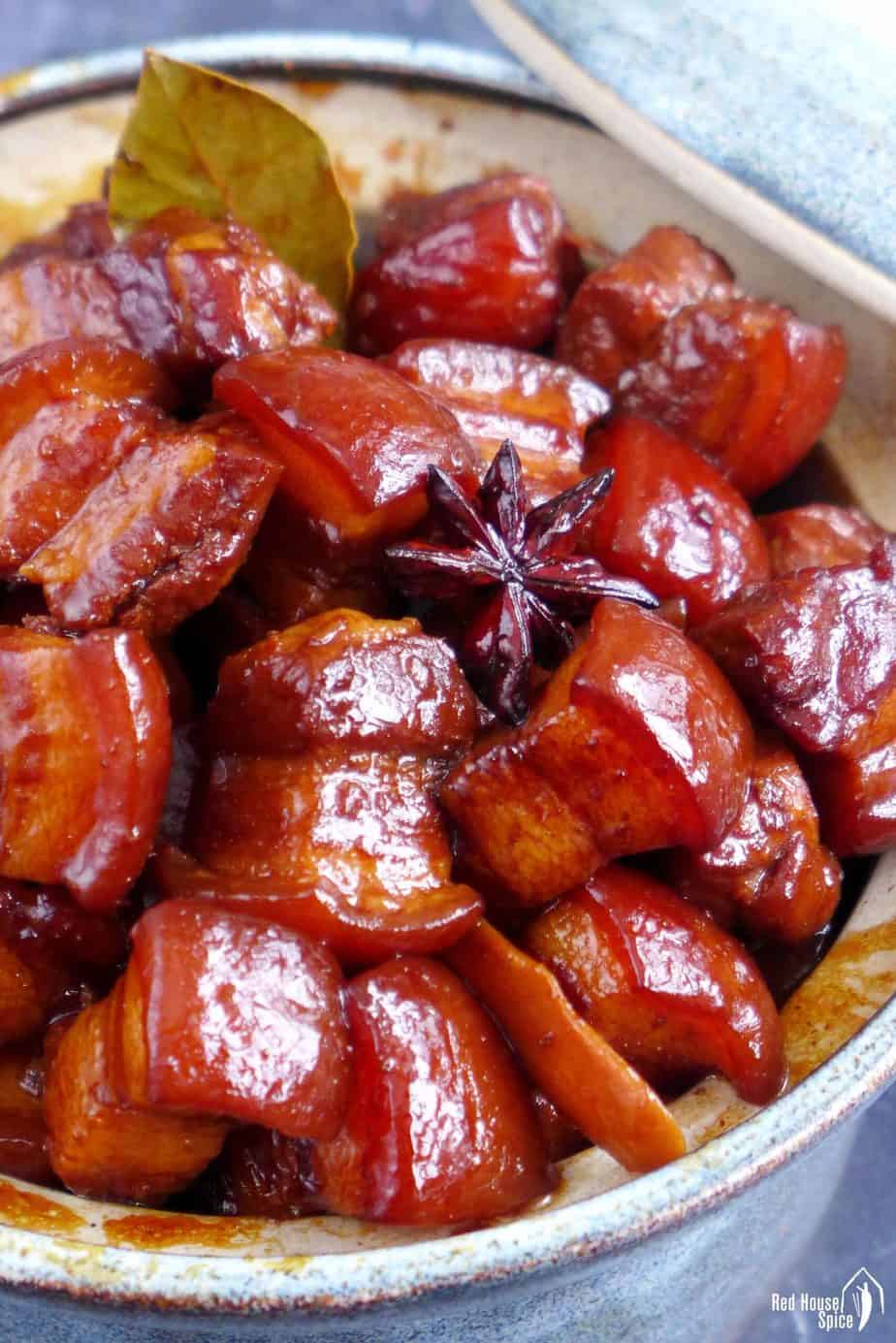
Apart from the desired taste and texture, braised pork belly also stands out for its red-brownish shine. That’s where the word “red” in its name comes from. Among many varieties of this dish from different regional cuisines of China, there are two classic ways to achieve this effect.
The famous Hunan style is believed to have been Chairman Mao’s favourite dish (Hunan was his home province). Rock sugar, in this version, is melted in hot oil to a caramel colour to give the meat an appetising appearance. Another popular variety from Shanghai cuisine involves dark soy sauce which plays a key role in colouring the pork.
Why this recipe
Over the years, I’ve made braised pork belly numerous times using different seasonings and methods inspired by various versions of this dish. Eventually, I settled down with a recipe that’s super easy, yet delivers a great result.
There is no frying involved (leaving you a greaseless kitchen) thus no extra oil needed (there’s enough fat in the pork belly already). And you don’t have to master the skill of caramelising the sugar properly. Yet the finished dish is more than satisfying. It’s totally novice-friendly. I promise!
Ingredients
The ingredient list is short and simple. Here are some tips on sourcing them that you might find useful.
Pork Belly
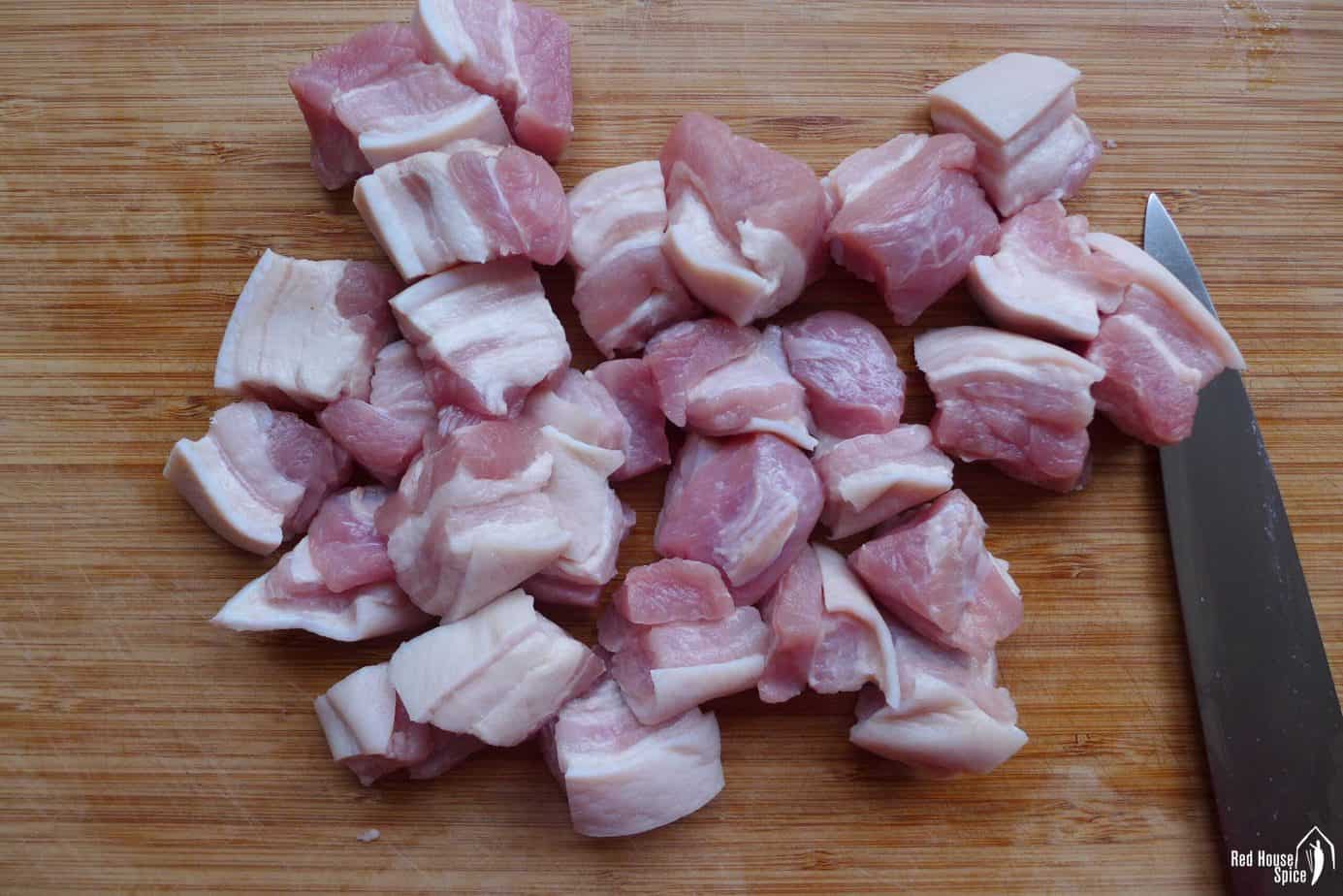
The star ingredient of the dish, pork belly is the fattiest yet the tastiest cut of pork. It’s not recommended to use skinless one. After cooking, the skin becomes super tender and gelatinous. You’ll love it for sure!
I usually cut it into 2-3 cm cubes (about 1 inch). You could use bigger chunks if you wish. Make sure they’re more or less the same size and extend the cooking time if necessary.
Shaoxing Rice Wine
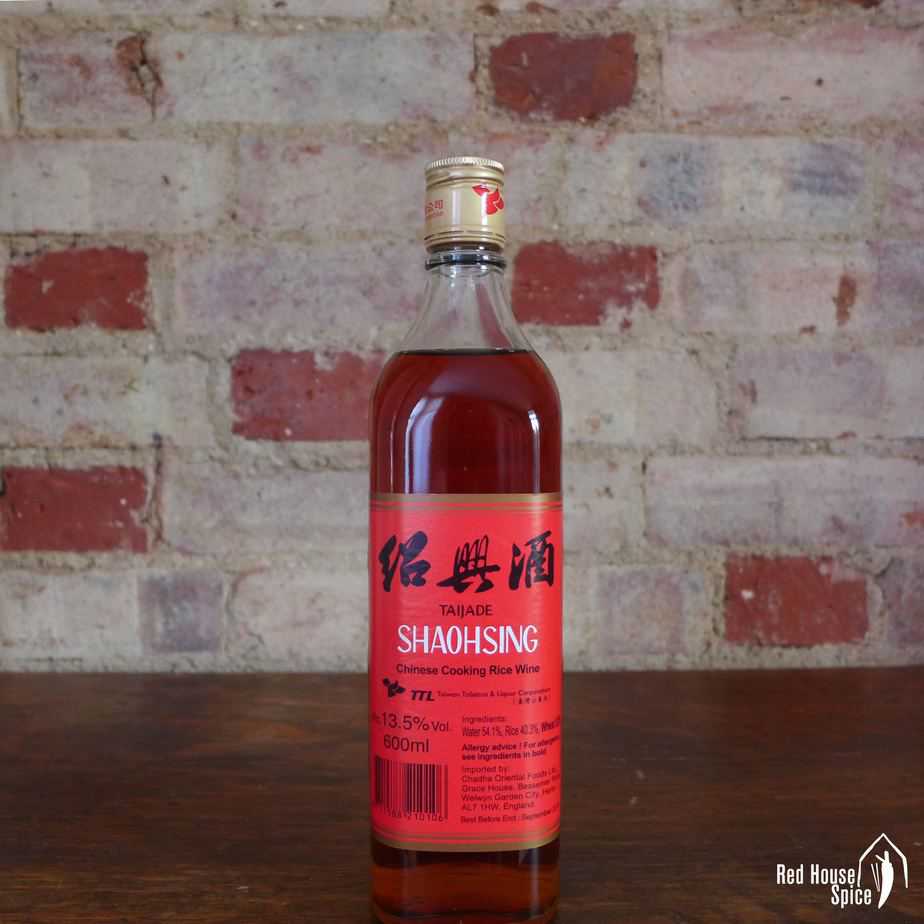
A type of Chinese cooking wine, Shaoxing rice wine (绍兴酒) lends an aromatic, rich flavour to the meat. It also seems to minimize its greasiness. As one of the must-have condiments for authentic Chinese cuisine, it definitely deserves a place in your pantry.
Unlike in many other recipes which call for only a spoonful of Shaoxing rice wine, for this dish I recommend you use at least 250ml (about 1 cup) for 600g (1.3lb) of pork belly. In fact, you could increase the quantity and use only rice wine (without water) as the braising liquid (like how I cook Three Cup Chicken).
🛎 NOTE: The proper Shaoxing rice wine should contain very little salt (mine has 0.08g salt per 100ml wine). However, I’ve seen some versions have a much higher percentage of salt. And they tend to have a bitter, unpleasant taste (usually cheaper to buy). I suggest you avoid those ones (check the nutrition label before purchasing).
Soy Sauce
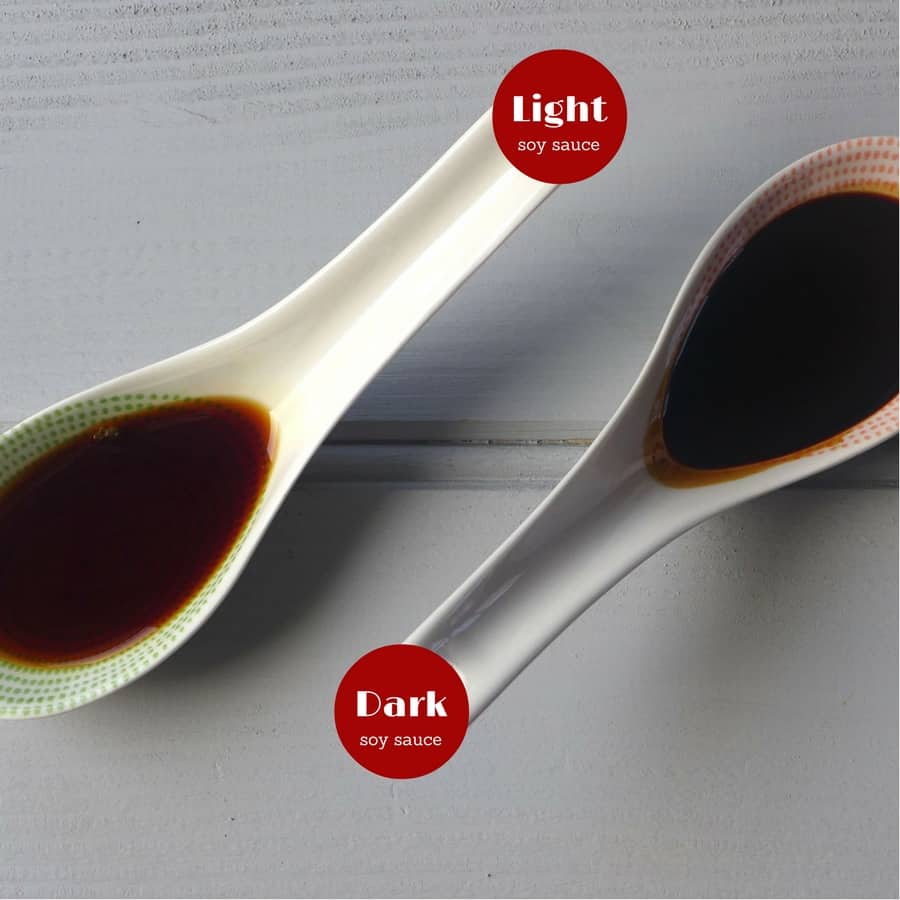
I use two types of soy sauce: light soy sauce (生抽) and dark soy sauce (老抽) for this dish. The former acts like an aromatic salt. The latter, which tastes less salty but offers a caramel overtone, is the key ingredient for giving the pork a beautiful brownish-red shine. So I don’t recommend that you substitute it with regular soy sauce.
Aromatic & Spices
Three simple ingredients, ginger, star-anise and bay leaf, are often found in classic Chinese braised dishes. They help to reduce the gamey taste of the meat as well as enhance its aroma.
Rock Sugar
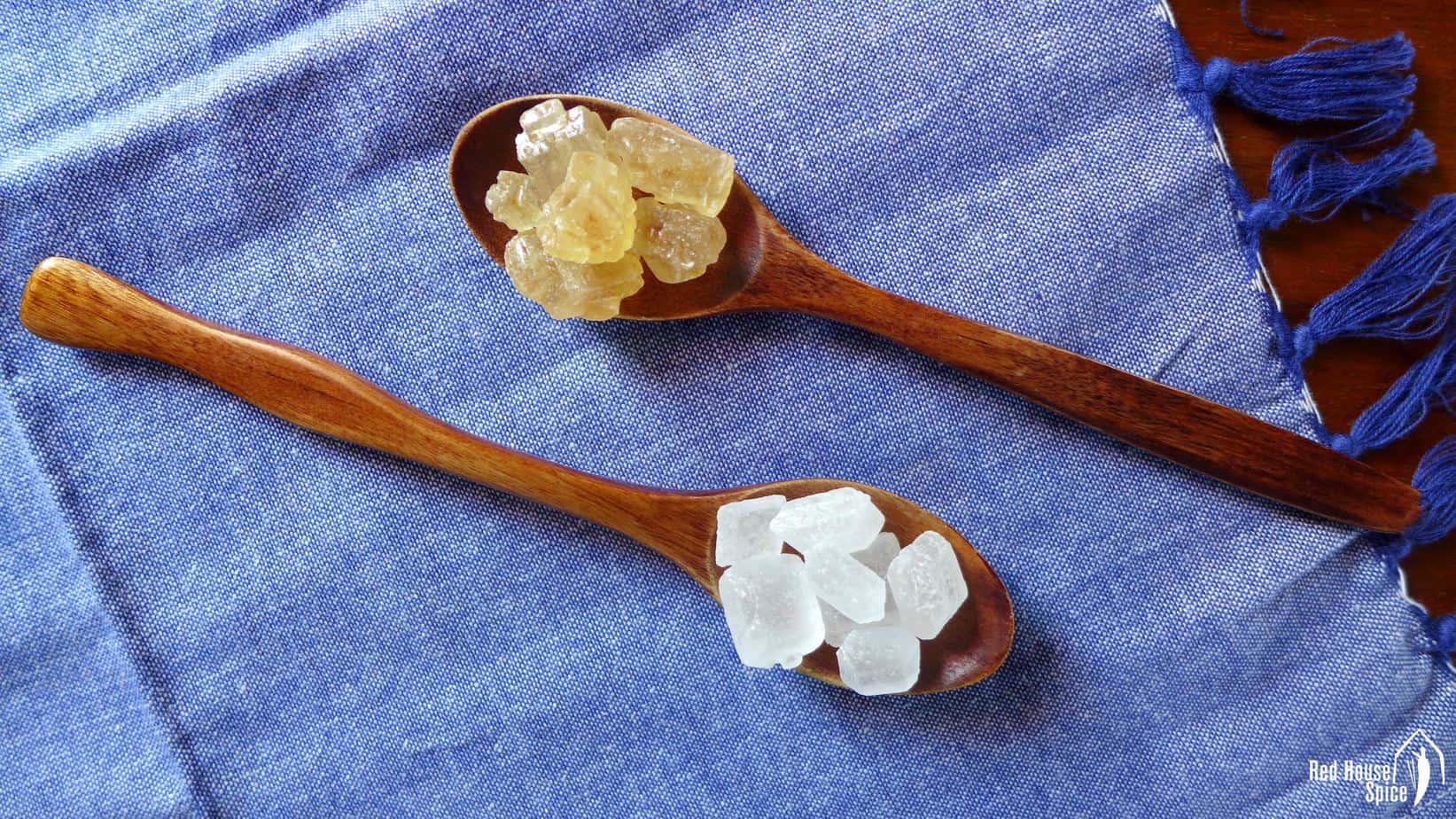
A type of refined, crystallized sugar, Rock sugar is traditionally indispensable in Chinese pantries. Less sweet than white sugar, it’s believed to add shine to braised dishes. However, please feel free to replace it with regular sugar if you wish.
Cooking steps
It does take a while to cook this dish to the desired texture, but the process is simple and hassle-free. Here are the three steps:
Step 1: Blanch the pork
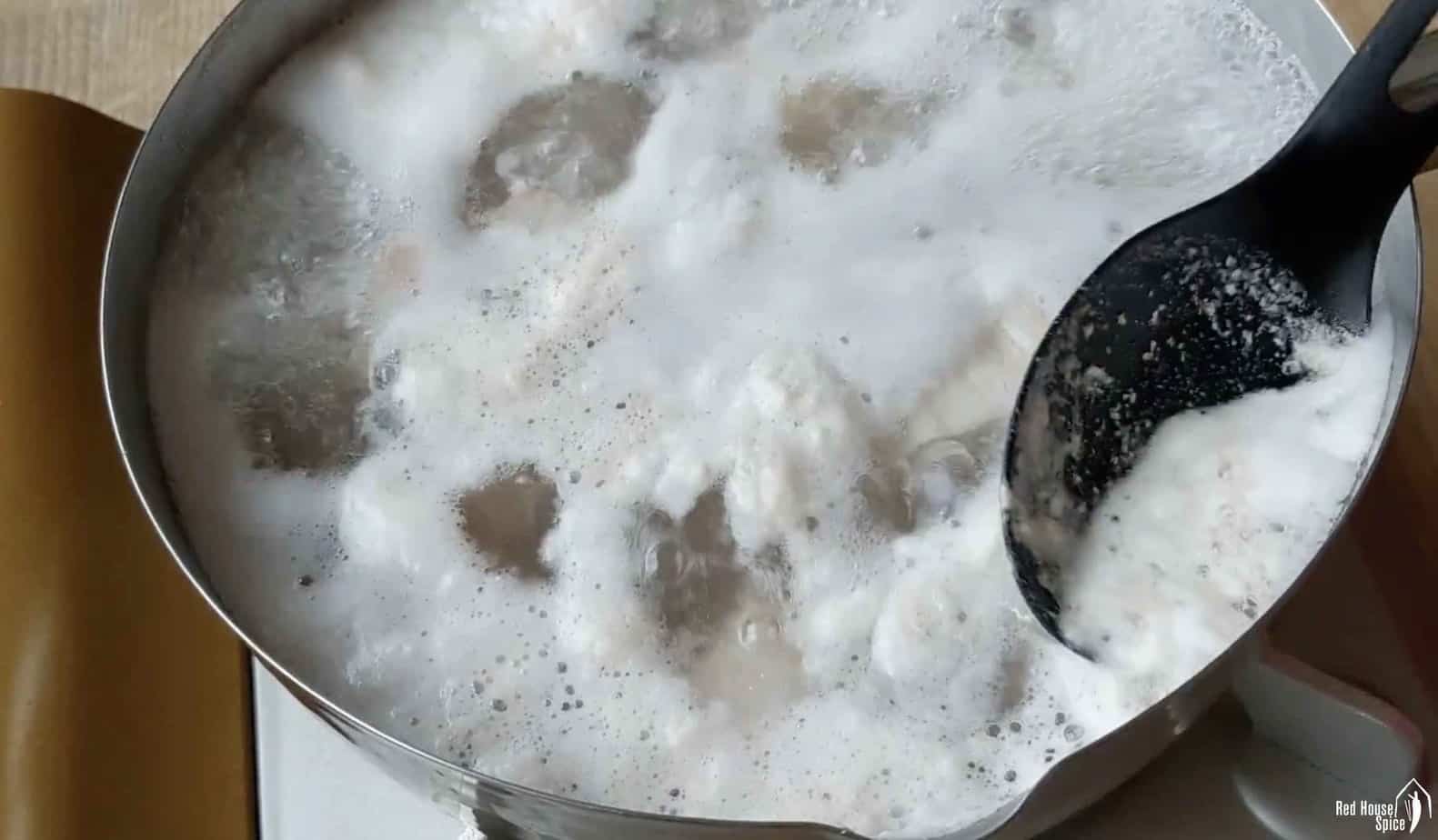
Blanching is a required procedure when cooking Chinese-style braised meat. It’s for removing blood and other impurities from the muscles and bones thus achieving a less cloudy broth and a less gamey taste.
Put the pork belly cubes into a pot filled with cold water then turn on the heat to high. As soon as it starts boiling, you’ll see froth appearing on the surface. Use a spoon to remove most of it. Then drain and rinse the meat under running water.
Step 2: Braise the pork
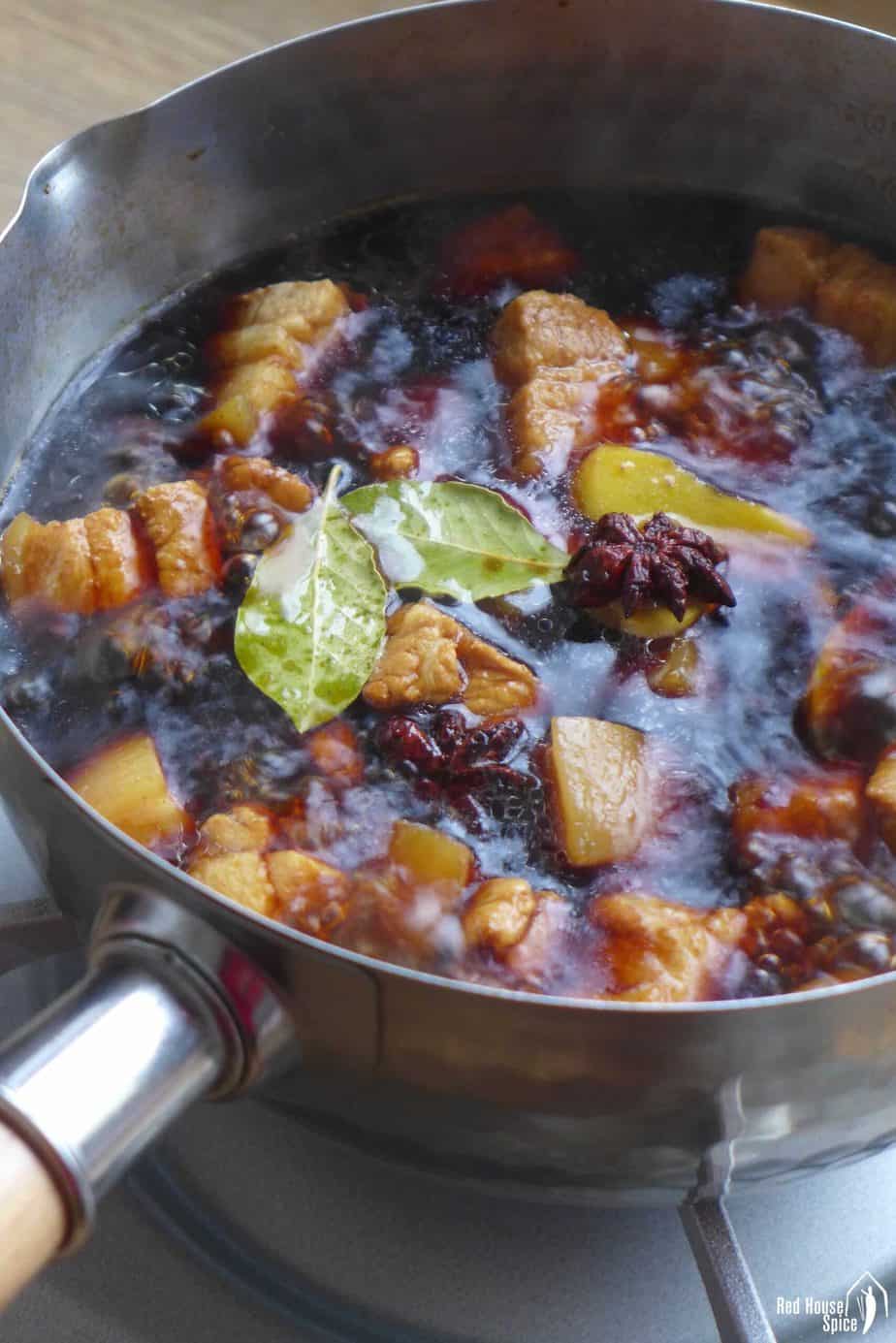
After blanching, put the pork into a clean pot then pour in Shaoxing rice wine and hot water (barely cover the meat). Add light soy sauce, dark soy sauce, ginger, star anise and bay leaves.
Turn on the heat to bring the liquid to a full boil. Cover with a lid and turn down the heat. Leave to simmer for at least one hour. Poke one piece of meat with a chopstick to check the tenderness. If it goes through without much resistance, you’re ready to move onto the next step.
During this process, remember to stir around the meat 1-2 times. If you notice the liquid becomes too little, add a small amount of hot water to prevent burning (but no need to reach the original volume).
Step 3: Thicken the broth
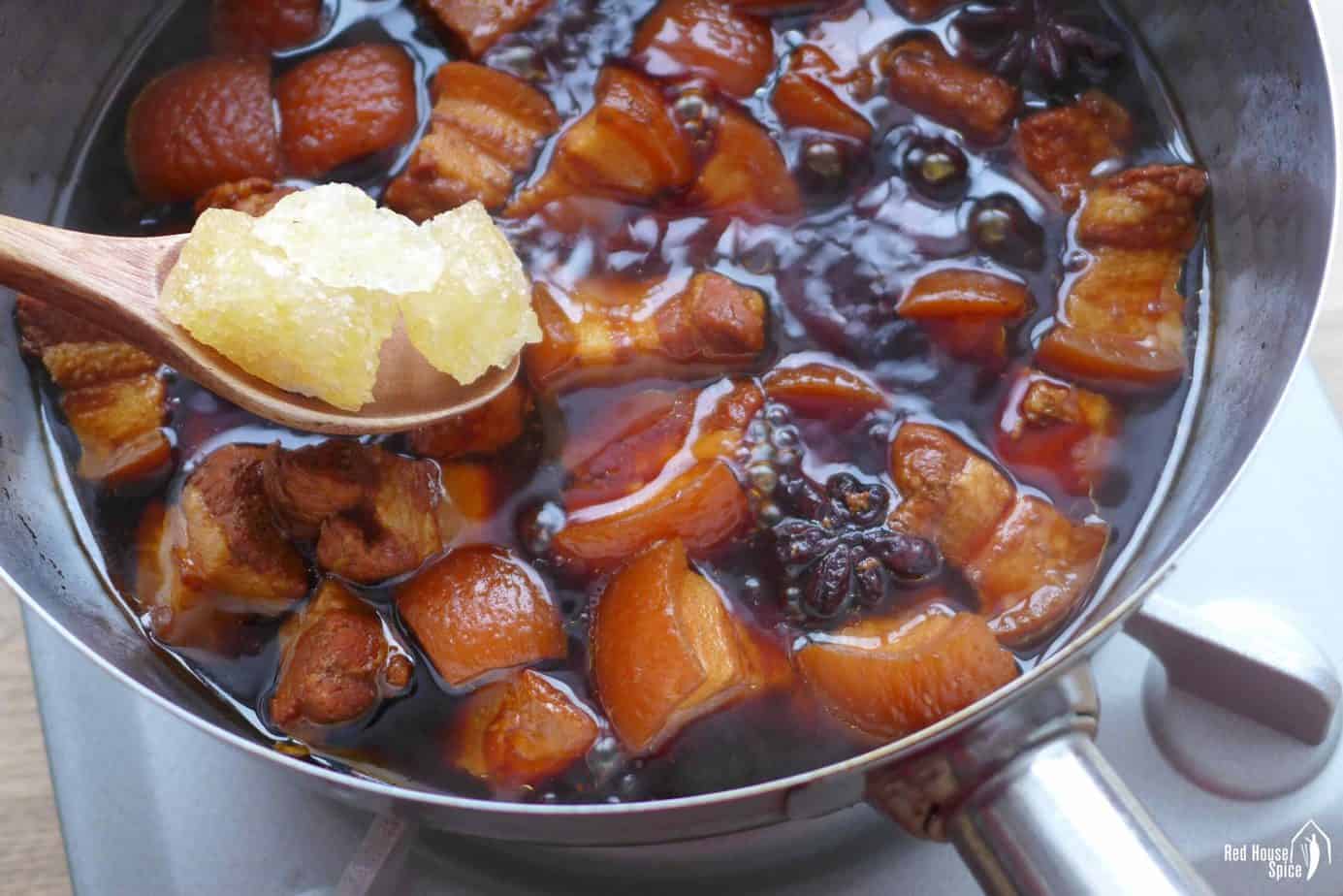
Turn the heat up to the highest. Add rock sugar (or regular white sugar) to the braising liquid and leave to boil fiercely. As the sugar melts and the water evaporates, the broth will dramatically reduce its volume and become thicker.
During this process, stir the pork cubes from time to time to ensure each piece gains an appetising colour and shine. Remove from the heat when the broth is just enough to cover the bottom of the pot (Over-boiling can burn the sauce). Please refer to the tutorial video in the recipe card below.
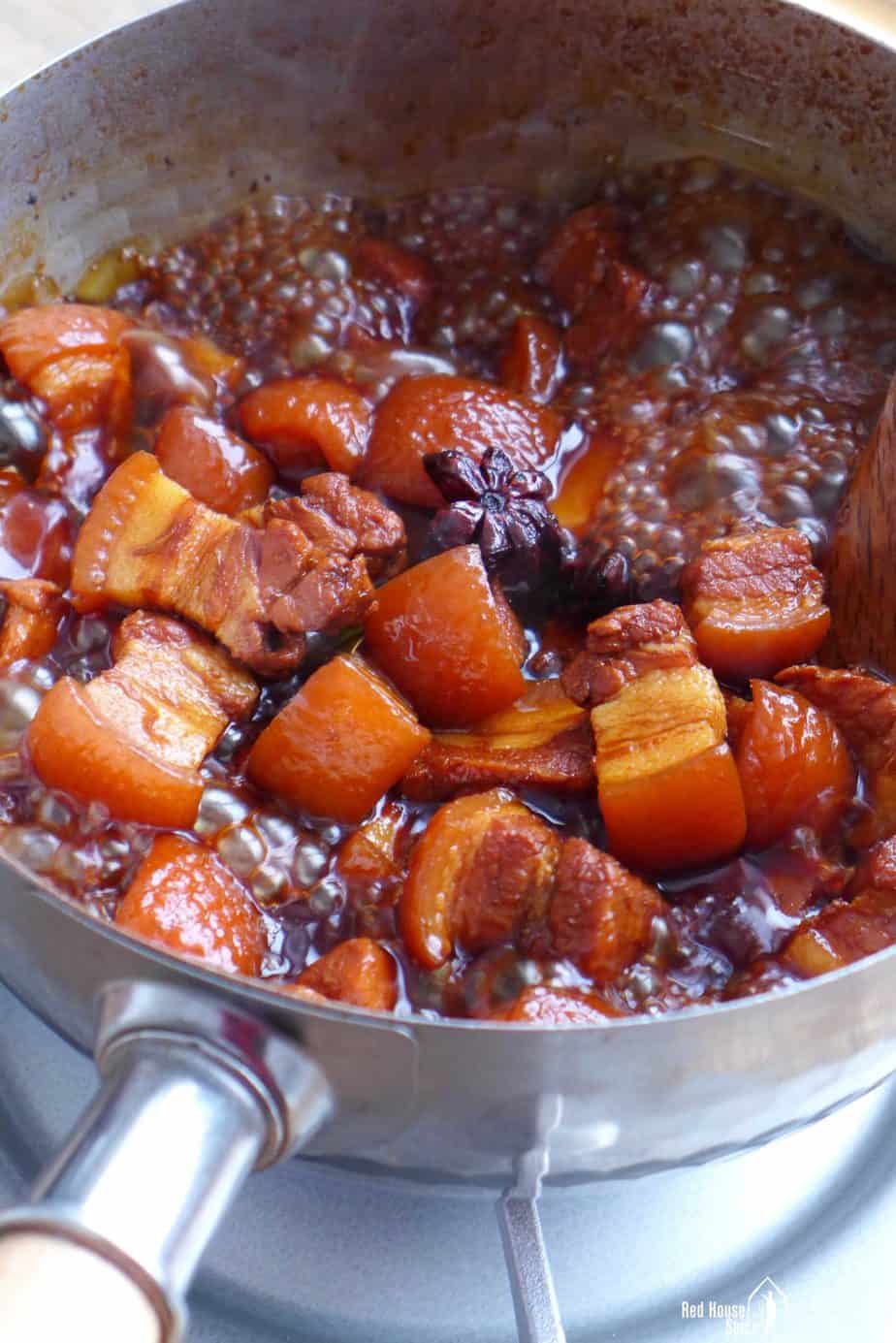
A note about the cookware: If possible, use a small-sized pot so you wouldn’t need too much water to braise the meat making the final thickening process shorter.
How to serve
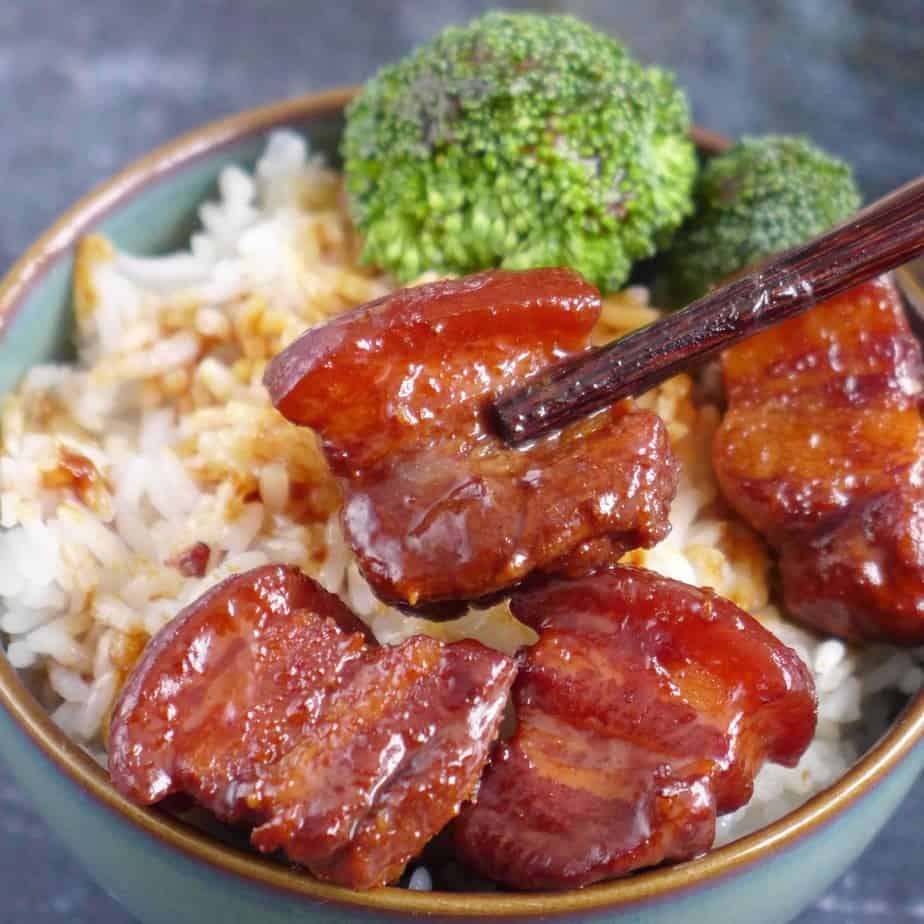
- Most commonly, Chinese red braised pork belly is served as a centrepiece in multi-course sharing meals.
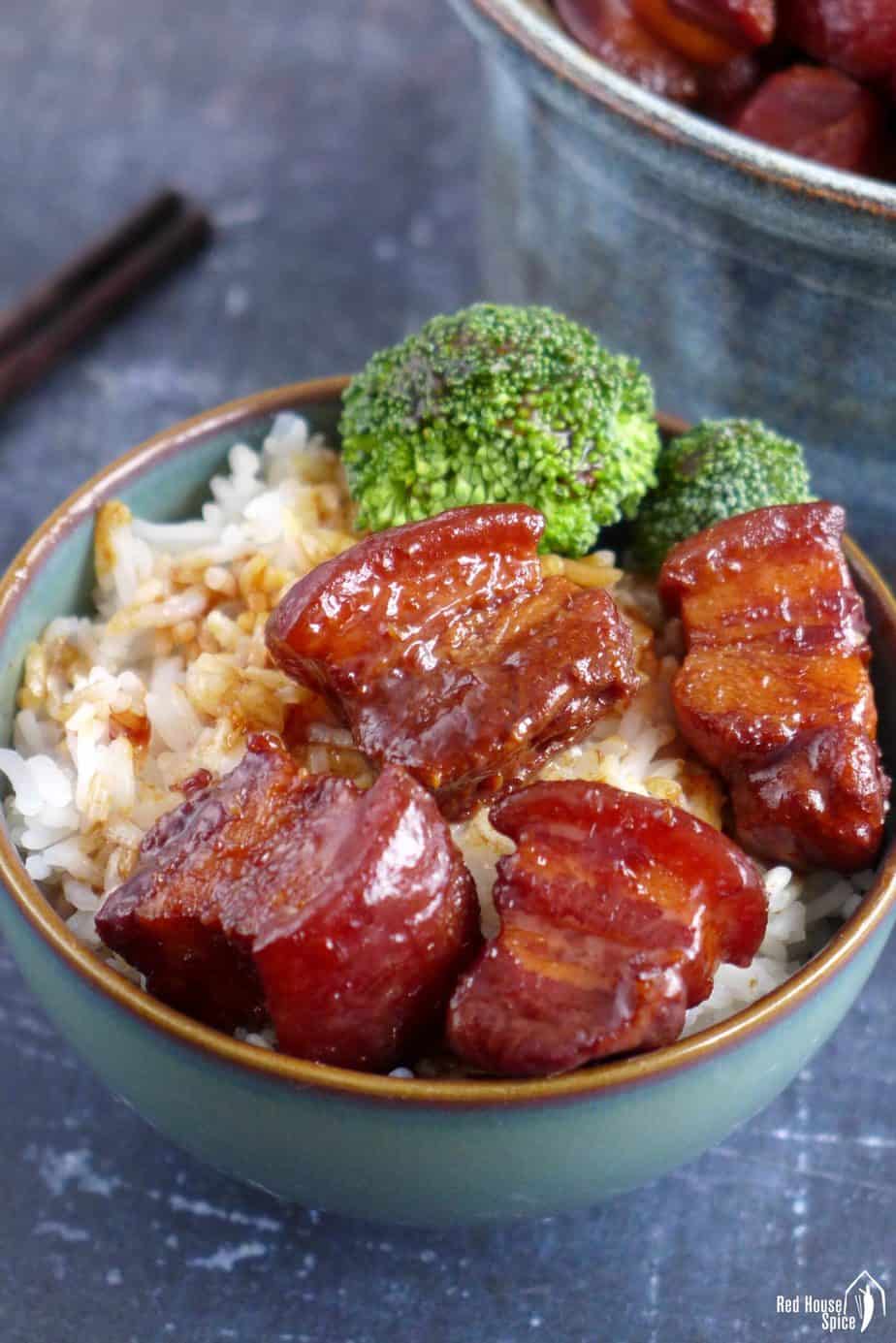
- For a simply all-in-one meal, use it as topping for plain steamed rice, along with blanched vegetables, such as broccoli, bok choy, etc.
- It also makes a wonderful filling for Bing (Chinese pan-baked flatbread) or Gua Bao (half-circle shaped steamed buns).
Recipe FAQs
A: You can freeze it and use it as a master stock for the next time when you cook this dish again (add less seasonings in this case).
A: If used in small quantity, Shaoxing wine can be replace by dry sherry. However, for this recipe I suggest you skip it altogether and increase the water volume. The taste will be different but still nice nevertheless.
A: Yes, you can. Blanch the meat as usual then braise it in your instant pot. You may slightly reduce the hot water. Set to cook 25 minutes on high pressure and perform a natural release. Afterwards, use the sauté function to boil down the broth.
Other pork recipes
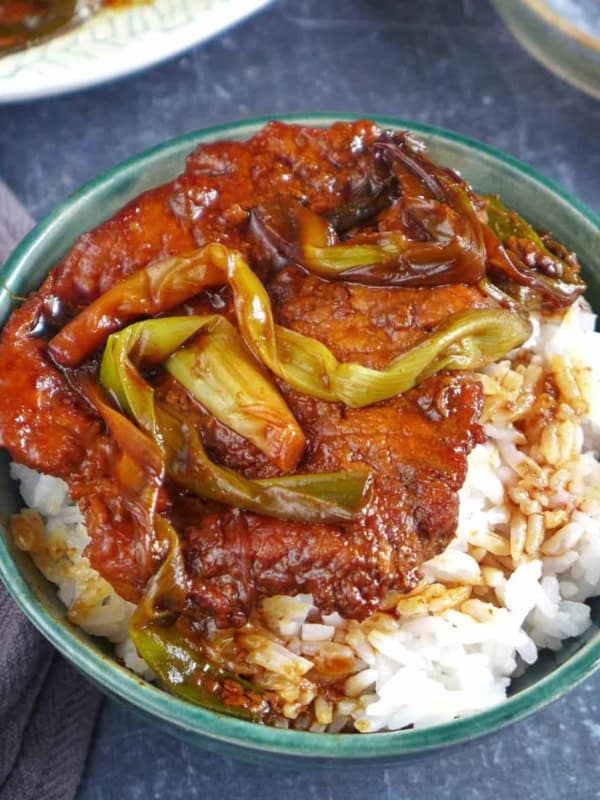
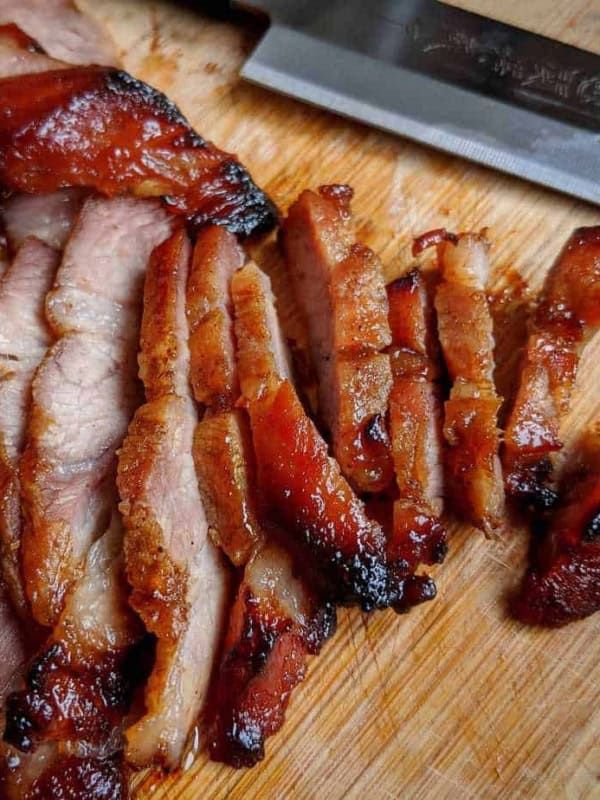
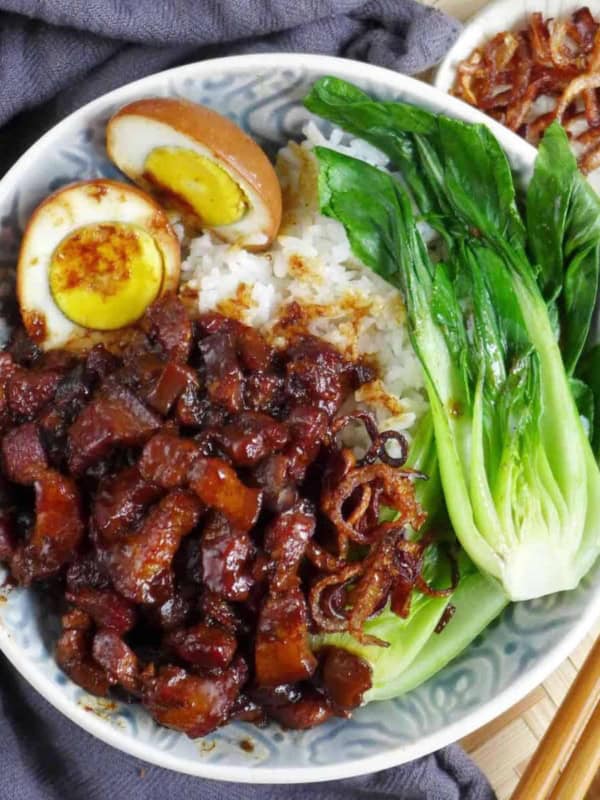
Looking for more ways to cook pork dishes? Try these popular ones:

📋 Recipe card
Love this recipe? Please leave a 🌟🌟🌟🌟🌟 rating and a comment. Thank you!
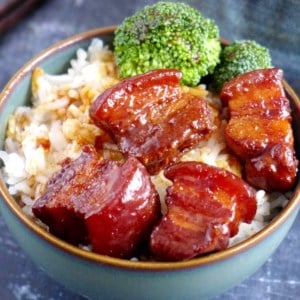
Braised Pork Belly (Hong Shao Rou/红烧肉), an Easy Version

Video
Ingredients
- 600 g pork belly, about 1.3lb
- 250 ml Shaoxing rice wine, about 1 cup, see note 1 (IMPORTANT)
- 2 tablespoon light soy sauce
- 1 tablespoon dark soy sauce, see note 2
- 5 slices ginger
- 2 star-anise
- 2 bay leaf
- 20 g rock sugar, or 1 tbsp regular sugar
Instructions
Blanch the pork
- Cut pork belly into 2-3 cm chunks (about 1 inch). Put into a pot then fill with cold water. Boil over high heat.
- Once it starts boiling, you’ll see froth appearing on the surface. Skim it off with a spoon.
- Drain the meat in a colander then rinse under running water.
Braise the pork
- Put the pork into a clean pot (ideally, a small one, see note 3). Pour in Shaoxing rice wine and hot water (barely covering the meat). Add light soy sauce, dark soy sauce, ginger, star anise and bay leaves.
- Bring the liquid to a full boil. Cover with a lid and leave to simmer over low heat for 1-1.5 hour until the meat is fork-tender (During the process stir the meat around a few times).
Thicken the broth
- Uncover the pot. Add sugar then turn the heat to the highest. Leave to boil fiercely (Stir from time to time) until the broth reduces to just enough to cover the bottom of the pot.
- Serve immediately with plain steamed rice and vegetable dishes of your choice.
Store and reheat
- The cooked pork belly can be stored in the fridge for up to three days or in the freezer for 2 months.
- Reheat in a pot (defrost first if frozen) over low heat. Add a little water to help to heat the pork thoroughly.
Notes
Your Recipe Notes
Nutrition
Nutrition information is automatically calculated, so should only be used as an approximation.













As a learner of asian cuisine, I followed the Braised Pork belly easily and have made it several times now. thank you
So happy to read your feedback Carmen! Hope you’ll find more inspiration on my blog.
Dear Wei, I tried your recipe yesterday and it came out really well. My husband & my kids loved it. Thanks for sharing! 😊
So happy to hear that Suvarna!
This was so delicious! I had to add a little more water and rock sugar at the end and yummmm! Thank you 😊
My pleasure to share Roberta! Glad you enjoyed the dish with your own adjustment.
Turned out delicious…..Easy to make
That’s wonderful to hear Steve!
A family favorite and serious comfort food. My grand mother frequently made this for family get togethers. She didn’t have any written recipes though, just knew them all in her head. When she passed away none of us knew how to make it: Ai Ya! Thanks so much for this recipe!
Thank you for sharing this memory Kim. I’m touched the recipe helped you reconnect with a family favourite. So glad it brought back something special from your grandmother’s cooking.
Hello Wei,
Cooked this dish for the first time today. I was however confused as I did not know what size of sliced ginger? 1 inch? We also found the dark soy quite salty as it reduced. I used Kim Kum Lee dark and light soy. Could I reduce the table spoon of dark soy to half table spoon? And light soy to 1 table spoon?
It was very nice all the same, and we will be having it again!!!
Leo
Thank you for trying the recipe. The ginger amount doesn’t have to be very precise and a 1-inch slice works well. And yes, feel free to adjust the soy sauces to suit your own taste. I’m glad you still enjoyed the dish and plan to make it again.
this was a long recipe, but so delicious it was worth every minute. Plus it made my house smell great! Thank you!
My pleasure to share, Katie! So happy to know you enjoyed the recipe. Hope you’ll find more inspiration on my blog.
I’m a Filipino and chinese cuisine has a huge influence in our palate. This braised pork belly recipe is super easy and delicious.. this will become a constant recipe for me. Thank you so much.
That makes me so happy to hear, Sheryl! I love how Chinese and Filipino flavors complement each other. Thanks for giving the recipe a try!
Enjoyed this version of Hong Shao Rou. However, I used the same Shaoxing wine in your picture but it turned out much too salty. I will try with half the amount next time.
Thanks for trying it, Mark! Shaoxing wine can vary in saltiness, so adjusting the amount next time is a great call. Glad you still enjoyed it!
Oh my goodness! this recipe is absolutely wonderful. It’s easy to put together once you have all the ingredients. I am so enjoying all your recipes. tonight I am making green onion pancakes. You make it look easy and delicious. Really enjoy your website. Thank you.
Thank you so much, Cynthia! I’m so happy you’re enjoying the recipes. I hope your green onion pancakes turn out delicious!
I wanted to do it this all the time but I didn’t know how to do it so I learn now thank you
I’m so glad you found it helpful! It’s wonderful when something you’ve wanted to try finally feels doable.