


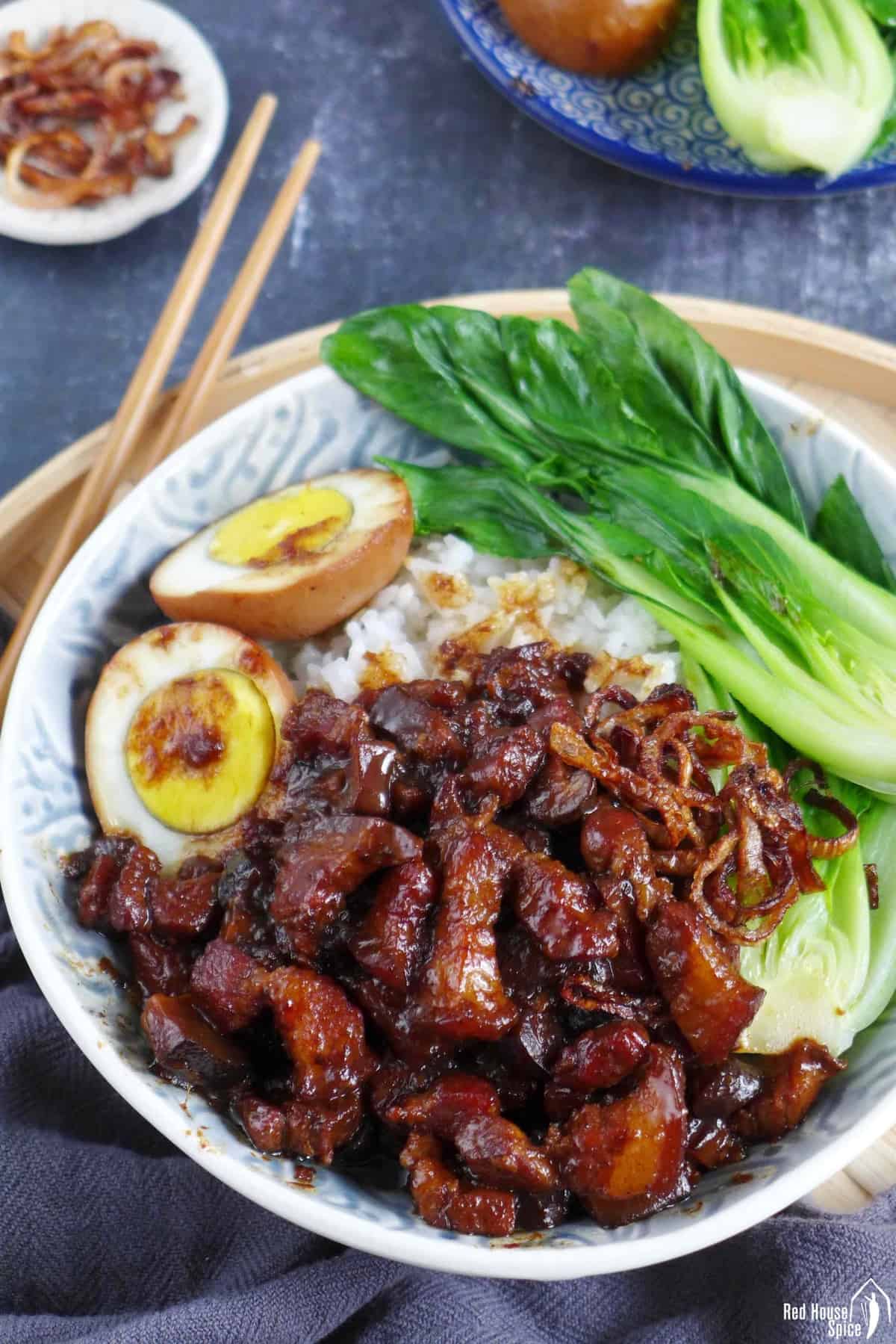
Cooked in a rich broth to a melt-in-your-mouth texture, Taiwanese Lu Rou Fan is a heavenly scrumptious way to enjoy pork in an all-in-one rice bowl dish.
Pin this now to find it later!
Pin ItTable of Contents
If you’re a regular reader of my blog, you may have noticed Chinese’s love for pork belly. There’re many classic dishes featuring this flavourful cut of meat: Red-Braised Pork (红烧肉), Twice-cooked Pork (回锅肉), Hunan Pork Stir-fry (湖南小炒肉), Chinese Pork Burger (肉夹馍), etc.
Today’s recipe Lu Rou Fan/卤肉饭 (Taiwanese pork rice bowl) shows you yet another way to enjoy it. It’s as delicious as the others, if not better.
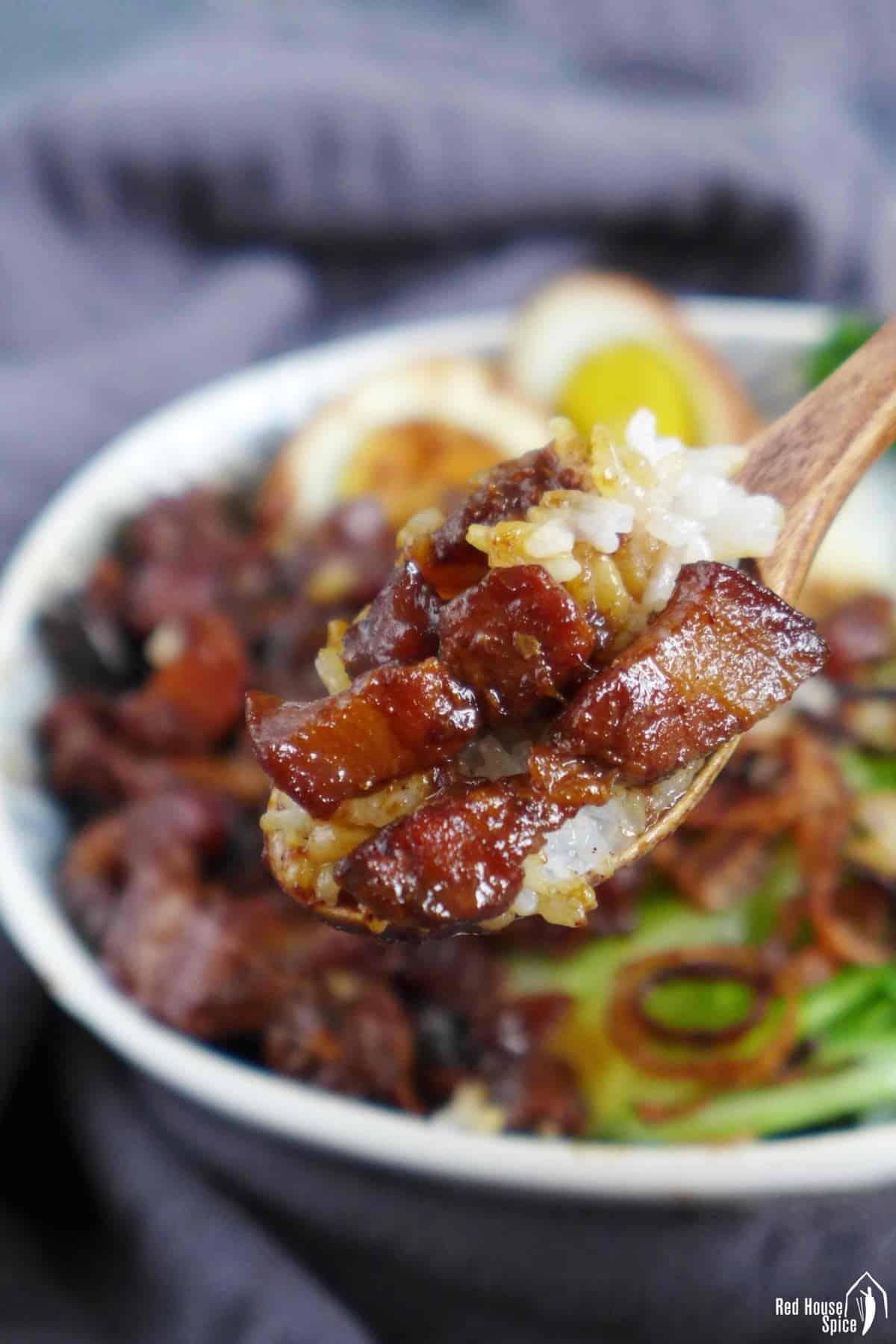
A type of all-in-one rice bowl dish (known as Gai Fan/盖饭 in Chinese), Lu Rou Fan consists of braised fatty pork, hard-boiled eggs (flavoured in the meat broth), steamed rice and blanched veggies. Pork belly, the star component of the dish, is richly seasoned, cooked to an almost gelatinous texture and coated with a layer of sticky broth. Simply irresistible!
Ingredients
Here is all that you need for cooking Lu Rou Fan:
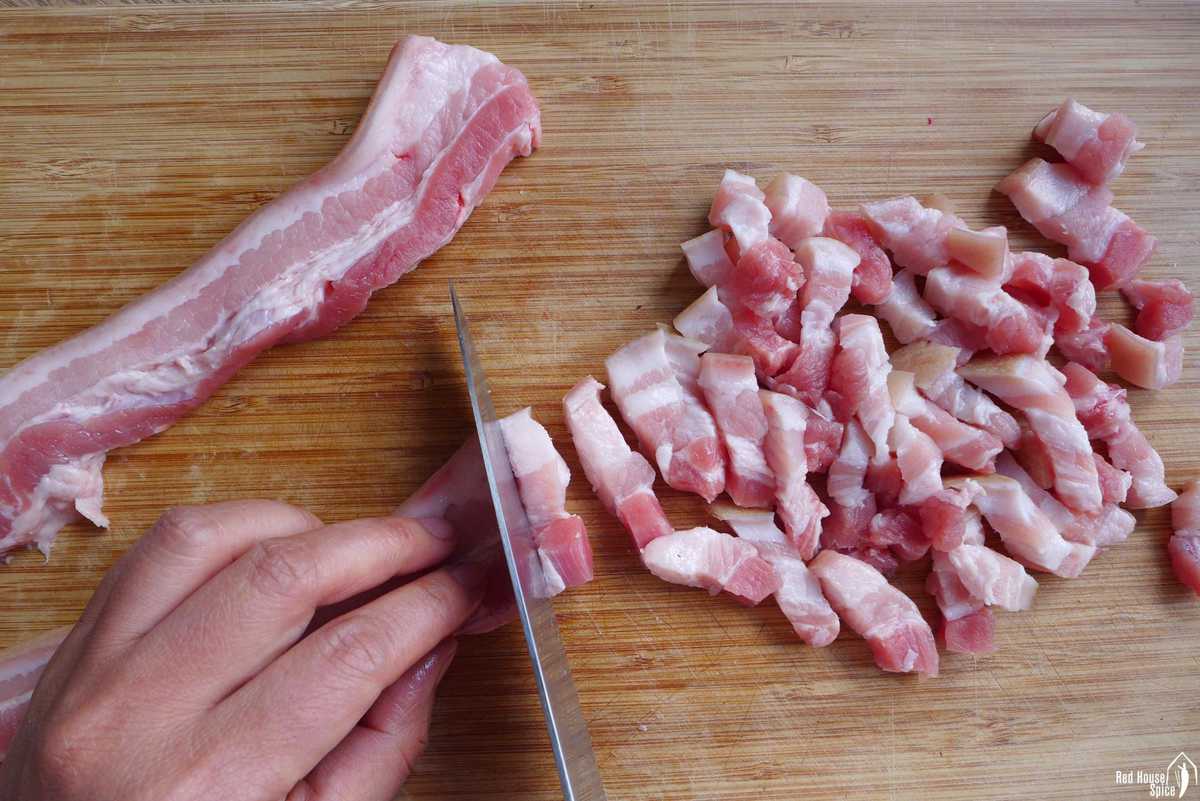
- Pork belly with skin on, cut into strips
- Shallots (or red onion), thinly sliced, plus oil for frying
- Shiitake mushrooms, rehydrated and diced
- Eggs
- Garlic, minced
- Rock sugar (or regular sugar)
- Light & dark soy sauce
- Shaoxing rice wine (skip for an alcohol-free version)
- Chinese five-spice powder & white pepper
- Rice
- Green vegetable
🛎 Can I use other cuts of pork? Obviously, this isn’t a healthy diet choice but an indulgent dish. So I don’t recommend you replace pork belly with other cuts or another type of meat.
Cooking procedure
It takes about one and a half hour to prepare and cook this dish (It may seem long but it’s totally worth the effort!). Before we go into details on each step, here is a summary of the workflow.
- Fry sliced shallots in oil until crispy (skip this step if using shop-bought version). Cook hard-boiled eggs over another burner at the same time.
- Fry pork belly strips (without oil) until slightly golden then add aromatics, seasonings, fried shallots, shiitake mushroom, eggs and water. Leave to simmer until tender.
- While waiting, cook rice and blanch green vegetable of your choice. Assemble the bowl once the pork is done.
Step 1: make crispy shallots
Crispy shallots (fried shallots, 油葱酥) are an essential (and magical) ingredient for Lu Rou Fan. They add an oniony taste and aromatic sweetness making the dish different from other types of Chinese style braised pork, such as the classic Hong Shao Rou (Red braised pork belly, 红烧肉). They also help to thicken the consistency of the broth.
Although shop-bought crispy shallots are available in most Chinese/Asian shops, I highly recommend you make your own if time permits. Believe me! It tastes so much better.
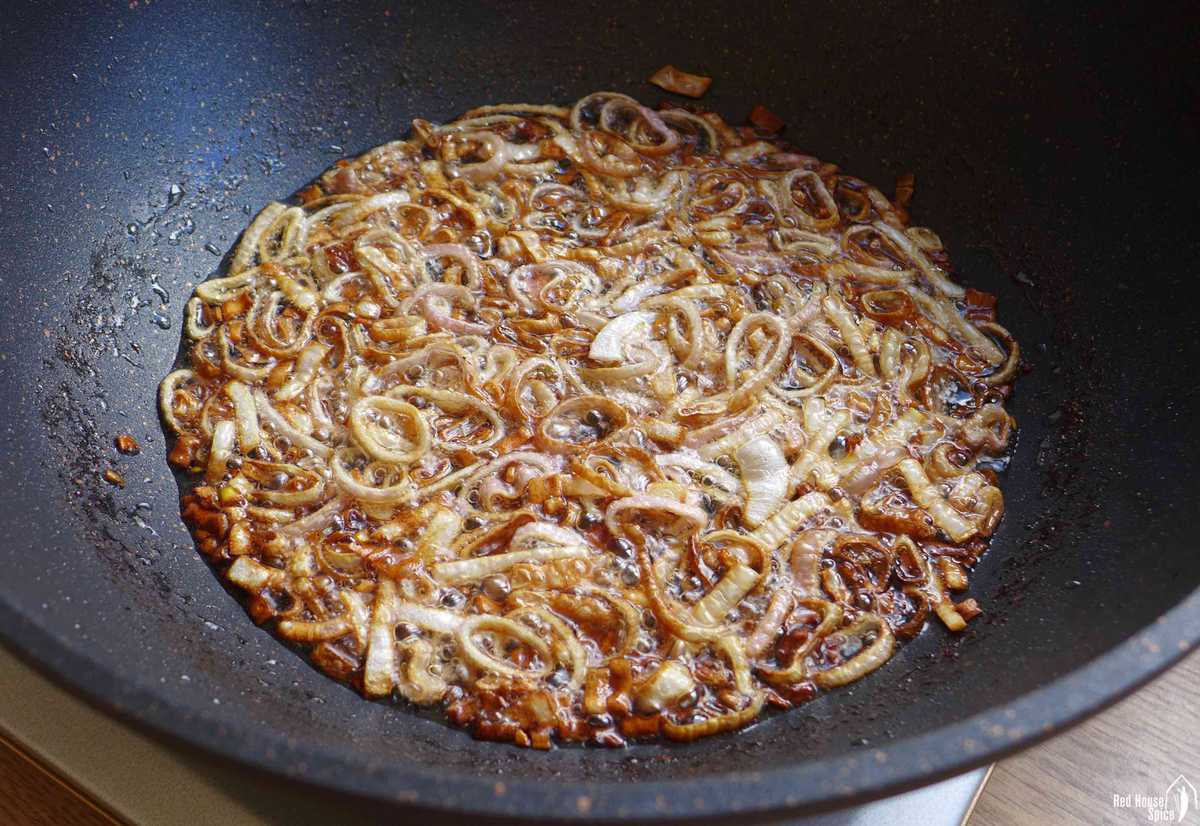
Heat up neutral cooking oil in a wok/pan then put in thinly sliced shallots (or red onion). The quantity of oil should be enough to allow the shallots to float.
Fry over medium heat and remove from heat as soon as the shallots brown (overcooking would result in a bitter taste). Drain through a sieve. Set aside the fried shallots for later use.
🛎 What to do with the leftover oil? It’s not going to be wasted for sure! Use it like the classic Scallion Oil (Cong You/葱油) which can be enjoyed in so many delicious ways (Shanghai Scallion Oil Noodles is a great example).
🛎 Cook eggs at the same time. It took me about 7 minutes to fry the shallots. If you have another burner available, I suggest you cook some hard-boiled eggs during this time. You’ll need them in the next step.
Step 2: cook the pork
Put the pork strips into an empty wok/pan over medium-high heat (you don’t need any oil). Stir occasionally to evenly heat the meat. You’ll see it changing colour and some oil appearing. So what you’re doing is actually frying the meat with its own fat.
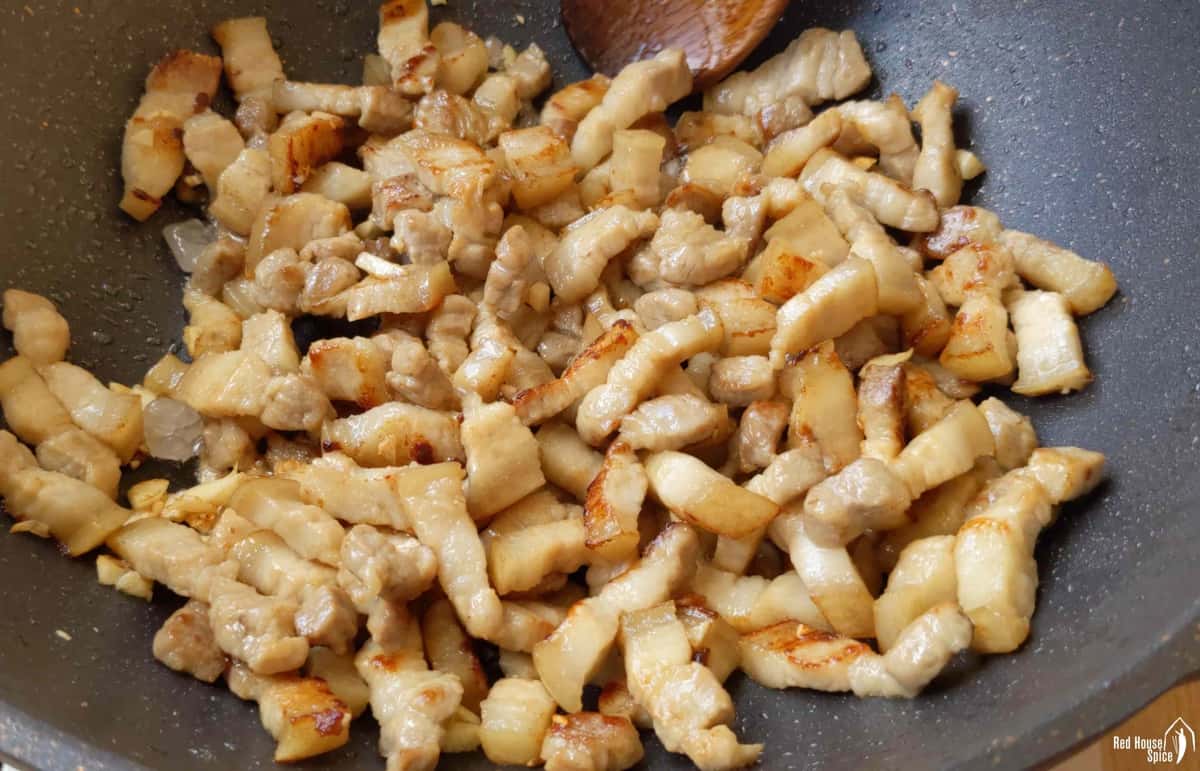
Once the pork gets golden slightly, add minced garlic and rock sugar (or white sugar). Fry until the garlic becomes fragrant and the sugar is melted.
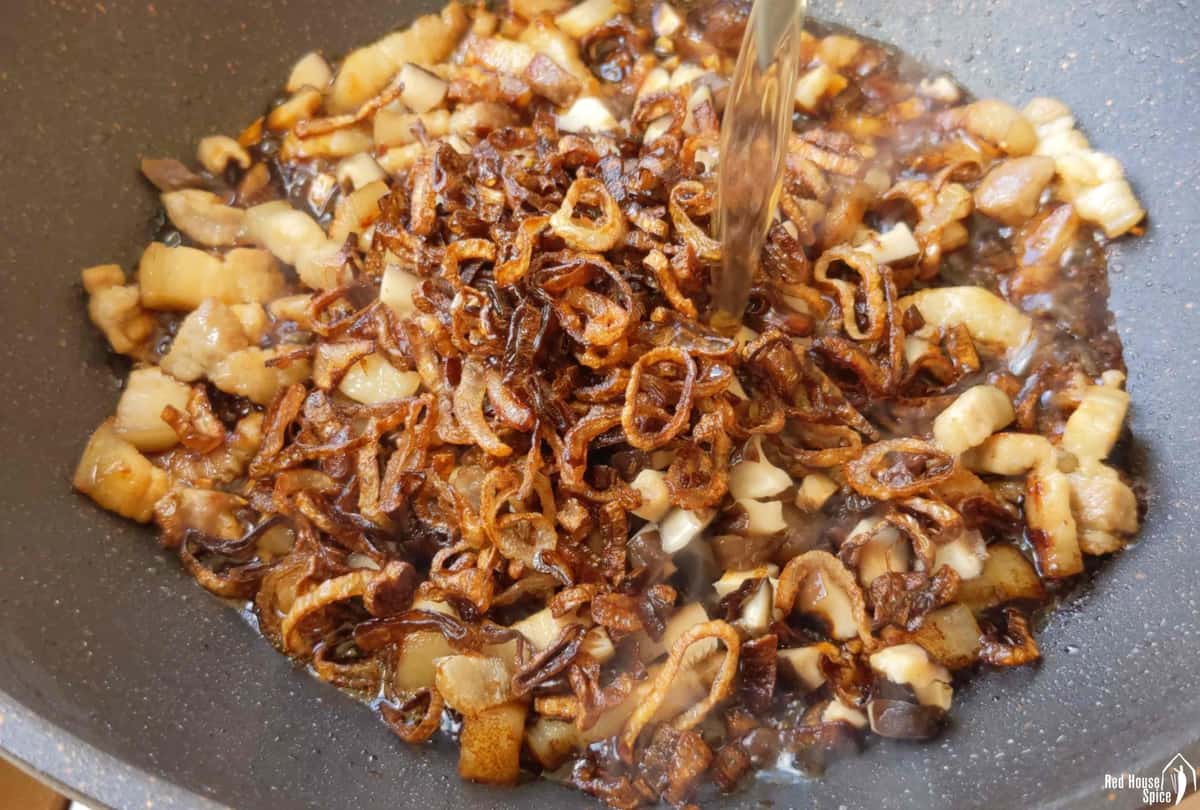
Add the rest of the ingredients: light soy sauce, dark soy sauce, Shaoxing rice wine, five-spice powder, white pepper, diced shiitake mushroom, hard-boiled eggs and fried shallots (I like keeping some to use as a topping when assembling the dish).

To add more aroma to the dish, I use the water in which the mushrooms were soaked as the braising liquid. Top up with more water if necessary to fully immerse the meat.
Once it comes to a full boil. Cover with a lid and turn down the heat to low. Leave to simmer for at least 1 hour until the pork becomes very tender and a little gelatinous.
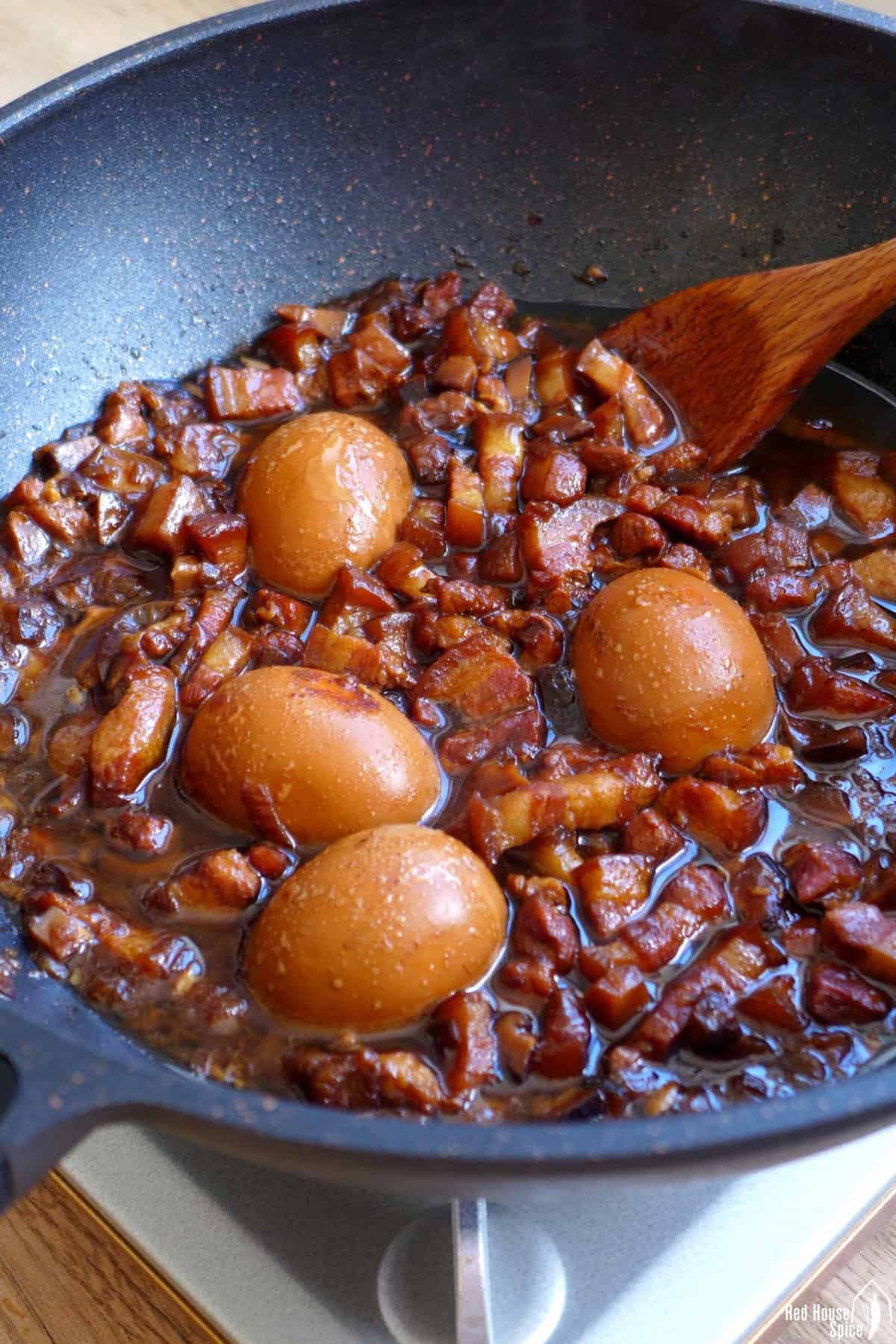
🛎 Use other cookware. The braising part can be done in a stovetop pressure cooker, an instant pot or a slow cooker. Adjust time accordingly.
🛎 Reduce the broth. If there is still a lot of liquid left when the pork is fully cooked, turn the heat to high and boil uncovered to reduce its volume and thicken. However, do not dry it out as it’s nice to serve a little thick broth over the rice.
Step 3: assemble the bowl
While you wait for the pork to cook, prepare another two elements of Lu Rou Fan: steamed rice and blanched green vegetable, such as Bok Choy, Choy Sum, Gai Lan, broccoli, etc.
Blanching vegetables is easy: bring a pot of water, with a little salt, to a full boil then add the vegetable (already washed and chopped). For leafy greens, it only takes 30 seconds or so to cook. Broccoli needs a little longer time. The goal is to cook it but retain its crunchiness. Overcooked vegetables often taste chewy or mushy which isn’t very pleasurable.
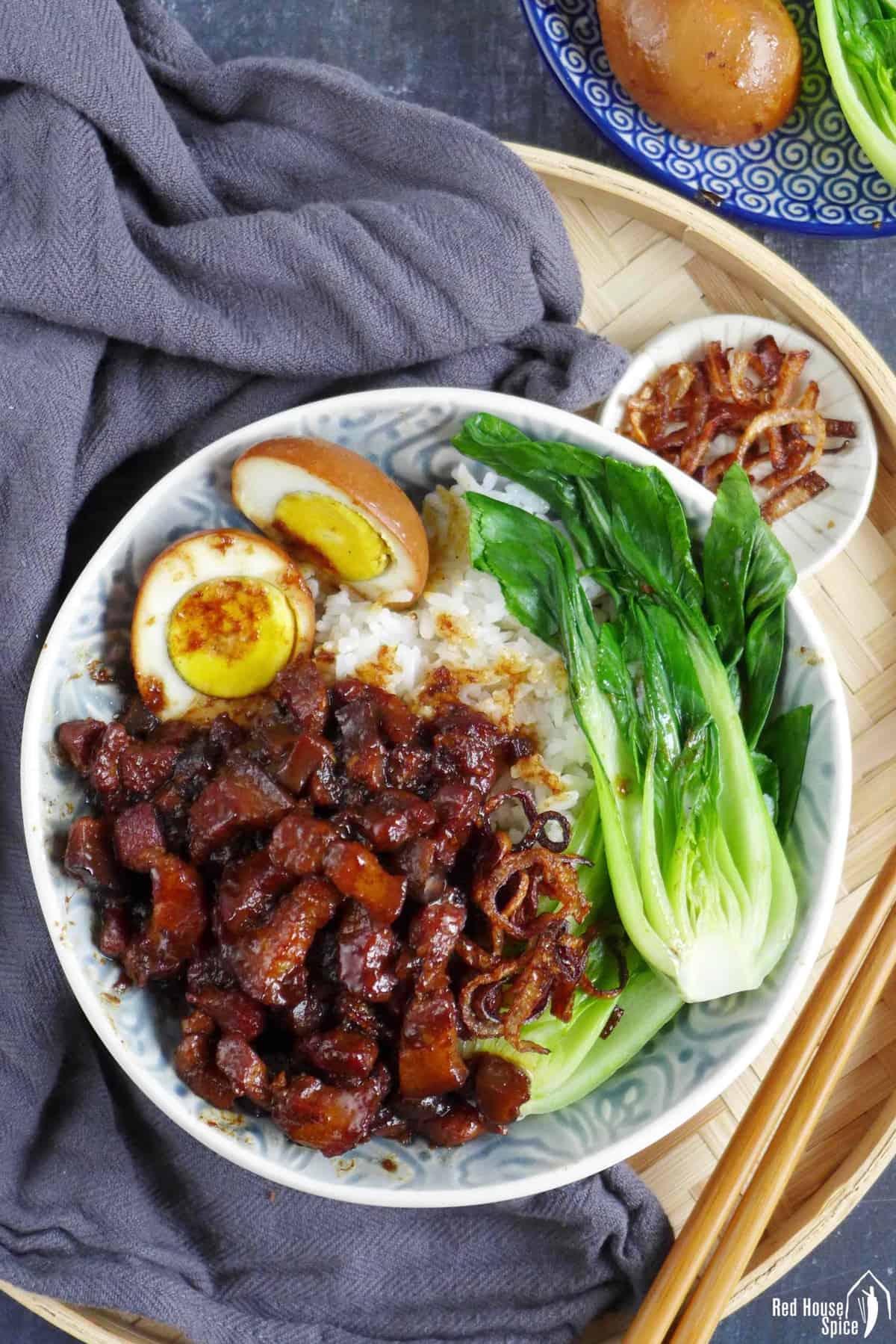
Put cooked rice into serving bowls then top with the vegetable. Use a knife (or a string) to halve the eggs. Add them and the pork over the rice. Sprinkle some leftover crispy shallots. Here you are! An all-in-one, scrumptious meal is ready to be served.
🛎 Make in advance. Since this dish takes some time to cook, I highly recommend you cook a large batch of pork and freeze the leftover for future use. Simply increase the ingredient quantity proportionally and lengthen the cooking time accordingly.
Other pork dishes
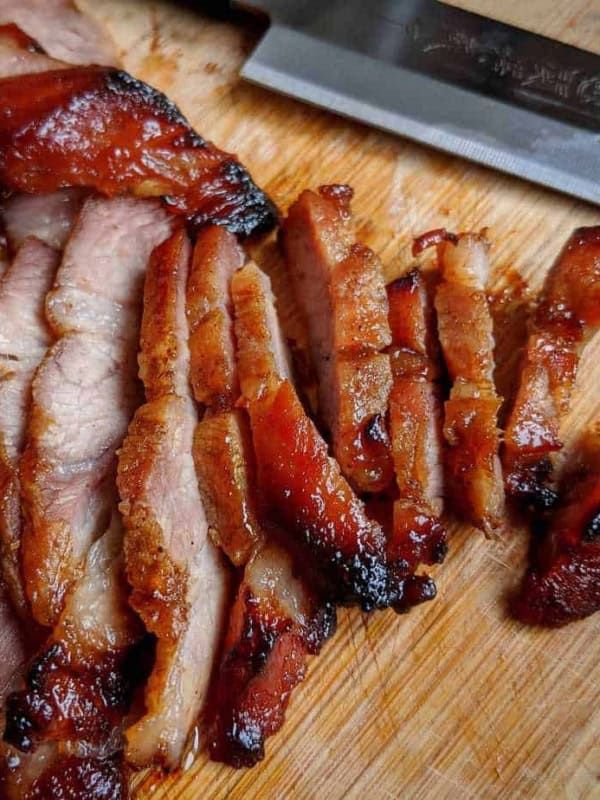
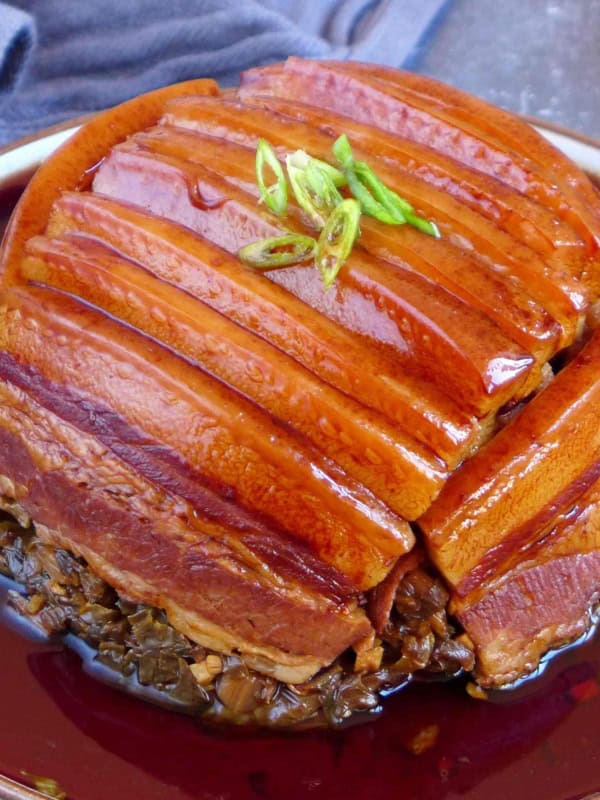
Looking for more ideas to cook pork? Check out these classic recipes:


📋 Recipe card
Love this recipe? Please leave a 🌟🌟🌟🌟🌟 rating and a comment. Thank you!
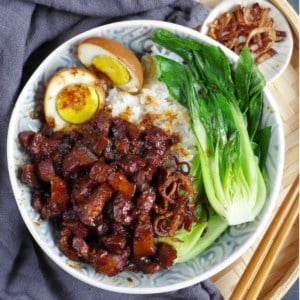
Lu Rou Fan (Taiwanese Pork Rice Bowl, 卤肉饭)

Video
Ingredients
For the crispy shallots (skip if using shop-bought version)
- 250 ml neutral cooking oil, about 1 cup
- 140 g shallots (or red onion), thinly sliced, about 5oz
For the pork
- 450 g pork belly, skin on
- 5 cloves garlic, minced
- 20 g rock sugar (or 1 tbsp white sugar)
- 2 tablespoon light soy sauce
- 1 tablespoon dark soy sauce
- 2 tablespoon Shaoxing rice wine
- ½ teaspoon five-spice powder
- ¼ teaspoon ground white pepper
- 5 shiitake mushrooms, rehydrated and diced
- 4 hard-boiled eggs
You also need
- 4 portions plain steamed rice
- Blanched green vegetable, see note 1
Instructions
Fry the shallots
- Heat up oil over medium heat. Add sliced shallots. Fry until they become golden and crispy. Drain through a sieve. Set the shallots aside for later use. The oil can be used in other dishes (see note 2 to learn how).
Fry the pork
- Cut pork belly into strips. Put into an empty wok (without oil) over medium-high heat. Fry until some fat has been extracted and the meat browns slightly. Stir in garlic and rock sugar. Fry until fragrant and the sugar has melted.
Braise the pork
- Add light soy sauce, dark soy sauce, Shaoxing rice wine, five-spice powder, white pepper, diced shiitake mushroom, fried shallots (leave some for topping) and hard-boiled eggs.
- Pour in the water in which the mushrooms were soaked. Top up with more water to immerse the meat completely.
- Bring it to a full boil. Turn the heat down to the lowest. Cover with the lid and leave to simmer for at least 1 hour until the pork becomes very tender (check the water level halfway through and top up if it seems too dry). This step can be done in a stovetop pressure cooker or an instant pot. Adjust time accordingly.
- If there is still quite a bit of liquid left, turn the heat to high and cook uncovered to reduce its volume and thicken (Do not dry it out though as you’d need some liquid to serve with the meat).
Assemble the dish
- Put freshly cooked rice in serving bowls. Top with blanched vegetable and halved eggs. Then spoon the pork, along with some thickened broth, over the rice. Add the rest of the fried shallots. Serve immediately.
Make in advance
- Once the pork cools completely, store in an airtight container and keep in the fridge for up to three day or two months in the freezer.
- Reheat over low heat (defrost first if frozen) until piping hot. If necessary, add a little water to help to heat the pork thoroughly.
Notes
Your Recipe Notes
Nutrition information is automatically calculated, so should only be used as an approximation.













Can I use baby Bella mushroom instead of shiitake mushrooms?
Yes you can. The general taste of the dish will be a little different but it will still be nice.
Delicious… BUT!
When I went to sear the chopped pork belly, all of the water had to cook out of the meat before browning started, which caused all of the fat to render out, leaving me with a heap of fatty oil and much less tender pork in the end. How can I get the pork pieces browned without rendering out all of the fat in the process?
Thank you for trying out my recipe Jurann! Here are a few tips: Preheat your wok/skillet; Keep the heat medium-high (not low) when searing; Spread the pork pieces to avoid trapped moisture; Stir/flip the pork sparingly. Also be aware that, as I mentioned in the recipe, some fat is supposed be rendered out during this process. Hope this helps!
Made this last night and it was really good! I didn’t have shallots so I just used regular sliced onions and it still turned out well. Will have to try with the fried shallots next time!
Very happy to know it worked out well for you Emily. Yes, try the fried shallot version next time!
Thanks for sharing this recipe… It was well liked by my family!! It satiated our craving for this Taiwan food.
Very happy to hear your positive feedback!
This I got to try. Not as difficult or intimidating as imagined
so a taipei travelogue when I chow down! Thanks
This will be a mainstay in my kitchen from now on. Might use my pressure cooker next time to cut down the cooking time but it was well worth the time spent cooking.
I had this dish as a special from my local Chinese restaurant (shout out to Hochima in Tottenham, London) and have been obsessed ever since. I tried making your recipe this week for a big family visit. We all absolutely loved it. So easy to make. I shall be doing it regularly.
Thanks for your really clear recipes and excellent tips.
You’re welcome Natascha! So happy to know you enjoyed the dish.
Excellent recipe, i enjoyed it very much.. Unfortunately i cannot post a picture here.
It is definitely different from Philipino Abode and Indonesian Babi Ketjap which are also pork in soy sauce recipes but all really different. I enjoy them all.
In Indonesia it is like Babi Hong. A lot of variation how it is cooked. Adobo uses vinegar to cut out the grease. Babi Hong, sometimes 5-spice is used, sometimes with ginger, dried squid, and fish sauce, light soy sauce, and Indonesian kecap manis. Also sugar or Ve-Tsin. Sometimes also oyster sauce is used. The light soy and fish sauce are added on the part of hot wok without food to become fragrant.
The babi kecap is just simple pork belly dish with garlic and Indonesian kecap (soy sauce) and cooked a long time. Then sometimes boiled eggs, cubed bamboo shoots, and cubed tofu, and dried shiitake mushrooms are added, even cubed potatoes; a very easy dish. My first dish that I learned how to cook. The babi hong is more complicated. Also eaten with some quickly boiled in salted greens.
By far the best Ru Rou Fan recipe as the sauce is really nice and thick and pork just melt in the mouth. I sliced the mushrooms instead of diceing them as we like more bite of the mushroom.
That’s wonderful to hear Dawn!
Thank you, Wei for this recipe which I’m keen to try as it sounds delicious. I have been following your contributions for the past one year and have tried many of your recipes with great success. I appreciate your clear step-by-step instructions and video accompaniments which are most helpful. I am quite fortunate that here in Australia the ingredients which you use are readily available so there’s no reason to cook a great dish!
You’re welcome Susan! So happy to know you find my recipes helpful!