


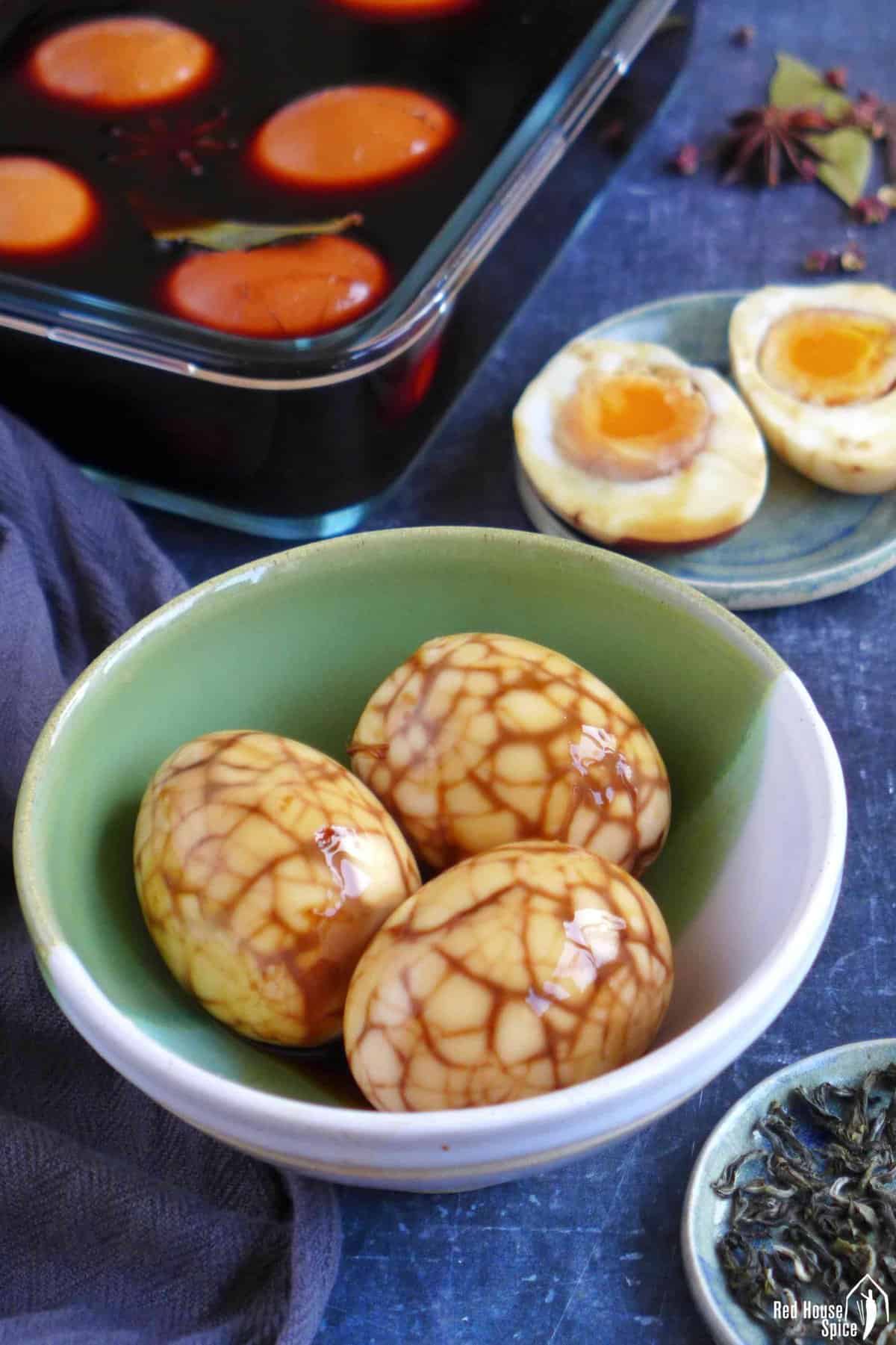
Probably the best way to enjoy hard-boiled eggs! Chinese tea eggs are packed with flavor and have a beautiful marble look. They make a great high-protein and low-calorie snack.
Pin this now to find it later!
Pin ItNote: This is a revised version of my post published in 2017. It provides more tips and process shots.
Table of Contents
The memories of my happy childhood are often food related. The recent school trip my daughter took reminded me of a particular food that I always ate on school excursions when I was her age. It was Chinese tea eggs, a simple and humble food that is popular in every region of China.
What are tea eggs
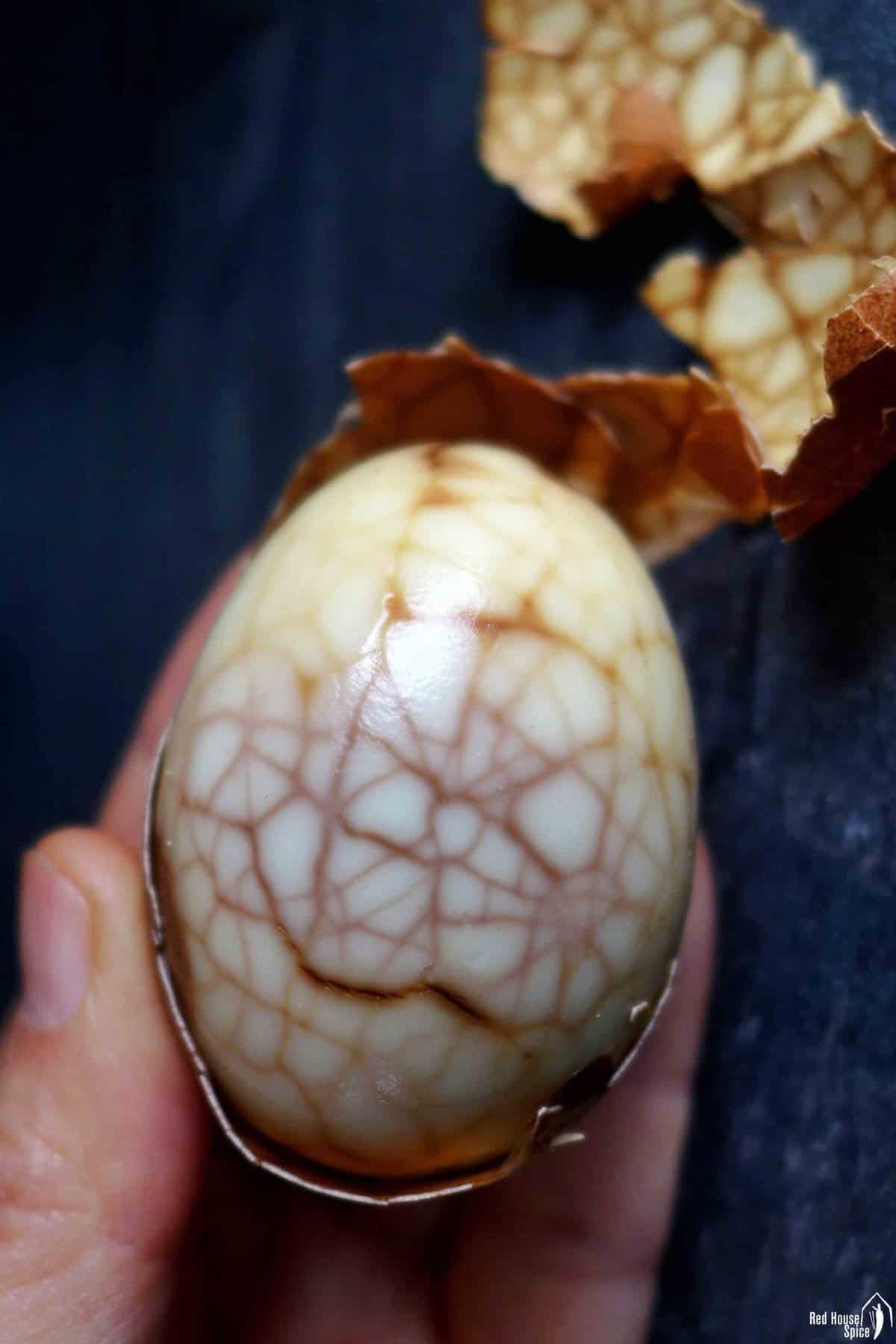
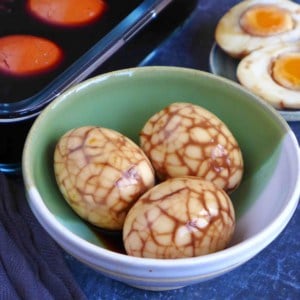
Tea eggs, known as Cha Ye Dan/茶叶蛋 or Cha Ji Dan/茶鸡蛋 in Chinese, are hard-boiled eggs that are cracked and soaked in a marinade infused with tea, spices and soy sauce. This intensely flavored liquid not only seasons the eggs but also creates a marble appearance. Hence they are also referred to as marbled eggs or tea-smoked eggs in English.
During the steeping process, the marinade seeps through the cracks and leaves a marble pattern on the egg whites, while the egg yolks absorb some flavor and become creamier and less dry than regular hard-boiled eggs.
Different home cooks and street food vendors have their own unique variations of tea egg recipes. The taste varies depending on the choice of tea, spices, soy sauce quantity, steeping time, etc. However, all versions share a similar profile: savory, umami, and aromatic, with a hint of sweetness and a smoky undertone.
Top tips
Before diving into the detailed recipe, keep these tips in mind:
- Feel free to choose any tea you prefer or have on hand.
- Dark soy sauce is essential for the best marbling effect.
- Reduce the boiling time if you prefer soft yolks.
- Adjust the steeping time according to your desired saltiness.
- Reuse the marinade for future batches.
Ingredients & substitutes
Eggs
Hen eggs are used in Chinese tea eggs, but I also cook quail eggs from time to time (they absorb the flavor more effectively).
Tea
Which type of tea? You may ask. There isn’t a set rule. Simply choose what’s available in your house or the one with your preferred aroma. However, herbal tea isn’t suitable for this recipe.
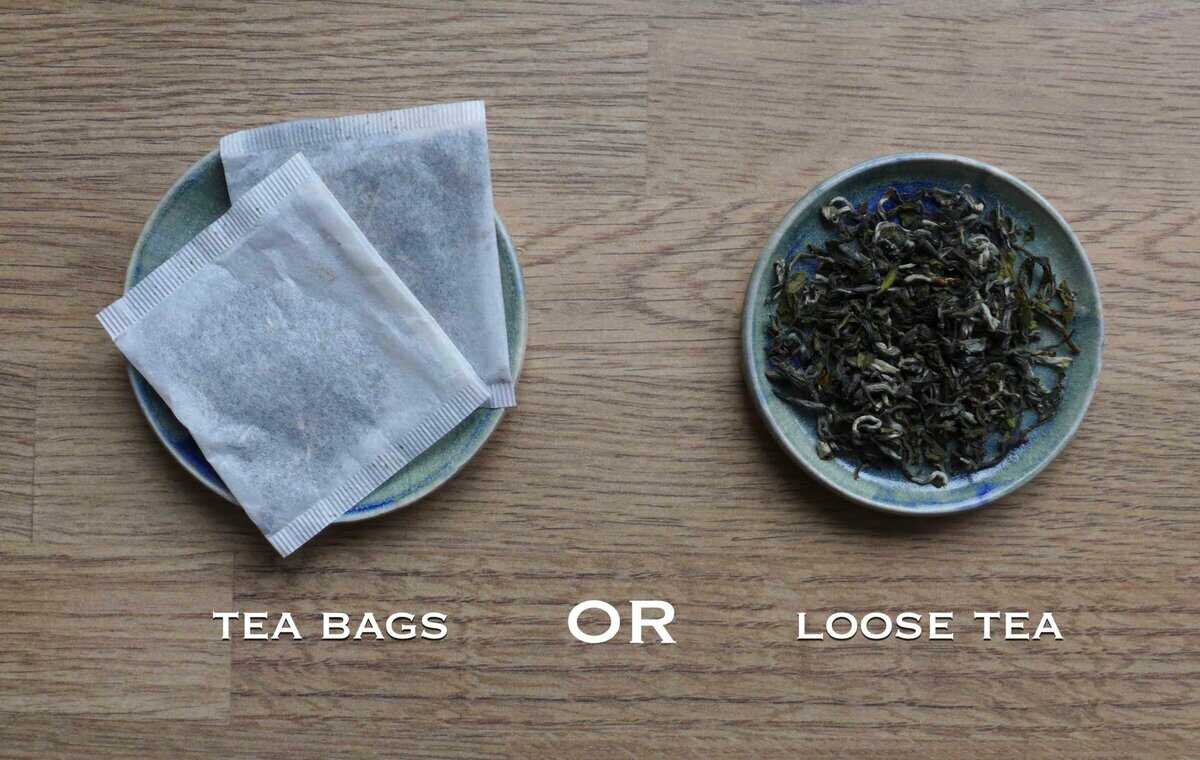
My parents use green tea (often the one infused with jasmine flowers) to make tea eggs. This is simply because it’s the most common type of tea in Chinese households.
Through testing, I found regular black tea to be a very good alternative. It’s cheap, easily accessible, and creates a more effective marble look. Either tea bags or loose tea leaves can be used.
Other types of tea, such as oolong, pu-erh, white tea, etc. are all fine for this recipe. I personally wouldn’t use very expensive ones (better save them for drinking).
Spices
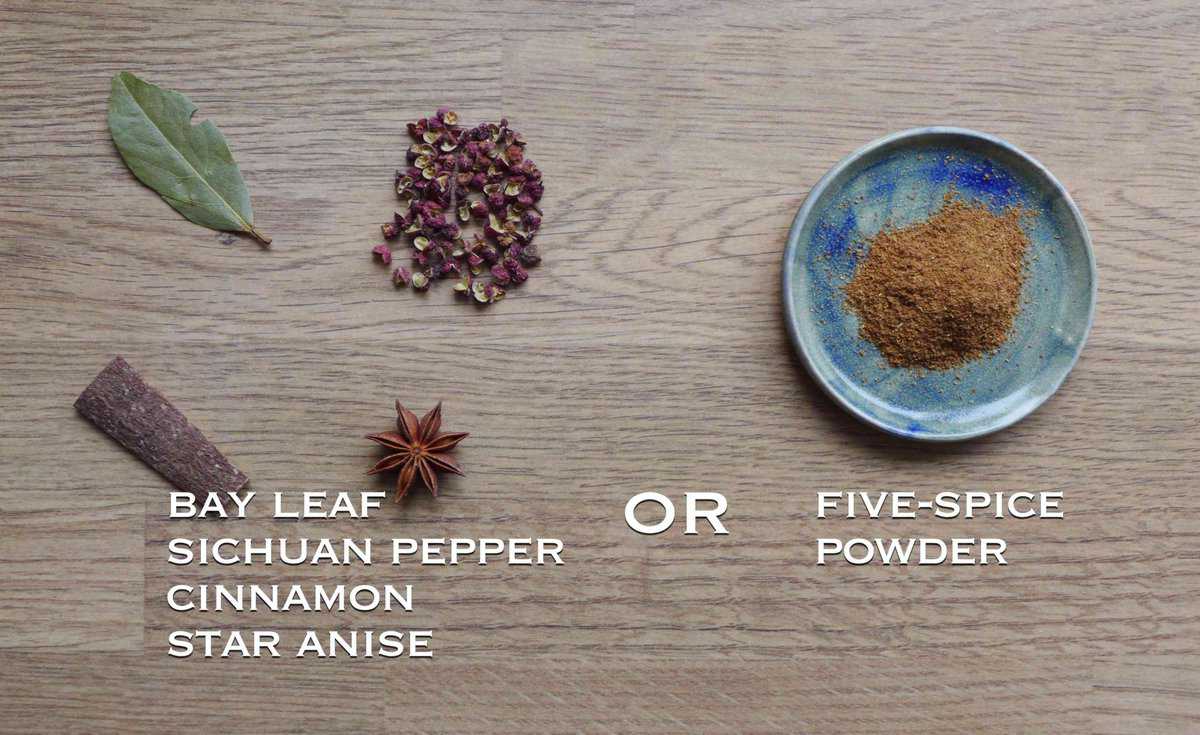
I use a few common Chinese spices to enhance the flavor. They include star anise, Chinese cinnamon stick (cassia cinnamon), bay leaf and Sichuan pepper. If you enjoy a hint of heat, add a few dried chili peppers too.
It’s fine to omit 1-2 spices or add a few extra, such as fennel seeds, cloves, tangerine peels, etc.
Don’t have any whole spices? No worries! Replace them with a teaspoon of Chinese five-spice powder. It works well too.
Seasonings
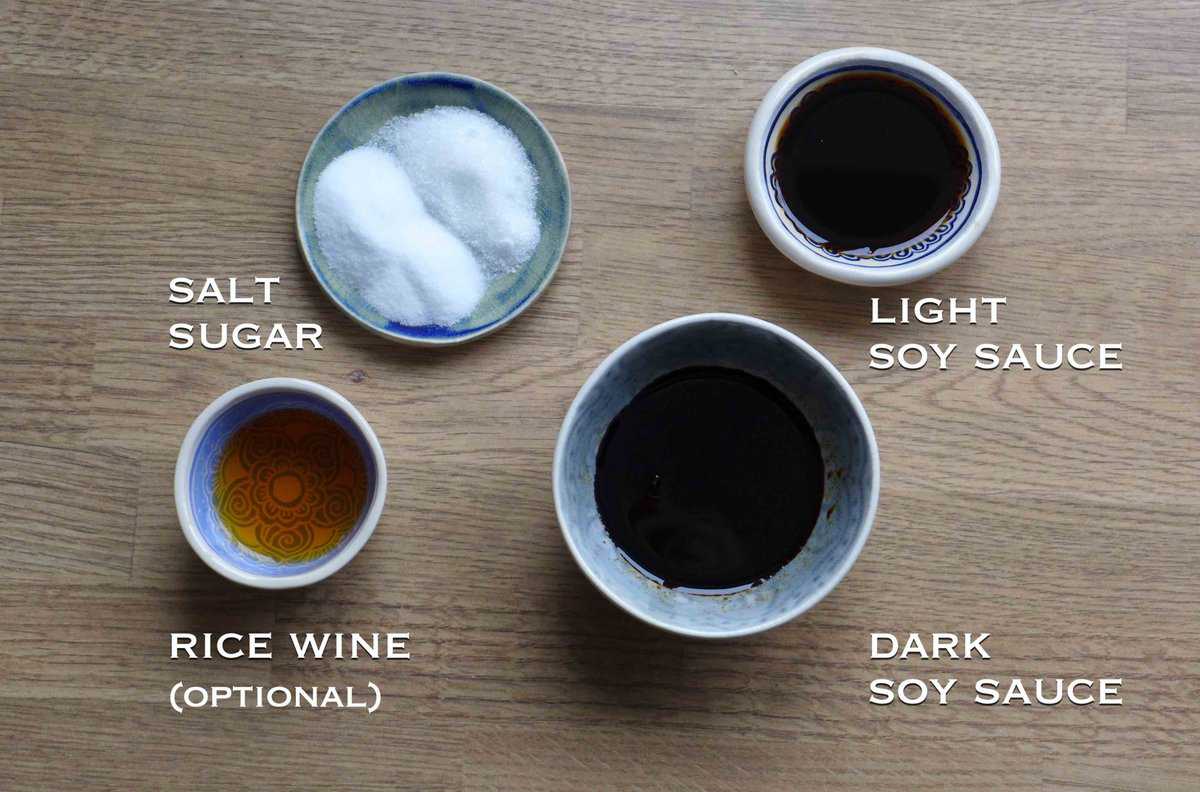
Soy sauce is essential to this recipe. The light version provides aroma and salty flavor, while the dark version helps to create the marble effect effortlessly.
Add a little Shaoxing wine if you happen to have some (it’s fine to skip it). Finally, include some salt and sugar (any type).
Cooking procedure
Step 1: Boil the eggs
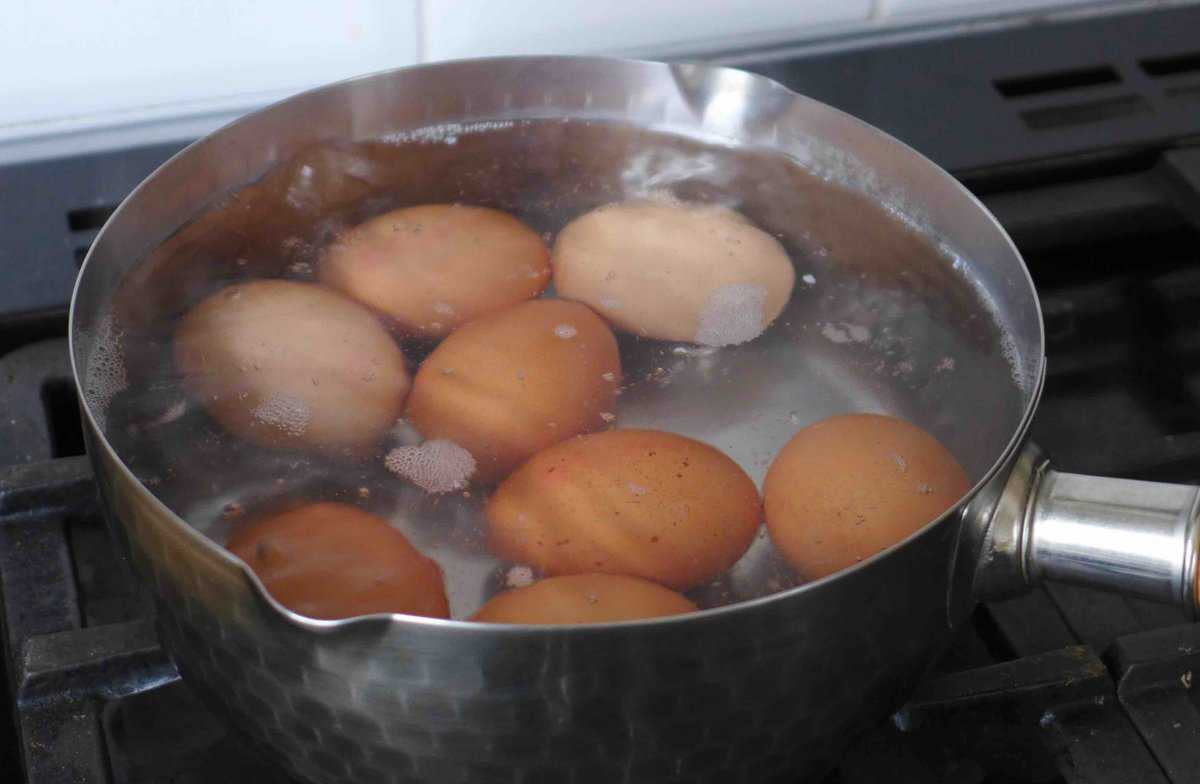
Bring a pot of water to a boil, then gently place the eggs in the water and cook over medium heat for 8 minutes.
The cooking time required depends on the size, quantity and temperature of the eggs. For testing this recipe, I used 8 large, room-temperature eggs. Adjust the time if you’re cooking less or more eggs, or your eggs are smaller, chilled, etc.
🛎 Want runny yolks?
Classic tea eggs are hard-boiled. In other words, the yolks are fully cooked. If you prefer runny yolks (like soy sauce eggs found in Japanese ramen), reduce the boiling time to 7 minutes.
Step 2: Prepare the marinade
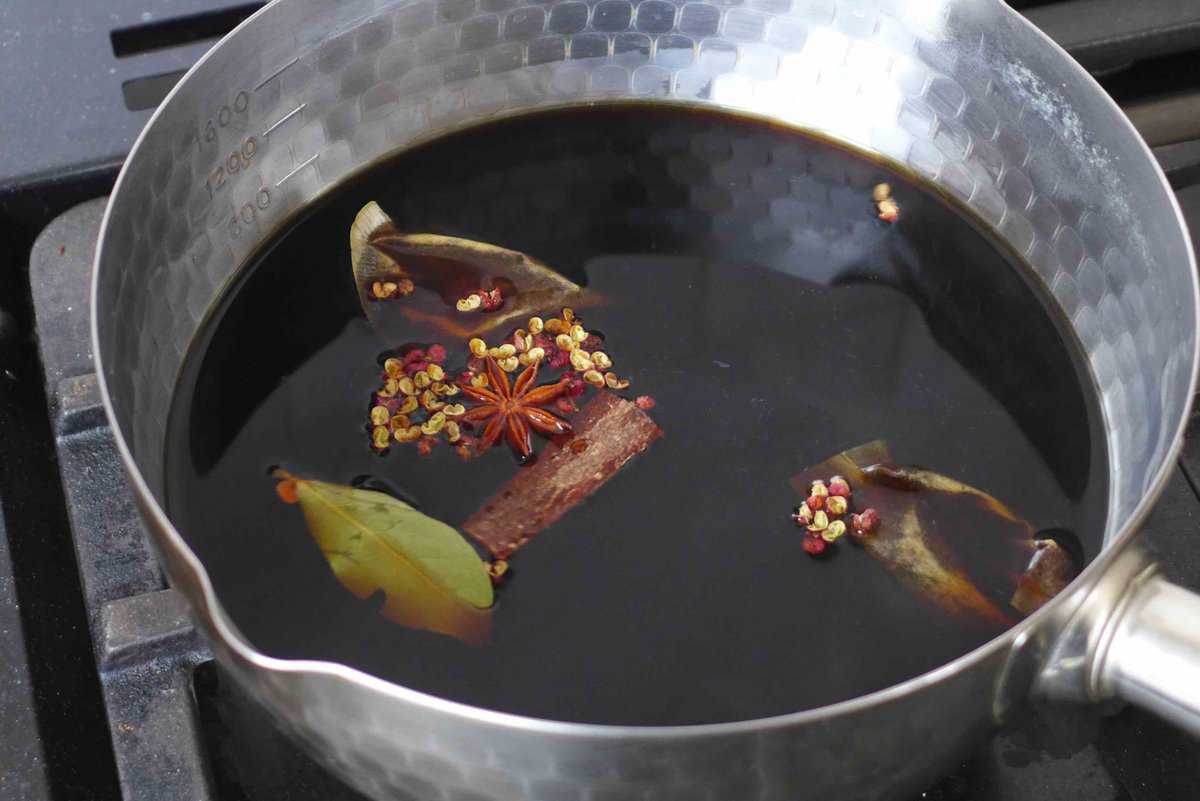
While waiting for the eggs to cook, gather all the spices and seasonings for the marinade and place them in a saucepan with 2 cups of water. Bring the mixture to a boil, then let it simmer for about 3 minutes.
Step 3: Cool & crack the eggs
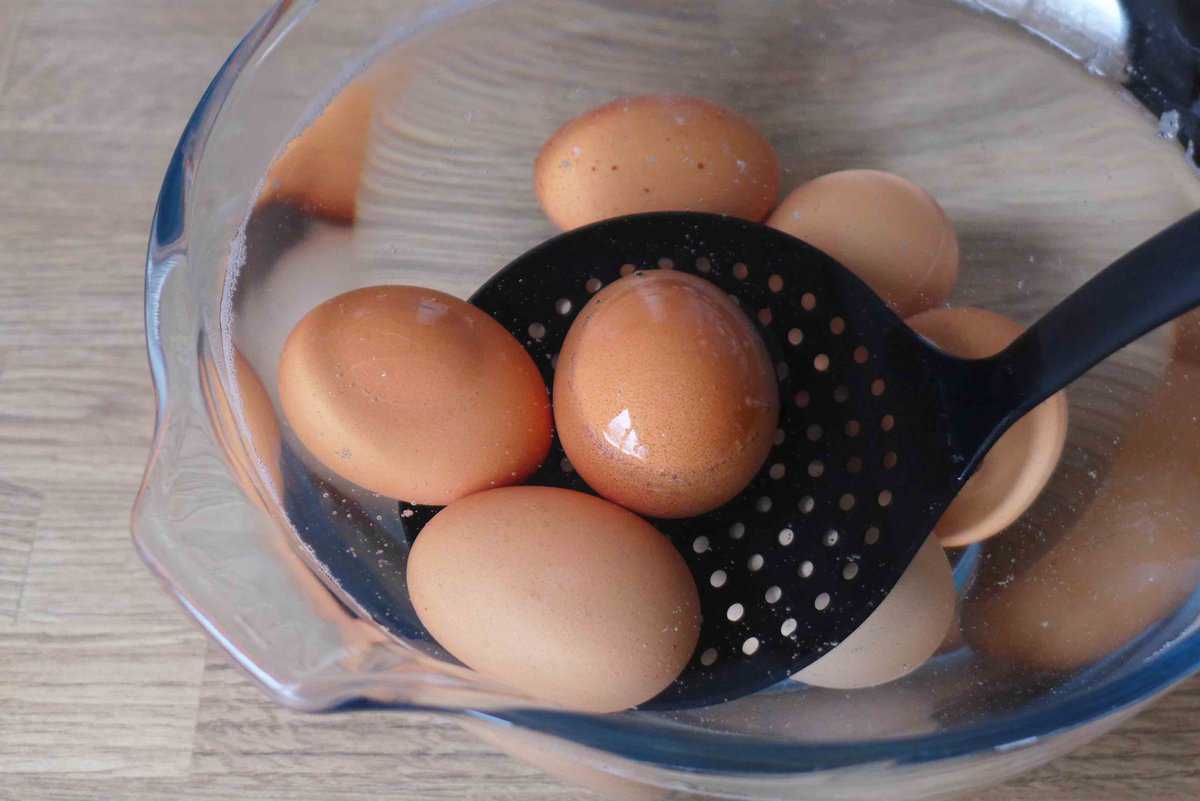
Immediately after cooking, transfer the boiled eggs to a bowl of cold water (tap water) to stop them from being further cooked.
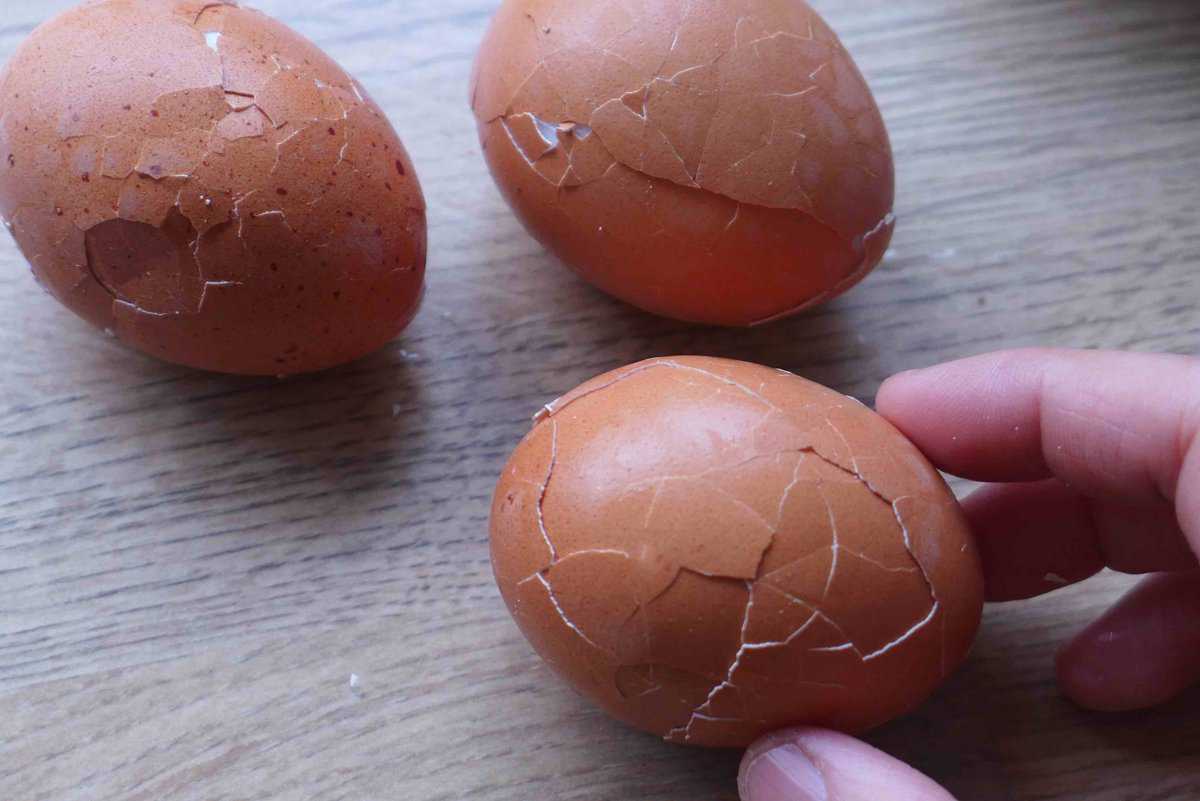
Once they are cool enough to handle, gently crack the egg shells all around. You can do so against the kitchen counter or use the back of a spoon.
🛎 Note: The cooling process will dramatically reduce the heat of the eggs so that they aren’t cooked further.
Step 4: Steep the eggs
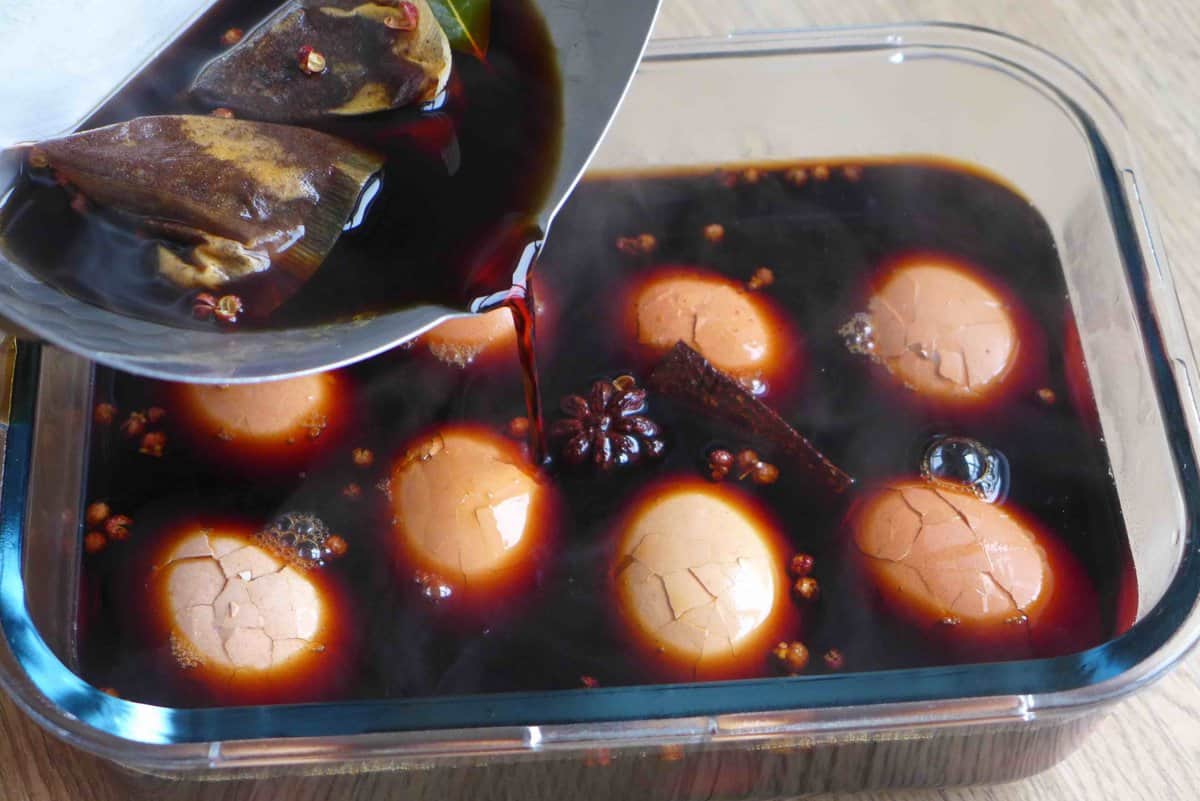
Put all the eggs in a container. Then pour in the marinade, along with the tea and spices. Cover with a lid and let the eggs steep for 12 to 24 hours.
🛎 Note: It’s best to use a container that can fit all the eggs snuggly. This way the marinade fully covers the eggs ensuring an even coloring. If not, flip the eggs once during the steeping process.
Alternatively, use a resealable plastic bag to marinate the eggs. Make sure to squeeze out any air before you seal it.
Tips on the marble effect
There are three factors that affect the marbling result. Consider these if you’re after a striking look.
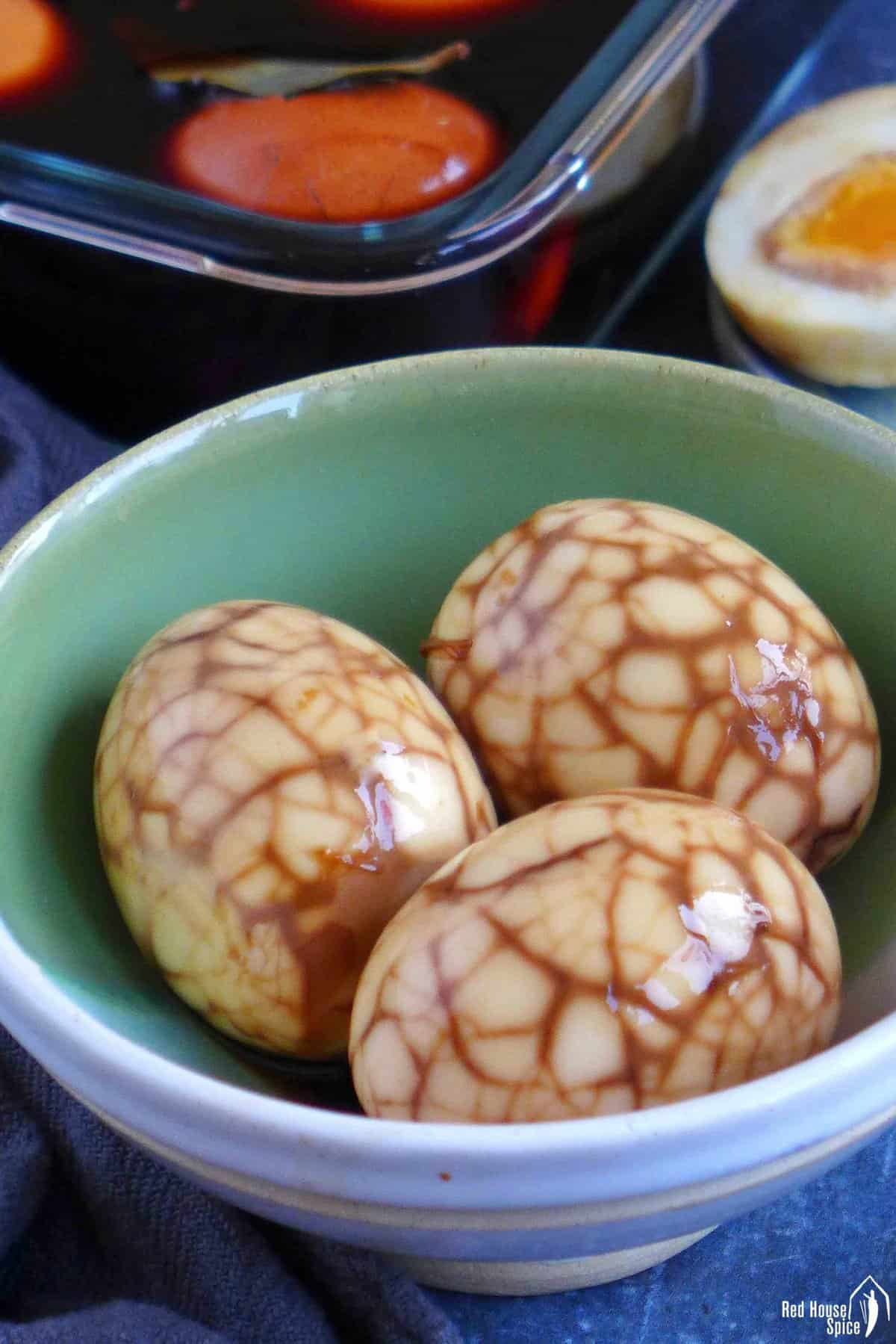
- The steeping time. The longer the eggs stay in the marinade, the more intense the marble look.
- Tea. Generally speaking, black tea (Known as Hong Cha/红茶 in Chinese) produces the darkest color.
- Dark soy sauce. Don’t skip this ingredient which is commonly used in Chinese cuisine for browning food (Think Red Braised Pork Belly). You may increase its volume and reduce the salt accordingly.
Storage advice
If your kitchen isn’t overly hot, it’s fine to leave the container on the kitchen counter for 12 hours. If longer, place it in the fridge.
The marble stains, flavor and saltiness of the eggs will intensify as the steeping time extends. However, be aware that the eggs might become too salty if you leave them in the marinade for over 24 hours.
After being removed from the steeping liquid, these tea eggs can be stored in the fridge for another 4 days.
Reuse the marinade
Like how master stock (Lu Shui/卤水) is preserved in Chinese cooking, I often reuse the tea egg marinade for subsequent batches. However, as the flavor and saltiness decrease with each use, you’d need to top up the tea, spices and seasonings when necessary.
Also, to reduce the risk of bacteria growth, I suggest you freeze the marinade between uses and reboil it each time before using it again.
Serving ideas
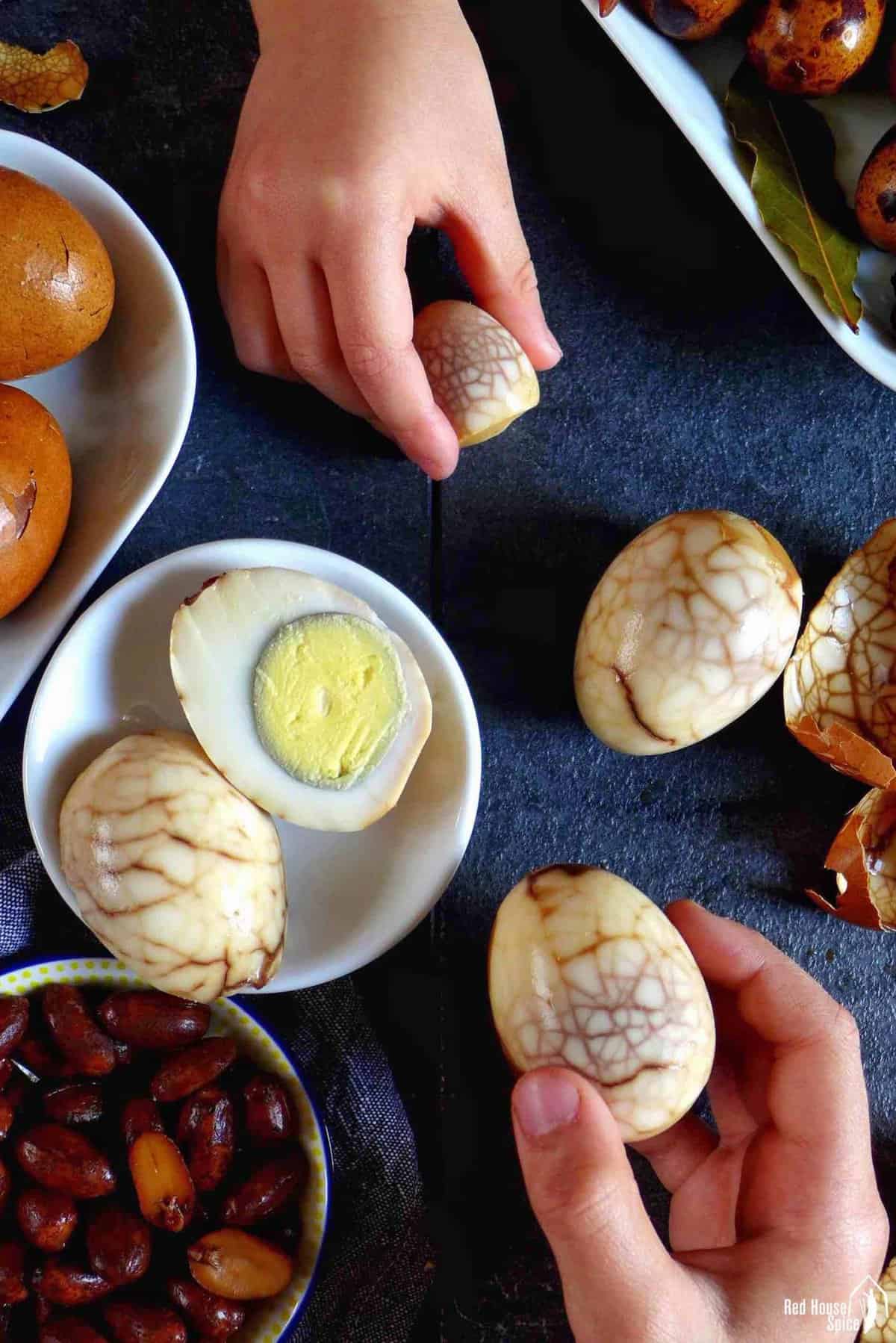
There are so many ways to enjoy these tea eggs. I grew up eating them at breakfast or as an after-school snack. And they were an essential item to bring on a journey, either on lengthy train trips or for short excursions. So tasty and handy!
Other serving ideas include:
- Over a bowl of steamed rice, along with other savory toppings, just like how you enjoy Lu Rou Fan (Taiwanese pork rice bowl).
- Add it to your favorite noodle dishes. In my hometown, tea eggs are a popular addition to Lanzhou Beef Noodle Soup.
- Put them into your packed lunches (bento), or smash them in between sliced bread to make a quick sandwich.
- Use it as a topping for Congee (Chinese rice porridge). Add a dash of homemade chili oil and some chopped scallions/cilantro.
📋 Recipe
Love this recipe? Please leave a 🌟🌟🌟🌟🌟 rating and a comment. Thank you!
Chinese Tea Eggs (茶叶蛋)

Ingredients
- 8 eggs, at room temperature (see note 1)
- 2 bags black tea, or 1 tablespoon of loose tea (see note 2)
- 1 star-anise, see note 3
- 1 bay leaf
- 1 piece Chinese cinnamon, aka cassia cinnamon
- ½ teaspoon Sichuan peppercorn
- 2 tablespoon dark soy sauce
- 1 tablespoon light soy sauce
- 1 teaspoon Shaoxing rice wine, optional
- ½ tablespoon sugar
- 2 teaspoon salt
Instructions
- Bring plenty of water (enough to cover all the eggs) to a full boil in a pot/saucepan. Gently slide in all the eggs. Leave to boil uncovered over medium heat for 8 minutes (if you prefer runny yolks, reduce the time to 7 minutes).
- While waiting for the egg to cook, put all the other ingredients into a clean saucepan. Add 2 cups (500ml) of water. Bring to a boil then leave to simmer for 3 minutes. Set aside.
- When the eggs are cooked, transfer them to a large bowl of cold water. Once they’re cool enough to touch, gently crack them one by one against the kitchen counter making sure the shells are cracked all around.
- Place the eggs in a container (ideally one that can fit them snuggly). Pour in the marinade. Cover with a lid and leave to steep for 12 to 24 hours before serving (see note 4).
- To reuse the leftover marinade: Freeze it if you don’t plan to make another batch soon. Add more tea, spices and seasonings when necessary. Always boil it for each use to prevent bacteria growth.
Notes
Your Recipe Notes
Nutrition
Nutrition information is automatically calculated, so should only be used as an approximation.












Loved the recipe! I did everything in the 1st recipe except added 1 tsp of 5 spice powder. My husband tried it the first time when I did the straight recipe and he said he was missing the 5 spice flavor. I made it again using the same marinade but added a teaspoon of 5 spice. Now he says it tastes like his mom’s tea eggs! Score! Thank you so much for this recipe!
That’s great news! It’s my great pleasure to share. Glad to know homemade tea eggs have made you and your husband happy.
Hello! Can I reuse the sauce for the next batch of tea eggs?
Yes you surely can. Happy cooking!
Thanks for such good recipes & info! I’m not having much success with egg marbling though. I was told lapsang souchong was the best tea to use. I think it’s great for flavour but perhaps not so good to get the staining effect? Am steeping for around 6 hours but the marbling is extremley faint/hardly noticeable. The quails eggs tasted great but were still snow white. How long do you usually steep? Many thanks
Hi Sarah! Thank you very much for following my recipe!
There are 3 factors which can affect the marbling result: 1. The steeping time. I recommend you steep the eggs for at least 12 hours before serving. For a more attractive look, you may steep them longer. 2. The tea. In general, black tea works the best. Since lapsang souchong is a type of black tea, it should work fine. I usually use ordinary English black tea. 3. The dark soy sauce. It also stains the egg. You may increase its volume (reduce the salt accordingly if you don’t want them too salty).
Wish you good luck!
I had the same problem and read online that you have to make sure to pierce the membrane when you crack the eggs. I tapped very softly but will tap harder next time. The egg should stay intact since its boiled. Using older eggs may help too. I like this recipe though!
Hi Cami! Thank you so much for sharing your tips. My readers will appreciate your input!
Hello, thanks for recipe.
I ain’t understand one thing. Need I steep in fridge or at room temperature? Is it safe to steep eggs at room temperature for 12 hours? I reckon they will addle a little after that…
It’s ok to steep at room temperature for 12 hours as long as it’s not on a hot summer day. The salt in the liquid will prevent it from going off for this length of time. I suggest you keep it in the fridge if left longer.
This recipe looks great.with the pepper/chili, does it come out spicy? Also, can the 12hr steeping be done in the fridge?
Hi Daniela! For the amount of Sichuan pepper & dried chilli I use for this recipe, the tea eggs won’t come out spicy. They are for adding a bit of extra flavour and you can skip them if you wish. Yes you can leave the eggs in the fridge.
Thanks – great recipes – just back from Xian and the memories flood back . Tom
Hi Tom Thank you for trying out my recipe. I guess you had lots of great food in Xi’an. It’s one of my favourite cities in terms of culinary experiences.
When we lived in Taiwan, the eggs would be simmering in a rice cooker. I usually simmer them overnight to enhance the flavor. Is that not the traditional way of preparing them?
Hi Karen! Since rice cooker is only a recent invention, I don’t believe that it’s the tradition method. However, you are totally free to cook it the way you prefer. Yes soaking the eggs overnight would definitely enhance the flavour.
Hi ! I sometimes prepare tea eggs using slow cooker, but I still boil them first in the pan on the stove. Both ways worked for me just like every recipe I tried so far from your blog, Wei. Please keep up good work and thank you for providing us with this blog full of excellent recipes and ideas. Happy new Year! Elwis Lewczuk, Bristol, UK
Thank you Elwis for following my recipes. A very happy and healthy Year of the Ox to you too!
Hi Claudia! Thank you for visiting my blog. I do reuse the marinade sometimes. Add more spice and/or salt if you wish. It’s entirely up to your own taste.
Hi Wei! Thank you for your wonderful recipes and food photography. As a Chinese-Canadian who loves to cook for friends and family, I’ve always been looking for someone who could explain to me how and why certain things are done a certain way. I found Serious Eats a while ago and they changed my culinary world, and now you too!
I just tried this recipe (the eggs are reheating as we speak – taste test time!) and I was wondering if you’ve tried saving the marinade and reusing it for the next batch (adding more spices along the way)? Is it safe? Does it make the eggs more or less tasty?
Your marbled eggs look soooo good! They are my favorites too! I have to agree that I’m feeling nostalgic and it is mainly food related
Thank you Marvellina! I think many bloggers’ love for food comes from the fact that they were fed with wonderful food in their childhood.