


Learn a simple way to cook Chinese sausage rice, a delicious all-in-one dish ready in 25 minutes. No clay pot or rice cooker needed. Cook a large portion stress-free.

Pin this now to find it later!
Pin ItTable of Contents
Why this recipe
I’ve been asked by many readers to share more quick & easy recipes. Today’s recipe, Chinese Sausage Rice (腊肠饭), is one of those simple all-in-one dishes that come to my rescue when I’m short of time for weeknight dinners.
And, it tastes wonderful (my daughter’s favorite)! Slices of Chinese sausages are steamed on top of rice along with crunchy carrots and aromatic mushrooms, then tossed with an umami-rich sauce. All is done in just 25 minutes.
This recipe is based on a classic Cantonese dish, Clay Pot Rice, but you don’t need a clay pot (nor a rice cooker). A regular saucepan or pot will do the job.
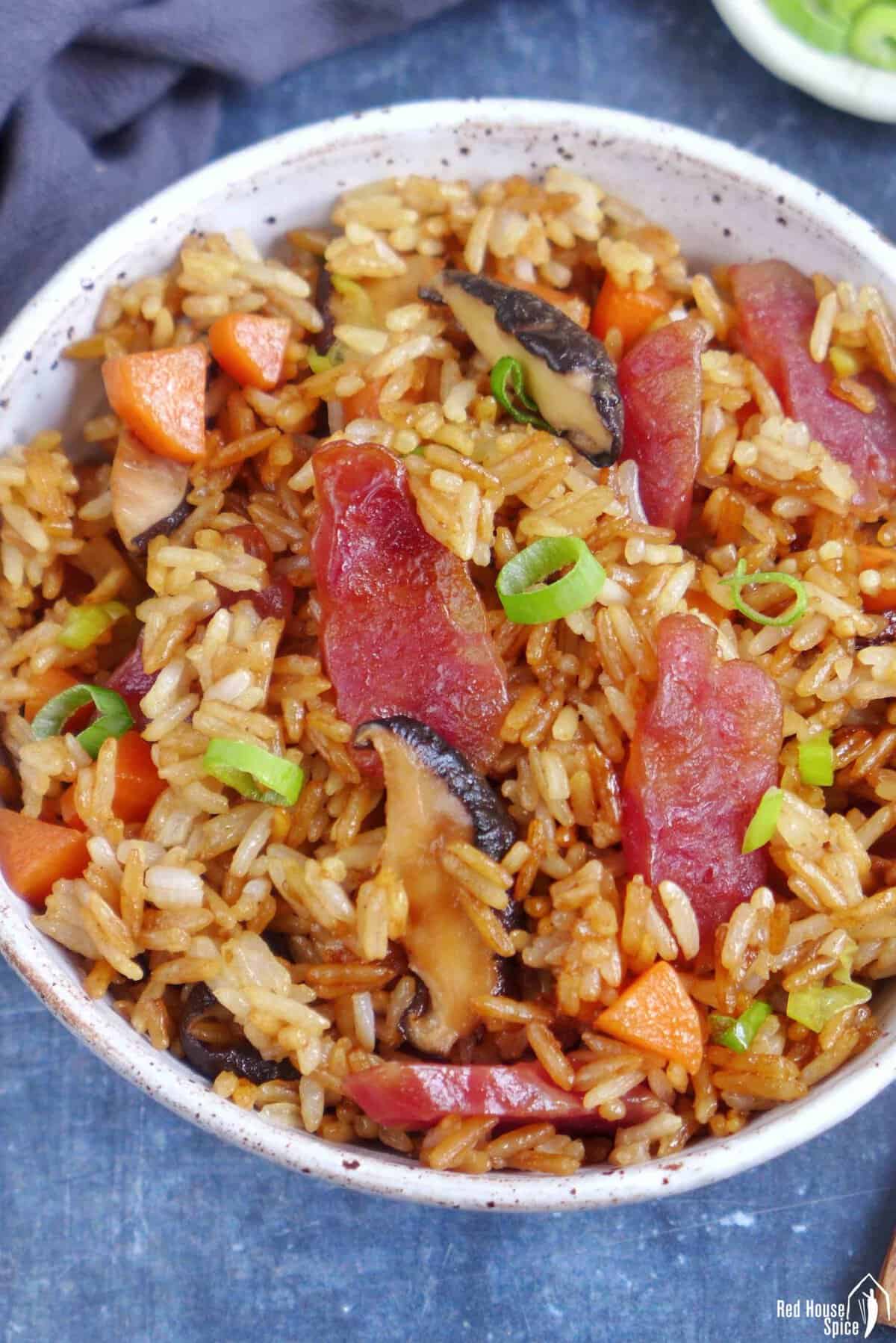
Also, if you’re in the mood for Chinese fried rice but don’t have leftover rice at hand, this sausage rice is a perfect alternative as it uses raw rice to start. Believe it or not, it tastes just as good as fried rice (if not better) thanks to the fragrant fat from the sausage that embraces each grain of rice.
Another benefit: you can cook quite a large portion of sausage rice at once, which is a difficult task when using a clay pot or frying rice in a wok.
🌟Note: Check out a similar recipe featuring glutinous rice and Chinese sausages: Lo Mai Fan (Stir-Fried Sticky Rice). It’s just as good as this one!
What are Chinese sausages
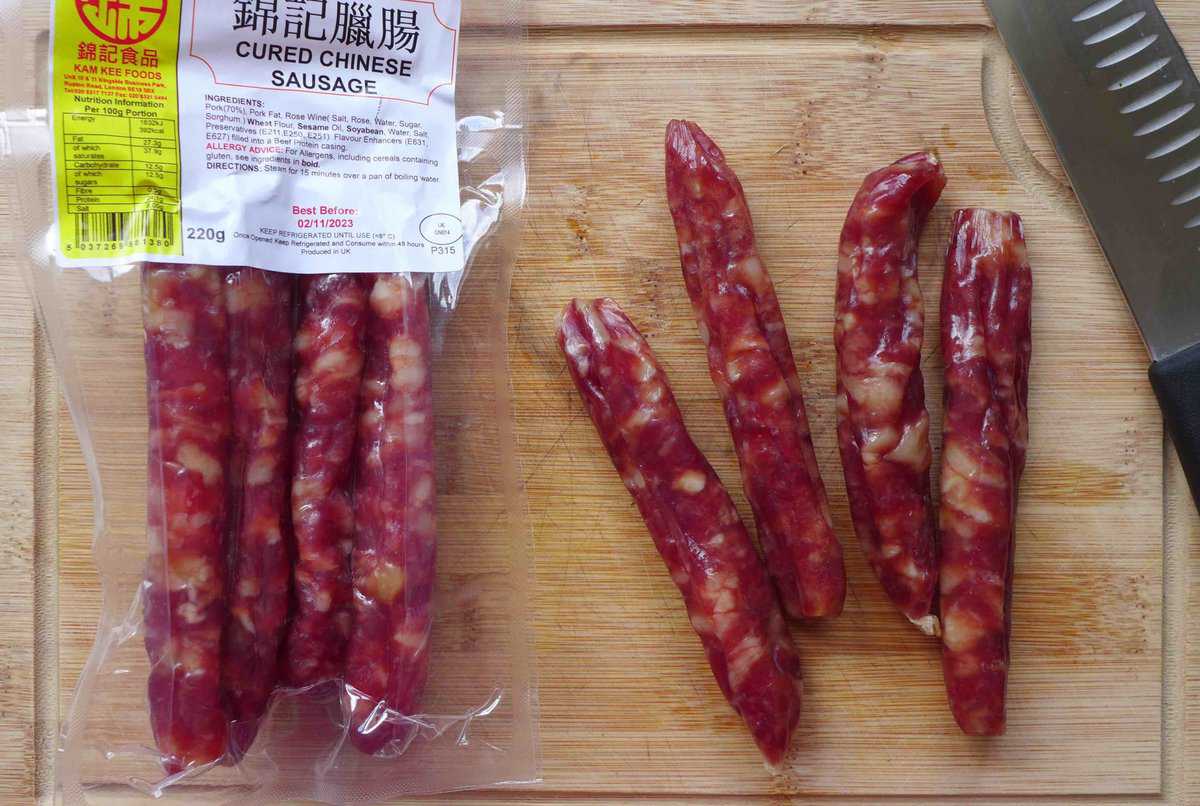
Known as La Chang/腊肠 in Mandarin or Lap Cheong in Cantonese, Chinese sausages refer to a type of cured sausage popular in many regions of China. Essentially, they’re made with fresh meat and a variety of seasonings, then air-dried until firm.
For today’s recipe, I use the Cantonese version which is accessible in most overseas Chinese stores (usually in the chilled food section). They are made of fatty pork (sometimes with the addition of duck liver) and seasoned with rice wine, soy sauce, rose water, etc.
Compared to other types of cured sausages (e.g. salami, chorizo, etc.), Cantonese sausages have a distinctive sweet-savory taste with a spiced fragrance and a smoky undertone.
🛎 Substitute: You may replace Chinese sausages with Chinese cured pork belly (Lap Yuk/腊肉, aka Chinese bacon) for this recipe.
Which rice to use
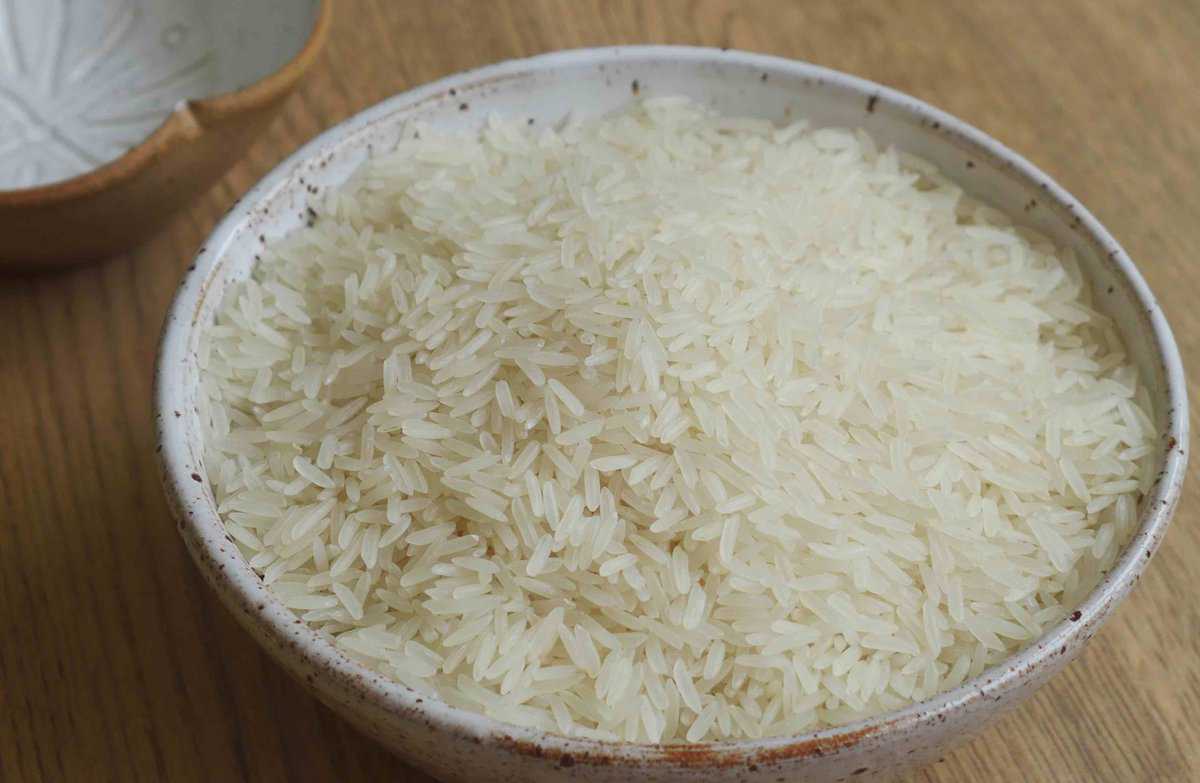
Jasmine rice is my No. 1 choice for Chinese sausage rice. This type of medium-grain rice has a slightly sticky texture and a subtle aroma that I enjoy very much.
My second choice would be short-grain white rice which has a stickier mouthfeel. Both the Chinese and the Japanese varieties work well.
Basmati rice isn’t used in Chinese cuisine but I’ve tried it for this recipe. It comes out a little too “loose” for my liking but it might be what you prefer.
Other ingredients
Vegetables
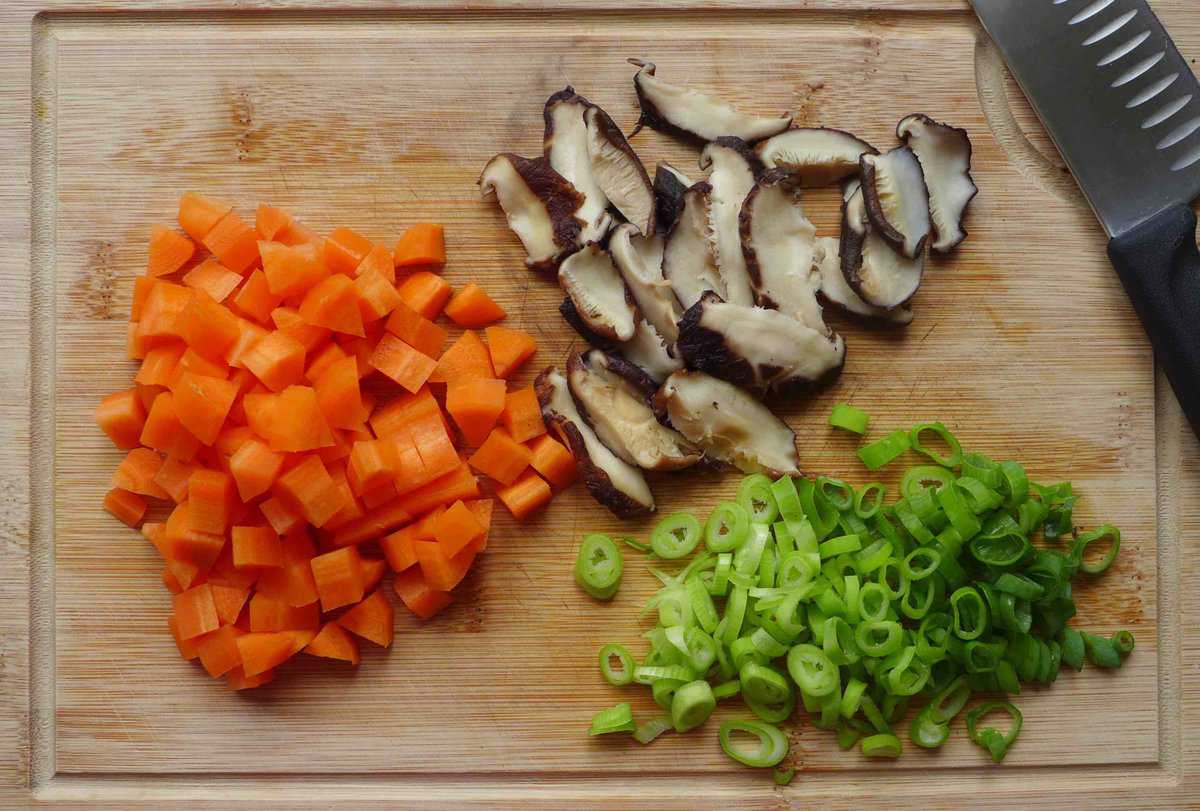
- Carrot, fresh or frozen
- Dried shiitake mushrooms (Learn how to rehydrate shiitake)
- Scallions (aka green onion, spring onion)
🛎 Substitute: You may use other vegetables to replace carrots, such as edamame, peas, broccoli, asparagus, etc.
For the sauce
To create a savory, aromatic and umami sauce, you’ll need these essential Chinese condiments:

- Light soy sauce
- Dark soy sauce
- Oyster sauce
- Shaoxing rice wine
- Sesame oil
- Ground white pepper
🛎 Note: If you’re allergic to seafood, use the vegetarian version of oyster sauce which is labeled as mushroom oyster-flavored stir-fry sauce.
Cooking procedure
Step 1: Prepare the toppings
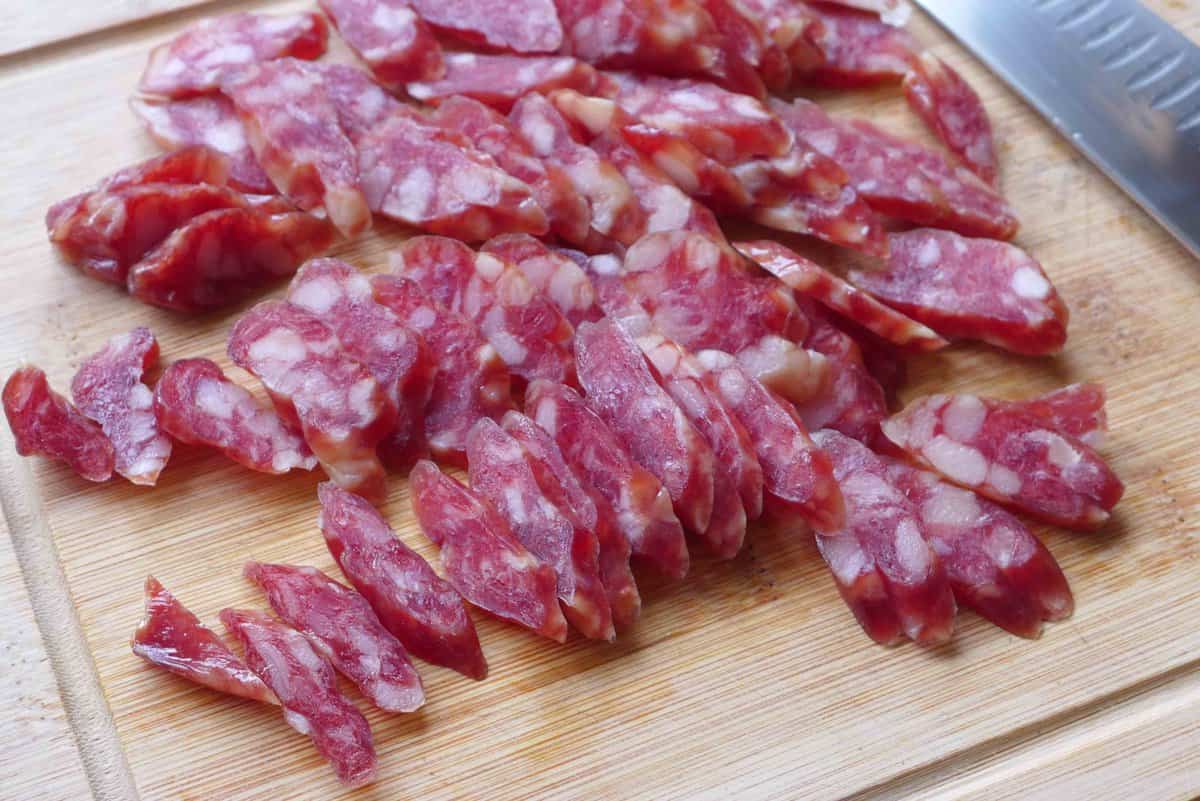
Rinse the sausages with running water, then cut them diagonally into thin slices, about ⅕ in (½ cm) thick. This type of cured sausage is quite firm to cut through. Use a sharp knife to do the job.
Cut carrots into small cubes (skip if using frozen diced carrots). Remove the stems of the mushrooms then cut them into slices. Chop scallions into small rings.
Step 2: Boil the rice
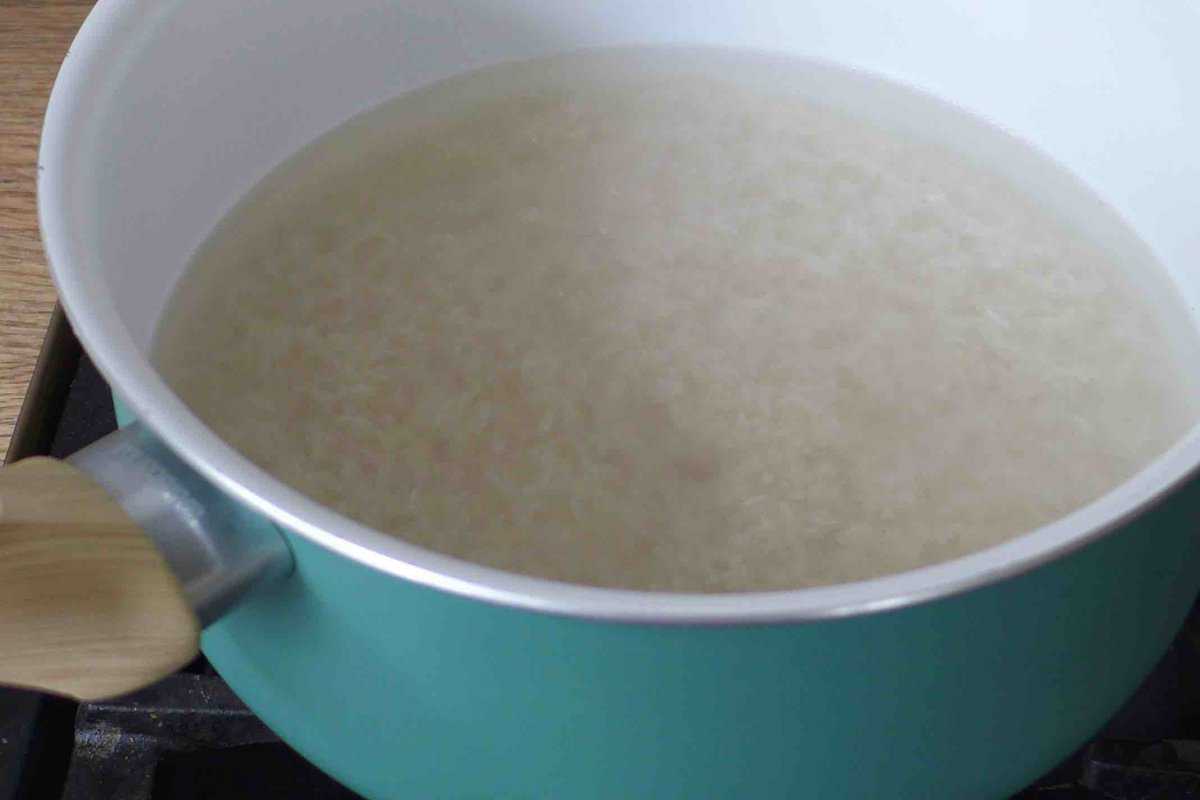
Start by rinsing the rice under tap water to remove any surface starch. Drain it well then put it into a saucepan or a pot (preferably one with a heavy bottom). Add equal volume of cold water (e.g. use 2 cups of water for 2 cups of rice).
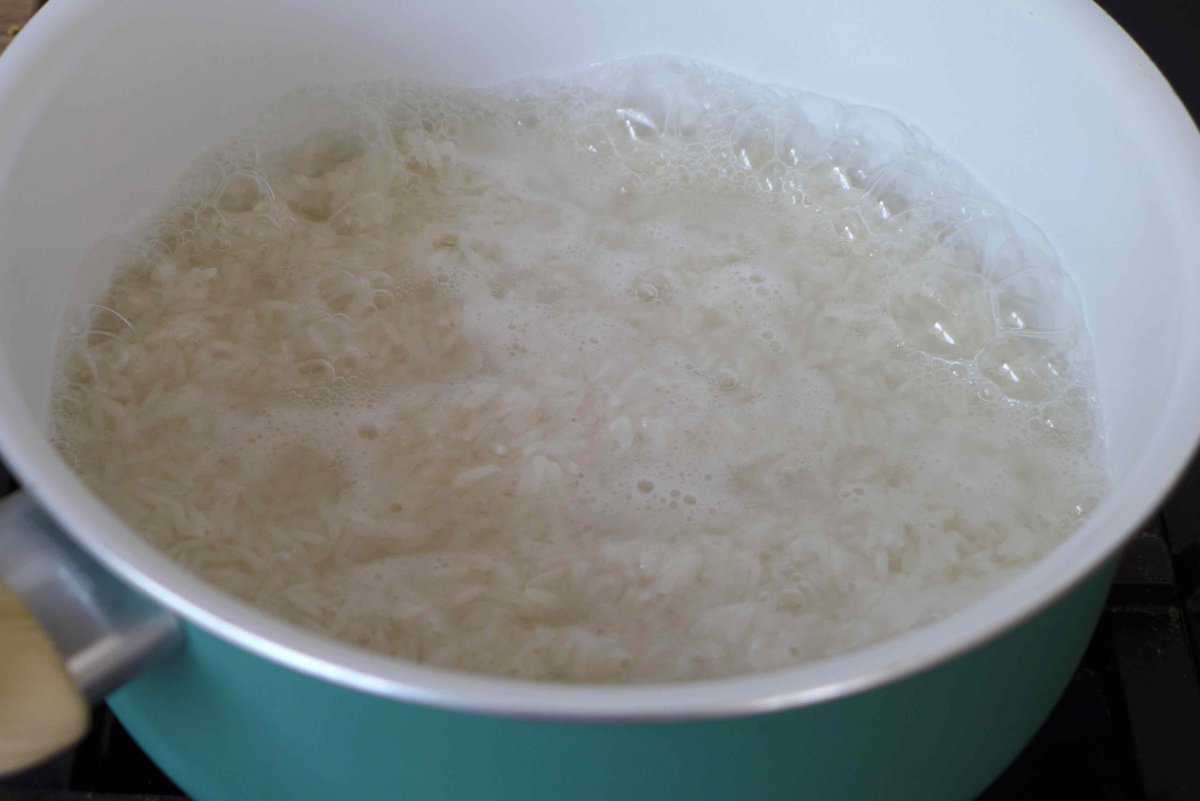
Bring the water to a full boil, then leave to cook uncovered over high heat until the water reduces to just level with the rice.
🛎 Note: This process takes me about 5 minutes but it may vary a little depending on your heat power and the nature of your cookware. Be attentive not to overly evaporate the water at this stage.
Step 3: Add the toppings
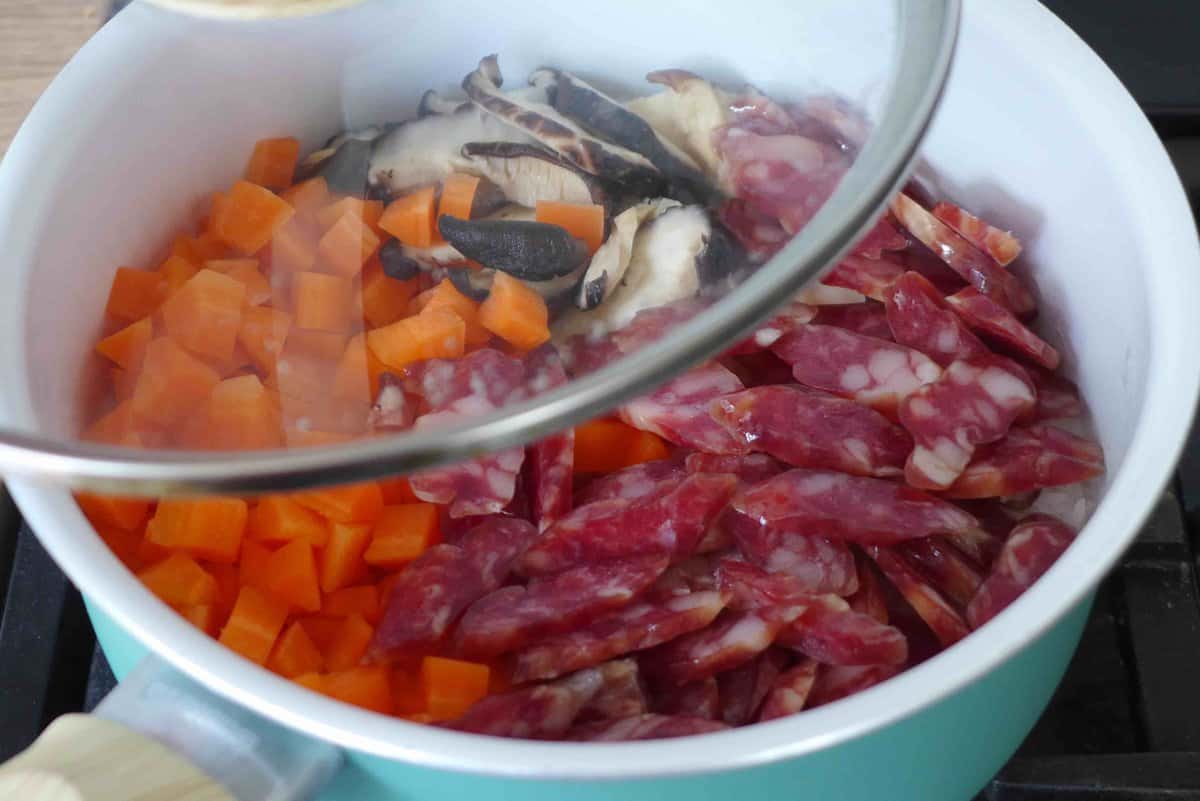
Once the water is level with the rice, turn down the heat to the lowest immediately. Spread the sausage slices, carrots and shiitake mushrooms over the rice. Cover with a lid and leave to steam over the lowest heat for 10 minutes.
When the time is up, turn off the burner and let the rice and sausage sit (with the lid on) for a further 5 minutes.
Step 4: Assemble the dish
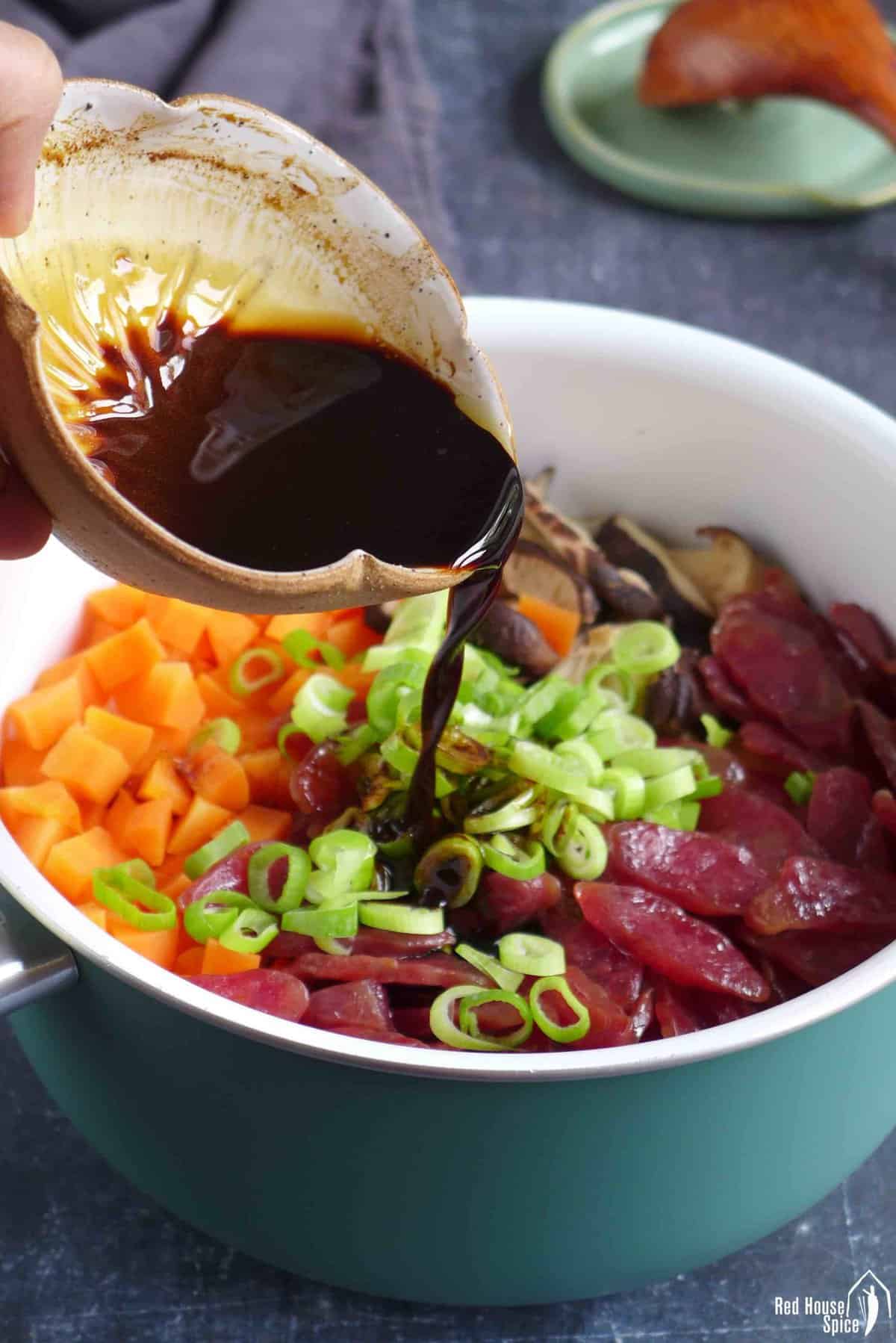
Measure and combine all the ingredients for the sauce (light soy sauce, dark soy sauce, oyster sauce, Shaoxing rice wine, sesame oil and white pepper). Pour it over the cooked rice, sausage and vegetables, along with finely chopped scallions.
Toss everything with a spatula/spoon to evenly coat each grain of rice with the sauce. Serve warm.

Another rice recipe to try
If you like the tasty flavor and easy preparation of Chinese sausage rice, check out another popular rice recipe on the blog: One-Pot Hainanese Chicken Rice.
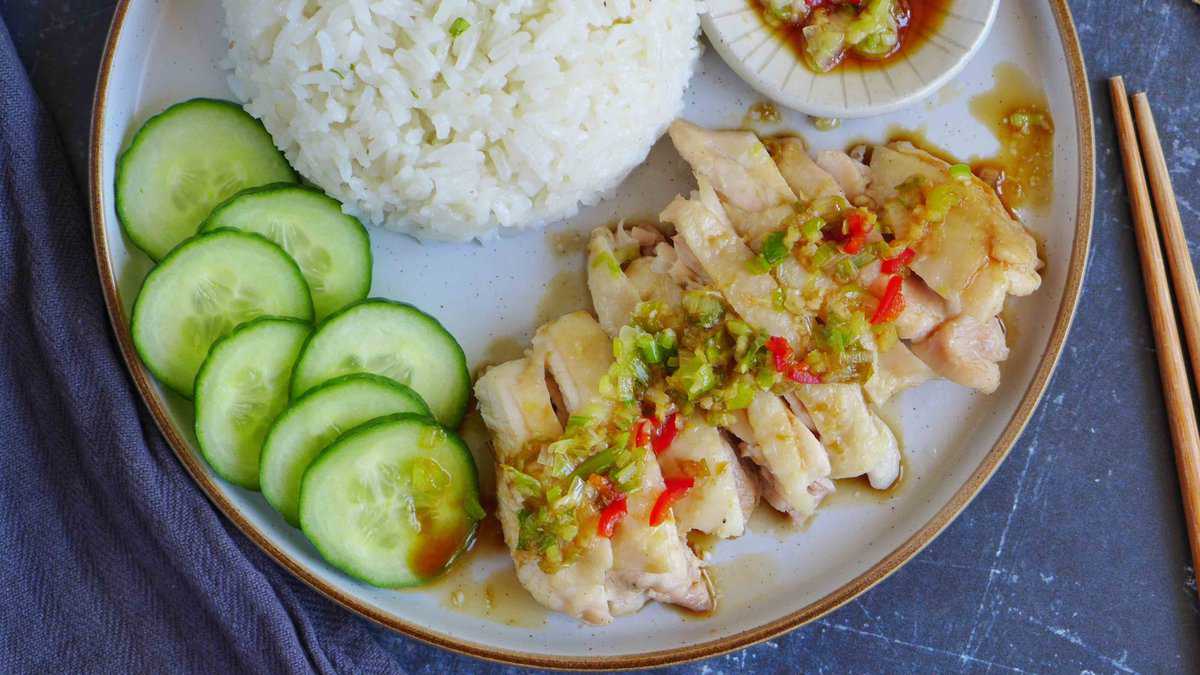
It’s a simplified version of a traditional dish that is served with a refreshing scallion & ginger sauce.
📋Recipe card
Love this recipe? Please leave a 🌟🌟🌟🌟🌟 rating and a comment. Thank you!

Chinese Sausage Rice (腊肠饭)

Ingredients
- 4 Chinese sausages, aka Lap Cheong (see note 1)
- 1 medium carrot
- 4 piece dried shiitake mushroom, rehydrated (see note 2)
- 2 stalk scallions, aka green onion, spring onion
- 2 cup jasmine rice, or other white rice (see note 3)
- 2 cup water
For the sauce
- 1½ tablespoon light soy sauce
- ½ tablespoon dark soy sauce
- ½ tablespoon oyster sauce
- 1 tablespoon Shaoxing rice wine, see note 4
- 2 teaspoon sesame oil
- ½ teaspoon ground white pepper
Instructions
- Rinse the sausages with running water, then cut them diagonally into thin slices. Dice carrot. Slice shiitake mushrooms (remove the hard stems). Finely chop scallions.
- Rinse rice under running water. Drain well then put into a saucepan/small pot (preferably one with a thick bottom). Pour in water. Cook over high heat without a lid until the water reduces to just level with the rice (see note 5).
- Immediately turn the heat down to the lowest. Place sausage, carrot and mushroom over the rice. Cover with a lid and leave to steam for 10 minutes.
- Remove the saucepan from the heat and let it sit for a further 5 minutes.
- While waiting for the rice to rest, mix all the ingredients for the sauce in a small bowl.
- Remove the lid of the saucepan. Add scallions and pour in the sauce mixture. Use a spatula to fluff and toss everything thoroughly. Serve immediately.
Notes
Your Recipe Notes
Nutrition
Nutrition information is automatically calculated, so should only be used as an approximation.






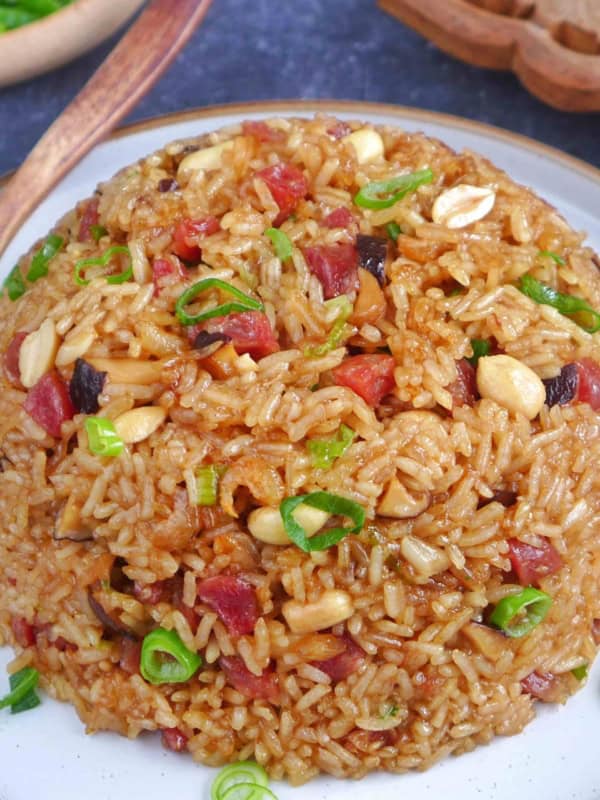









My second time to make it because everyone loved it the first time! Our rice cooker doesn’t cook so after the rice is done and I’ve added the carrots, mushrooms, and sausage, I move it all to a pot and continue cooking it on the stove. It works out great 😍 Thanks so much for sharing!
So happy to hear it’s become a repeat dish! Thanks so much for sharing the feedback, Anna!