

Making wonton wrappers is easier than you might think! Follow this foolproof recipe to achieve the perfect look and texture.
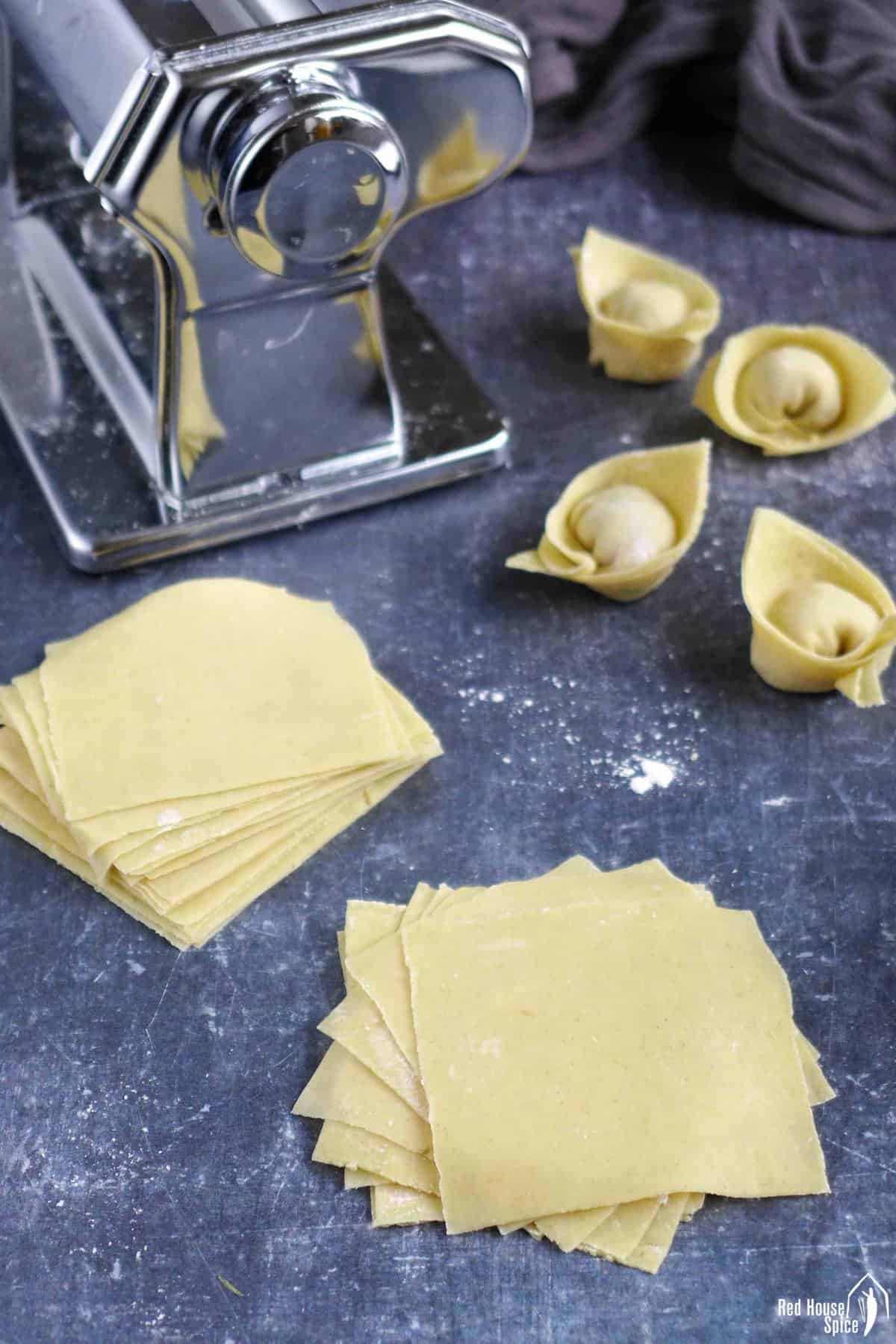
Pin this now to find it later!
Pin ItTable of Contents
What are wonton wrappers
Wontons, known as 云吞 or 馄饨 in Chinese, refer to stuffed parcels made of wheat flour-based dough wrappers with savory fillings of proteins (pork, chicken, shrimp, etc.) and/or vegetables (cabbage, chives, etc.). The wrappers used for wontons are very thin squares cut from rolled-out dough sheets.
Don’t confuse them with the wrappers for Chinese dumplings (Jiaozi/饺子), which are individually rolled out into round discs that are slightly thicker and softer in texture.
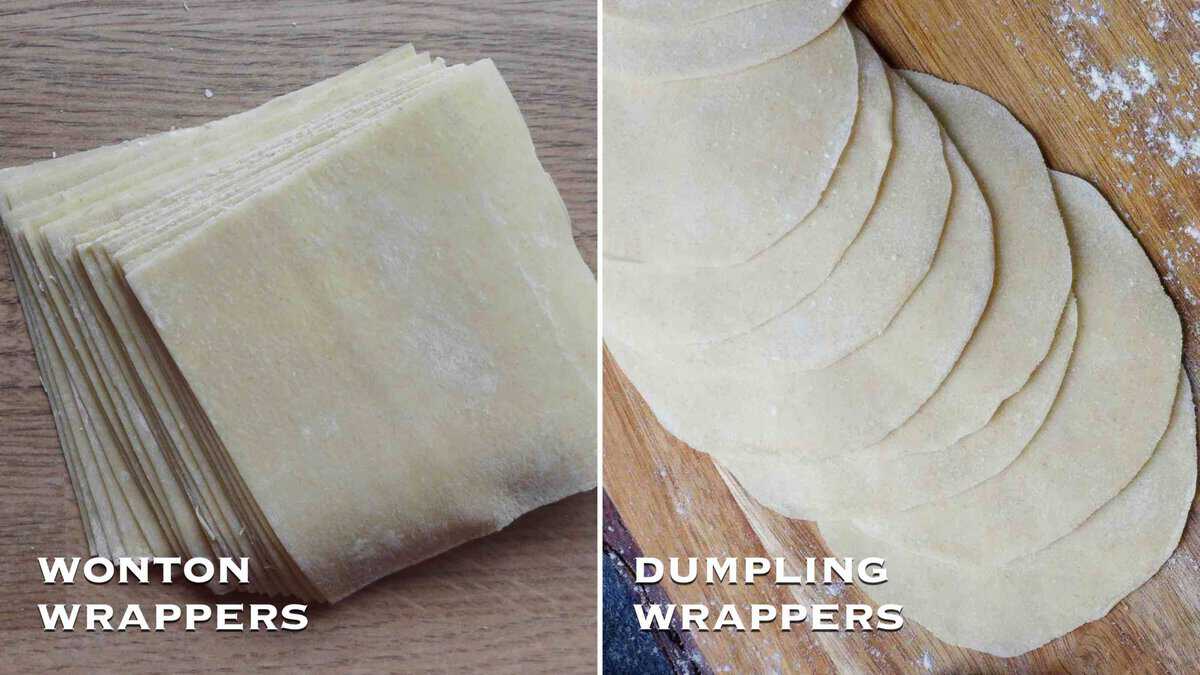
Unlike dumpling wrappers, which are pretty universal across the country, wonton wrappers from different regions of China differ in many ways. Some are super thin and become translucent after cooking, while others are thicker and more robust. Some are simply made of flour and water (the same composition as dumpling dough), whereas others include egg and/or lye water in the dough for extra taste and a silky smooth texture.
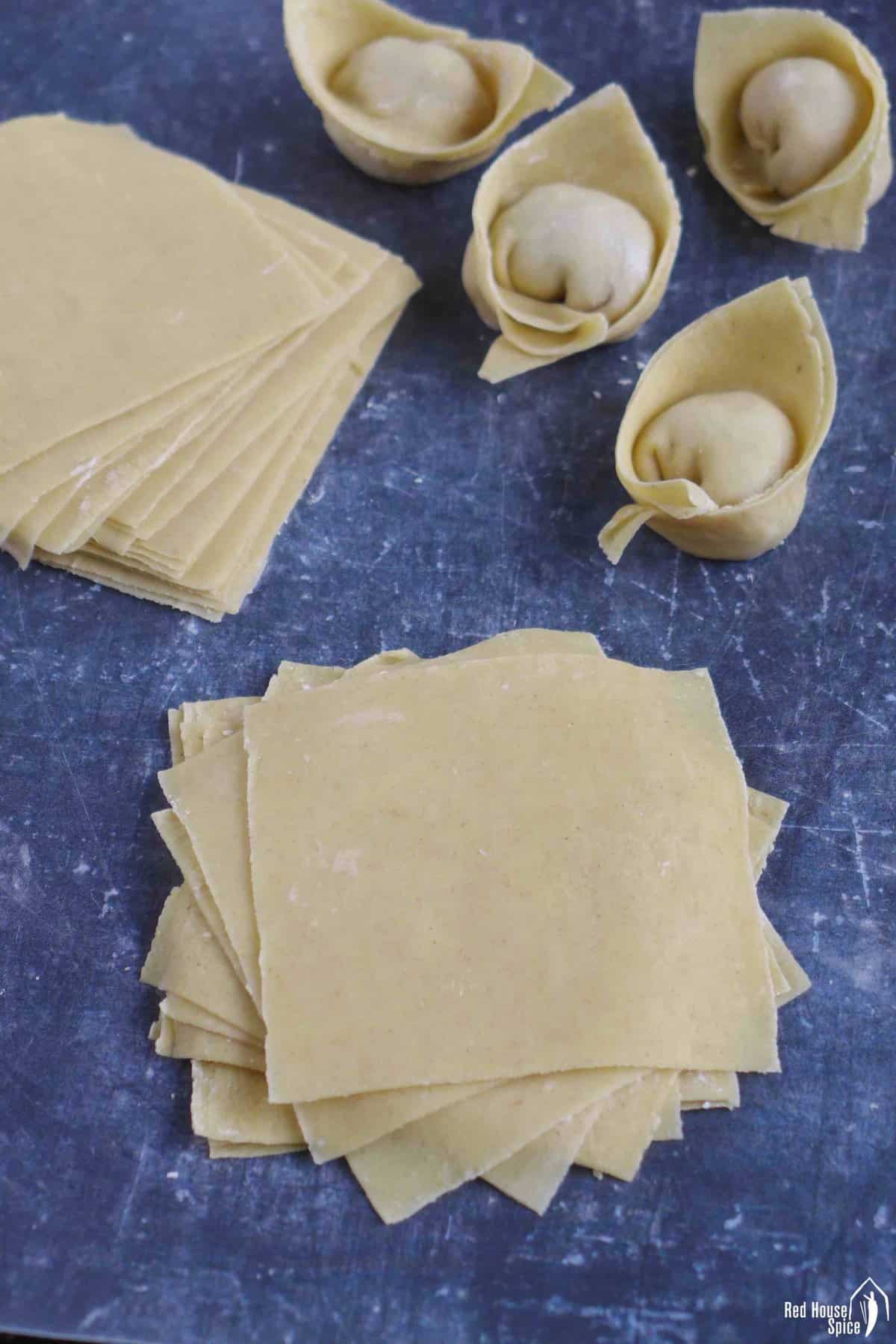
Although frozen wonton wrappers can be easily found in Chinese stores, making them from scratch in your kitchen is still worthwhile. With the aid of a pasta machine, it’s much easier than you’d imagine.
Top tips
Before we go through the recipe steps, here are some useful tips to bear in mind:
- Use egg whites and lye water to achieve a silky texture
- Allow the dough to rest so it becomes very easy to knead
- Frequently dust with cornstarch to prevent sticking
- Adjust the thickness and size of the wrappers as you wish
- Make a large batch and freeze for future use
Prepare the dough
As I mentioned earlier, the dough for wonton wrappers can be made with different components. After numerous tests, I’ve finally settled on a formula that produces silky, slippery wrappers that don’t tear easily.
Ingredients
Here is a simple list of ingredients you need:
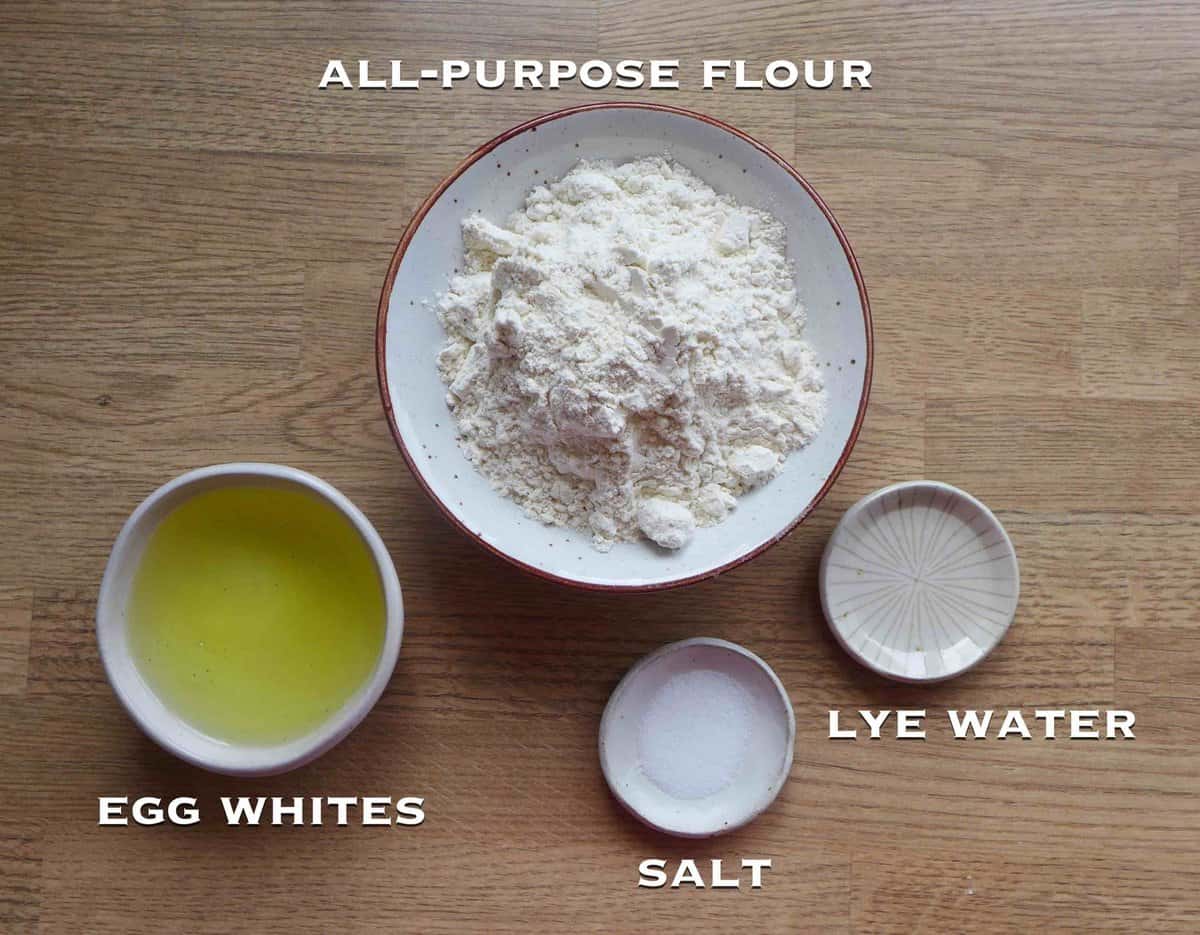
- All-purpose flour, aka plain flour
- Egg whites
- Lye water
- Salt
- Cornstarch, for dusting
Ratio
The flour to egg white ratio is 2: 1 by weight. For example, if two large egg whites measure a total of 85g, you’d need 170g of all-purpose flour. This amount makes about 40 wrappers.
Knowing this ratio, you can easily scale the recipe to make any amount you need. Also, please be aware that you may need to slightly alter the ratio, as flours from different brands can vary in their liquid absorption capacities.
A note on lye water
Known as Kansui/枧水, lye water is a food-grade alkaline solution used in many dishes, including ramen, mooncakes, bagels, and more. Similar to its benefits for noodles, its addition gives wonton wrappers a slippery, springy texture, ensuring they have little chance of becoming mushy once boiled.
Additionally, wrappers made with lye water stay in a better condition when frozen (they’re less likely to stick to one another when in stacks) compared to those made without it.
You can find lye water in Chinese/Asian stores. Alternatively, check out my post on how to make lye water using baking soda.
🛎 Want to skip lye water? Northern Chinese style and Shanghai-style wonton wrappers don’t contain lye water. If that’s what you’re looking for, feel free to skip it.
Mix, knead & rest
It takes a few simple steps to make the dough by hand (a stand mixer isn’t necessary for this recipe).
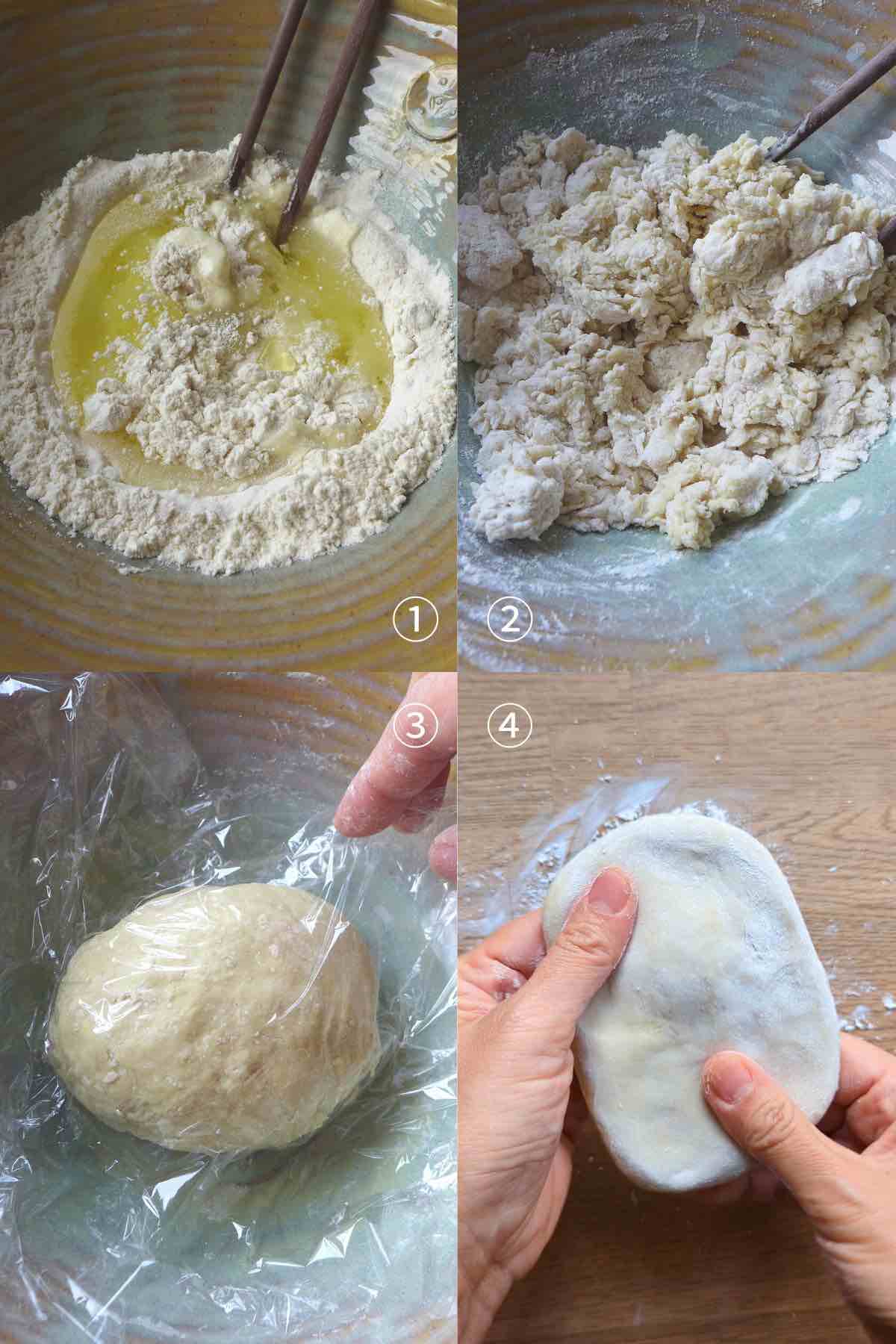
- Mix flour and salt in a large bowl. Pour egg whites and lye water over the mixture.
- Stir with chopsticks, or a fork, to combine the solid with the liquid.
- Once there is no more loose flour, use your hand to form a cohesive dough (It doesn’t need to be smooth at this stage).
- Cover the dough with plastic wrap and leave it to rest for 30 minutes. Then knead again until it becomes reasonably smooth.
🌟 NOTE: Since this dough will be passed through a pasta machine, it requires a much firmer consistency than regular dumpling dough, which is typically rolled out by hand into individual wrappers. At the same time, it should be slightly softer than the dough for ramen noodles, as it needs to be rolled into a much thinner sheet.
Roll the dough sheet
Traditionally, wonton wrapper dough is rolled out by hand using a long, slightly tapered rolling pin, and then cut into squares. This technique requires well-practiced skills. Fortunately, using a pasta maker, whether manual or automatic, can significantly simplify this laborious task.
Here is how you turn the dough into very thin sheets (watch the tutorial video inside the recipe card below):
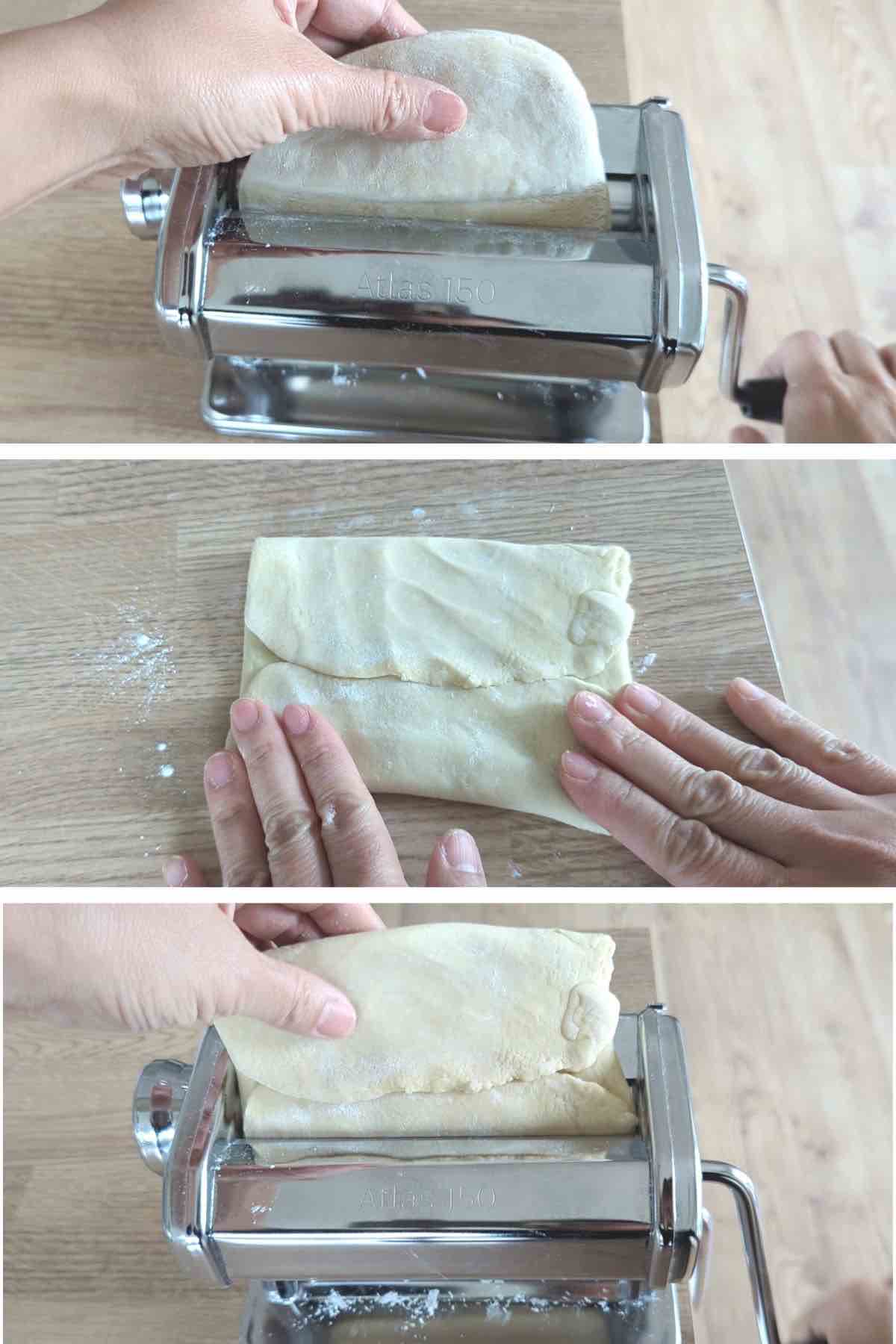
Flatten a piece of dough into a squarish shape, approximately the width of the pasta maker. Then, rub a thin layer of cornstarch all over to prevent sticking.
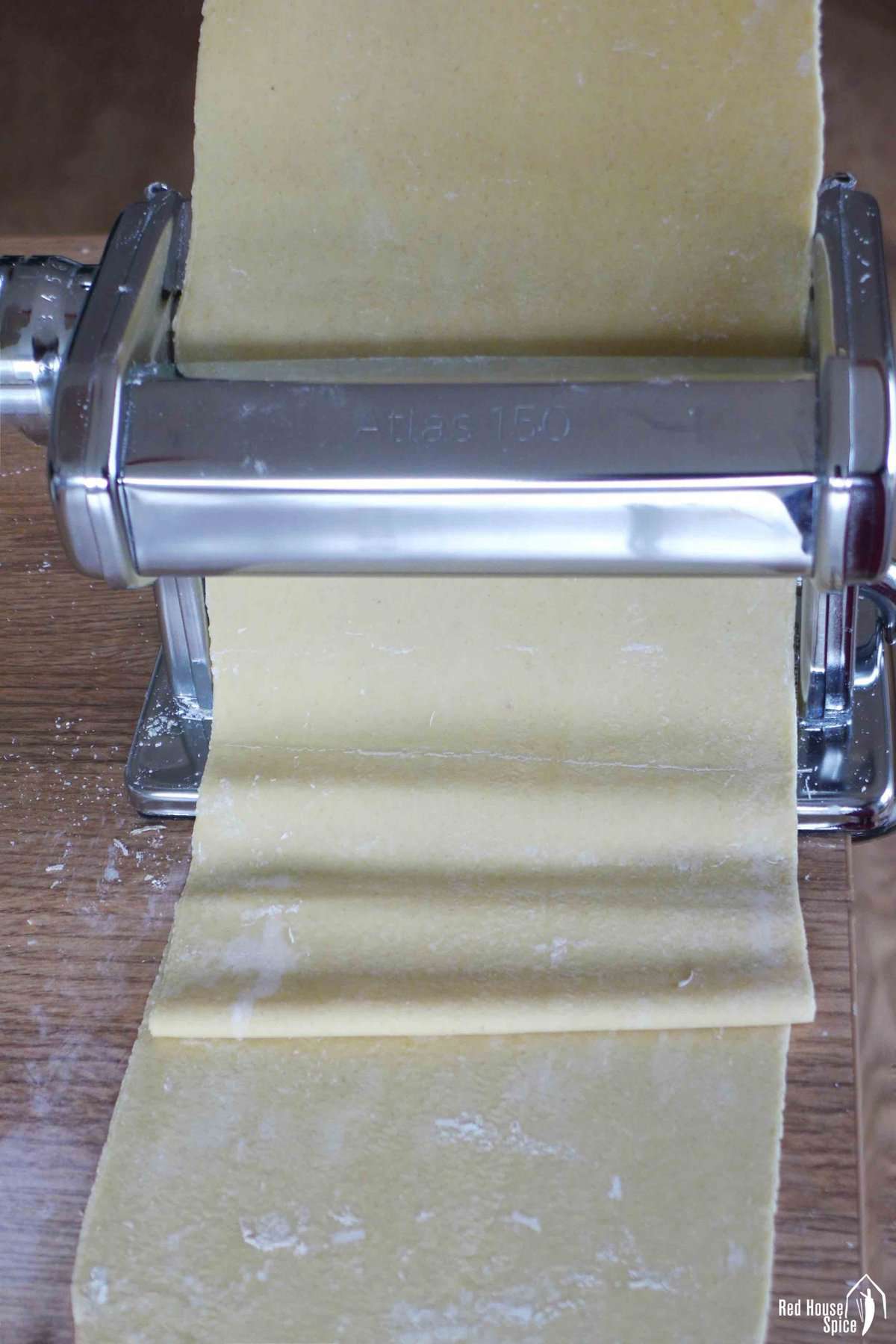
Feed the flattened dough into the machine, starting with the thickest setting, typically the lowest number (mine is 0). After the first pass, fold the dough then pass it through the machine two more times. Remember to dust the sheet with cornstarch frequently throughout the rolling process.
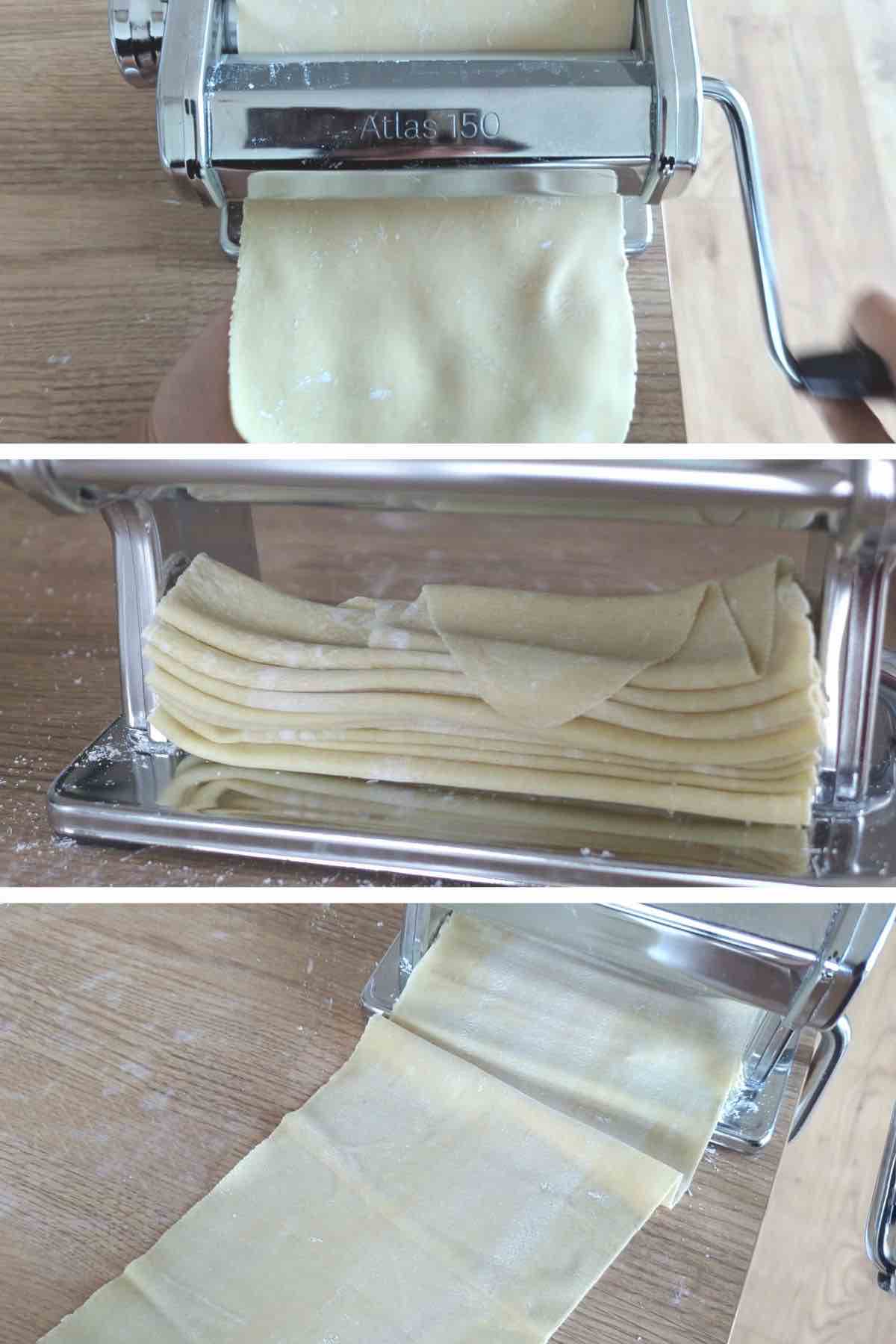
Gradually reduce the thickness by changing the setting one number higher at a time, and pass the dough sheet through twice at each setting. Don’t forget to dust it with cornstarch when the dough starts to appear a little sticky.
I usually stop the process at setting No. 7, which results in a sheet about 0.8mm thick. You can adjust the thickness to suit your preference and the specific type of wonton dishes you plan to make.
🌟 NOTE: If making wonton soup, you may roll the sheet as thin as you prefer. However, for deep-fried wontons, thicker wrappers are less likely to break or leak, ensuring the filling stays inside and reducing the risk of oil splashing.
Cut the wrappers
After rolling the sheet to your preferred thickness, apply another thin layer of cornstarch before cutting it into wrappers.
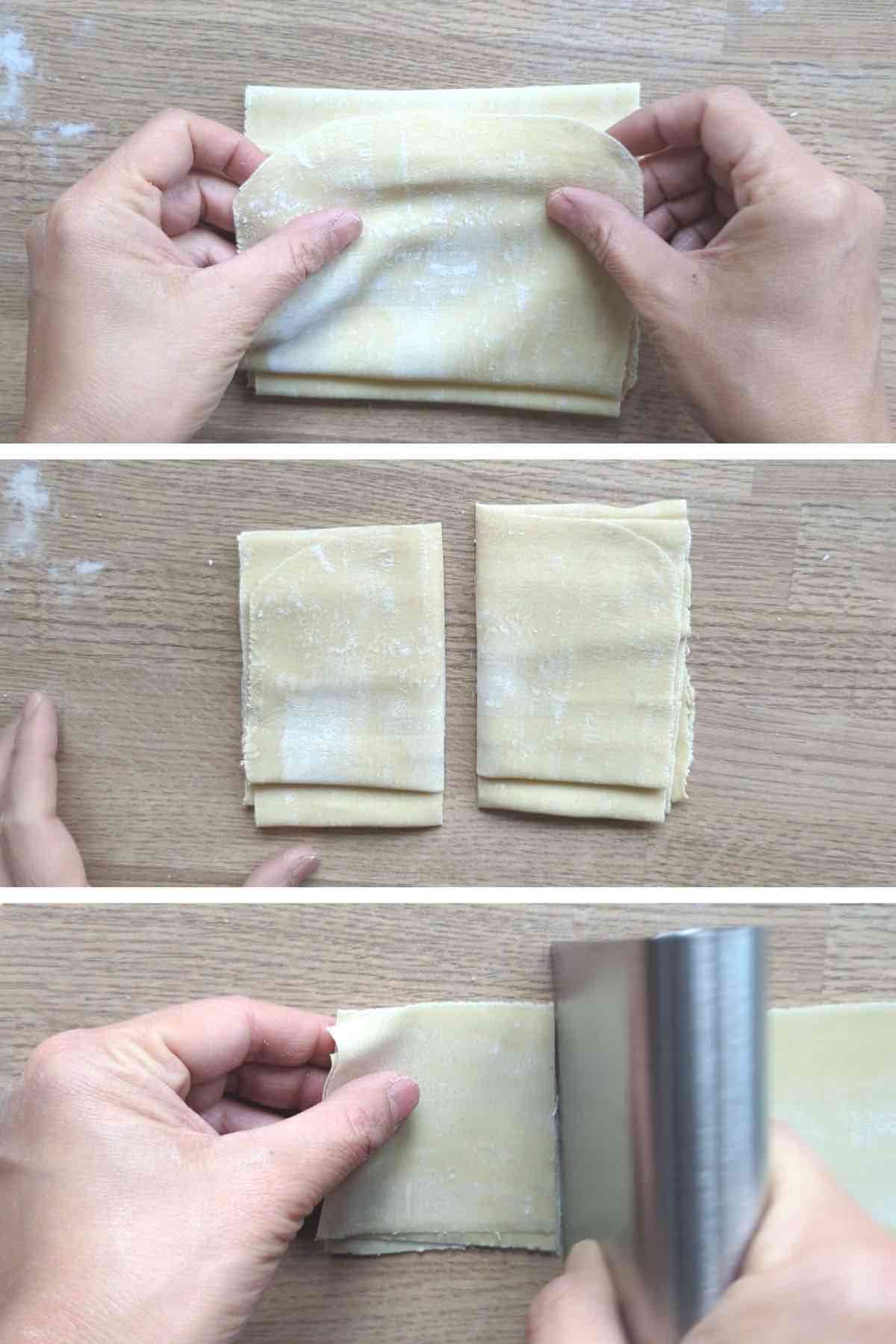
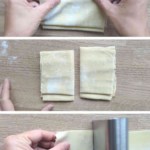
Firstly, gently fold the long sheet accordion-style into a stack. Then, cut it along the middle line so that you end up with two narrow, long sheets.
Take one of these sheets, fold it over once, and use a bench scraper or a knife to cut out two square wrappers from one end, one on top of the other.
Use these first two wrappers as a template for size, and continue to cut out the rest of the wrappers in the same manner.
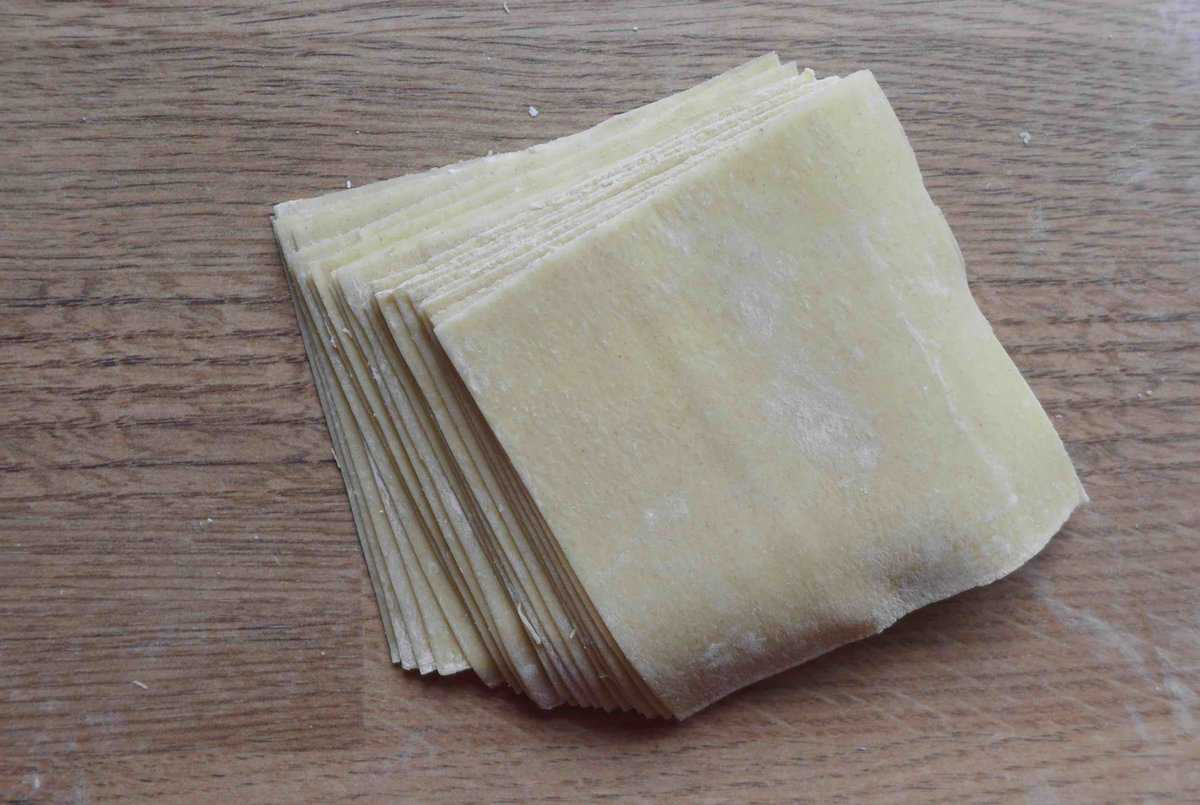
🌟 NOTE: If you wish to make larger-sized wonton wrappers, cut the rolled-out sheet directly into squares of your preferred size, and reuse the leftover cut-offs to form another sheet.
Make ahead & store
Homemade wonton wrappers freeze well so it’s always a good idea to make a big batch for later use. Here are some storage tips:
- Dusting the wrappers with cornstarch is even more crucial if you plan to freeze them.
- Stack them up neatly and wrap the pile with plastic wrap.
- Put the pile in an airtight bag or container. Keep in the freezer for up to 2 months (or in the refrigerator for up to 2 days).
- Defrost in the fridge, without unpacking, before using.
How to use
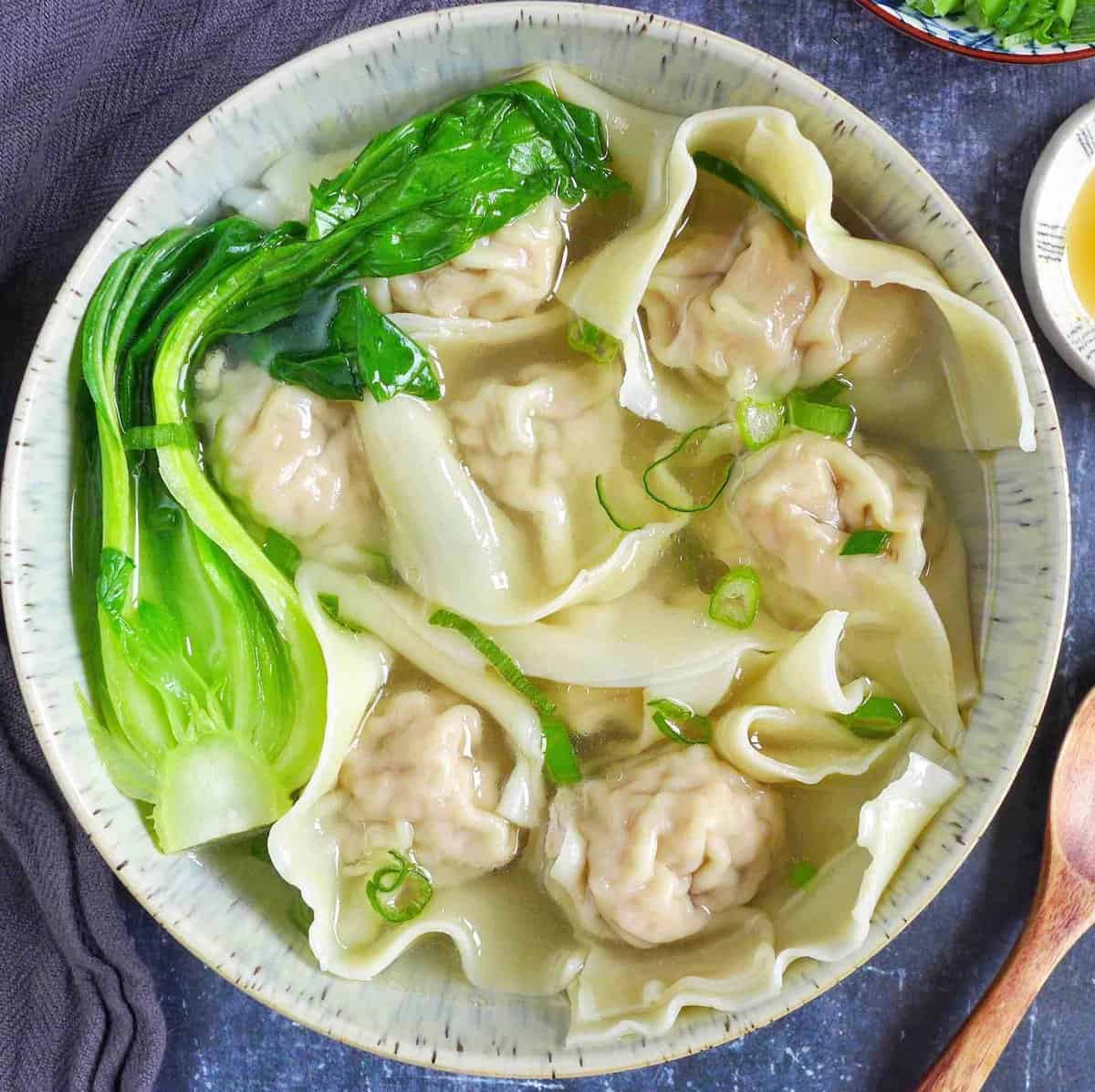
With freshly made wonton wrappers, you can create delicious wonton dishes from scratch. For filling, seasoning ideas and folding techniques, check out these popular posts:
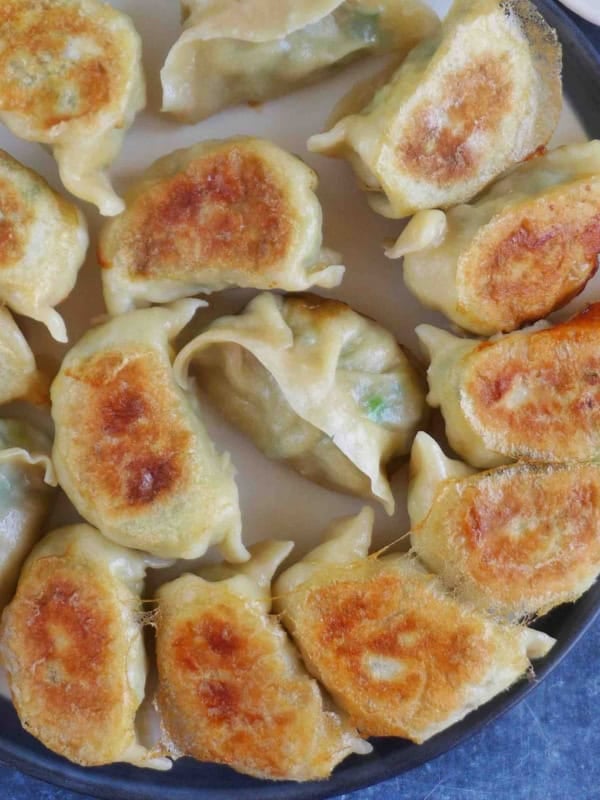
- Wonton Soup (see image above)
- Sichuan Chili Oil Wonton
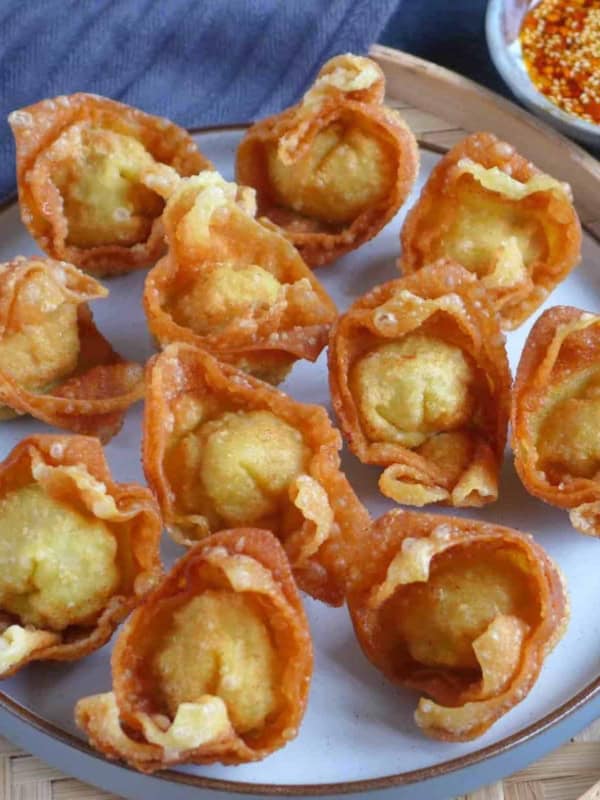
- Fried Wontons (deep-fried or air-fried)
- Six Ways to Fold Wontons
- Dumpling Filling Guide (it works for wontons too)
Do you know that this recipe also works for making wrappers for other dishes? Such as Siu Mai, spring rolls (egg rolls), crab rangoon, and more. Simply adjust the thickness of the dough sheet and cut it into the shape and size of your choice.
Recipe FAQs
A: I don’t recommend doing so. Flour can make the dough sheet drier and thus more prone to tearing, while cornstarch (or other types of starch) doesn’t have this negative effect.
A: Although the result will be different, it’s okay to use water as a substitute. Follow my recipe for ramen and slightly increase the water quantity to make a softer dough.
A: Absolutely! You can stuff wonton wrappers with any dumpling fillings and serve them with dumpling dipping sauces if you wish.
📋 Recipe
Love this recipe? Please leave a 🌟🌟🌟🌟🌟 rating and a comment. Thank you!
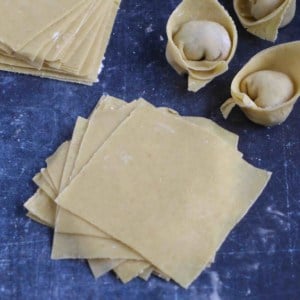
Homemade Wonton Wrappers

Video
Equipment
- Pasta maker
Ingredients
- All-purpose flour, double weight of the egg whites (see note 1)
- ¼ teaspoon salt
- 2 large egg whites
- ½ teaspoon lye water, (see note 2)
- Cornstarch, for dusting (see note 3)
Instructions
Make the dough
- Mix all-purpose flour and salt in a mixing bowl. Pour egg whites and lye water over. Use chopsticks, or a fork, to stir and mix until no more liquid or loose flour can be seen.
- Combine with your hand to form a cohesive dough. Cover tightly with plastic wrap and allow it to rest for 30 minutes or so.
Roll the sheets
- Knead the dough again to make it smoother, then divide it into two equal portions. Work with one piece first and keep the other well-wrapped.
- NOTE: In the following steps, remember to lightly dust the dough with cornstarch from time to time to prevent sticking.
- Flatten the dough into a squarish shape that is thin enough to go through the pasta maker on its widest setting, which is usually the lowest number.
- Feed the dough through the machine, then fold it from both ends and pass it through another two to three times, making sure that the dough sheet eventually reaches the full width of the roller.
- Gradually reduce the thickness by turning the setting one number higher at a time, and pass the dough sheet through the roller twice at each setting. Handle the dough gently and dust it with cornstarch regularly.
- My pasta machine has settings from 0 to 9, I stop at No. 7 which results in a thickness of 0.8mm. Please feel free to adjust this to your preference (see note 4).
Cut the wrappers
- Dust the finished dough sheet lightly and evenly with cornstarch. Carefully fold the long sheet accordion-style into a stack, then cut it along the middle line to create two narrow, long sheets.
- From these, cut out square wrappers, aiming for approximately 40 pieces in total.
Store the wrappers
- Use the wrappers immediately, or stack them up and store them for later use.
- Keep them in airtight bags or containers to prevent drying out. Store in the fridge for up to 2 days and 2 months in the freezer (defrost in the fridge before using).
Notes
Your Recipe Notes
Nutrition
Nutrition information is automatically calculated, so should only be used as an approximation.












Has anyone ever tried this with another type of flour? Like almond or coconut?
Almond or coconut flour wouldn’t work for this recipe. If you’d like to avoid wheat flour, you could try my Crystal Shrimp Dumplings recipe, which uses a different type of wrapper.
Hi, I’m so happy to find your recipe since I’m looking for a recipe similar to the one that my parents make (using Kansui).
But I really wanted to ask if I can put cornstarch in the dough, cause I remember clearly that my mom used to put a little bit with the flour, and if you could recommend a ratio to this.
Thank you so much for sharing the recipe.
Thank you for your message. You can add a little cornstarch to the dough, but only sparingly. It’s mainly used for dusting to prevent sticking rather than as a core ingredient. If you do include it, keep it to a small proportion of the flour so the wrappers don’t lose their structure.
If I leave out the lye water, do I still need to add plain water, or just rely on the egg white as the liquid?
I’ve enjoyed discovering childhood favorites on your website and making them with my kids. Thank you!
Since the amount of lye water is very small, you can skip it without needing to add anything else. Happy cooking! I’m so glad you’re enjoying these childhood favorites with your kids!
Sorry! Scrolled down further and found another version of the recipe with the quantities!
Hope you’ll enjoy making this recipe Alicia!
Thank you so much! I’m on a Asian cooking skills quest and your recipes and explanations are very helpful! De.ise
My pleasure to share, Denise. Have more fun cooking Chinese food!