

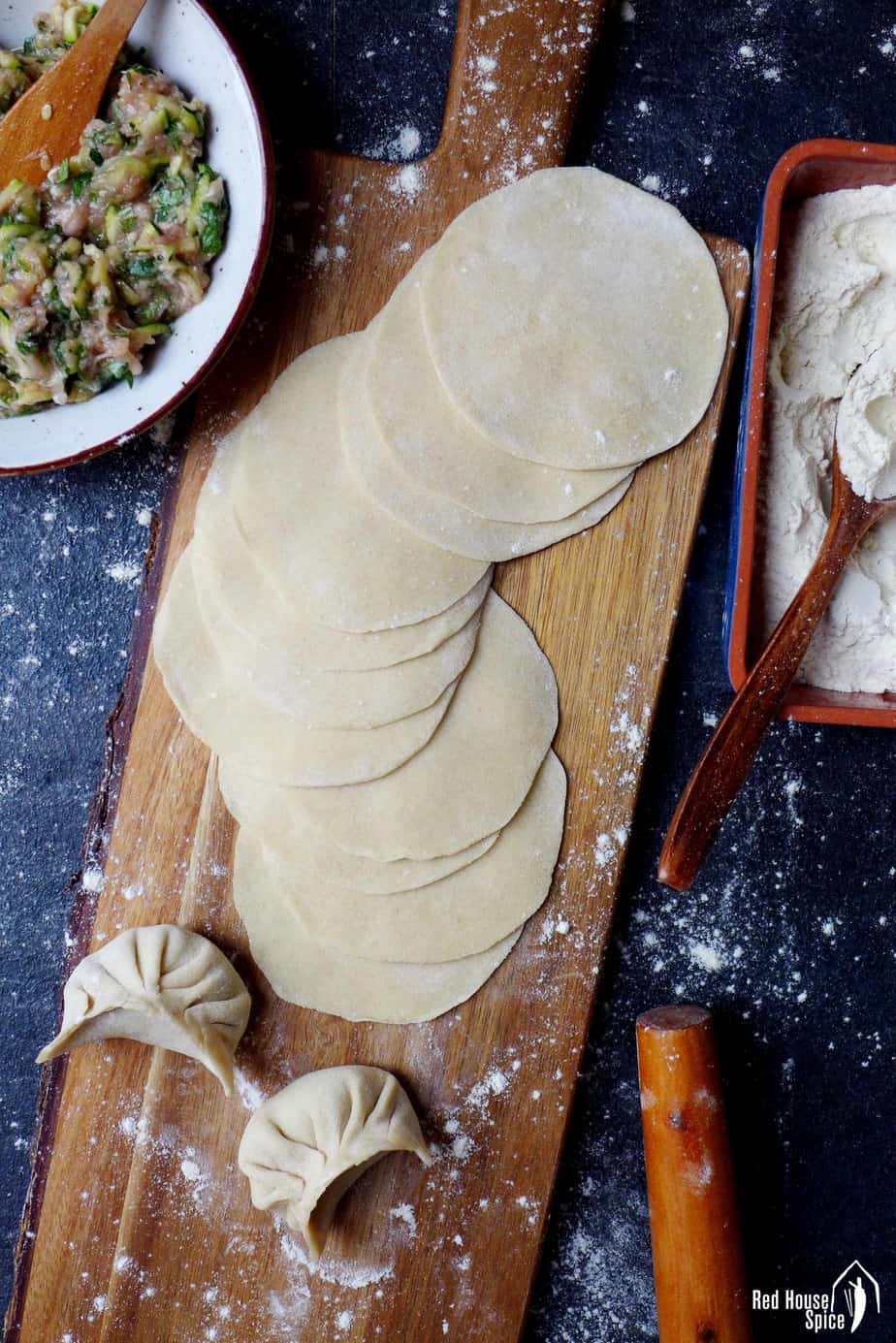
Making dumpling wrappers from scratch couldn’t be easier! In this section of my ultimate dumpling guide, you will learn to master this basic skill with ease.
Pin this now to find it later!
Pin ItWith the Chinese New Year (Spring Festival, 春节) fast approaching, I’ve decided to create a series of posts on Chinese dumplings to say THANK YOU to my lovely readers for another year of support.
This ultimate guide will cover all aspects of homemade dumplings, the iconic dish of Chinese cuisine. Today, we start the journey with homemade dumpling wrappers (饺子皮).
Which flour to use?
Let’s get down to the basics: what kind of flour is required for Chinese dumplings? Contrary to popular belief, you don’t need to buy flour produced in China or flour specifically labeled as “dumpling flour”. You can produce excellent dumpling wrappers using regular flour sold in your local shop.
The most common all purpose flour works just fine! However, it’s a good idea to understand your flour.
- Flour with a medium level of gluten works best. The dough is easy to work with. The cooked wrappers are tender but still have a pleasurable chewy texture.
- The gluten level varies in all purpose flour sold in different countries. Check the protein content on the nutrition label (per 100g flour).
- 10-11g = ideal
- 12-14g = more resilient
- under 10g = soft
The good news is that you can alter the texture if you wish.
- Like your wrapper softer: add some corn starch to the flour or make a hot water dough instead of regular cold water dough (Continue reading to find out how).
- Prefer a more resilient texture: add a little salt to the dough.
The flour water ratio
For making dumping wrappers, you would need a reasonably soft dough which is easily rolled but not so soft that it sticks.
Ratio:
- 250g / 2 cups all purpose flour
- 125-130ml / 0.5 cup water
*Please be aware that it’s less accurate to measure by cups.
This is the perfect ratio for me when using British regular plain flour (aka all purpose flour) which has a medium gluten level (10-11g protein per 100g flour). If you are using flour from another country, it might have a different water absorbing capacity. In general, the higher the protein content, the more water you would need to achieve the same consistency.
You might need some trail and error to find your very own perfect ratio. If you are new to homemade dumpling wrappers, I suggest you make the dough by hand for the first time instead of relying on a dough kneading device. This way you will be able to constantly “feel” the readiness of the dough and add more flour or water as required.
Make the dough by hand
I usually mix flour and water in a bowl. You can also do it directly on a flat floured surface. Add water to the flour gradually. Gently mix with a pair of chopsticks / spatular until no more loose flour can be seen. Then combine and knead with your hand.
At this stage, the dough ball should be medium firm and have a rough appearance. Leave it to rest (covered) for 10-15 minutes then knead it into a smooth ball. Cover and rest the dough a second time for at least 30 minutes.
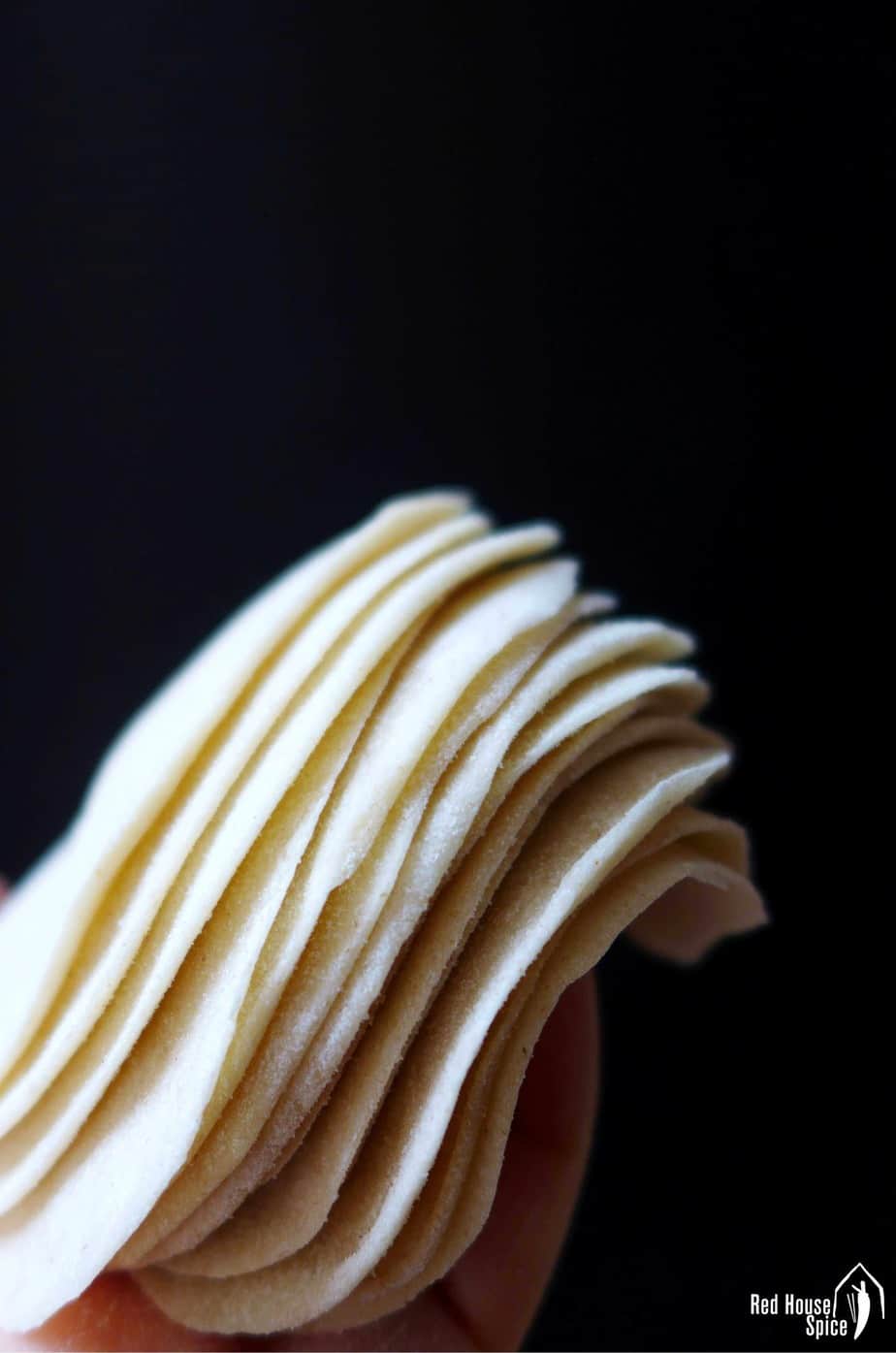
The resting process will help to soften the dough. The longer it rests, the softer it becomes. If you use flour high in gluten, it’s better to rest it a little longer. A Chinese cook would say the finished dough should be “as soft as an earlobe”.
Other dough varieties
What I have outlined is the most commonly used all purpose dough for Chinese dumplings. If you prefer a dough that is more supple to work with and more tender when cooked, I recommend another two types of dough:
- Hot-water dough. Let’s say the total water required is 300ml. Firstly, mix the flour with 200ml of boiling water. Then add 100ml of room temperature water to the mixture.
- Semi-starchy dough. Replace about 1/4 of the flour with corn starch. Don’t forget to sift to ensure an even mix. Wrappers made of this dough have a lovely shiny appearance when cooked and are tender on the palate.
These two types of dough work perfectly when the dumplings are either steamed or pan-fried. However, for water boiled dumplings I would suggest you use the regular dough.
* Some Cantonese dim sum dumplings use transparent wrappers that are entirely made of starch. Please refer to my post “Har gow: crystal prawn dumplings (虾饺)” for the wrapper recipe.
Shape the wrappers
Here comes the most intimidating part: rolling the dough into individual wrappers one at a time. I admit it’s a labour-intensive, time-consuming job. But when you get the hang of it, you can make them quite efficiently. Here are the steps (Please refer to the the video above):
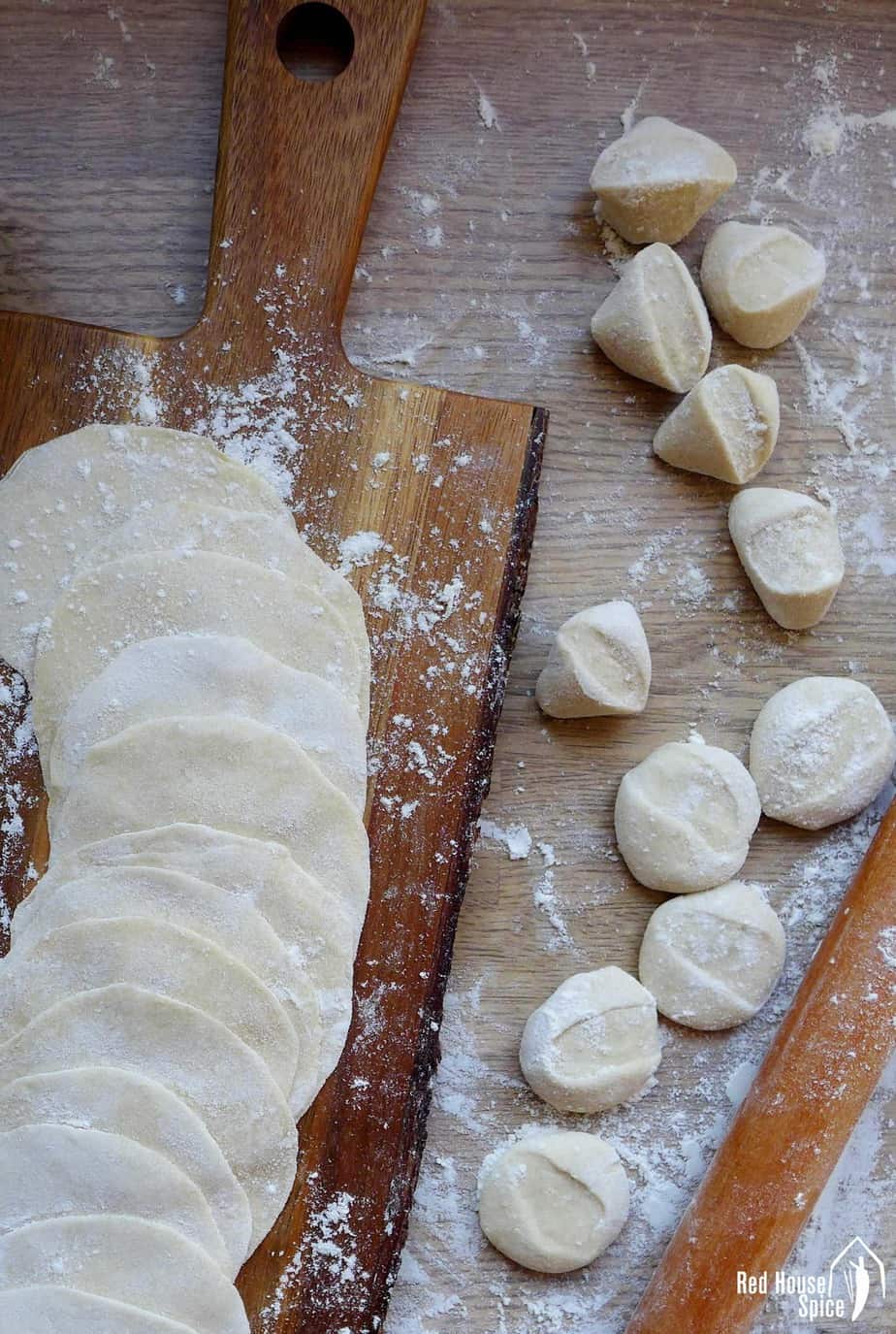
- Make a loop / rope with the dough.
- Cut it into equal sections.
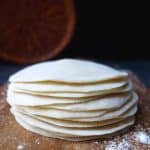
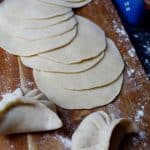
- Press each piece into a small disc with the palm of your hand.
- Use a rolling pin to flatten it into a thin disc.
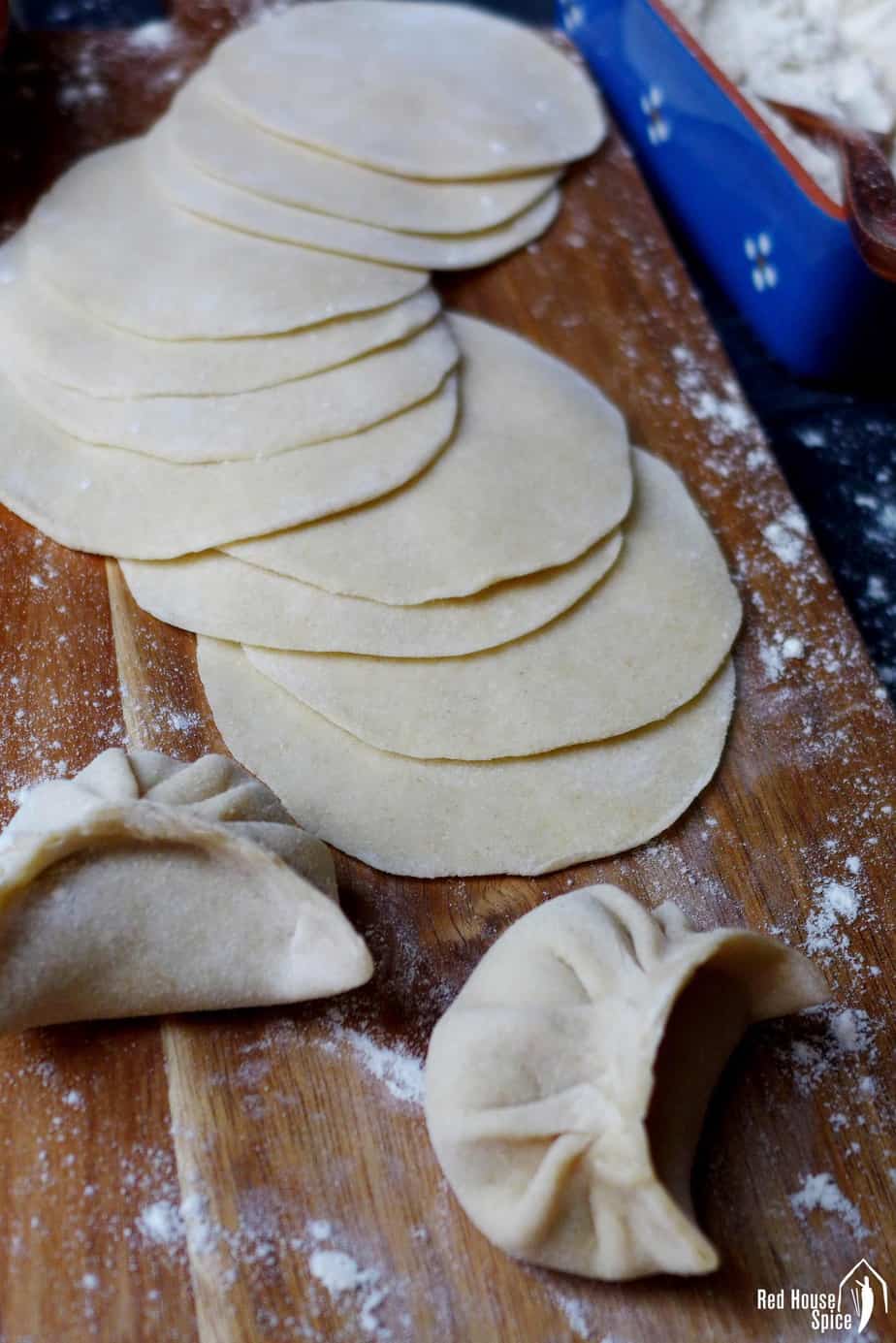
Ideally, the wrappers should be thicker in the middle and thinner around the edge. So the edge of the dumpling wouldn’t be too thick after sealing. To achieve a good result when rolling out the dough, a particular hand coordination is required.
One hand moves the rolling pin halfway over the dough and then rolls back. The other hand turns the wrapper a little each time in a circular motion. Roll, turn, roll, turn…(see how it works in my video above). Once you’ve got the rhythm right, the perfect wrappers can be made in no time!
* Always remember to dust with flour if the dough sticks. Cover the unused dough to prevent it from drying out.
* Alternative way: Use a pasta maker to roll the dough into a thin sheet (similar to how you make wonton wrappers). Then cut out wrappers with the rim of a wine glass or something similar.
Store the wrappers
Freshly made dumpling wrappers need to be used immediately. Otherwise they become dry and difficult to shape. In Chinese households, making dumplings is usually a family activity in which everyone participates. So the wrappers are always used straightaway by those who are in charge of dumpling assembly.
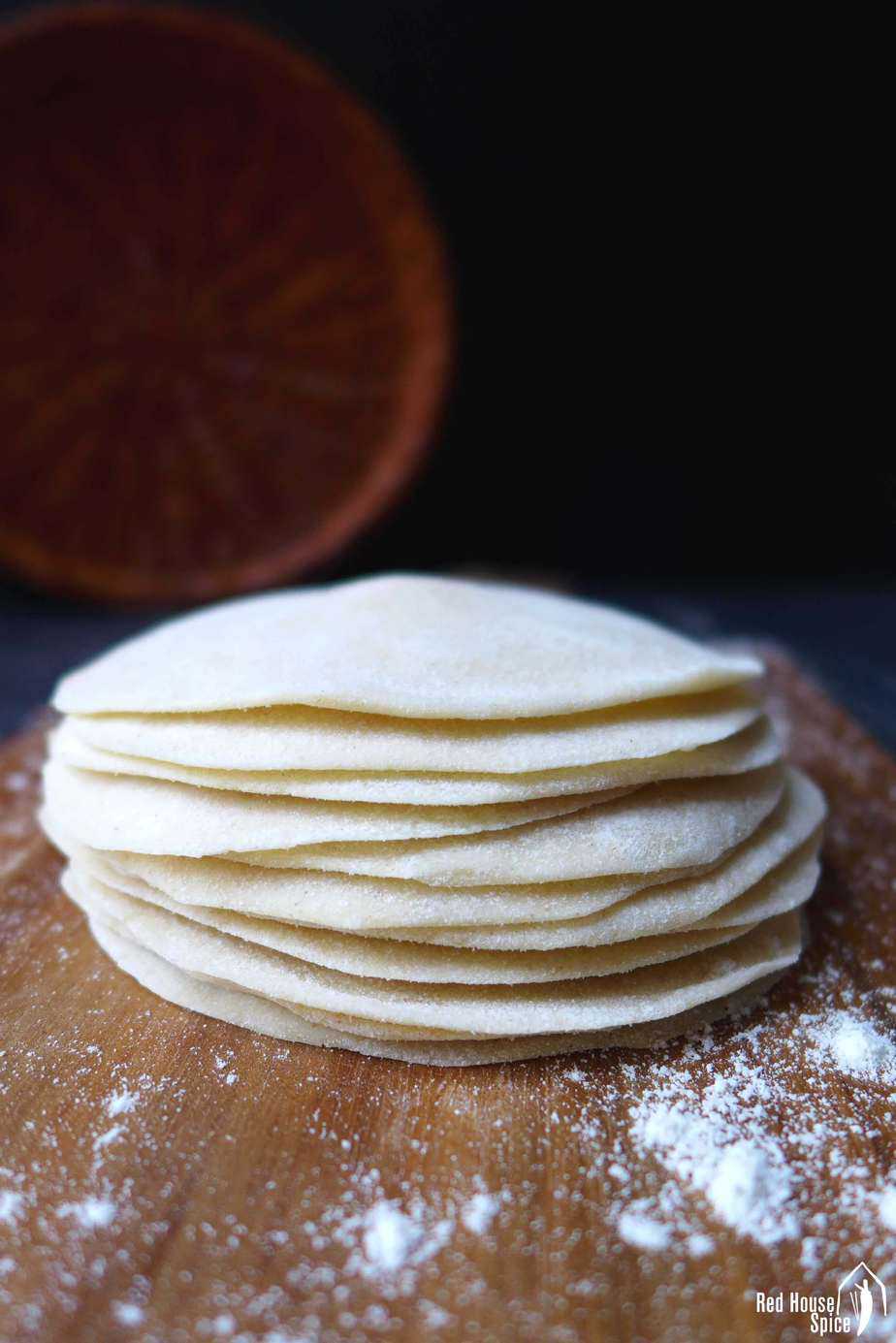
If you are working alone, remember to roll less than 10 wrappers at a time and assemble them. Then get back to your rolling action to produce the next batch. Don’t forget to dust with flour if you wish to pile up the dumpling wrappers.
Make them in advance: Homemade wrappers can be frozen. Sprinkle extra flour (or even better, use cornstarch) in between each wrapper. Place them in an air-tight plastic bag (squeeze out the air as much as possible). Defrost in the fridge then use them straightaway.
Use up the leftovers: No dough is wasted in my Red House kitchen. I always use leftover dumpling dough to cook Cong You Bing (Scallion Pancakes). Even it’s just enough for a small one, I think it’s worth the effort.
Other dumpling recipes
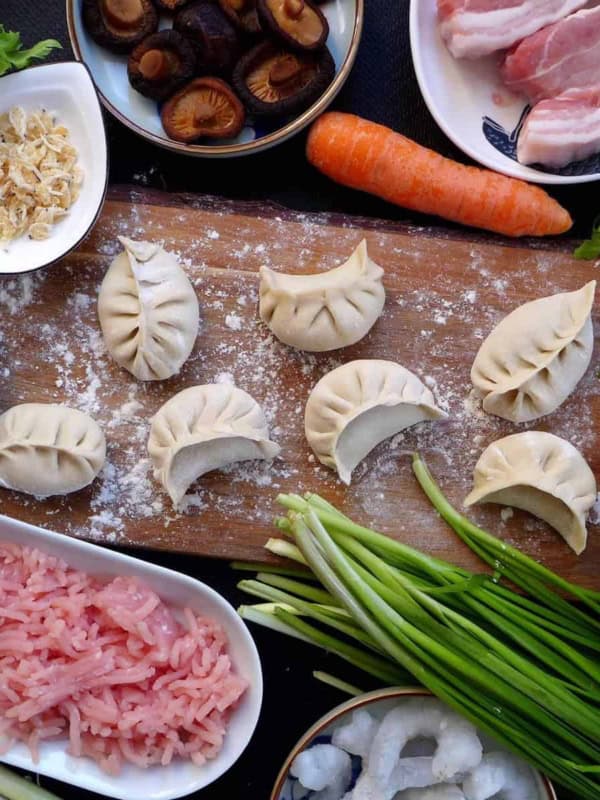
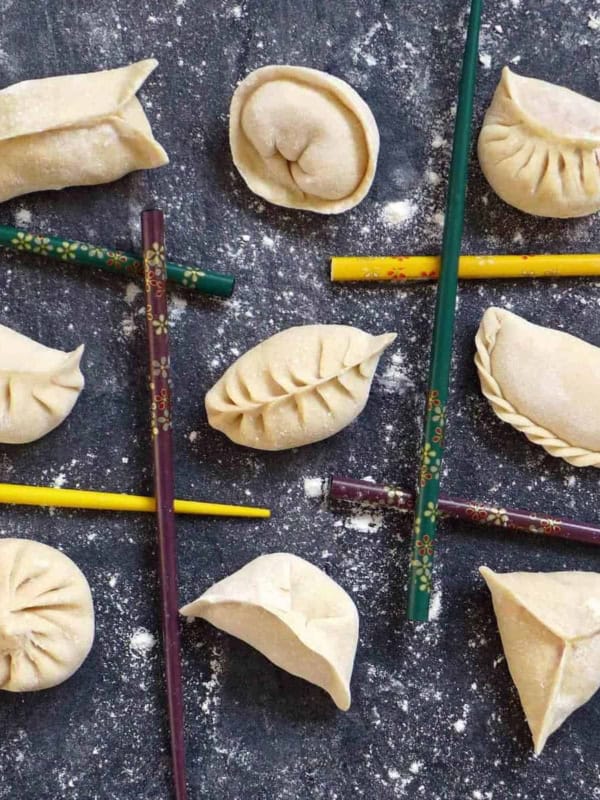
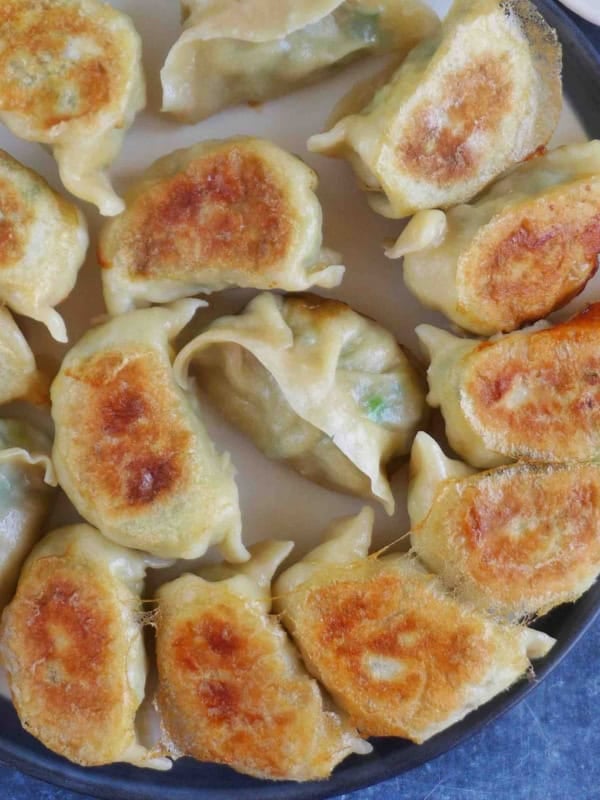
Now that the wrappers are made, why not check out other dumpling-related posts?


I’ve also included dumpling recipes in my new cookbook Three Meals Four Seasons.
📋 Recipe card
Love this recipe? Please leave a 🌟🌟🌟🌟🌟 rating and a comment. Thank you!
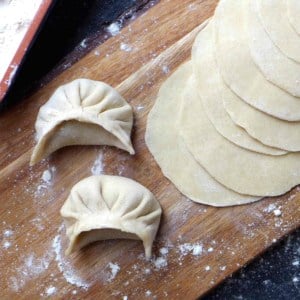
Homemade dumpling wrappers (饺子皮)

Video
Ingredients
For making around 30 wrappers
- 250 g all-purpose flour, about 2 cups, plus some for dusting
- 130 ml water, 1/2 cup+2 tsp (see note 1)
Instructions
- Add water to the flour gradually. Gently mix with a pair of chopsticks / spatular until no more loose flour can be seen. Then combine and knead with your hand. Leave to rest covered for 10-15 minutes then knead it into a smooth dough (see note 2).
- Cover and rest the dough again for 30-60 minutes until it becomes soft (Chinese cooks would say “as soft as an earlobe”).
- Make a loop with the dough then divide it into four parts. Roll one part (cover the rest to prevent them from drying out) into a rope then cut into 7-8 equal sections.
- Press each piece into a small disc with the palm of your hand. Then use a rolling pin to flatten it into a thin disc. Dust with flour if the dough sticks (Please refer to the video below).
- Use the fresh wrappers immediately. If you wish to freeze them for later, sprinkle extra flour in between each wrapper. Pile them up then place into an air-tight plastic bag (squeeze out the air as much as possible). Defrost in the fridge then use them straightaway.
Notes
Your Recipe Notes
Nutrition
Nutrition information is automatically calculated, so should only be used as an approximation.











Can you describe your rolling pin? What is the diameter and Is it straight? Thanks.
Hi Mike! My rolling pin is 3cm in diameter in the middle and slightly narrower at both ends. You could use a straight one without any problem.
Was trying this one out yesterday and it turned out OK part of it was my fault for not realizing how many wrappers this recipe can make so was larger hahaha was making 22pcs silly me. I replaced 60g with corn starch and 135 water instead. I steamed it.
Today I tried it again replacing 90g with corn starch and 135 ml water and made 30pcs. Today turned out perfectly! I fry-steam-fry… The wrapper came out more of the translucent side compared to my first try. Will be making this one regularly!
Thank you. Can’t wait to try your other recipes. FYI I always thought making dumplings you need special machines so I assumed it’ll be too difficult to even try! Luckily I Googled! First Chinese food I made lol
Well done Leen! So happy to know you’ll continue your dumpling making journey. Enjoy!
I like this
Thank you so much for sharing this series! Your write-ups and video tutorials completely demystified the process for me and my first attempt turned out surprisingly well. My daughters really enjoyed them too and are excited to make this a family activity the next I make them. I do have one question about steaming. Is it important to have a bamboo steamer? Does it bring a benefit not attainable with a metal steamer?
My pleasure Cathy! Bamboo steamers work the best but you can use a metal steamer too. Remember: 1. Brush a thin layer of oil on the basket before placing in the dumplings to avoid sticking. Alternatively, use steamer parchment paper. 2. Tie a piece of cloth/tea towel around the lid to avoid water dripping off onto the dumplings. Hope this helps.
Hi and thank you for amazing recipes 🙂 And I´m planning to make all 30 wrappers, but want to save 15 wrappers for tomorrow, can I just store those in the refrigerator, or it´s the best in the fridge? 🙂 If refrigerator, do you recommend rolling out the wrappers or storing the whole dough? 🙂 Thank you so much.
Hi Tommy! As I mentioned in the post, you can freeze the wrappers. Sprinkle extra flour in between each piece. Place them in an air-tight plastic bag (squeeze out the air as much as possible). Defrost in the fridge then use them straightaway.
Hi,
I am really happy of having found your blog! The explanations and photos are great!
I see that you mention to use the wrappers and filling as soon as they are ready but you need some time to prepare the wraps or filling. How do you suggest to do it? When the dough is resting in the fridge you prepare the filling and then go finish the wraps?
Also, if I would like to do more quantity, shall I assume that I will need to use the proportional amount of flour and water?
Thank you very much! I love your page and will try mote recipes!
My pleasure John! Here is the procedure: Make the dough first then leave it to rest (on the counter, NOT in the fridge). While waiting, mix the filling (you may keep it in the fridge if it’s hot in your room). When the dough is ready, roll the wrappers. Then assemble the dumplings! My instructions in the recipe card explains in detail the procedure. If you wish to make more, just follow the flour-water ratio to increase the quantity. Hope this helps!
Thank you!!! All clear!
Just discovered your website. Your instructions and tips are crystal clear. Excited to make pork/chive steamed dumplings. I plan to make the wrappers in advance, and appreciate your tips on freezing. One question: can you freeze the dough before dividing and rolling or is it better to roll and freeze? Thanks!
Hi Jake! You can either freeze the dough or the wrappers. Better to thaw in the fridge prior to making dumplings.
Love these! Can you make the dumplings and wait to cook them or should they be cooked immediately? Thank you!
You can’t leave uncooked dumplings for too long. However, they freeze very well. I’ve written some advice on how to freeze dumplings. Please read it in this post.
Just did your recipe, work perfectly, specially the rolling-turning technic, thanks!
My pleasure Richard! Glad that you find my video helpful.
Like Cass I was unable to find the video link. I’m glad you provided it in the comments. Is the rolling pin you use straight or tapered? It was very helpful to see how you manipulate the discs as you roll.
The actual video (not a link) is placed in the post and inside the recipe card. It’s usually the ad blocker on your device that causes the problem. Anyway, you can always find the video on my YouTube Channel. My rolling pin is slightly tapered, a typical Chinese rolling pin.
I was wondering if this dough would also work for making fried egg rolls.
Regular dumpling wrappers would be too thick and dense for egg rolls.