

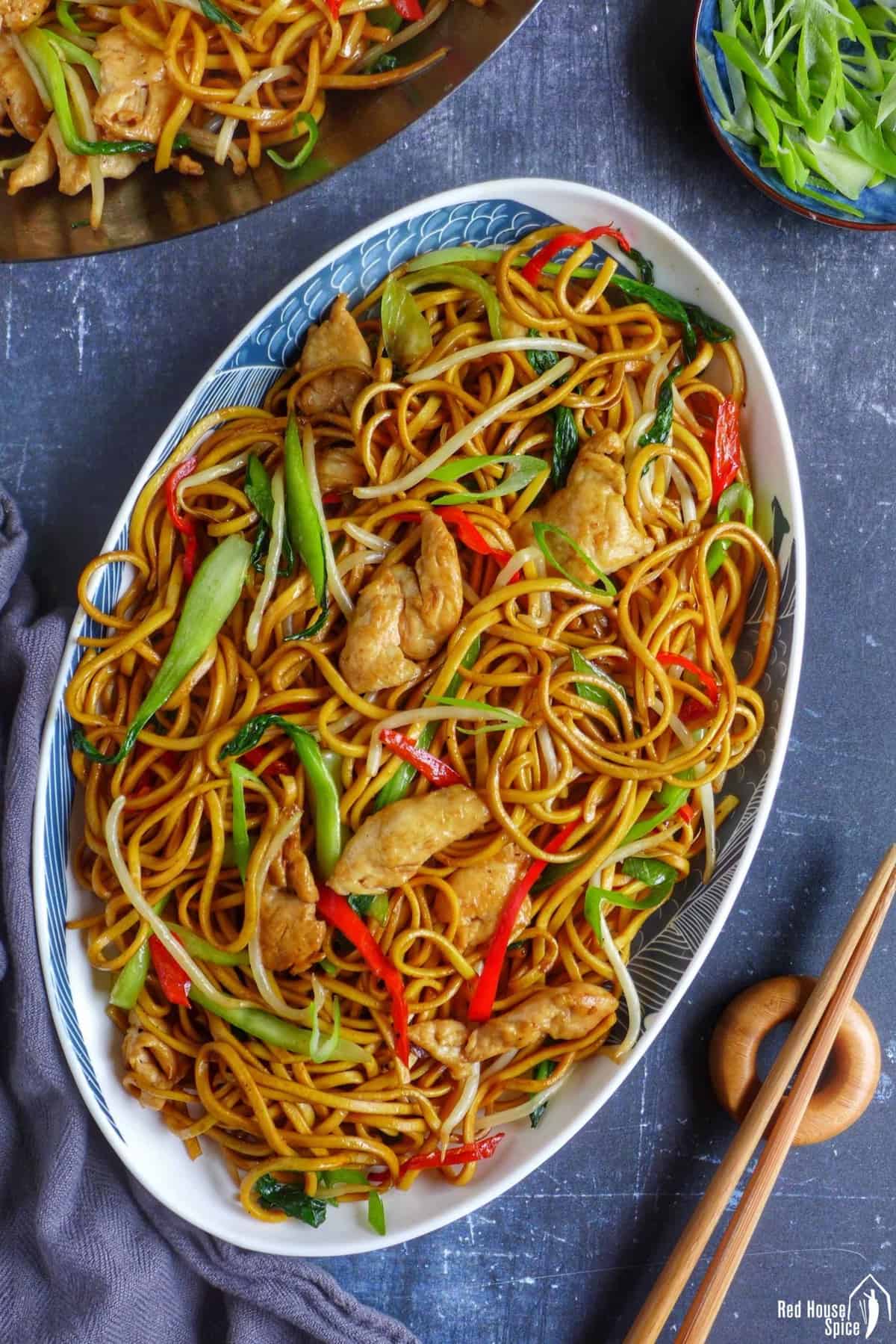
A complete guide on cooking Chinese chow mein at home. It includes noodle choices, protein and veggie options, an easy tasty sauce and essential stir-frying tips.
Pin this now to find it later!
Pin ItIf you’re a fan of Chinese takeout food and love noodle dishes, it’s highly likely you’ve tasted chow mein (炒面). Have you ever thought about cooking it yourself? I encourage you to give this recipe a try! No hard-to-source ingredients are required and it takes only 15 minutes to prepare. It tastes great and is likely healthier than the bought version.
Table of Contents
What is chow mein
The word Chow Mein resembles the Cantonese pronunciation of the dish (The phonetics in Mandarin is Chǎo Miàn). Chow refers to the action of stir-frying, whereas Mein is the general word for wheat flour-based noodles (rice noodles are called Mei Fun or Ho Fun instead).
The typical components of Chinese chow mein include noodles, a type of protein, vegetables, aromatics and a sauce. When homemade, it’s very much of a fridge-forage meal, meaning you use what is available in your kitchen (Just like how you cook Yangzhou Fried Rice or Stir-Fried Rice Cakes). The mix and match options are numerous.
Choose & prepare the noodles
Noodles used in classic chow mein are Chinese egg noodles. Their composition is very similar to spaghetti but the texture and flavour are noticeably different. They usually come in a round (or roundish) shape and have a quite pronounced yellow colour.
When purchasing, look for the labels that say “chow mein noodles”, “egg noodles”, or “Hong Kong style pan-fried noodles”. They come in different forms, thus you’d need to know how to prepare them accordingly.
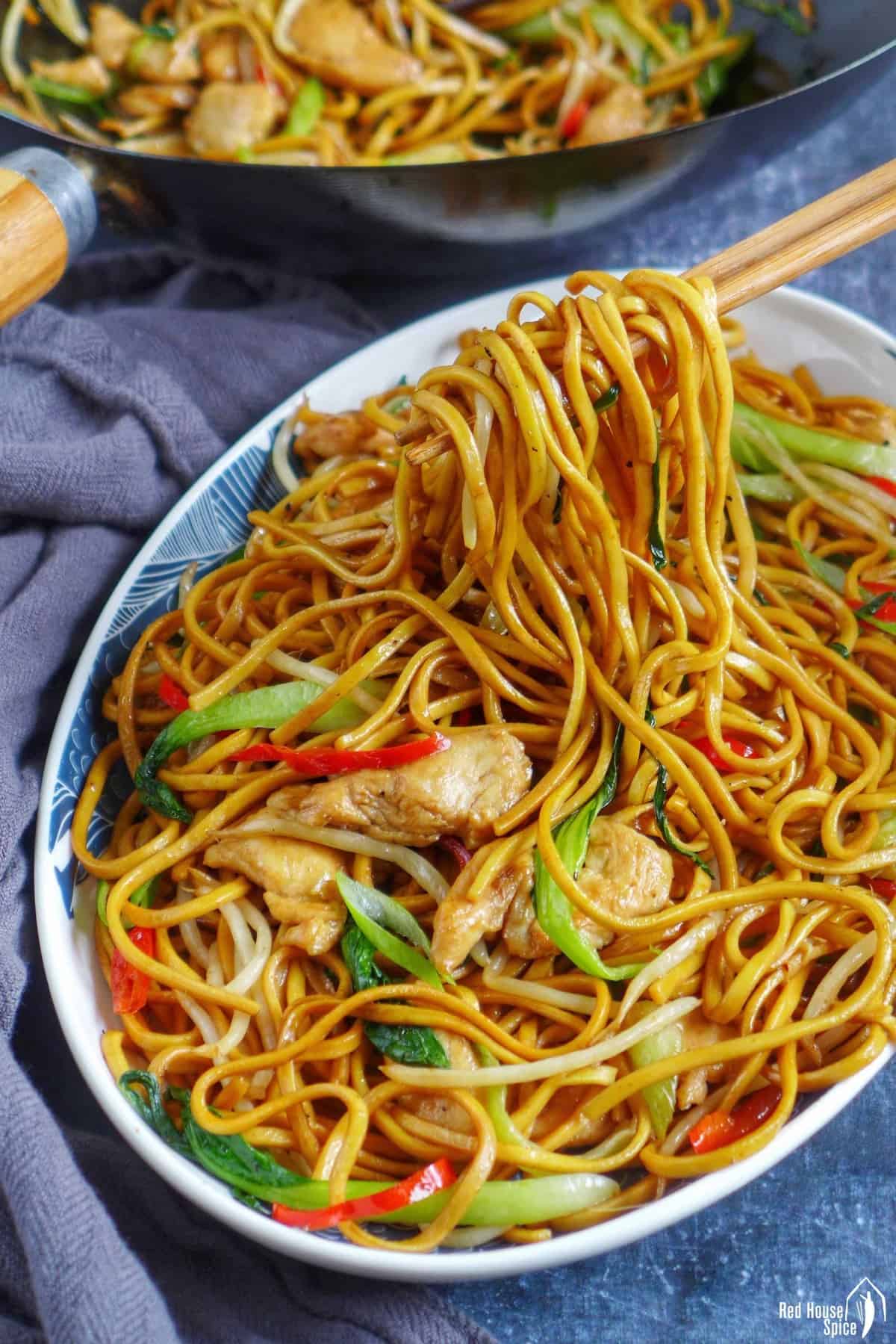
- Ready-to-fry (pre-cooked) egg noodles. These are what I used for shooting this recipe, and for making Lo Mein recipe too). They can go into the wok/pan straight away so they’re definitely a winner when you have little time to hand.
- Fresh egg noodles. They are uncooked so need a quick preparation before frying. Usually, you can simply soak them in hot water for 3 minutes or so. But it’s always a good idea to read and follow the package instructions.
- Dried egg noodles. They need to be boiled first until they are flexible but al dente. I use this type in my recipe for Soy Sauce Pan Fried Noodles and Beef Chow Mein.
🛎 TIP: No matter how you prepare uncooked egg noodles, it’s important not to overcook. Drain them well and pat dry with kitchen paper/tea towel. They should be slightly underdone. The noodle strands should be separated from one another. Otherwise, after further frying, you’re likely to end up with a plate of sticky and mushy noodles.
🛎 SUBSTITUTES: If you don’t care too much about your dish being truly “authentic”, use other types of noodles, such as Yi Mein/伊面 (special egg noodles used for Longevity Noodles), Ramen (aka alkaline noodles), or even spaghetti. They’ll still taste great. I promise!
PS: If you like the sound of the dish but need a gluten-free option, head over to my recipe for Chicken Chow Fun (fried rice noodles).
Protein choices
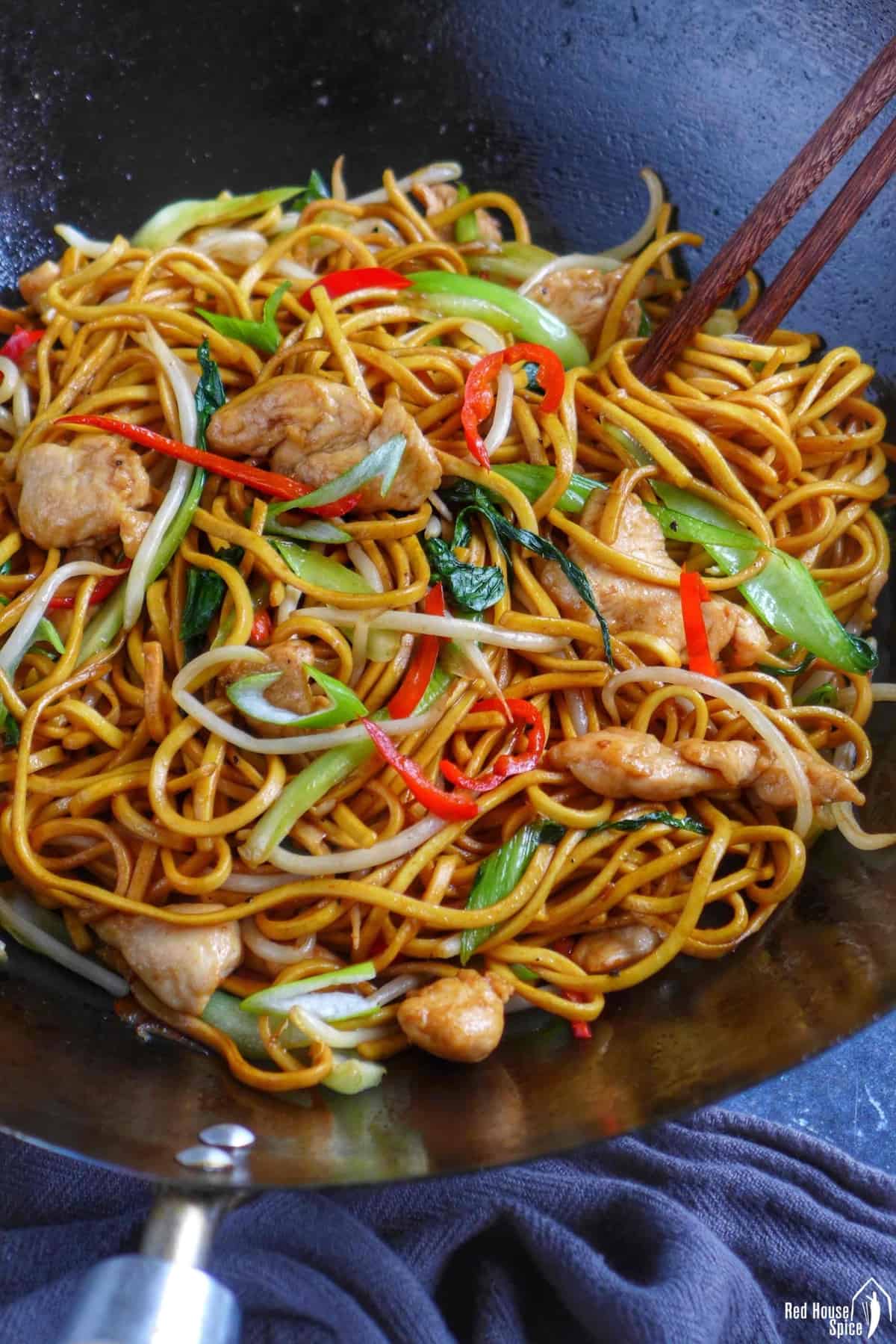
It’s not compulsory to include a protein ingredient in chow mein but if you want to make it an all-in-one quick meal, here are some options to choose from.
- Chicken. It’s what I used for this recipe post. Both chicken breasts and thighs work.
- Beef or pork. Choose a tender cut and slice it against the grain. My recipe for Beef and Chinese Broccoli Stir-Fry has many tips on how to make the meat succulent.
- Char Siu (Chinese BBQ pork). This delicacy makes a tasty addition to any fried noodle or fried rice dishes, with Singapore Mei Fun being a great example.
- Shrimp. Seafood lovers should give it a try. Lightly marinate it following the instructions in my post on Kung Pao Shrimp.
- Egg (vegetarian). Lightly beat and scramble it in oil, just like how you cook the classic Egg and Tomato Stir-fry.
- Tofu (vegan). You can use pan-fried tofu (The method can be found in Sichuan Braised Tofu), or shop-bought five-spice/smoked tofu.
Vegetable options
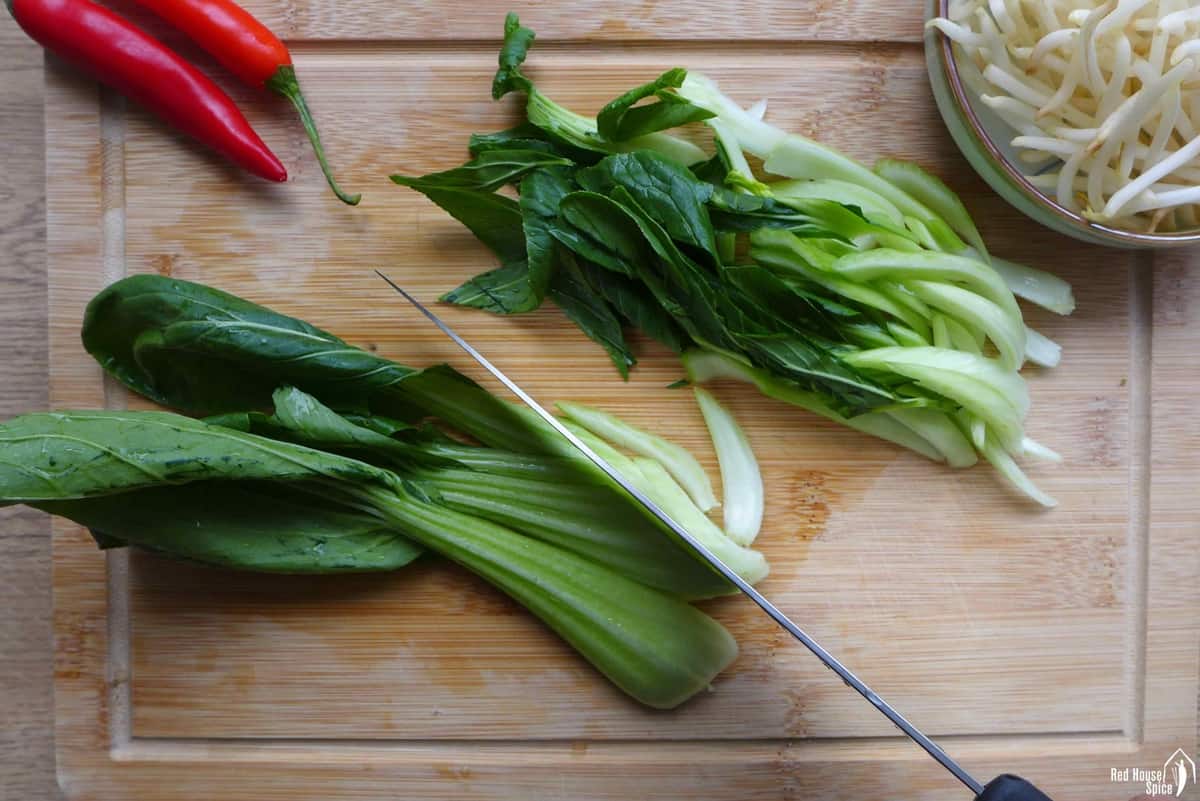
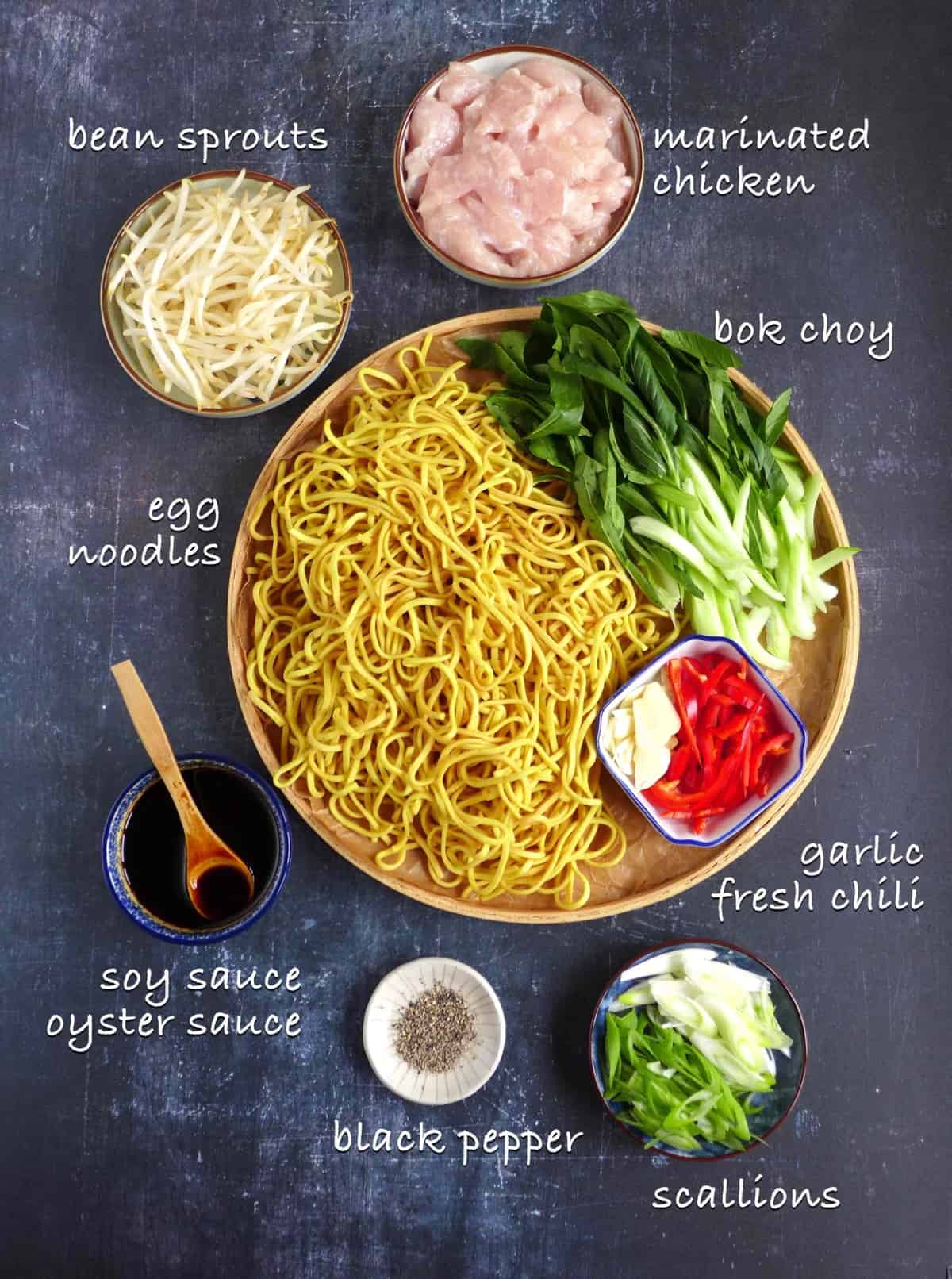
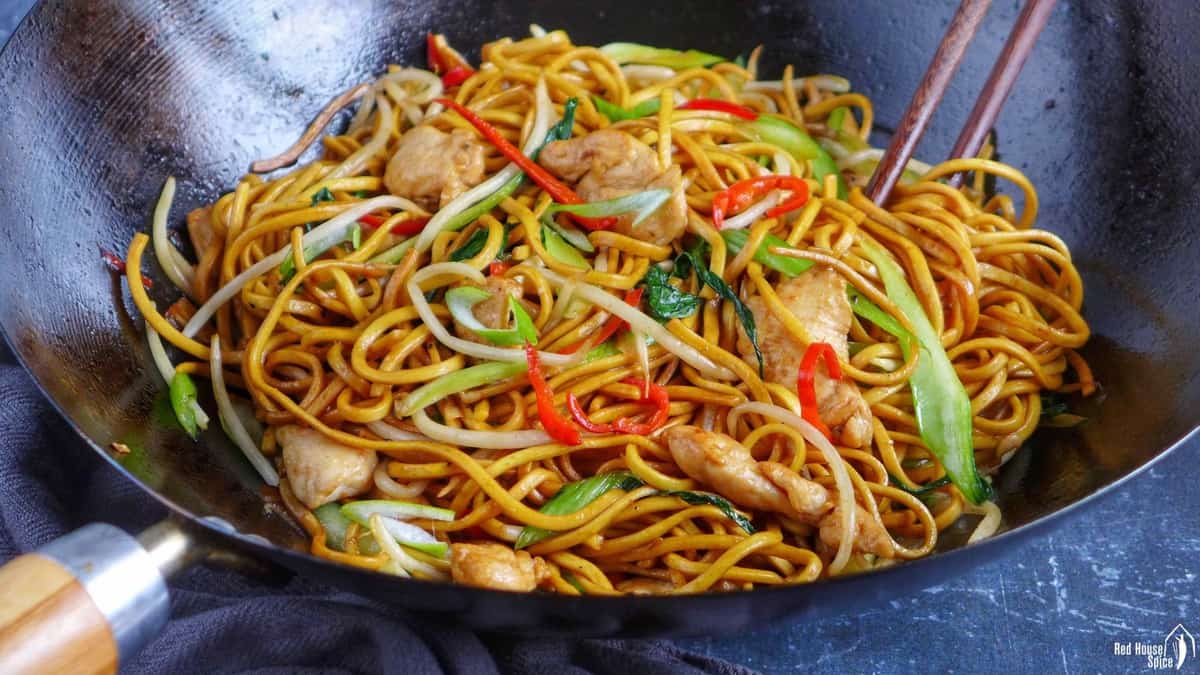
Vegetables provide flavour, texture, colour and nutrients to a good plate of chow mein. As you can see in the image above, bok choy, bean sprouts and fresh chilies are my choices on the day of shooting this recipe. Collectively, they elevate the dish with bright colours, a crunchy mouthfeel, subtle sweetness and a nice kick of heat.
Don’t limit yourself to these options though. More often than not, I just open my fridge and choose whatever is available at the moment. Celery, cabbage, carrot, snow peas, baby corn, bamboo shoot, bell pepper, just to name a few. Be aware that some vegetables, e.g. broccoli, would need a quick blanching before stir-frying as they take longer to cook through.
Aromatics
Use sliced garlic and scallions (green onions) to enhance the aroma. I separate the white and green parts of the scallions. The former is sizzled in the oil with garlic, while the latter is added at the very end as a garnish. Ginger can be used as well.
The chow mein sauce
There isn’t a set formula for chow mein sauce. Every restaurant or takeaway/takeout has its own ideal composition. My biggest problem with most chow mein I had outside China is their overuse of sauce. It makes it hard to appreciate the flavours of individual ingredients and I’m always left with an unpleasant salty taste in my mouth.
For 2 servings of chow mein, I combine the following four common condiments:
- Light soy sauce (1 tablespoon). It’s the source of saltiness and umami taste.
- Dark soy sauc (1 teaspoon). It adds an appetizing brown colour and a hint of caramel flavour.
- Oyster sauce (1 tablespoon). Use the vegan version (known as vegetarian stir-fry sauce/素食蚝油) if you’d like to exclude seafood.
- Black pepper (1 generous pinch), preferably freshly ground.
Chow mein isn’t supposed to be a saucy dish. With this simple sauce mixture, the noodles, protein and veggies are thinly and evenly coated with the seasonings. Every mouthful is light but flavourful.
Cooking workflow
Step 1: Prepare the ingredients
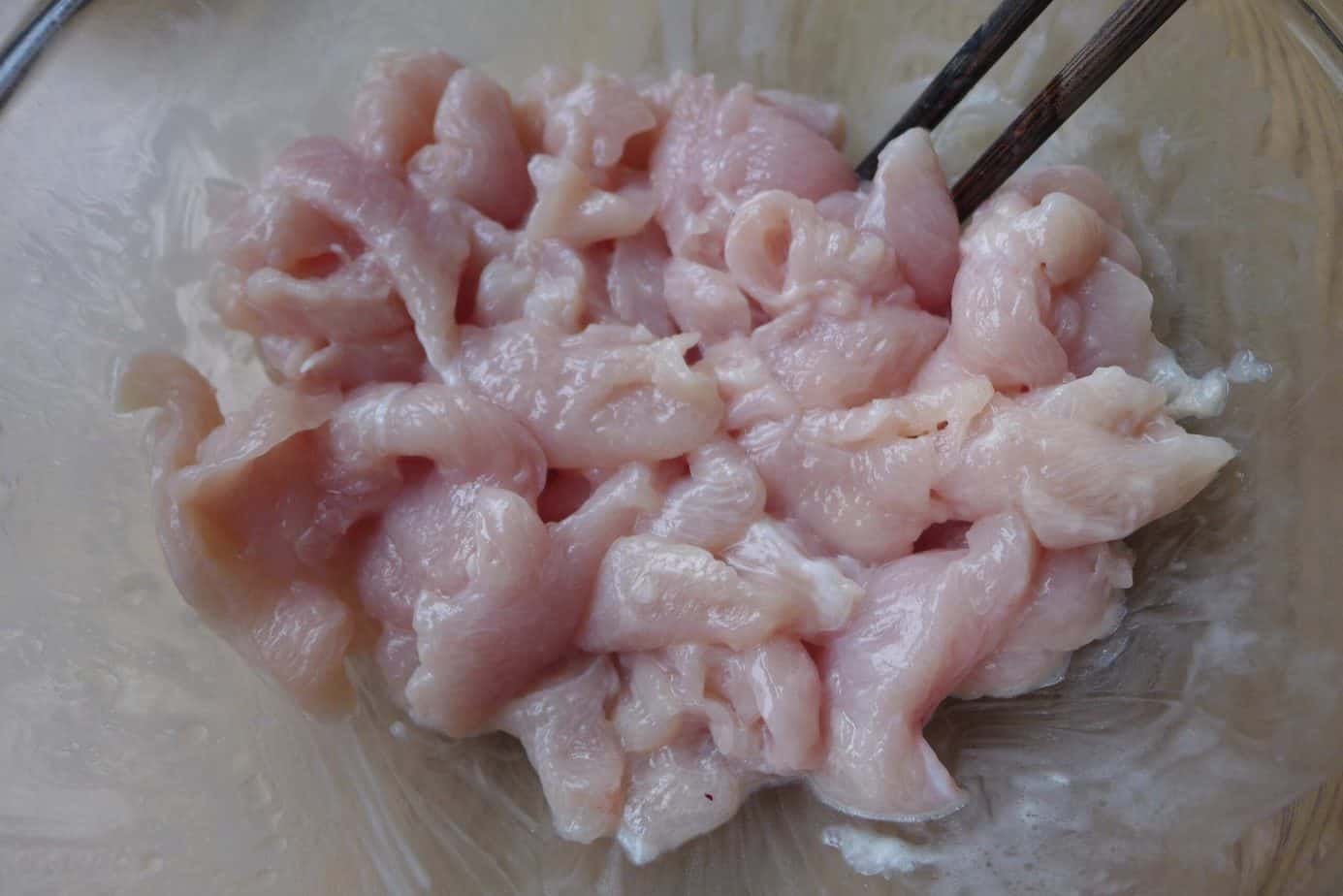
Cut the chicken into thin slices then coat with a mixture of cornstarch, water, salt and sesame oil. This is to ensure a succulent texture. You don’t need to leave it for long. After you chop all the vegetables, aromatics and mix the condiments for the sauce, the chicken is ready for the next step.
Step 2: Sear the chicken
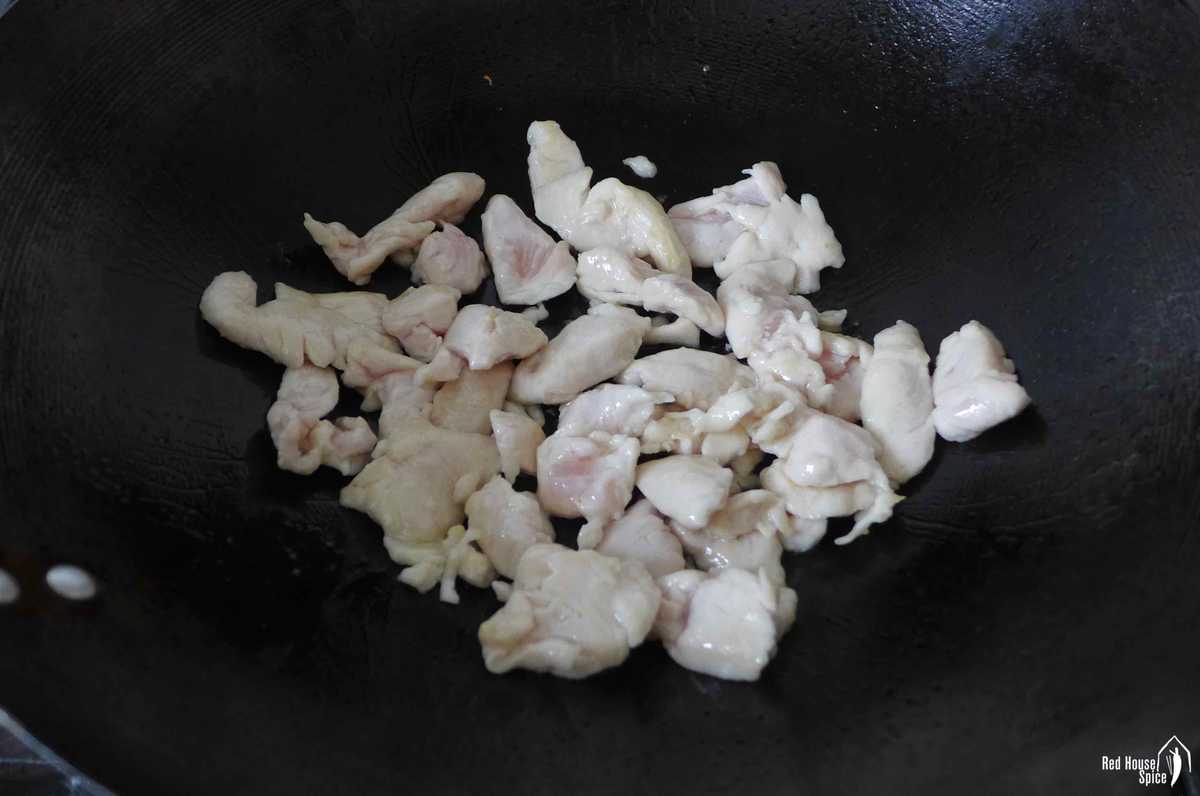
If using a traditional carbon steel wok, it’s crucial that you heat it up empty over high heat, then pour in the oil and sear the chicken. This way you’ll avoid sticking. However, if using non-stick cookware, add the oil first. Then fry the chicken when the oil is hot. Transfer the chicken out to a plate as soon as it loses its pinkness (halfway cooked).
Step 3: Fry the noodles
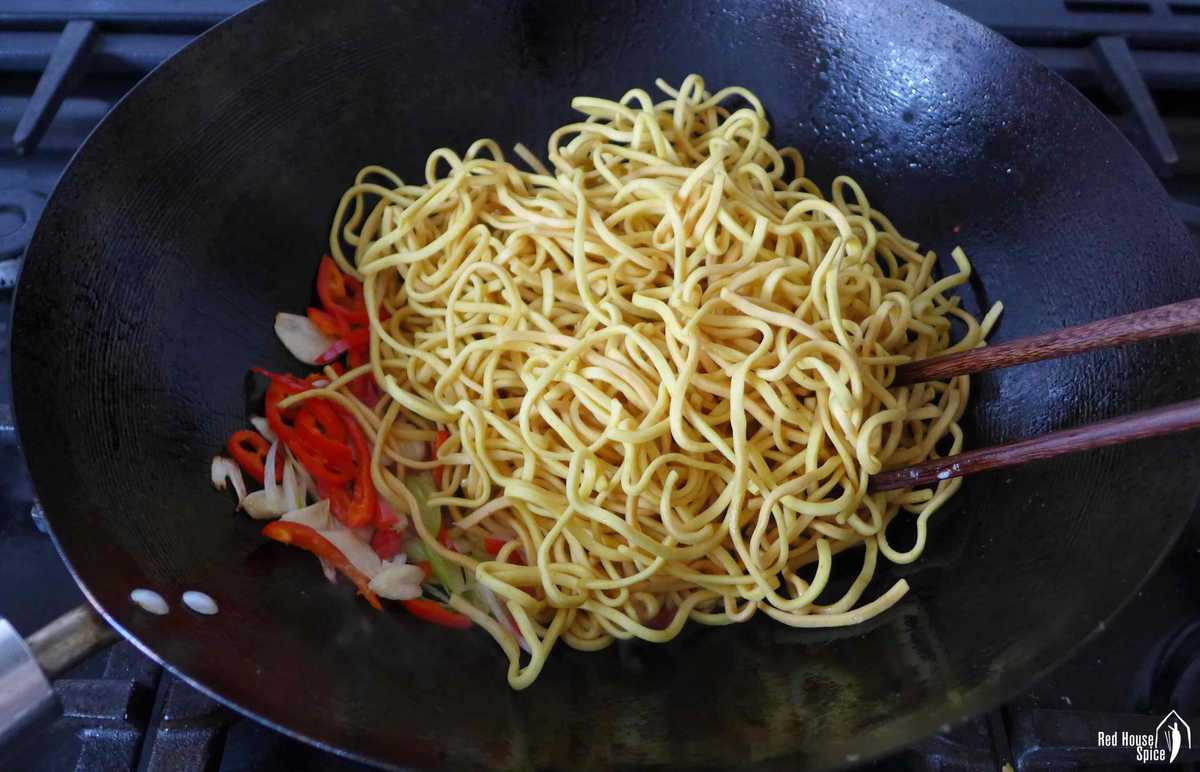
Add more oil to the hot wok. Sizzle garlic, fresh chili and the white part of the scallion until fragrant. Put in the noodles. Stir fry for 1 minute or so until they’re evenly heated.
Step 4: Add the veggies and season
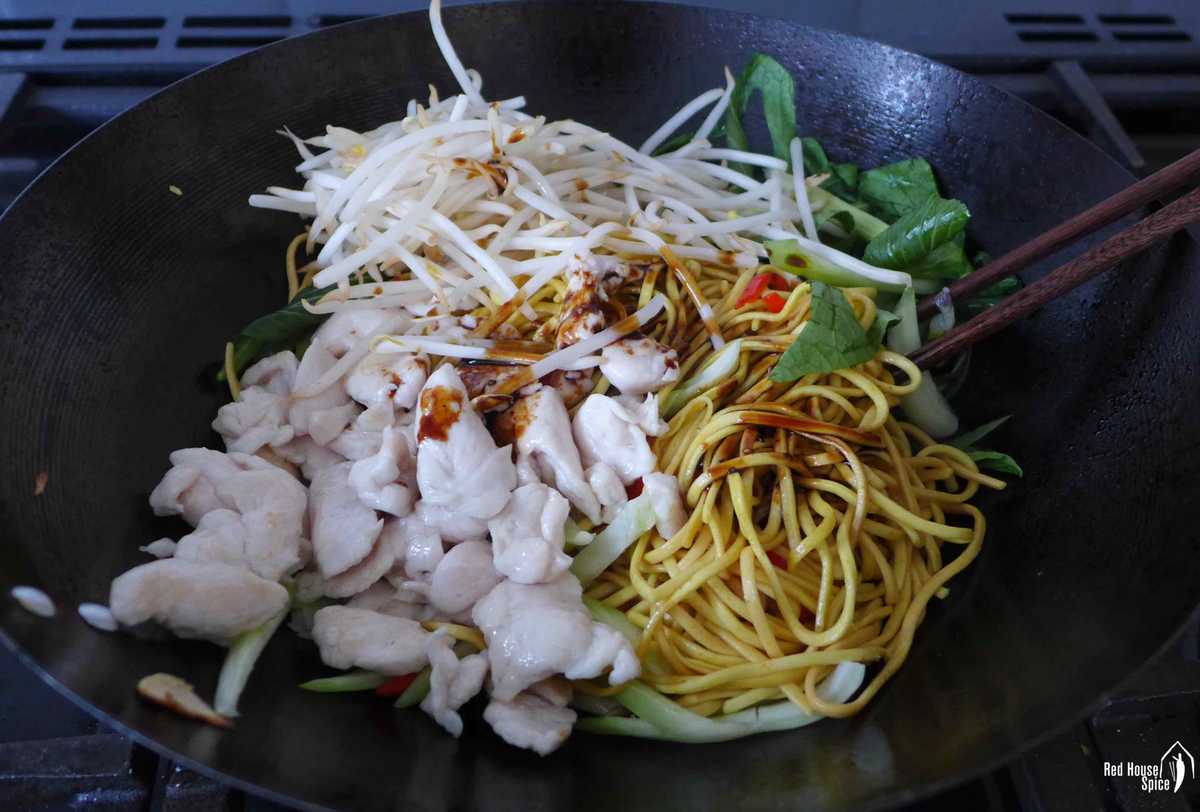
Add the chicken, bok choy and bean sprouts. Pour in the sauce. Toss continuously to cook evenly. Once everything becomes piping hot, throw in the green part of the scallions. Mix, then plate up to serve immediately. You may also have homemade chili oil on the side for those who fancy an extra kick.
Other one-pan dishes
Looking for more inspiration on one-pan weekday dinners? Check out these recipes:


📋 Recipe card
Love this recipe? Please leave a 🌟🌟🌟🌟🌟 rating and a comment. Thank you!
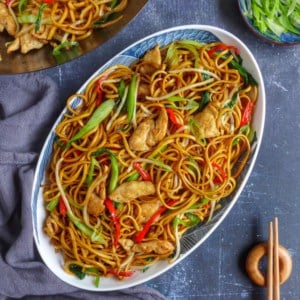
Chicken Chow Mein (鸡肉炒面)

Before You Start
Ingredients
For the chicken (see note 1 for other protein options)
- 1 piece chicken breast, about 180g/6.3oz
- ½ tablespoon cornstarch, or tapioca starch
- 1 pinch salt
- 1 tablespoon water
- 1 teaspoon sesame oil
For the sauce
- 1 tablespoon light soy sauce
- 1 teaspoon dark soy sauce
- 1 tablespoon oyster sauce
- 1 pinch black pepper, freshly ground
For the stir fry
- 2 tablespoon neutral cooking oil, divided
- 1 stalk scallions, chopped, white and green parts divided
- 2 cloves garlic, sliced
- Fresh chilli, sliced, to taste
- 1 head bok choy, sliced, see note 2 for other veggie options
- 80 g bean sprouts, about 1½ cup
- 400 g ready-to-fry chow mein noodles/Chinese egg noodles, about 14oz (see note 3 if using uncooked ones)
Instructions
- Cut chicken breast into thin slices. Mix with cornstarch, salt and water until well incorporated. Pour in sesame oil. Stir to coat evenly.
- Mix light soy sauce, dark soy sauce, oyster sauce and black pepper. Set aside.
- Heat up a wok/skillet until very hot. Add 1 tablespoon of oil (see note 4 if using non-stick cookware). Stir in the chicken slices. Fry until they lose the pinkness and turn pale (do not overcook). Dish out.
- Pour the remaining 1 tablespoon of oil into the wok. Sizzle garlic, fresh chili and the white part of the scallion until fragrant. Put in noodles. Stir fry for 1 minute or so.
- Add the chicken, bok choy and bean sprouts then pour in the sauce mixture. Toss and mix until the seasoning is evenly distributed and everything becomes piping hot.
- Garnish with the green part of the scallion. Dish out and serve immediately. Drizzle some homemade chili oil over if you wish.
Notes
Your Recipe Notes
Nutrition
Nutrition information is automatically calculated, so should only be used as an approximation.










I made the chicken chow mein tonight and we LOVED it!!! Quick and easy and I still boiled the noodles. Absolutely delish!
So happy to hear that, Anna!
Thank you so much for the recipe, I made it and it turned out wonderful!😋
My pleasure to share! Delighted to know you liked the recipe.
Havent tried the recipe yet, but trying to navigate between all the various adverts is not a good experience. I know you have to earn a living, but if you turn off before you get to the recipe then to me it seems self defeating. I might want to know more but feel defeated before I start. But I am intrigued and love Chinese food, I will sign up, and try a few of your dishes.
Thank you for your honest feedback, Martyn. I’ll pass this on to the ad team to help improve the reading experience. I hope you enjoy the dishes you make.
The flavour was outstanding. I used the vegetables on hand in my fridge and it worked a treat. It was so easy and my husband loved it. I thought it was better than our local pub.
I’m so glad it turned out so well! Better than the restaurant version is high praise.
Hey there,
I tried this recipe today and it was quite nice. However I ran into a bit of a problem. I feel like the noodles stuck to the wok quite a bit and when it was time to eat they were a bit dry. It feels like some of the sauce burnt in or evaporated but I’m not sure. I’m very new to wok cooking so do you have any advice why this may have happened and how to prevent it? I’m not entirely sure but I think the wok I have is cast iron (I wasn’t the one who bought it) and I did heat up the wok first and then pour in the oil if I remember correctly. Anyways if you have any advice on this it’d be great.
Have a nice evening 🙂
Thank you for giving the recipe a try. From what you describe, it sounds like the heat may have been a bit too strong. When the burner is quite powerful, the sauce can evaporate quickly. You can add a tablespoon of water to the seasoning mixture so there’s more moisture to coat the noodles. Also, make sure to toss the noodles well and avoid overcooking. I hope this helps.
Ah i see, thank you so much. I was wondering about the burner actually, i don’t have access to gas or induction burners so i’m just cooking on a normal stove (ceramic hob). It seems to be fine but i was wondering if there is a big downside to it?
For Chinese cooking, the key is being able to control the heat easily, especially increasing or reducing it quickly. Ceramic hobs can work, but they tend to respond more slowly. If the heat feels too strong, a simple trick is to briefly lift the wok off the burner to lower the temperature, then put it back on once things are under control.
can i use hoisin sauce instead of oyster sauce and if so how much pls
Yes you can use the same amount of hoisin sauce instead. The taste would be different but I think you’ll still enjoy it. Happy cooking!
Better than restaurant!!
How wonderful to hear that! Thanks for trying my recipe, Tina!
Super easy, fast and delicious.
That’s wonderful to hear!
Love this noodle easy recipe to follow I have all the ingredients and sauces to make this delicious dish
That’s wonderful to hear, Eleonor! Hope you you’ll find more inspiration on my blog.
When a person decides they are vegetarian I’ve learnt there are work-arounds 🙂 so that all other diners can be omnivores:-)