Succulent beef slices stir-fried with soft, springy rice noodles then seasoned with soy sauce, beef chow fun is a classic Cantonese delicacy not to miss.
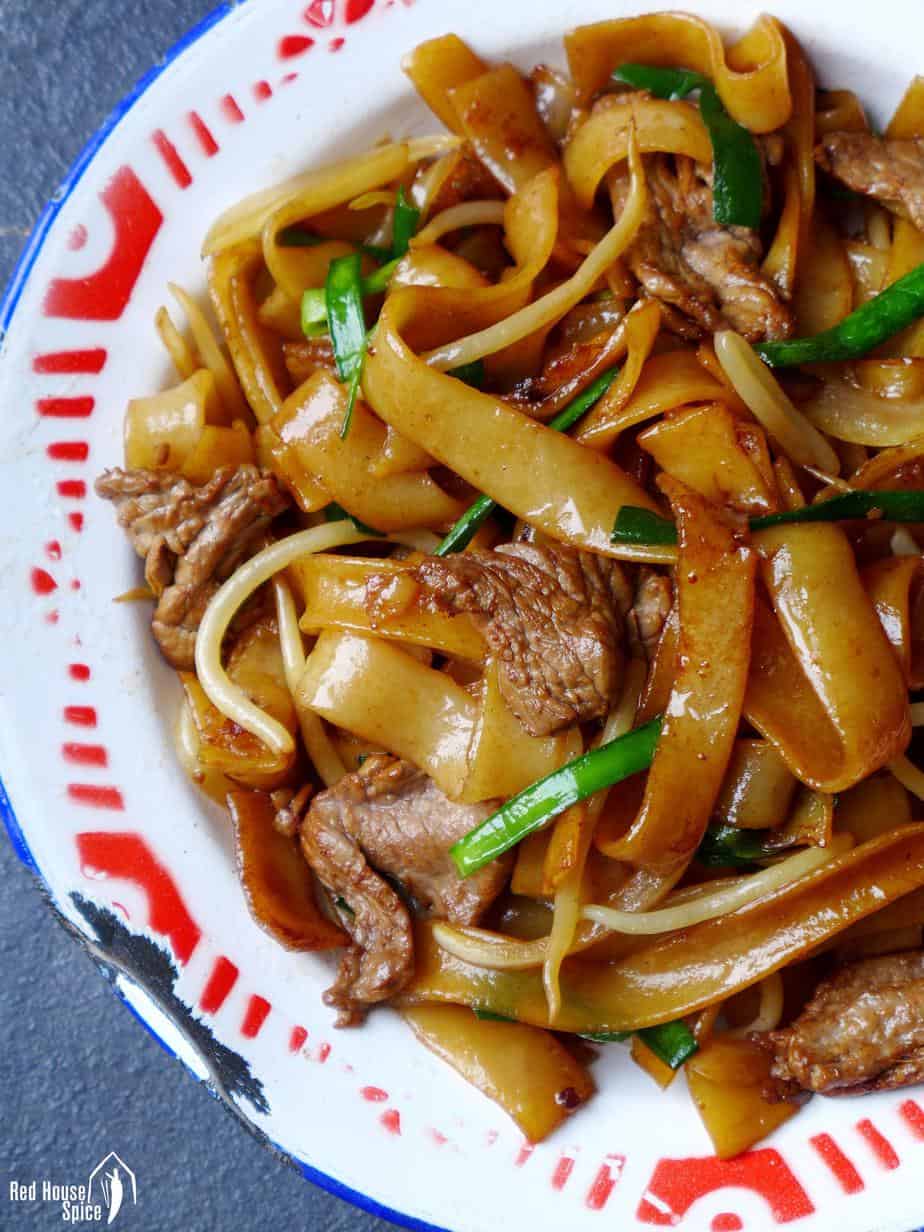
Cantonese dish beef chow fun

Pin this now to find it later!

Pin It

When I was working in Beijing, I always loved visiting Hong Kong-style Cha Can Ting/Cha chaan teng (茶餐厅, literally meaning Tea restaurant) for lunch. I’d order a plate of beef chow fun and a cup of Hong Kong-style milk tea.

Simple, tasty and very satisfying! While there are no local outlets serving an authentic version of this dish near to where I live in England, I’m lucky enough to be able to find all the ingredients needed locally to make Beef Chow Fun (Beef Ho Fun, 干炒牛河) in my own kitchen.

Save this recipe
Enter your email & we’ll send it to your inbox. Plus get great new recipes from us every week!

What is beef chow fun

Beef chow fun consists of tender, succulent beef slices; soft, springy rice noodles; crispy beansprouts and aromatic Chinese chives. It’s tasty, comforting and nutritious (protein, vegetable and starch in one plate). 
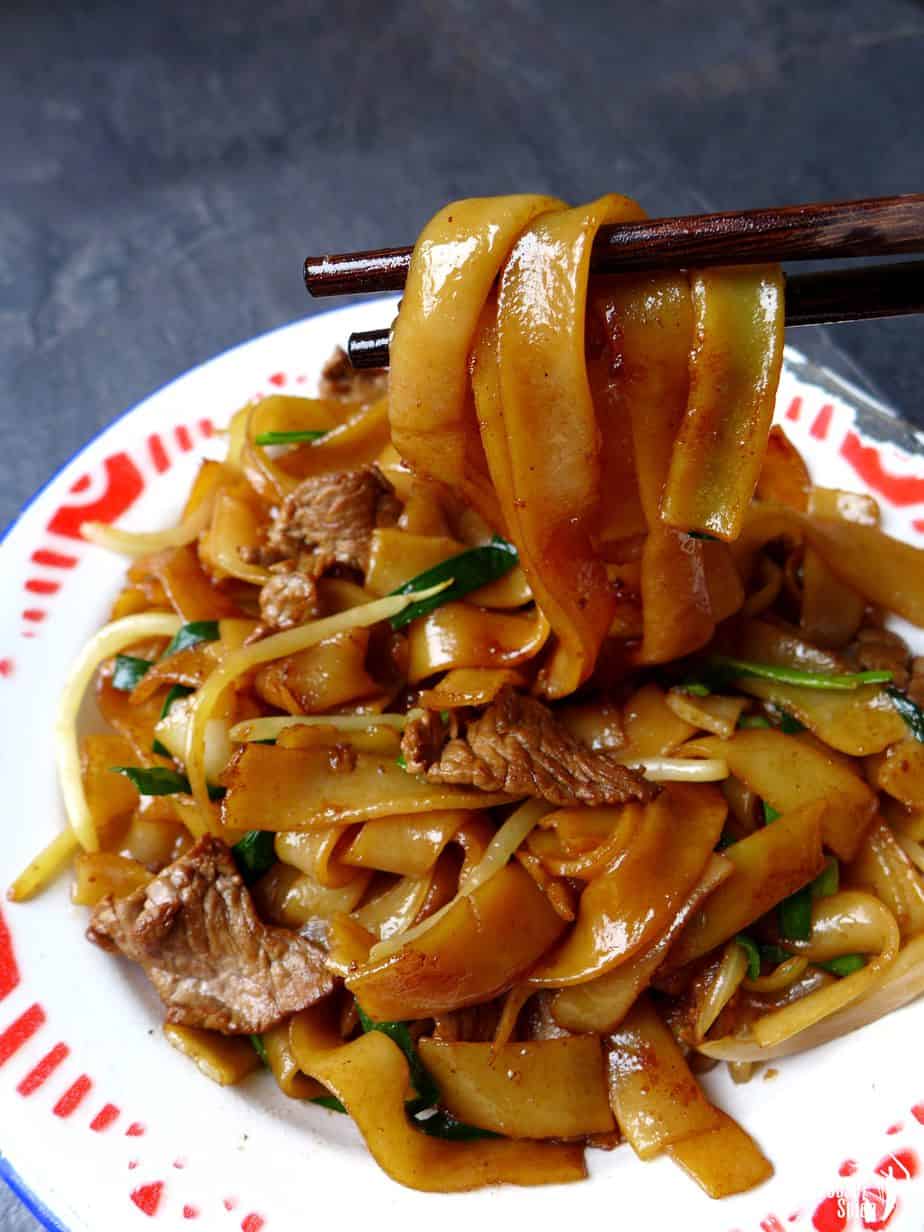
Beef ho fun

The Chinese name of this dish “干炒牛河” literally means “Dry fried beef and ho fun (a particular type of rice noodles)” As it suggests, the dish should look dry. That is to say, there shouldn’t be any excessive oil or sauce left on the plate when finished.

It’s not a complicated task to cook this delightful dish at home. However, I’d like to share a few tips and tricks to help you have a fail-proof experience.

Make the beef tender

  • Choose the right cut of beef. This is the key to tender, tasty beef stir fry dishes. I recommend flank or skirt steak.
  • Remember to slice the beef against the grain, especially if you use a cheaper cut of beef.
  • Marinate the beef with soy sauce, cornstarch, water and a pinch of sugar. Massage the meat until it absorbs all the liquid. Then coat with a little oil to lock in the moisture.
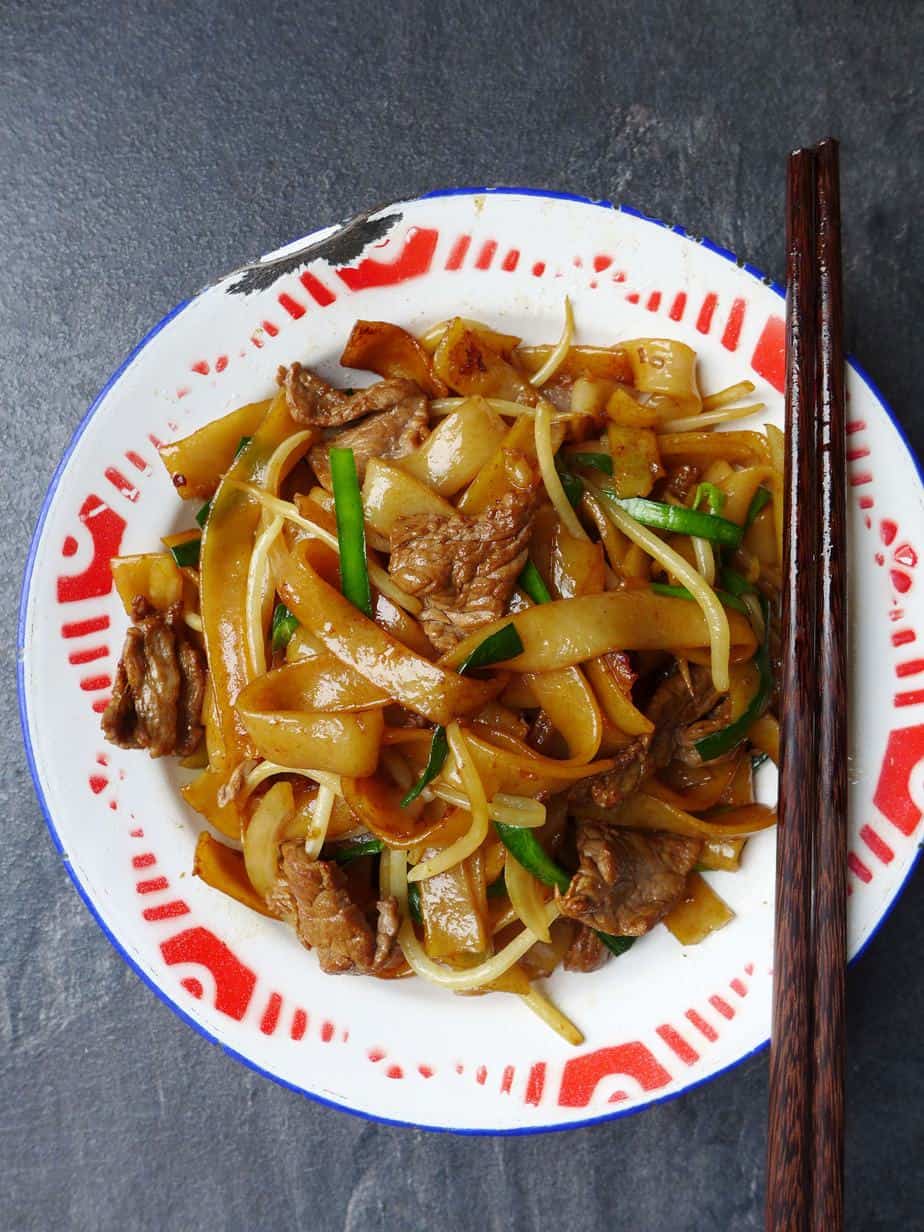
A plate of beef chow fun

Choose the right noodles 

There are many types of Chinese rice noodles and they come in different shapes and forms. Authentic beef chow fun calls for a particular type named Sa-ho fun (沙河粉). 

  • Sa-ho fun are wide, slightly thick, non-transparent rice noodles. They are different from the extra thin rice vermicelli used in Chow Mei Fun or the round rice noodles found in Yunnan Rice Noodle Soup.
  • You may find them with different spellings such as Sa-ho fan, Sha he fen, etc. Show Chinese character 沙河粉 to the shop assistant if you have trouble finding them in Chinese stores.
  • Use fresh sa-ho fun if available. They often come in a block pre-cut into strands. Prior to frying, gently separate them. 
  • Dried Sa-ho fun also work for this recipe. Follow the instructions on the package. Always remember not to overcook them and rinse under cold water right after boiling.

Use two types of soy sauce

Beef chow fun doesn’t require complicated seasoning. Two types of Chinese soy sauces are all that you need:

  • Light soy sauce for its aromatic, sharp saltiness.
  • Dark soy sauce for giving the dish an appetizing brown colour and a hint of sweetness to balance the taste.
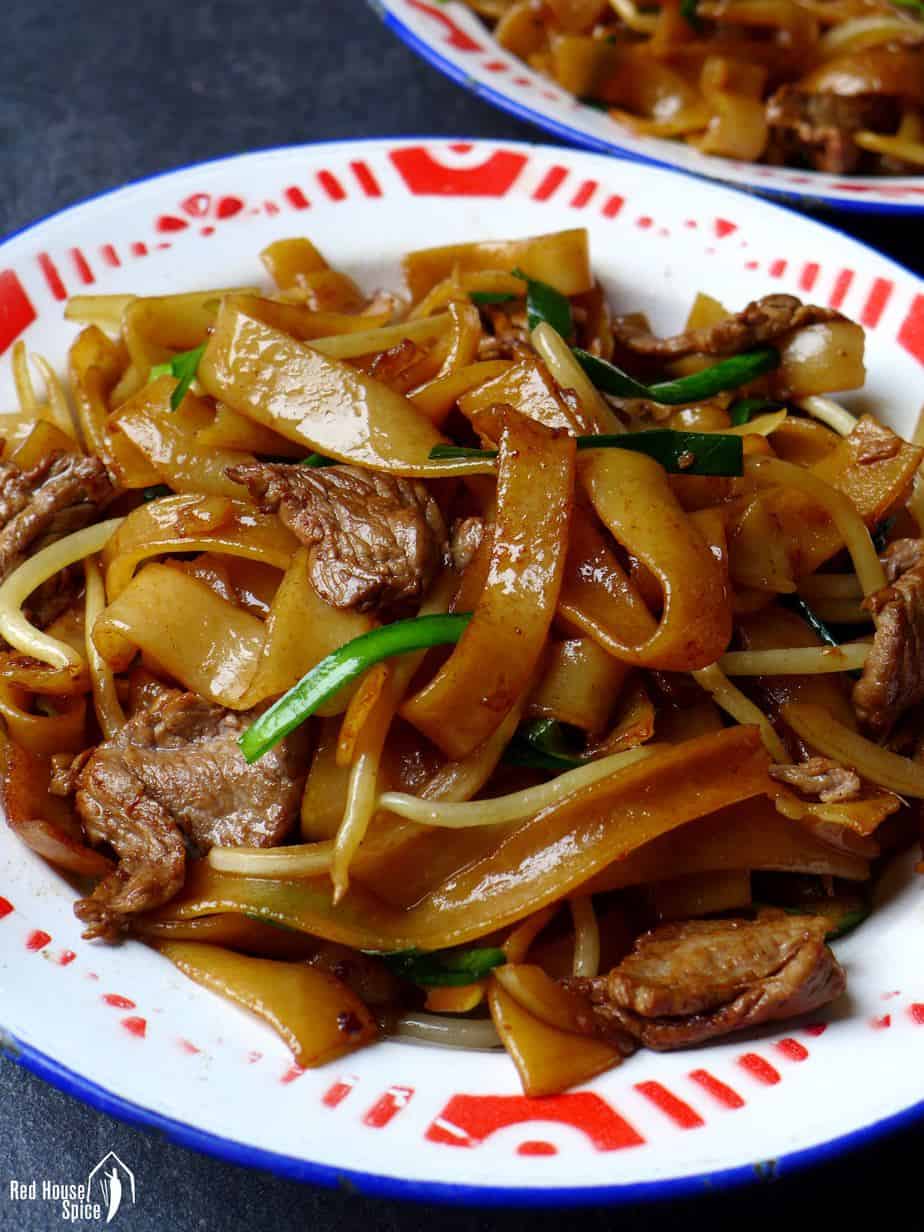
Stir-fried rice noodles with beef

Stir fry in sequence

To ensure the best texture of your homemade beef chow fun, please follow these steps when stir-frying:

  1. Quickly fry the beef in oil. Transfer out as soon as it turns pale (Do not overcook).
  2. In the remaining oil, stir fry sa-ho fun using a pair of chopsticks (They work better than spatular which breaks the noodles more easily).
  3. Add in beansprouts & onion slices. Cook them for a short period of time to retain their crispiness.
  4. Finally stir in the beef, Chinese chive and the seasoning. Dish out as soon as everything is evenly coated with the sauce.

Another note: Make sure you use a well-seasoned wok or a non-stick wok. 
a plate of stir fried rice noodles with beef
5 from 104 votes

Beef Chow Fun (Beef Ho Fun, 干炒牛河)

Succulent beef slices stir fried with soft, springy rice noodles then seasoned with soy sauce, Beef Chow Fun is a classic Cantonese delicacy not to miss.
Prep: 20 minutes
Cook: 5 minutes
Total: 25 minutes
Servings: 2 servings
Save this recipe!
Get this sent to your inbox, plus get new recipes from us every week!

Ingredients 

For the beef:

  • 5 oz beef, preferably flank/skirt steak
  • 1 teaspoon light soy sauce
  • 1 teaspoon Shaoxing rice wine
  • 1 teaspoon cornstarch
  • 1 tablespoon water
  • 1 pinch sugar
  • 1 teaspoon cooking oil

You also need:

  • 1 lb fresh sa-ho fun, see note 1
  • 2 tablespoon cooking oil
  • 2 oz beansprouts
  • ¼ onion, thinly sliced
  • 1 oz Chinese chives, see note 2
  • 1 tablespoon dark soy sauce
  • 1 tablespoon light soy sauce

Instructions 

Marinate the beef

  • Slice the beef against the grain. Mix with light soy sauce, rice wine, cornstarch, water and sugar. Coat with oil then leave to rest for 15 minutes.

Prepare the rice noodles

  • If using fresh ones: Gently separate the sa-ho fun by hand into long strands (try not to break them into small pieces).
  • If using dried ones (reduce the quantity to 8oz/230g): follow the instructions on the package to cook then rinse under cold water prior to stir-frying.

Stir fry

  • Pour oil into a hot wok. Stir in the marinated beef slices. Fry until they just turn pale (do not overcook). Dish out and leave the oil in the wok.
  • Put in sa-ho fun. Gently stir around with a pair of chopsticks. When the sa-ho fun begins to wilt, add in beansprouts and onion. Fry for 30 seconds or so.
  • Add the beef and Chinese chives. Pour in light soy sauce and dark soy sauce. Cook for a further 30 seconds.

Notes

1. Sa-ho fun is a variety of Chinese rice noodles. They are wide, slightly thick and non-transparent. You may find them with different spellings such as Sa-ho fan, Sha he fen, etc. Or you can identify them by Chinese character 沙河粉.
2. There are two types of Chinese chives: regular green coloured chives or yellow chives which have a milder flavour and a hint of sweetness. Authentic Cantonese beef chow fun calls for the latter. Yellow chives are much less accessible outside China. Please feel free to use the regular ones.

Your Recipe Notes

Nutrition information is automatically calculated, so should only be used as an approximation.
Like this? Rate and comment below!

Hi! I’m Wei

Born and raised in China, I’m the do-it-all creator behind this blog, a free digital cookbook sharing authentic, accessible Chinese recipes since 2017. I couldn’t be happier to have you here!

More Noodles

Leave a comment

Your email address will not be published. Required fields are marked *

Rate this recipe


This site uses Akismet to reduce spam. Learn how your comment data is processed.

56 Comments

  1. Nancy says:

    5 stars
    Wow!! This is tasty!! I found the recipe on Saturday morning in my newsletter from you. We were missing a couple of ingredients, so we rushed out to our local Asian store for them. We made this dish the next day (today), and what a keeper of a recipe!! We kept commenting the entire meal how delicious it was!! Thank you so much for this recipe!!

    1. Wei Guo says:

      Thank you so much for sharing this, Nancy! Delighted to hear it’s a keeper.

  2. Con Loizou says:

    5 stars
    Cooked this last night with chicken breast, followed this recipe, plus velveting the chicken. This is the best recipe I have used so far; the balance of the flavours is spot on. I added fresh chilli to my serving as well.

    1. Wei Guo says:

      I’m so glad the recipe worked well with chicken too. The fresh chili sounds like a lovely touch.

  3. Amy Grace says:

    5 stars
    Hi Wei,
    I just made the beef chow fun. It’s delicious! Since I didn’t have bean sprouts, I used bok choy and firm tofu (cut into cubes). Next time I will use the full amount of dark soy sauce to give it a rich, darker colour just like your dish! Your instructions are so easy to follow. Thanks very much.
    P.S. Your new hair-style is very pretty!

    1. Wei Guo says:

      Thank you so much for trying the recipe. I’m glad you enjoyed it, and your bok choy and tofu swap sounds great. I appreciate your kind words about the recipe and the hairstyle. Thanks for making my day, Amy!

      1. Millisia Brown says:

        Can you tell me please what the serving size is for this recipe?

        1. Wei Guo says:

          This recipe makes two generous servings.

  4. Elisabeth Alejandro says:

    5 stars
    My grandmother used to buy us this for breakfast in WanChi Hong Kong in a plastic bag with chopsticks. The flavours are very close, so that’s an excellent comment, truly a taste of home 😀

    1. Wei Guo says:

      That’s such a lovely memory. I’m so glad the flavors brought you a taste of home!

  5. Ana Aguilar says:

    5 stars
    Receta muy fácil y deliciosa. Mil gracias😁

    1. Wei Guo says:

      Thanks Ana! I’m thrilled you enjoyed it.

  6. Jeff Hale says:

    This is so delicious and so quick and easy to prepare! I had only dried chow fun noodle, so I used 8 oz. and after preparing it, it equals 1 pound. If you use 1 pound of dried chow fun, you will have way too much! Thank you Wei!

    1. Wei Guo says:

      My pleasure to share Jeff! I’m so glad you enjoyed the dish—it really is quick and delicious! The recipe’s quantity is for fresh noodles (450g/1 pound), and I realize I should have made that clearer. If you’re using dried noodles, you’re absolutely right to reduce the quantity since they expand when cooked. Thank you for pointing that out and sharing your experience!

  7. Anna says:

    5 stars
    This is my favourite Chinese dish and it turns out just like the restaurant version! I’m so glad I found this website. I will try more recipes soon. Thanks!

    1. Wei Guo says:

      I’m so glad to hear it turned out just like the restaurant version! Can’t wait for you to try more recipes. Thanks for the kind words!

  8. Jack LoCastro says:

    Is there a way to achieve 鑊氣 (Wok Hei) at home?

    1. Wei Guo says:

      Great question! To get a bit of 鑊氣 (Wok Hei) at home, use a well-heated, carbon steel wok over the highest heat possible and avoid overcrowding. Cooking in small batches can also help. It won’t be exactly the same as in restaurants, but it’ll add some of that smoky flavor!

  9. Lily Lynn says:

    This is my first time making this and it turned out pretty good except I had challenges keeping the noodles from sticking together. I used fresh sa-ho fun and separated them into long strands but as soon as I put them in the wok, they started sticking together. Is there a trick in keeping them separated?

    1. Wei Guo says:

      Great job on your first try, Lily! Fresh sa-ho fun noodles can be tricky since they tend to stick. Here are a few tips: refrigerate them beforehand to make them stiffer, gently separate the strands before cooking, and make sure your wok is very hot. Stir gently but quickly to keep them moving. These should help with sticking. Happy cooking!