

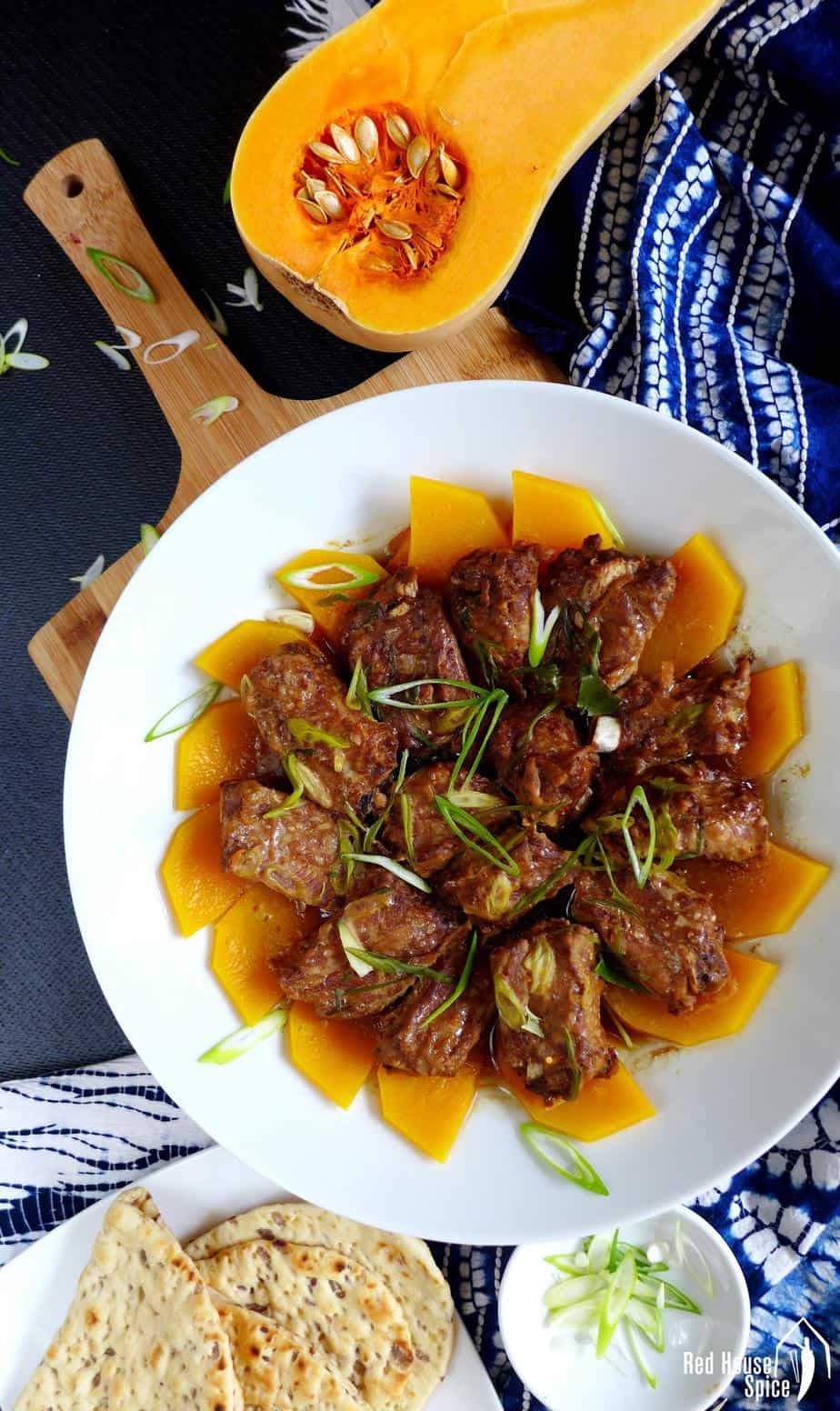
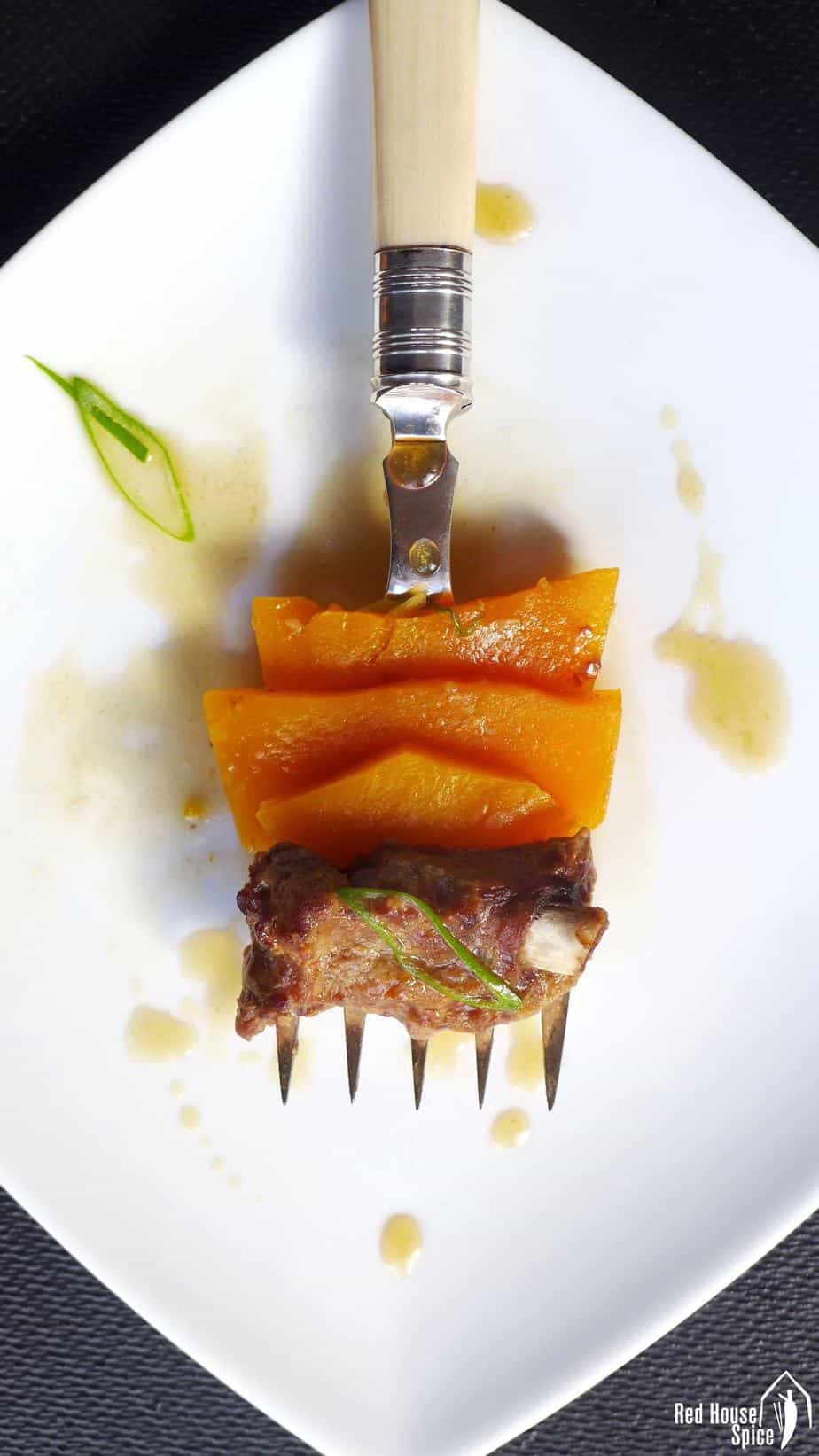
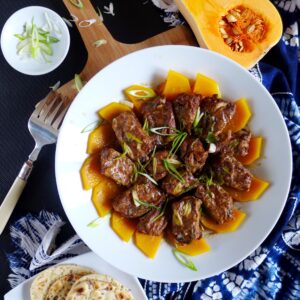
Seasoned with “soy cheese”, these steamed pork ribs leave a unique aroma in your mouth. Butternut squash underneath collects all the flavour from the meat.
Pin this now to find it later!
Pin ItLike many Chinese, I love bony pieces of meat. They are more flavoursome and it’s fun to eat. The other day, a local butcher chopped some pork ribs into small pieces for me. With butternut squash which I found in my larder, I made steamed pork ribs seasoned with Chinese fermented bean curd (腐乳, aka soy cheese). Everyone in our Red House enjoyed it a lot even though it made our fingers greasy.
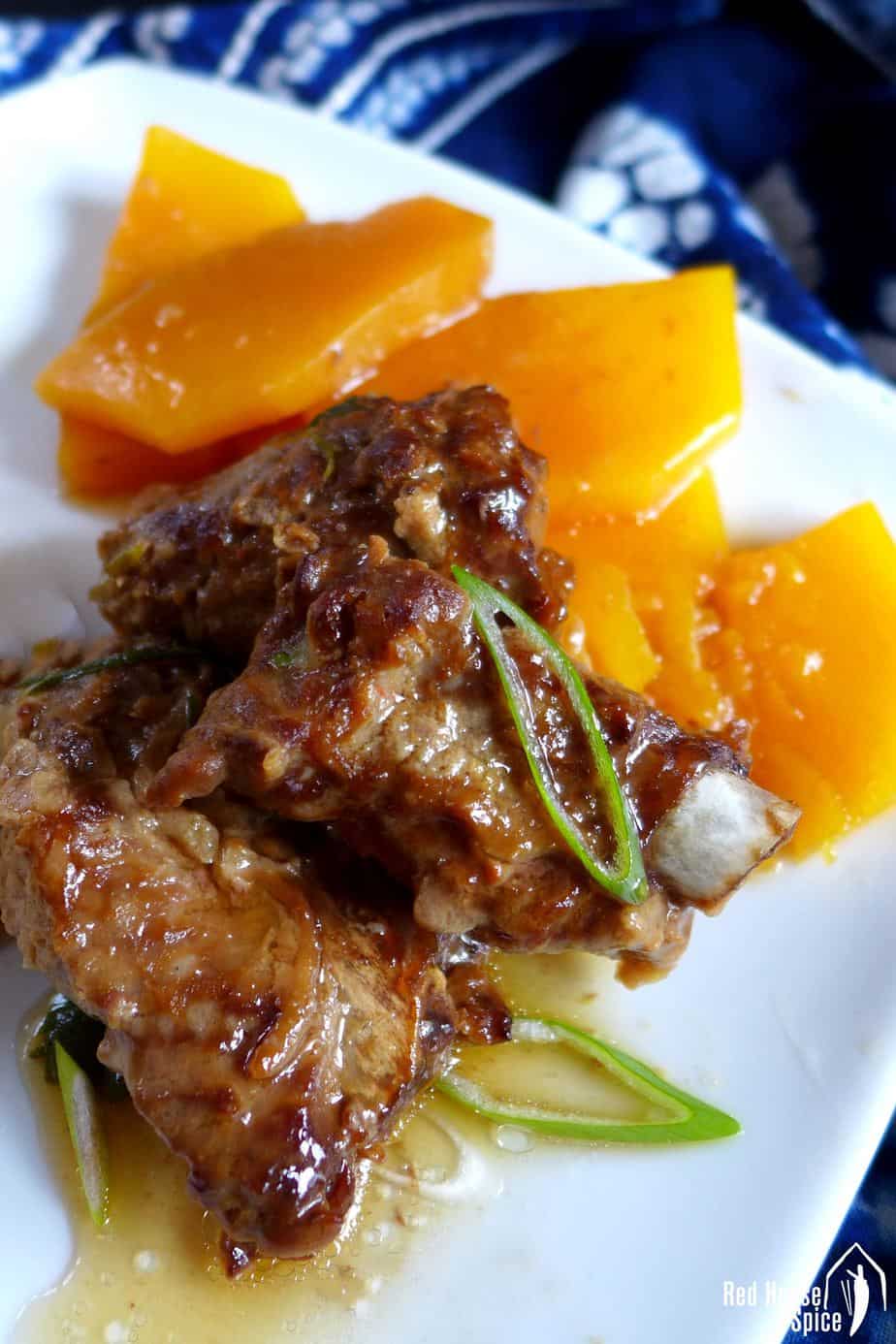
In Chinese cuisine there are three main ways to prepare pork ribs: braised in soy sauce, stewed in clear soup or steamed. The steamed version has a more chewy texture and a more intense flavour as all the seasoning stays on the surface of the ribs instead of being diluted in liquid.
I like placing some vegetable underneath the ribs when steaming. Butternut squash is a great choice since it stays in shape after a long period of steaming, and its naturally sweet taste gives a nice addition to this salty dish.
In this recipe, pork ribs are firstly marinated with soy sauce, rice wine, corn starch and ground Sichuan pepper (can be replaced by black pepper). This procedure tenderizes the meat and allows the seasoning to penetrate. Afterwards, the pork ribs are coated with fermented bean curd paste right before steaming.
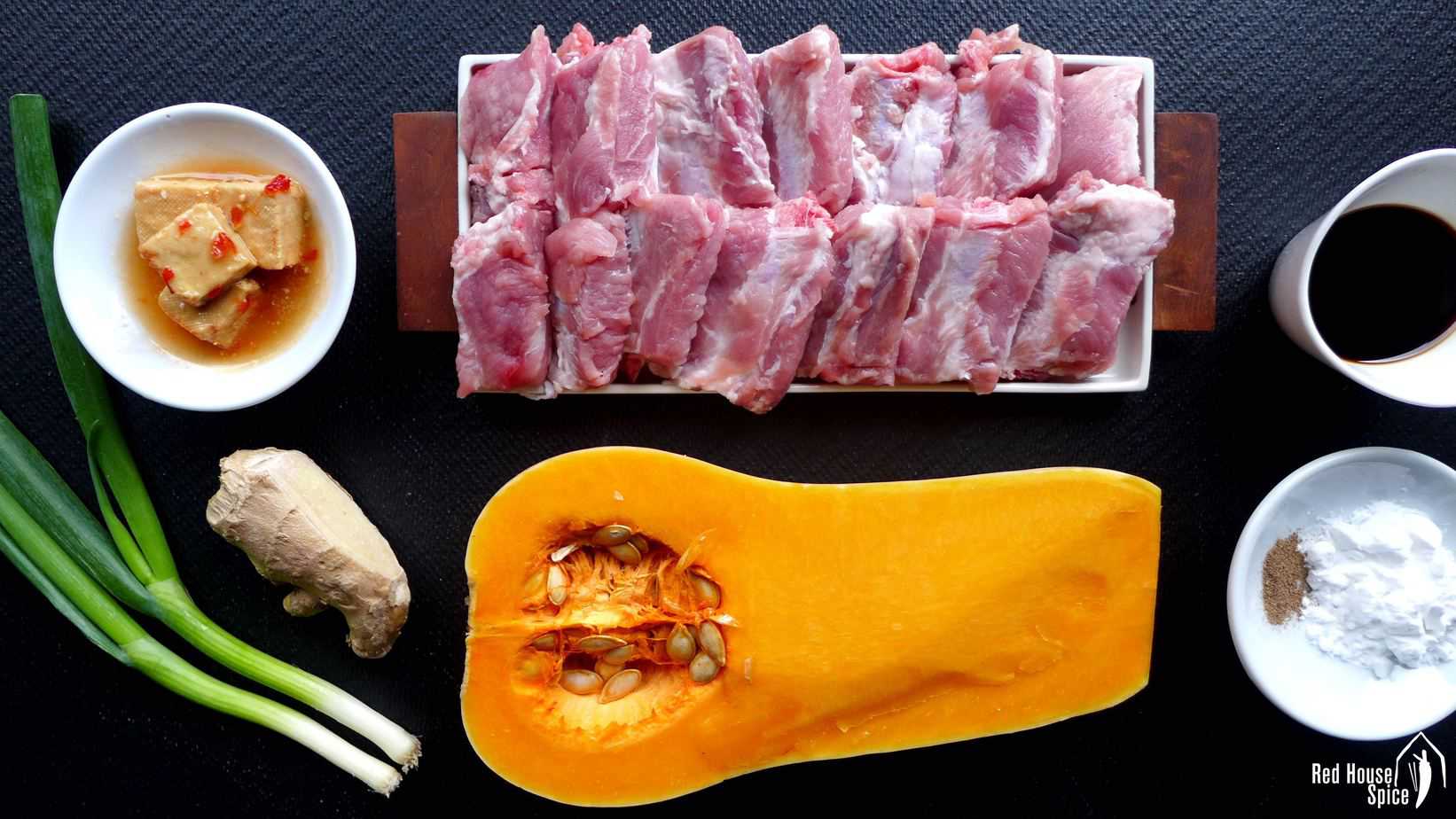
Fermented bean curd (top left of the photo above) is a Chinese condiment made from soy beans, rice wine (or Chinese liqueur), salt, spices, etc. It normally comes in cubes (size of 1-2 sugar cubes), soaked in a jar of brine with different flavourings. You might hear people call it soy cheese or tofu cheese because it somehow resembles the taste and texture of certain types of cheese.
It’s salty, winey, pungent, aromatic, with a hint of sweetness. All in all the flavour is quite intense, unique and (in my opinion) addictive. For steamed pork ribs with butternut squash, I use white fermented bean curd with chilli flavour by a reputable Chinese brand named “Wangzhihe/王致和”. It can be found in most Chinese shops.
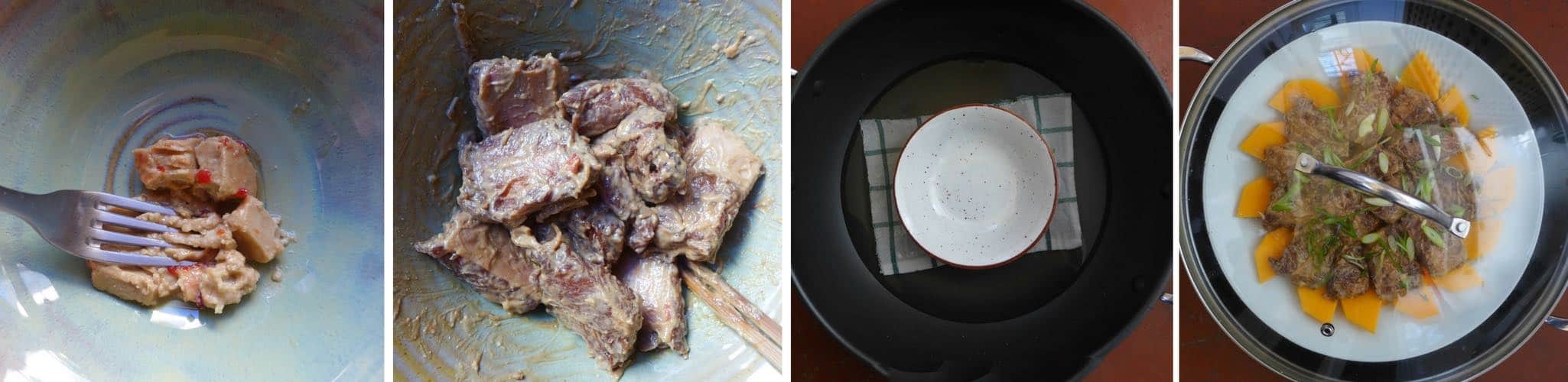
Now let’s talk about steaming. It’s good news if you have a steamer. But what if it’s too small to hold a plate inside (like mine)? I solved this problem by placing a small bowl in a wok, then put the rib plate on top. Since my wok has a non-stick coating, I also put a piece of cloth underneath the bowl to avoid scratching. This works perfect, just like using a shop bought steamer rack, but costs nothing!
Steamed pork ribs with butternut squash (南瓜蒸排骨)

Ingredients
- 400 g pork ribs, 14oz
- ½ butternut squash, about 400g/14oz
- 2 teaspoon light soy sauce
- 2 teaspoon dark soy sauce
- 1 teaspoon Shaoxing rice wine
- 2 teaspoon cornstarch
- 1 pinch ground Sichuan pepper, or ground black pepper
- 1 tablespoon ginger, cut into thin strips
- 5 cubes white fermented bean curd
- ½ teaspoon sesame oil
- 1 stalk scallions, finely chopped
Instructions
- Wash pork ribs then pat dry with kitchen paper. Marinate them with light and dark soy sauce, rice wine, corn starch, ground Sichuan pepper and ginger for at least half an hour or overnight in the fridge.
- Put fermented bean curd and sesame oil into a bowl. Mash it into a smooth paste with a fork. Coat marinated ribs with the paste.
- Peel and deseed butternut squash. Cut into slices (about ¼ inch thick). Evenly place them onto a deep plate. Then top with ribs (avoid overlapping). Sprinkle spring onion over.
- Place the plate into a steamer filled with water. Bring water to a boil then turn down the heat to low. Steam for 40 mins or so. Check water lever half way through. Add more if needed.
Your Recipe Notes
Nutrition information is automatically calculated, so should only be used as an approximation.













Hi Wei,
I made your recipe and I liked it very much. Do you think that I can also use red fermented bean curd i.o. the white ones for this recipe? And if so, I assume that in that case I should use only 2 or 2.5 cubes of the red cubes, since red fermented bean curd has a much stronger (and different) flavour than white fermented bean curd, right?
Thanks,
Fred
Hi Fred! You can use other types of fermented bean curd for this recipe. Yes, you’d need to adjust the quantity as each type has different level of saltiness.