
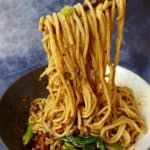
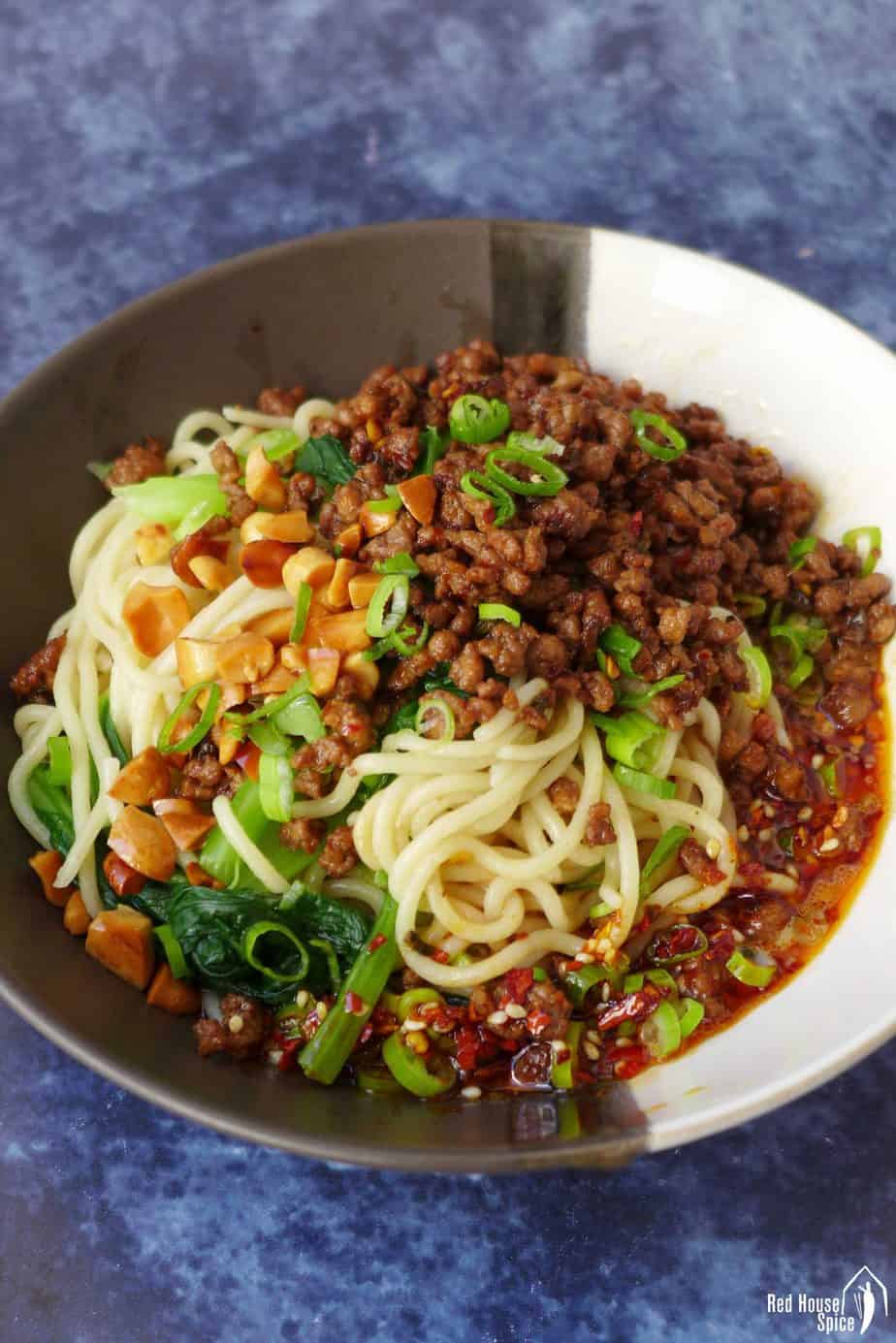
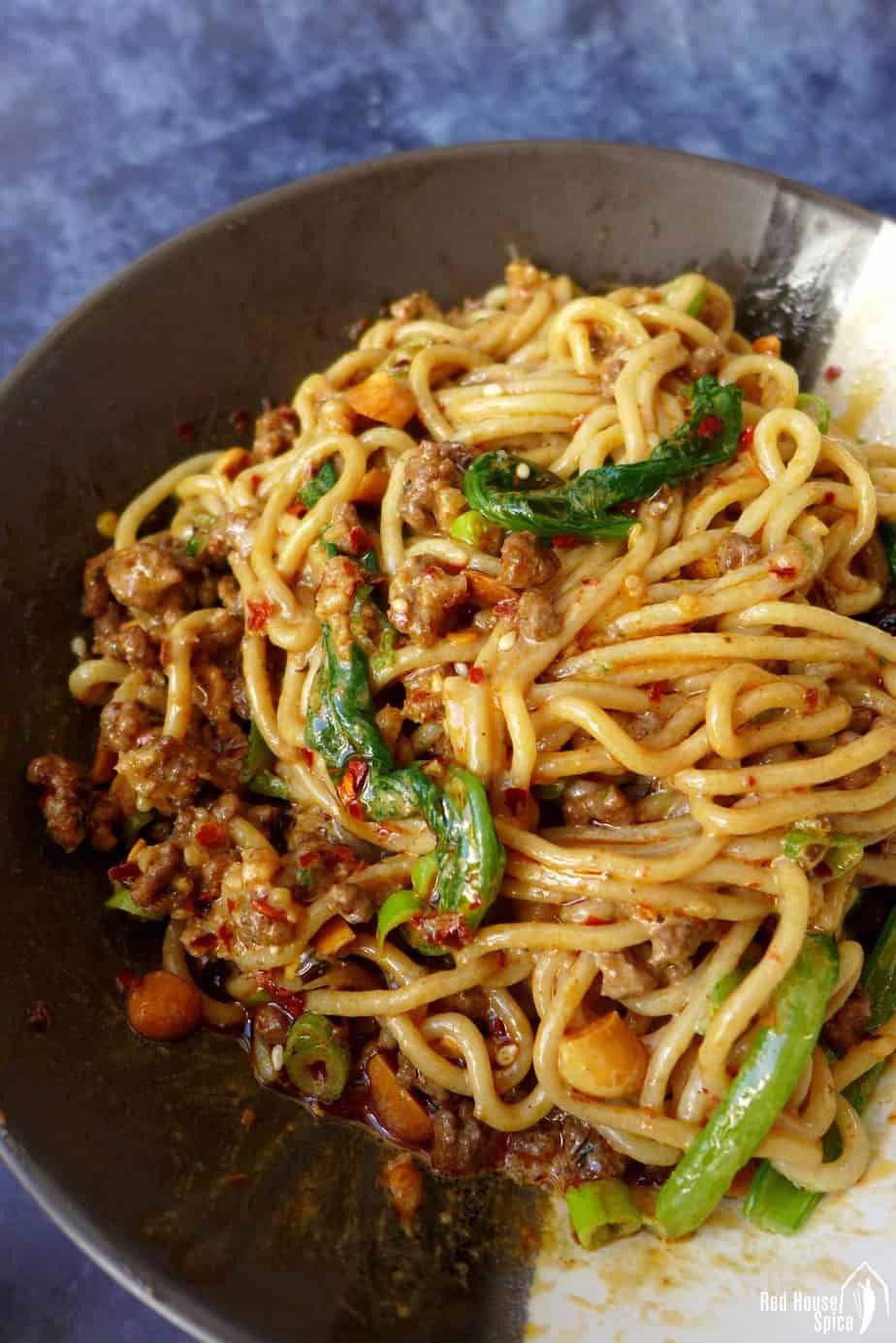
A classic Chinese noodle dish famous for its nutty & pungent taste. With my detailed recipe, Dan Dan noodles can be easily replicated in your home kitchen.
Pin this now to find it later!
Pin ItWhen it comes to cooking, I can never hide my love for spicy food and noodle dishes. Today’s recipe, like many others on my blog, is a great combination of my two obsessions. If you could only try one dish while exploring street food of Sichuan cuisine, I would highly recommend Dan Dan Noodles.
What are Dan Dan noodles
Dan Dan noodles (担担面, aka spicy Sichuan noodles) is named after the traditional carrying pole “Dan Dan” that street vendors use.
They place the ingredients, bowls, chopsticks & cookwares in two baskets tied to each end of the pole. Walking around with the pole over their shoulders, they cook and serve the noodles in the street whenever stopped by customers.
It’s no longer a scene in Sichuan that street vendors carrying the pole to sell Dan Dan noodles. From its humble background, it is now a classic Chinese noodle dish adored by many, including foodies outside China.
🌟 NOTE: Love noodle dishes like this one? You’re likely to enjoy these recipes too: Sichuan Sweet Water Noodles, Chongqing Noodles,
This scrumptious Sichuan speciality contains:
- A thick sauce made of Chinese sesame paste, chilli oil, ground Sichuan pepper, soy sauce, black rice vinegar, etc. It delivers a distinctive nutty, hot & numbing taste.
- Delicious toppings consisting of fried minced meat, preserved vegetables & fried peanuts/soybeans.
- Plain wheat flour noodles, sometimes accompanied by some leafy green vegetables.
Don’t let the length of the ingredient list scare you. They are what make this dish a wonder. It might take you some time to find all of them, but for a great finished taste, all these ingredients contribute.
Workflow
In terms of cooking, it’s quite straightforward. Follow three simple steps:
- Fry the toppings: Firstly fry peanuts or soybeans in oil. Then fry minced meat and preserved vegetable in the remaining oil.
- Mix the sauce: Thin Chinese sesame paste with water, then add chilli oil, ground Sichuan pepper & other seasonings.
- Cook the noodles: Cook noodles in boiling water. Blanch some leafy green vegetable at the end.
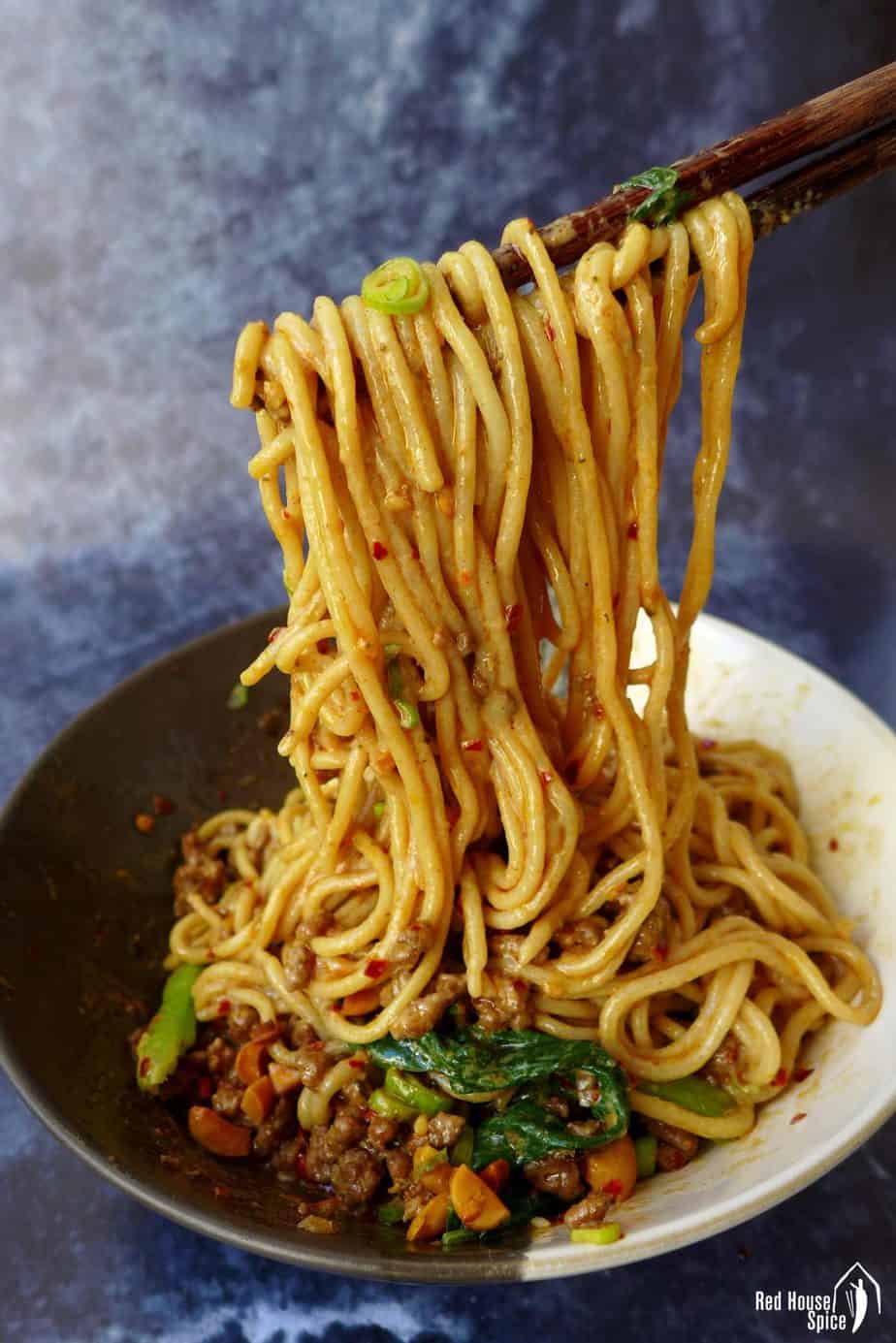
Voilà! Now you just need to put everything in serving bowls and give the noodles a good stir!
Make the toppings
The typical toppings for Dan Dan noodles include fried minced meat, some preserved vegetable and fried peanuts (you may use soybeans too). Here are some tips and substitute ideas for making delicious toppings.
How to fry the minced meat
Pork or beef mince are the two popular choices. However, you may use minced chicken too. Fry the meat in a little oil and season it with soy sauce, rice wine, preserved vegetable and chilli flakes.
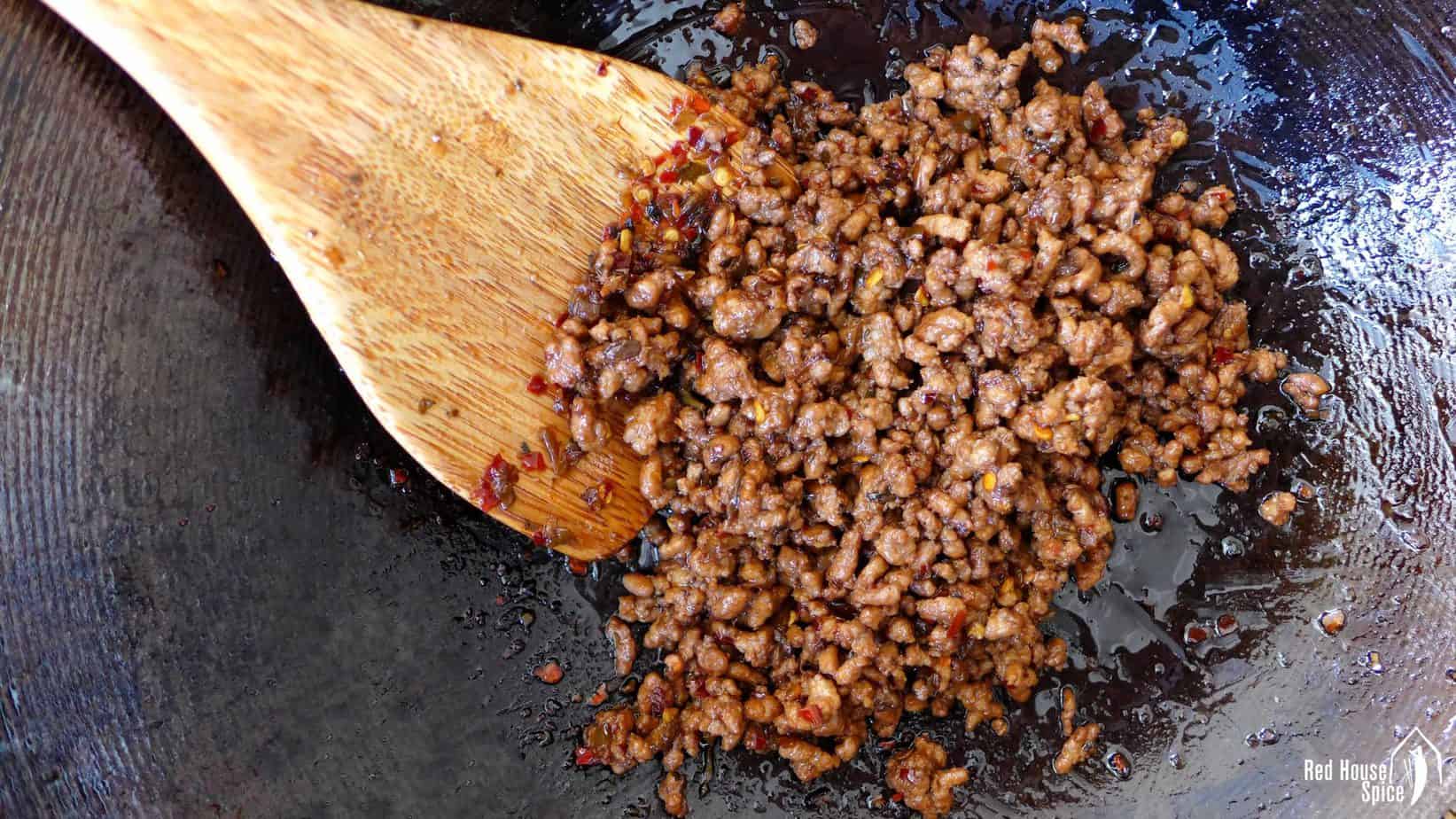
When frying minced meat (particularly the machine ground one), you might find it clots easily. To solve this problem, I always mix raw meat with soy sauce and rice wine prior to frying. The liquid seasoning helps to loosen the mince.
Vegetarian alternatives
To make Dan Dan noodles vegetarian/vegan-friendly, you may replace the minced meat with mushrooms. Dried/fresh shiitake mushrooms or king oyster mushrooms does the job. Chop small and fry them the usual way.
Choices of preserved vegetables
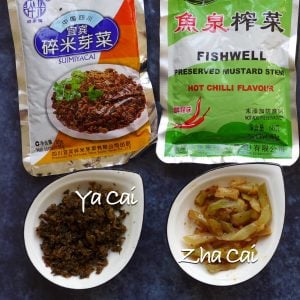
Providing an aromatic, rich saltiness to dishes, preserved vegetables are commonly used in Chinese cuisine. Traditional recipes for Dan Dan noodles call for Yá cài/芽菜 which is preserved mustard greens. I use minced Yá cài (Suì Mǐ Yá cài/碎米芽菜) which is chopped into tiny pieces and very handy to use. You may find it in small plastic packages available in most Chinese stores.
Zhà cài/ 榨菜, aka preserved mustard stem, is a good alternative and more accessible. Usually, it comes in strips or slices. Remember to finely chop them prior to cooking.
Make the nutty topping crispy
The nutty topping gives Dan Dan noodles another layer of texture and flavour. I use peanuts for this recipe but soybeans work too.
To make the peanuts crispy & nicely browned, you need to start frying them with oil in a cold wok over low heat. Otherwise, they can be quickly burnt.
If using soybeans, you need to soak them in water overnight then pat dry with kitchen paper/a clean tea towel. Same as mentioned above, start frying with cold oil in a cold wok.
Prepare the sauce
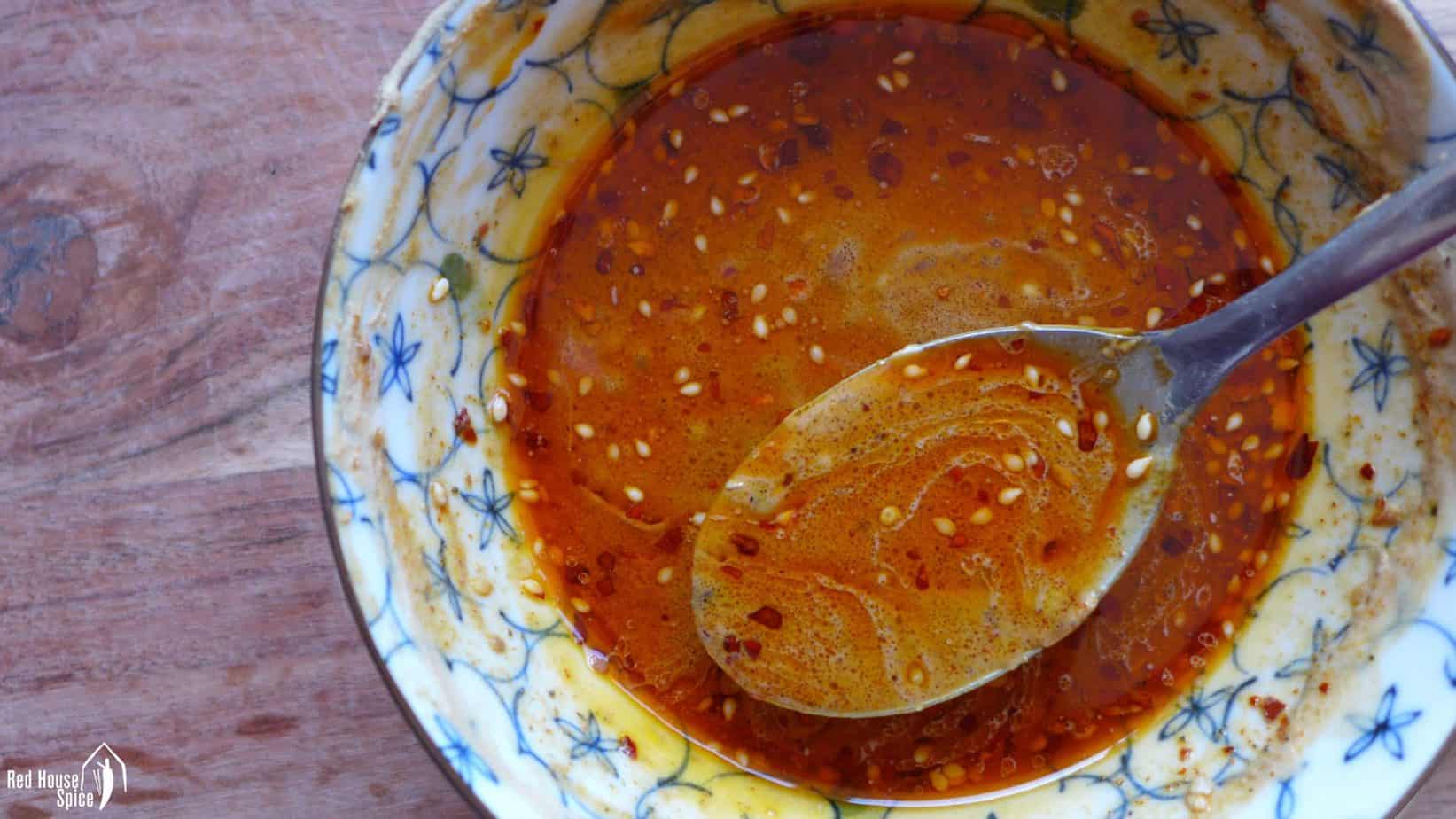
Making a tangy, exciting, additive sauce is the most important part of cooking Dan Dan noodles. Chinese sesame paste is a must (You find it in Classic Sesame Noodles). Its powerful fragrance, along with the Mala flavour (hot and numbing) created by chilli oil and Sichuan peppercorn, is the soul of Dan Dan noodles.
Chinese sesame paste & its substitutes
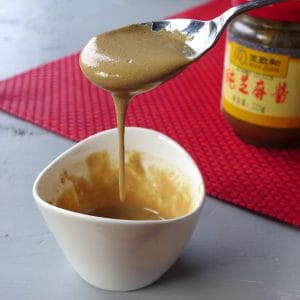
Made of toasted sesame seeds, Chinese sesame paste is a dark brown, semi-solid paste resembling the thick version of peanut butter. Not only does it give Dan Dan noodles a distinctive nutty aroma, it also contributes by thickening the sauce which coats the noodles very well.
I’ve seen some online resources suggesting that Chinese sesame paste/芝麻酱 can be replaced by tahini. This is misleading. Chinese sesame paste is made of toasted, whole sesame seeds, whereas tahini uses raw, hulled sesame seeds (sometimes lightly toasted). They have very different tastes and thus, are not interchangeable.
If you have a hard time finding Chinese sesame paste, read my post “Chinese sesame paste & 3 substitute ideas” and try one of the options.
Unlike peanut butter, Chinese sesame paste has a very thick consistency. You need to thin it with some water to achieve a smooth, semi running texture.
Make your own Chinese chilli oil
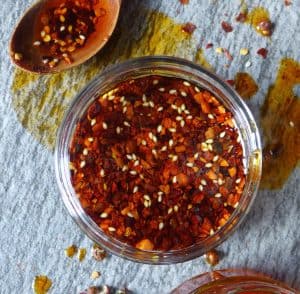
The hotness of Dan Dan noodles comes from chilli oil which is also called Red Oil/红油 in Sichuan cuisine. You would find many types of Chinese chilli oil in Asian stores and they vary a lot in terms of flavour.
I highly recommend you make your own chilli oil for Dan Dan noodles. It’s super aromatic but doesn’t interfere with other flavours of the dish like some shop-bought ones would do. Also, there isn’t any flavouring agents/preservatives involved and it’s very useful for many Sichuan dishes.
Use freshly ground Sichuan pepper
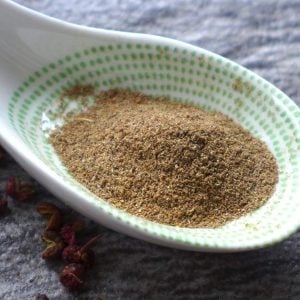
Regarding Málà (hot & numbing) dishes, one suggestion I always emphasize is grinding your own Sichuan pepper whenever possible. Its freshness and intense flavour would make your Dan Dan noodles stand out.
I’ve received many enquiries on this unique spice, particularly on how to avoid grittiness when grinding. Please refer to my post “Homemade Sichuan pepper powder” to learn how to grind Sichuan peppercorns correctly.
Noodle choices
Wheat flour-based noodles with round, thin shape are the most popular type used in Dan Dan noodles.
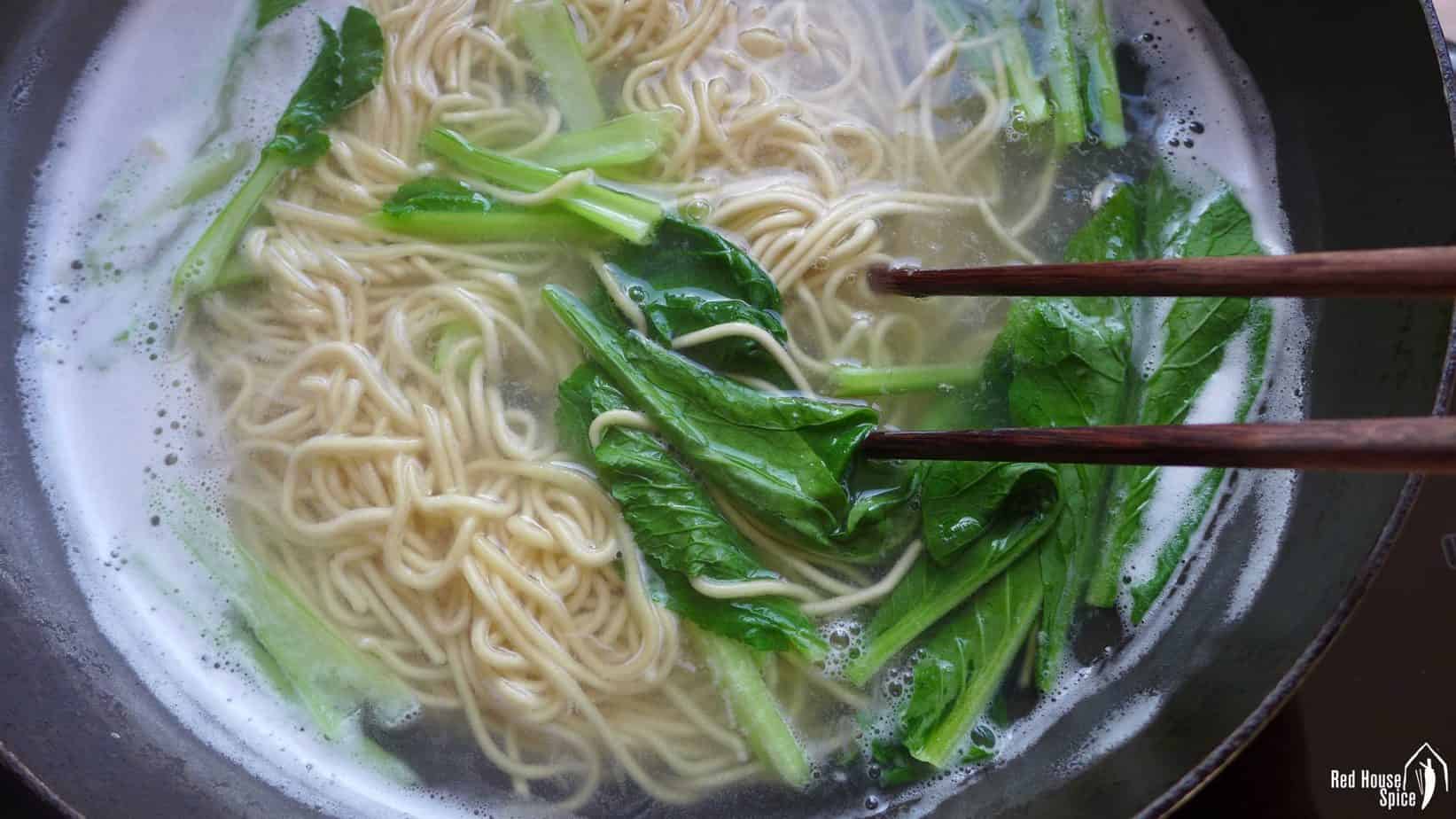
- Use shop-bought dried noodles, preferably the thin type, about 100g for a serving.
- Homemade alkaline noodles (ramen noodles) would work too.
- If you don’t have a noodle maker but still want fresh noodles, try either hand-rolled noodles or hand-pulled noodles.
- If you are looking for a gluten-free option, then use round rice noodles or glass noodles (see example in hot and sour noodle soup).
Make ahead
You can make the sauce in advance or in bulk. It can be stored in the fridge for up to a week. Just remember to leave out the minced garlic. Add it prior to serving.
I also like making a big batch of the toppings (fried meat & peanuts). Store them in air-tight containers in the fridge and consume with 4 days.
Other noodle dishes
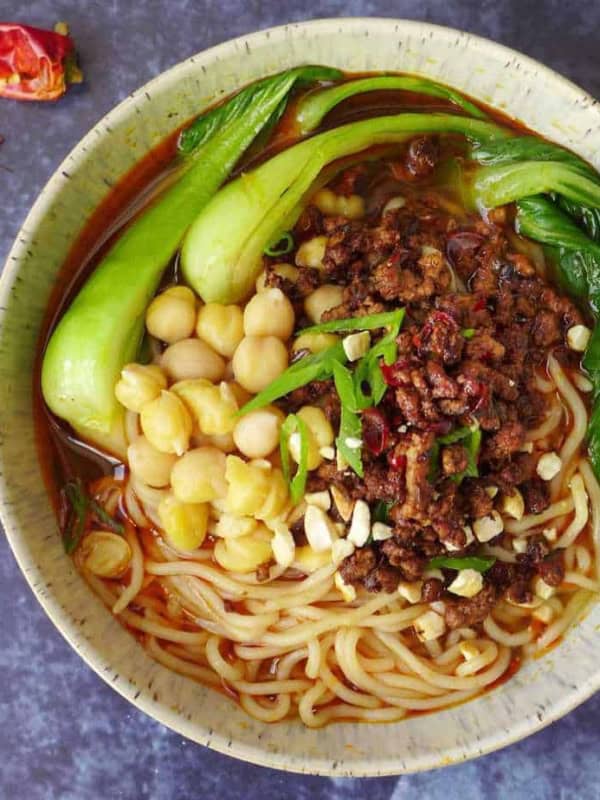
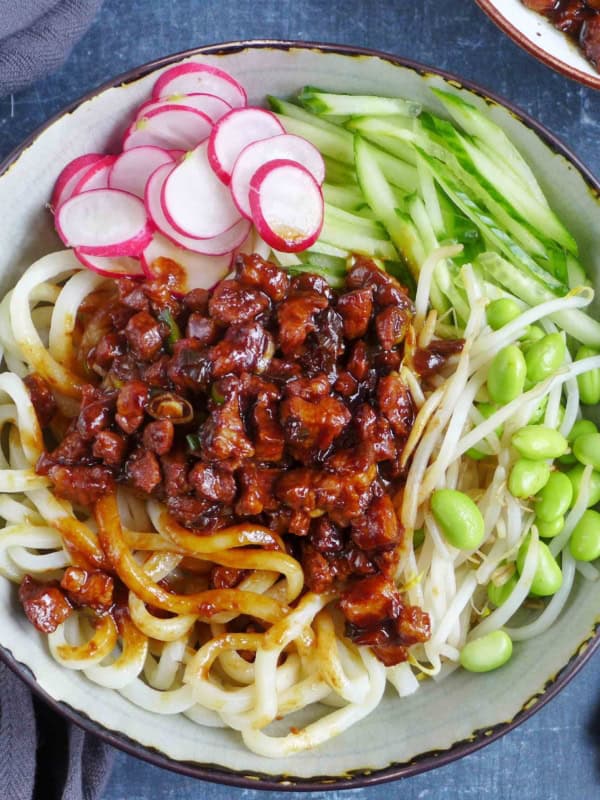
Looking for more classic noodle recipes to try? Check out these popular ones:


📋 Recipe card
Love this recipe? Please leave a 🌟🌟🌟🌟🌟 rating and a comment. Thank you!
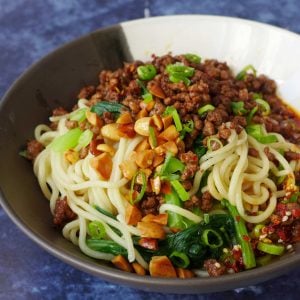
Dan Dan Noodles(担担面)

Video
Ingredients
For the toppings
- 4 oz ground pork, or beef
- 2 teaspoon light soy sauce
- 2 teaspoon Shaoxing rice wine
- 2 tablespoon neutral cooking oil
- 2 tablespoon peanuts, skinless, coarsely crushed
- 1 teaspoon ginger, minced
- 1 tablespoon minced Ya Cai, or Zha Cai (see note 1)
- 1 teaspoon chilli flakes, or to taste
For the sauce
- 1½ tablespoon Chinese sesame paste, see note 2
- 1½ tablespoon water
- 2 cloves garlic, minced
- 2 tablespoon light soy sauce
- 1 tablespoon black rice vinegar
- ½ teaspoon ground Sichuan pepper
- 2 tablespoon Chinese chilli oil, or to taste
- 1 pinch sugar
For the noodles
- 2 portions noodles, fresh or dried
- 1 handful leafy green vegetable, i.e bok choy, choy sum, spinach, etc
For garnishing
- 1 stalk scallions, finely chopped
Instructions
Season the meat
- Put the ground pork in a bowl. Add soy sauce and rice wine. Mix well and loosen the meat as much as possible.
Fry the toppings
- Pour oil into a cold wok. Add peanuts and fry over low heat until they turn golden brown. Transfer the peanuts to a bowl (Leave the oil in) and set aside.
- In the remaining oil, stir-fry the marinated meat with minced ginger, Ya Cai and chilli flakes. Dish out when the meat is fully cooked. Set aside.
Mix the sauce
- In a bowl, mix sesame paste and water until it becomes semi-runny & smooth.
- Add garlic, soy sauce, vinegar, ground Sichuan pepper, chilli oil and sugar. Mix well and set aside.
Cook the noodles
- Bring a large pot of water to a full boil. Cook noodles following the instructions on the package.
- Add the vegetable at the very end of the process.
- Once cooked, drain and rinse under cold water for a few seconds to remove excess starch.
Assemble the dish
- Pour the sauce into two serving bowls. Add the noodles and the vegetable.
- Top with cooked meat and peanuts. Garnish with scallions.
Notes
Your Recipe Notes
Nutrition
Nutrition information is automatically calculated, so should only be used as an approximation.










Dear Wei
These noodles look great and I’m a big fan of spicy Asian noodles across Asia.
I have important question, all the preserved vegetables ( especially mustard greens) are way too salty for my taste. Are there brands that are not ultra salty or should I just soak in water before using to get out the brine. We live in Seattle and have a huge selection of Asian food stores so bands are not an issue.
Hi Steve! My recipe only calls for a small amount of Ya Cai (Sichuan preserved mustard greens) and no extra salt needed. No matter which brand, its saltiness would be very similar. The one I use is a chopped version which can be used directly (see image in the post). If you’re using whole leaves of preserved mustard greens, you should rinse it before chopping.
It took a while to find all the ingredients, but that gave me the opportunity to make the rounds of our local Asian grocery stores. The olive vegetable is delicious and I never would have sought it out otherwise. It’s a wonderful addition to the pantry.
I used fresh Korean noodles, a little thicker than spaghetti and with a really nice chewiness. All the different flavors came together beautifully. I served it with a side of blanched choi sum with a little oyster sauce and it made a very satisfying meal. My husband is thrilled about my forays into Asian cooking, so I’m looking through the recipes for the next adventure. Thank you for the clear, well-written and helpful instructions!
So happy to hear that Kalia!
Ok, Awsome! Thank you!
Hi Wei!
I love the Dan Dan Sauce that I buy in the jar and I found your website because I wanted to find out if I could make it on my own. You said that the sauce that you provide the recipe for here can be stored up to a week. It this because I am making it fresh? I like to always keep some on hand but it sounds like I would need to make it in small batches every week or so because it would not last as long as the store-bought sauce. Is that correct?
Unlike commercial sauces, homemade sauces don’t contain preservatives so they wouldn’t last very long.
Hi Wei,
We have some in our house who aren’t keen on spicy food, what can you sub the chili oil for to make it less spicy? Thanks!
Hi Lauren! For homemade chili oil, you may reduce its heat by using mild chili flakes & chili powder. If you can’t stand any spicy food, just skip the chili oil altogether.
Hi Wei,
Thank you for posting the Dan Dan Noodles recipe! I have lately been expanding my cooking beyond my usual mediterranean to include more Asian foods. I found your link as part of my effort to separate the sandy seeds from the Sichuan pepper I like to use in Mapo Ragu. Dan Dan Noodles seems like a perfect match for our taste.
We just moved to Luzern from Oakland, California so I am surprised by the number of comments you have from people in Switzerland. Most of our friends and family here are surprised by the general spiciness of my dishes, but they are growing to love the heat!
Keep up the great work!
Hi Steve, it’s my pleasure to share! I used to live in Switzerland (precisely Neuchâtel). You might have read some comments by my swiss friends. Enjoy your kitchen time exploring new food!
What type of noodle do you recomend using?
Hi Matt! Classic Dandan noodles call for plain, thin, round shaped noodles which are made of wheat flour and water. You can use dried ones or fresh ones if available.
However if you wish, you can use any noodles. I once served it with spaghetti and it was delicious too.
Hi, thanks for sharing! I was wondering why you don’t use any fermented beans or bean paste in this recipe. I believe it is essential for authentic Dan Dan noodles, no?
Hi Sandra! Authentic Dan Dan noodles doesn’t call for fermented black beans or bean paste. Perhaps you’ve mistaken it with other noodle dishes. You can surely create a tasty bowl of noodles using these two ingredients, but I wouldn’t call it Dan Dan noodles. Hope this is helpful.
I used to find the preserved vegetable in a small store in California for my Dan Dan Noodles. I have yet to find them here in Zurich. Do you have the brand name that you find here in CH? Or have you a store to recommend in Canton Zurich?
Hi Ashley! I used to know a Chinese shop in Zurich. It’s called Lian Hua. I think you can find preserved vegetable there. A Chinese brand called Yu Quan (Fish Well) is quite popular for preserved vegetables. Hope this is helpful.
YES! Super helpful. Thank you!
You are welcome Ashley.
This looks so GOOD! Can I find all of these ingredients in Switzerland?
Thanks Heddi! Yes you can find everything in Switzerland. Even in our little “la ville de Neuchâtel”. Do you know there is a HongKong shop in Rue de L’Ecluse? They have all the basics. And the Thai shop on top of the painted street has some good stuff too. For example I used to buy Chilli flakes there. Tell me if you have any other questions. Have a great day!
OK! Will have to check these places out. I figured it was possible, so thanks for pointing me in the right direction. Thanks so much!
Nowadays, it’s hard to find any places without an Asian (or Chinese) shop!