

Chewy noodles served with an irresistible pork sauce and crunchy vegetable toppings, Zha Jiang Mian is a signature Beijing dish that’s perfect for weekday dinners.

Pin this now to find it later!
Pin ItNote: This recipe was originally published in May 2017. This revised version includes minor recipe alteration, process photos, and a video tutorial.
Table of Contents
What is Zha Jiang Mian
I worked in Beijing for quite a few years before living abroad, and I consider it as my second home. In this mega-city, with amazing food from every corner of China on offer, traditional Beijing cuisine is always treasured by locals and migrants alike. Apart from the famous Peking duck, I adore its signature dish, Zhá Jiàng Miàn/炸酱面, the noodle dish I cook the most often for my family.
The literal meaning of Zhá Jiàng Miàn is “fried sauce noodles”. It consists of three components: pork cubes braised in a savory, aromatic sauce; thick noodles; and a variety of crunchy vegetables.

Like many iconic Chinese noodle dishes, such as Dan Dan Noodles, Chongqing Noodles, and Beef Chow Fun, it makes a wonderful weekday dinner. What I love about this iconic dish is its flexibility:
- The meat sauce can be made in big batches for later use, making it so convenient!
- You’re free to improvise with whatever noodles and vegetables you have on hand.
Ingredients & substitutes
Meat options

For an authentic taste, I suggest you choose pork belly or other cuts that have a high-fat content. Cut it into small cubes for quick cooking and a nice bite.
- Use ground pork to substitute if you wish to save time on chopping.
- Want to use other meat? Replace pork with beef, chicken, or lamb.
- To make it vegan, use dried tofu (豆腐干) or shiitake mushrooms instead.
Condiments & aromatics
These are the ingredients that lend flavor to the meat sauce:

- Yellow bean paste
- Sweet flour sauce
- Shaoxing rice wine
- Star anise
- Scallions
- Ginger
About yellow bean paste
Yellow bean paste (Huáng Dòu Jiàng/黄豆酱), a popular condiment in northern Chinese cuisine, is a dark brown, thick, slightly lumpy sauce made of fermented soybeans, wheat, salt and water. The variation of its names include 黄酱, 大豆酱, 干黄酱 (the extra-dry version) in Chinese and yellow soybean paste, soybean sauce in English.
🌟 To substitute, I often use Sichuan chili bean paste (aka doubanjiang) for an extra hot taste.
About sweet flour sauce
Sweet flour sauce (Tián Miàn Jiàng/甜面酱) is made of fermented wheat flour and it has a darker, runnier, and smoother texture than yellow bean paste. As its name suggests, it has a noticeable sweet taste which nicely balances the saltiness.
🌟 To substitute, you may use hoisin sauce. Alternatively, use yellow bean paste solely and add a little sugar.
Noodle choices

Traditionally, Beijing cooks use hand-cut noodles (手擀面) for Zha Jiang Mian. A piece of firm dough (made of flour, water, and a little salt) is rolled flat with a rolling pin and then cut into long, thick noodles.
Other types of noodles work well too:
- Shop-bought dried noodles are a time-saving alternative.
- Hand-pulled noodles are the type I use the most often as they have a similar texture to hand-cut noodles.
- Fresh ramen noodles made with a pasta machine are also a great option.
Veggie toppings

Vegetables play an important role in Zha Jiang Mian. They are used either raw or quickly blanched, preserving most of their nutrition. The natural taste of vegetables goes very well with the salty sauce, giving this dish an excellent balance.
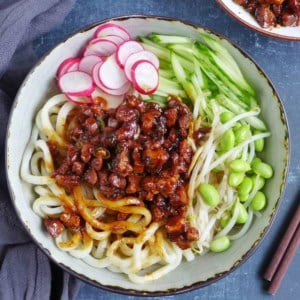
As shown in the pictures, I chose to use cucumber, beansprouts, red radishes, and edamame (aka fresh soybeans). Many other vegetables work well too, such as Napa cabbage, carrot, celery, kohlrabi, etc.
Cooking procedure
Step 1: Cook the sauce

Heat a little cooking oil in a wok or a large skillet. Sizzle the green part of the scallions, minced ginger, and star anise until fragrant.

Stir in the pork cubes and fry until they lose their pink color (If using ground meat, use a spatula to loosen any lumps).

Pour in Shaoxing rice wine, then add yellow bean paste and sweet flour sauce.

Toss well and top with a little water.

Once the sauce comes to a gentle boil, cover with a lid and leave to simmer over low heat for 20 minutes (or 15 minutes if using ground meat).

Uncover and turn up the heat. Let the sauce boil briefly to thicken the consistency. Then stir in the remaining scallions to finish.
Step 2: Prepare the vegetables

First, blanch edamame beans in boiling water for about 1 minute if chilled, or 2 minutes if frozen. Then, add bean sprouts and blanch them for no longer than 20 seconds to remove their rawness but retain the crunchy texture.

Cut the cucumber into matchsticks and thinly slice the red radishes.
Step 3: Boil the noodles

Use the same water in which the vegetables are blanched. Add more if necessary and bring it to a full boil over high heat. Put in the noodles. Once it comes back to a boil, reduce the heat to medium-low (be attentive to avoid boiling over).
Simmer until the noodles are just cooked. The time required depends on the noodle type. Taste a strand if unsure.
Optional step: Rinse the cooked noodles for a few seconds under running water. This is to remove any surface starch and achieve a silky mouthfeel.
Step 4: Assemble the dish

Once you’ve got all the elements ready, simply assemble them in serving bowls. Alternatives, only add the noodles to each bowl and let the diners decide how much the meat sauce and which veggie toppings to use.
Don’t forget to give everything a thorough toss before tucking in!
Make-ahead
As I mentioned earlier, I make Zha Jiang Mian regularly. But I don’t cook the saucy meat topping every time. Usually, I make it in a big batch and freeze any leftovers for later. Here are my make-ahead tips:
- Increase the ingredient quantity proportionally and follow the same procedure to make the sauce.
- Once completely cool, divide the sauce into small portions and refrigerate for 1 week or freeze for 3 months.
- Defrost in the fridge then reheat before serving.
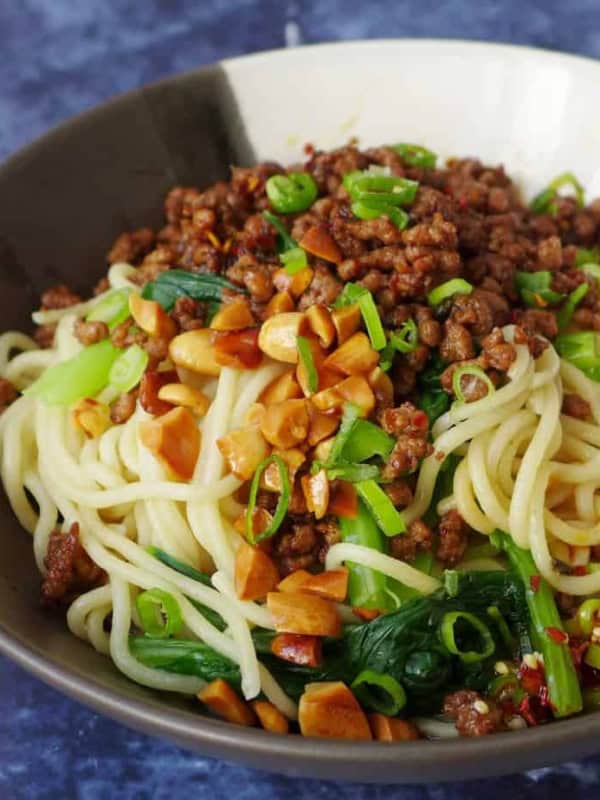
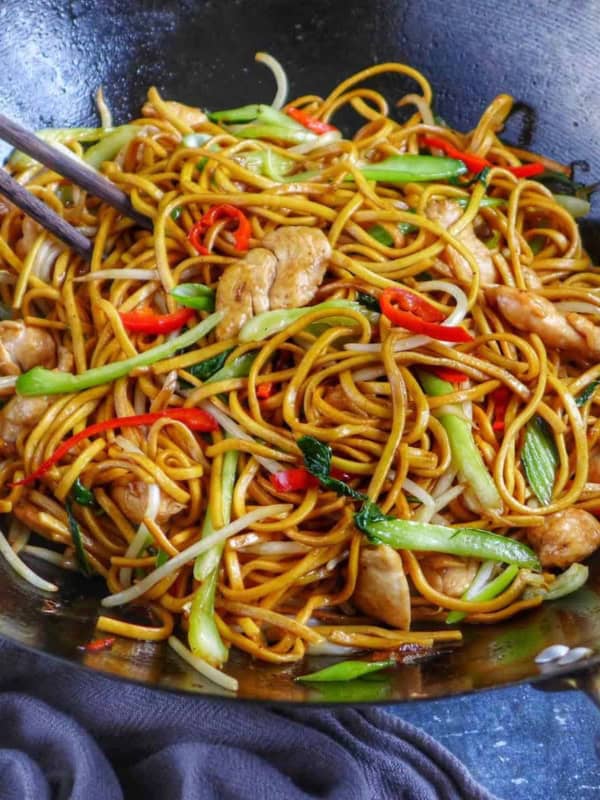
Other popular noodles
Want to learn more authentic Chinese noodle dishes? Here are more to try:


📋 Recipe card
Love this recipe? Please leave a 🌟🌟🌟🌟🌟 rating and a comment. Thank you!
Zha Jiang Mian (炸酱面)

Video
Ingredients
For the pork:
- 10 oz pork belly, or ground pork (see note 1)
- 2 tablespoon neutral cooking oil
- 3 stalk scallions, chopped and divided
- 1 teaspoon minced ginger
- 1 piece star anise
- 1 tablespoon Shaoxing rice wine
- 4 tablespoon yellow bean paste, see note 2 & 3
- 2 tablespoon sweet bean sauce, see note 4
- ⅔ cup water
For the vegetables
- 1 large cucumber
- 8 red radish
- ½ cup edamame, aka fresh soybeans
- 2 cup bean sprouts
For the noodles
- 4 portion noodles, fresh or dried (see note 5)
Instructions
Cook the pork
- Cut pork belly into small cubes (about 1/3 inch/1 cm). Keep its skin on if any.
- Heat oil in a wok (or a skillet) over medium heat. Add the green part of the scallions, ginger, and star anise. Leave to sizzle until fragrant.
- Stir in the pork. Fry until it turns pale. Add Shaoxing rice wine, yellow bean paste, and sweet flour sauce. Mix well then add water.
- Cover with a lid and leave to simmer over low heat for 20 minutes (or 15 minutes if using ground meat).
- Turn the heat up to high and leave to cook uncovered until the sauce thickens further. Stir in the remaining scallions and set aside.
Prepare the vegetables
- While waiting for the pork to cook, prepare the vegetable toppings. Cut the cucumber into matchsticks, and thinly slice the red radish.
- Blanch edamame in boiling water for 1 minute if chilled, or 2 minutes if frozen. Add beansprouts and continue blanching for about 20 seconds. Fish out the edamame and sprouts.
Boil the noodles
- Add noodles to the same pot of boiling water (top up with more if necessary), and boil until fully cooked. Drain then rinse under cold water for a few seconds to remove surface starch (skip rinsing if your tap water isn’t portable).
Assemble the dish
- Place the noodles in four serving bowls. Add the pork sauce and all the vegetable toppings. Stir well before tucking in.
Notes
Your Recipe Notes
Nutrition
Nutrition information is automatically calculated, so should only be used as an approximation.












Hi! I have yet to try out this recipe but am wondering if preserved soy bean paste or salted soya bean paste works the same? Thanks in advance!
I’m not 100% sure what ‘preserved soybean paste’ and ‘salted soybean paste’ refer to. They could be similar things and fine to use as substitutes, but the quantity required may vary since each sauce has a different level of saltiness.
This is a delicious bowl of noodles! I used Korean knife cut fresh noodles which had a smooth, slippery texture but was a little chewy too which made the dish interesting. I substituted and used doubanjiang and hoisin sauces which gave the noodles great flavour. Will definitely cook this again as it is the family’s new favourite dish.
Thanks for sharing your cooking experience and recipe twists. Knife cut fresh noodles are the best choice for this recipe. The combination of Doubanjiang and hoisin sauce makes a great alternative.
Hi Wei,
I have a potentially very silly question for you. My pantry contains a lot of asian foods and spices that i don’t use too often and i am trying to not buy more spices. I don’t have dry yellow bean paste but would really like to make a variation of this dish. Could i use Doubanjiang instead? And what other changes would i have to make to the ingredients? I understand that the dish will no longer be Zha jiang Mian but i am happy to settle with a tweaked version of it. Any tips on how to use Doubanjiang would be greatly appreciated! Thank you 🙂
Yes Razia, you can use Dougbanjiang as a substitute. The only thing you need to pay attention is the saltiness. You may need to adjust its quantity as needed. Happy cooking!
Thank you for your reply! Will try it out and let you know how it went 🙂
Hi Barry! I’ve emailed you a picture.
Use 300ml water as suggested in the recipe. You can use yellow bean paste as substitute for sweet bean sauce to make Peking Shredded Pork or Chongqing Noodles.
Thanks wei for the recipe.
Instructions were easy. I used miso, and hoisin sauce with a bit of sugar. My whole family said its delicious. As for me, i am more on no meat diet, so i used mushrooms, and dried beancurd.
Thank you for sharing your no meat twist of the dish.
Hi Wei
Thank you for this recipe.
I have one question: would it be possible to use miso instead of the yellow soybean paste?
I’ve never tried with miso but I assume it works too. You might need to adjust the quantity as it has a different level of saltiness.
Hi Wei! I am really grateful to learn about Beijing’s Zha Jiang Mian. Its savory taste must come from Yellow Bean Paste, I guess. Once I had Zha Jiang Mian at a small tea house in Chongqing and cannot forget the genuine and honest taste of a somewhat rough and basic sauce (it was bean paste-based) . Could you please kindly comment on the difference between them? (i.e, yellow bean paste in Beijing’s zha jiang mian and bean paste in Chongqing’s zha jiang mian) With many compliments!
Thank you for trying out my recipe Jason! In fact, these two dishes have different names: the Beijing one is ZHA Jiang Mian (炸酱面) whereas the Chongqing one is ZA Jiang Mian (杂酱面). Their pronunciation is somehow similar but not exactly the same. For the latter, please check out my recipe for Chongqing Noodles. You’ll find out the ingredients involved are quite different. But both versions are delicious!
Aloha! Is this the origins of the Korean-ized Chinese dish called “Tangsuyuk”? The restaurants that serve this some are owned by Chinese who came from the border with Korea and some are Korean who also make what I think is the Korean version of Zha Jiang Mian (炸酱面) that they call “Jajangmyeon” which is a black Bean base they call chunjang vs. Gan huangjiang & Tianmianjiang in Hawaii hard to find these Beijing type sauces so sub huang doujiang and hoisin(recently found some tianmianjiang).? Just curious if you’ve tried these Korean takes on northern Chinese dishes?
Yes, I’ve had jajangmyeon (Korean black bean noodles) which is considered a dishinspired by Chinese Zha Jiang Mian. Very tasty too!
Where do you get dry yellow bean paste from? I’m in U.K. and only see yellow bean sauce/paste. If I get the sauce should I change the proportion?
Hi Marty! I’ve found dry yellow bean paste in a Chinese shop in Coventry long time ago. Yes, yellow bean sauce is more accessible and you can surely use it to substitute. As the saltiness of yellow bean paste varies depending on the brand, I suggest you use 4 tbsp at first. Taste a little after 15 mins of simmering. Add more if necessary. Hope this helps.
I used 5tblsp and it was a bit too salty but the flavor was good. Hardest part was doing the hand pulled noodles. It’s hard to pull enough at a time. I need some practice
Practice makes perfect. You’ll master it soon Marty!