

A step by step recipe guiding you to make Chinese spring onion oil (aka scallion oil) without fail. You will also learn how to use this versatile condiment in six ways.
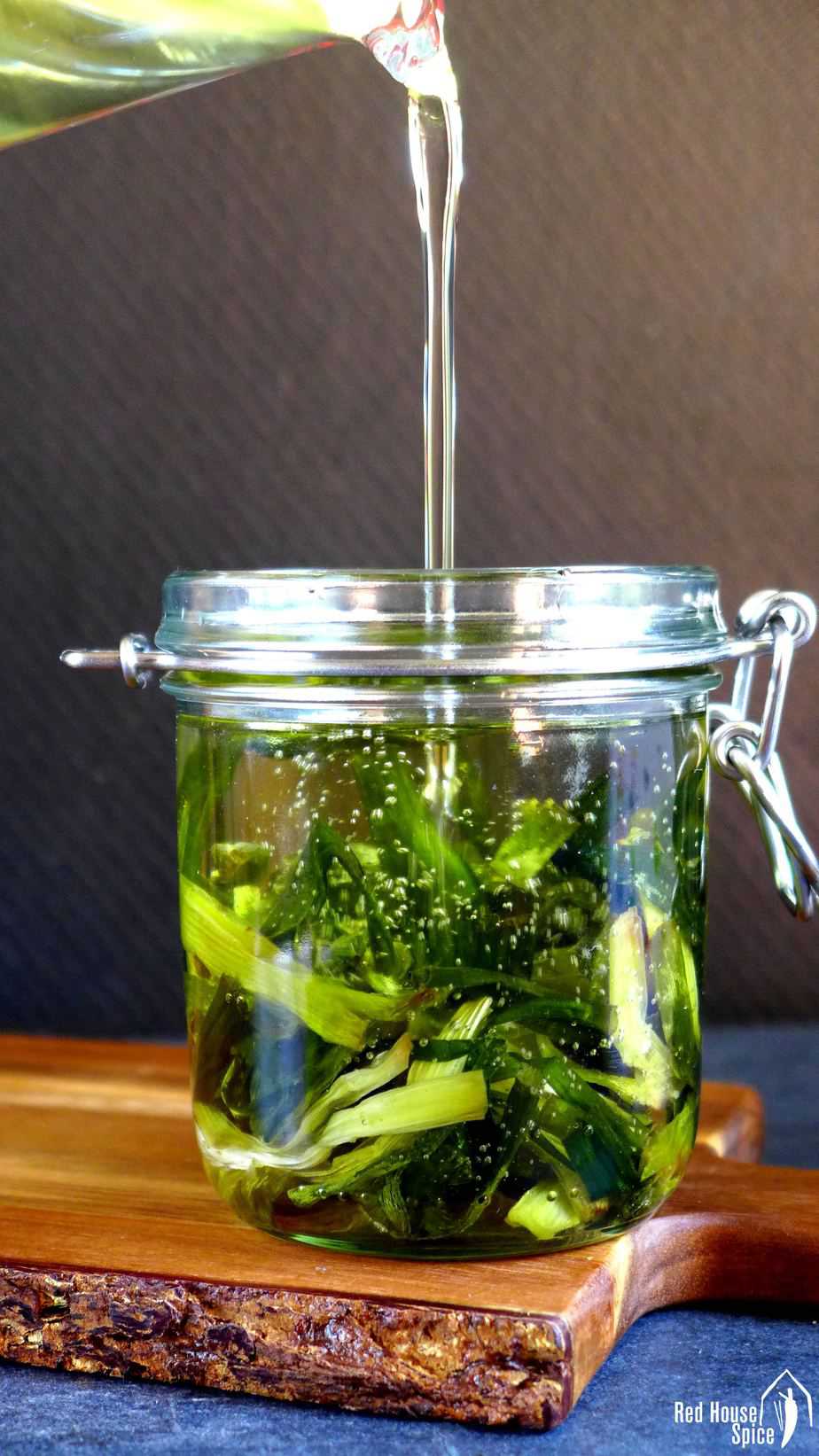
Pin this now to find it later!
Pin ItTable of Contents
In a typical Chinese kitchen, you can always find three indispensable herbs: spring onion (aka scallion or green onion), ginger and garlic. They are common ingredients yet give dishes so much aroma and flavour. Unlike ginger and garlic which can be kept at room temperature for quite a while, spring onion doesn’t last that long, even when kept in the fridge. That’s why a jar of homemade Chinese spring onion oil (葱油, aka scallion oil) comes in handy.
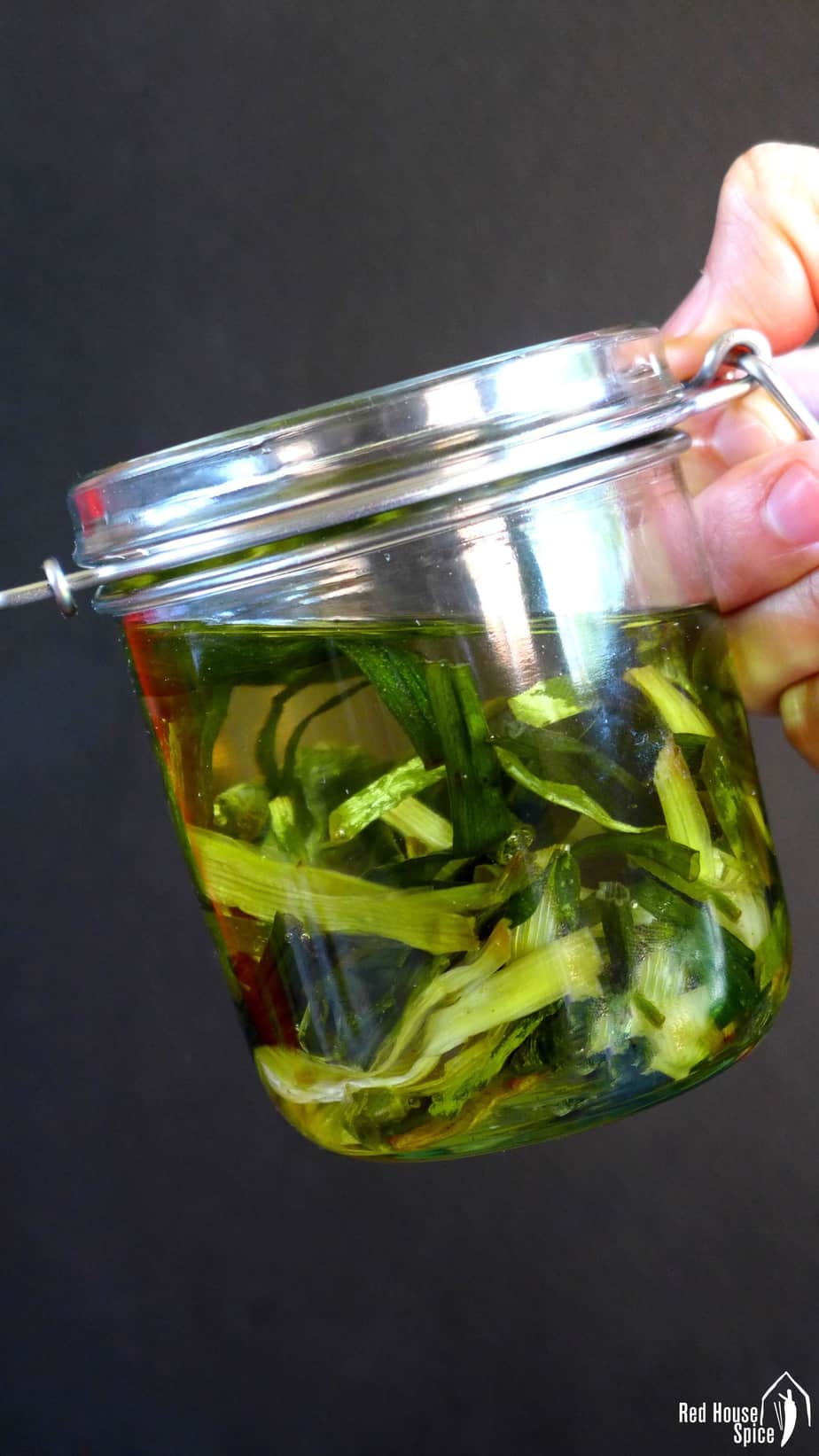
3 tips to ensure the desired result
The making of Chinese spring onion oil is pretty straightforward: just simmer spring onion in oil over medium-low heat, then cool and store. The traditional recipe usually calls for spring onion only. I like adding one more ingredient to the recipe: shallot or onion. This will enhance the fragrance and flavour of the finished oil. A few tips for helping you achieve the desired result:
- The lower the heat is, the longer will it take you to simmer. However, an extended process will extract more flavour from the shallot and spring onion, thus the oil will be more aromatic.
- It takes me 25 minutes or so to complete the simmering over medium-low heat. Do keep a close eye on it as you don’t want to over-fry the ingredients which might leave an unpleasant burnt flavour in the oil.
- To make this recipe even simpler, you may skip shallot/onion and only use spring onion. If you don’t wish to store up a big batch, please feel free to cook a small amount as required.
6 ways to use spring onion oil
Chinese spring onion oil can be used in many ways. It’s truly worth having it in your kitchen. Not only does it provide a unique aroma to dishes, but it will also save you lots of time in everyday meal preparation.
- For noodles. This seasoned oil is the star ingredient for the famous Shanghai Spring Onion Oil Noodles, a delectable dish that can be made in a few minutes. You can also add it to other noodle dishes, such as Dan Dan noodles, Chow Mein, etc.
- For stir-fried dishes. This will save you time buying, washing and chopping fresh spring onion. For example, use it (instead of cooking oil) to make fried rice, Chicken Chop Suey, etc.
- For salad. You can use it for all type of Chinese salad dishes, e.g. Cucumber Salad, to replace sesame oil.
- For steamed dish. It makes a brilliant addition to steamed fish thanks to its strong, infused flavour.
- For soup. Simply pour a few drops over a finished soup to add an extra zing. Try Hot and Sour Soup, Egg Drop Soup, etc.
- For bread. Use it to make Scallion Pancakes, Baked Scallion Bread, Spiced Beef Flatbread, etc.
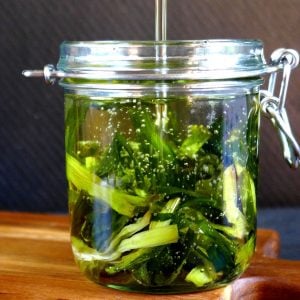
How to make & use spring onion oil (葱油)

Ingredients
- 480 ml cooking oil (sunflower/rapeseed/vegetable, etc.) , 2 cups
- 150 g shallot or onion, 5.3oz
- 150 g spring onion, 5.3oz, about 15 stalks
Instructions
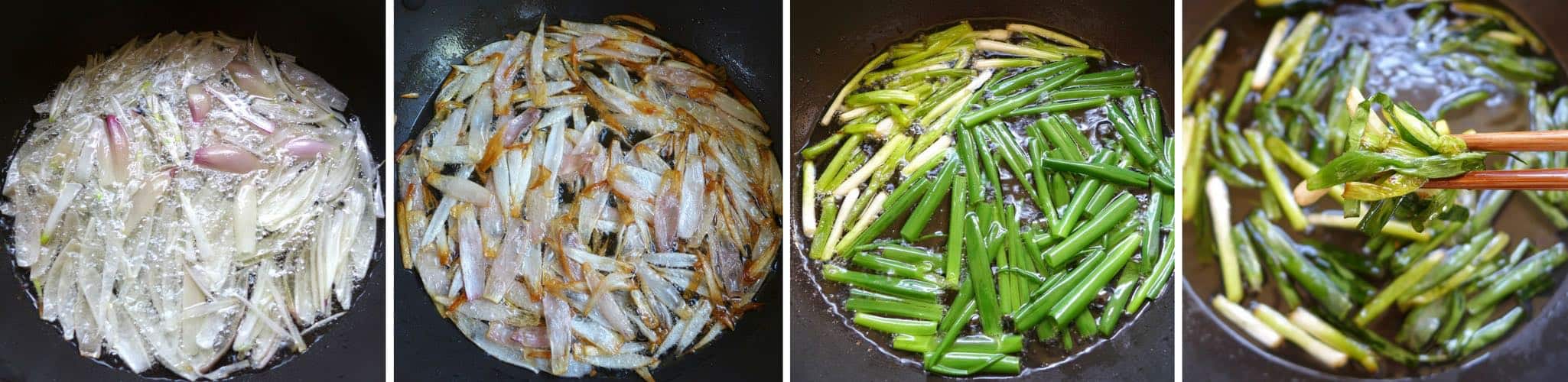
- Peel shallot then thinly slice. Wash spring onion then dry thoroughly with kitchen towel/paper. Cut into long sections (separate the white part and the green part).
- Pour oil into a wok (or a deep frying pan). Heat over medium-low heat. Add shallots then leave to simmer until it becomes lightly brown. Turn off the heat (see note 1 & 2). Take out the shallot pieces with chopsticks.
- Turn the heat back on. Add the white part of the spring onion. Leave to simmer over medium-low heat until it wrinkles a bit. Add the green part of the spring onion. Turn off the heat when it turns brown (see note 1 & 2).
- Pour the oil into a sterilized, airtight jar. Store in the fridge and use it within a month. Use a clean spoon each time you use the oil.
A SIMPLE & FAST VERSION:
- You may use only spring onion and cook on a slightly higher heat thus the simmering time will be shorter. Make sure to observe closely during the process to avoid burning.
Notes
Your Recipe Notes
Nutrition information is automatically calculated, so should only be used as an approximation.












Would olive oil work for this recipe?
Yes, you may use olive oil for this recipe.
Hi Wei,
Can I use leeks instead of spring onions? I ran out of spring onions and leeks are the only thing I have. Thanks!
Yes Andrei you can use leeks instead. The flavour would be a little different but still nice.
Hi Wei,
I love this oil! I made a small batch and I used it in 2 days! My favourite was pouring a little over a prawn foo yung instead of the brown Chinese gravy I usually make and it was super delicious.
It reminded me of a spring onion condiment I ate in China which is one of my favourite things to eat in the world!
So happy to know you liked it. Sounds yummy with prawn foo yung!
Hi Wei, I made a bowl of scallion oil from your recipe and used it for Shanghai scallion oil noodles. It was delicious. Thank you.
My pleasure! Very happy to know you enjoyed the recipe.
Hi Mihai! You can surely use regular chive for this recipe. As its flavour is not as strong as spring onion, I suggest you increase its volume. However I don’t think it works for Chinese chive. Have a look at my recipe of “Chinese chive pockets”. It’s a great way to cook Chinese chive. You can freeze the pockets as soon as they are assembled and fry the normal way (without defrosting) whenever you fancy them. Alternatively, you could use Chinese chive to make some Pesto. Find a classic Italian pesto recipe and replace basil with Chinese chive. You can freeze leftover Chinese chive pesto in ice cubes for later consumption.
Hope this is helpful to you. Happy cooking!
Hi Wei, would this recipe work for garlic chives (chinese chives) and for regular (oniony) chives? Every now and then I get a big bunch (as in almost a pound) of each from a relative who grows them and I love their flavor but, as you know, you cannot keep them in the fridge for long, especially the garlic chives.
How long will this oil last? Do I keep it in the fridge?
Hi Chris, it’s better to keep the oil in the fridge and use it up within a month.
Thanks for sharing about how to make and use spring union oil. I like it.
My great pleasure Robert!
Can you use peanut oil?
Yes, absolutely! In fact, peanut oil is very popular in Chinese household. I didn’t mention it as in England where I currently live it’s not that common.
I need to try this!!
Great! I will soon post more recipes using this oil.