

Smooth, slippery and heavenly soft, Chinese steamed eggs requires minimum ingredients yet delivers a delicate look and flavour. Learn how to make it flawlessly.
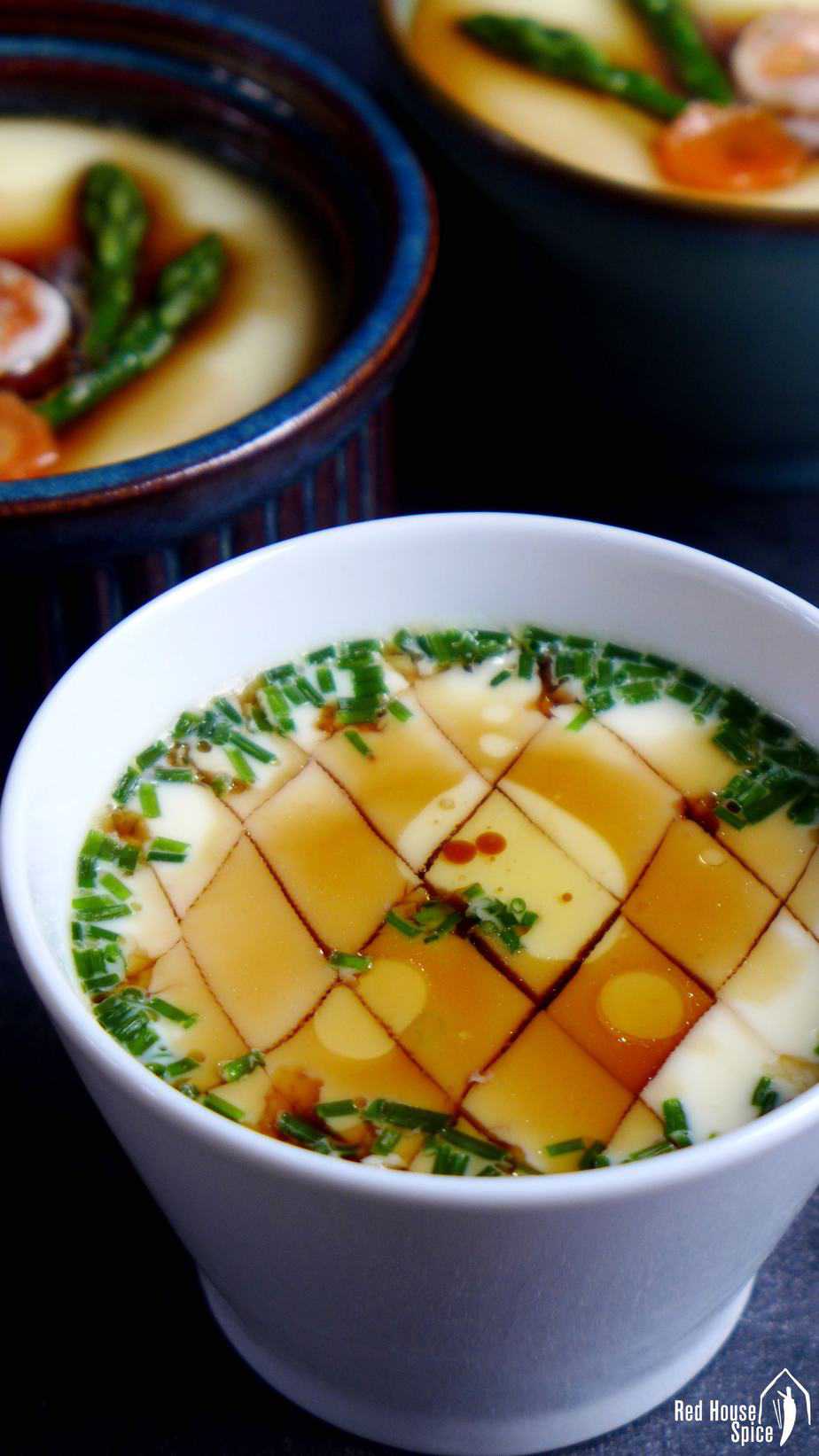
Pin this now to find it later!
Pin ItWhat are steamed eggs
I’m very lucky to have had a childhood full of sweet memories and many of them are food-related. My family didn’t have any sophisticated ingredients but every single dish my mum & dad prepared was so satisfying and delicious.
Today, I’m sharing a super simple dish that always reminds me of my dear mum (now it has become my own children’s favourite dish): Chinese steamed eggs (蒸蛋羹), also know as water egg or egg custard.
It couldn’t be simpler to make Chinese steamed eggs: beat the eggs, add water then steam. Voilà, all done! However, it does require a bit of attention to detail to achieve the perfect texture: smooth, slippery and heavenly soft.
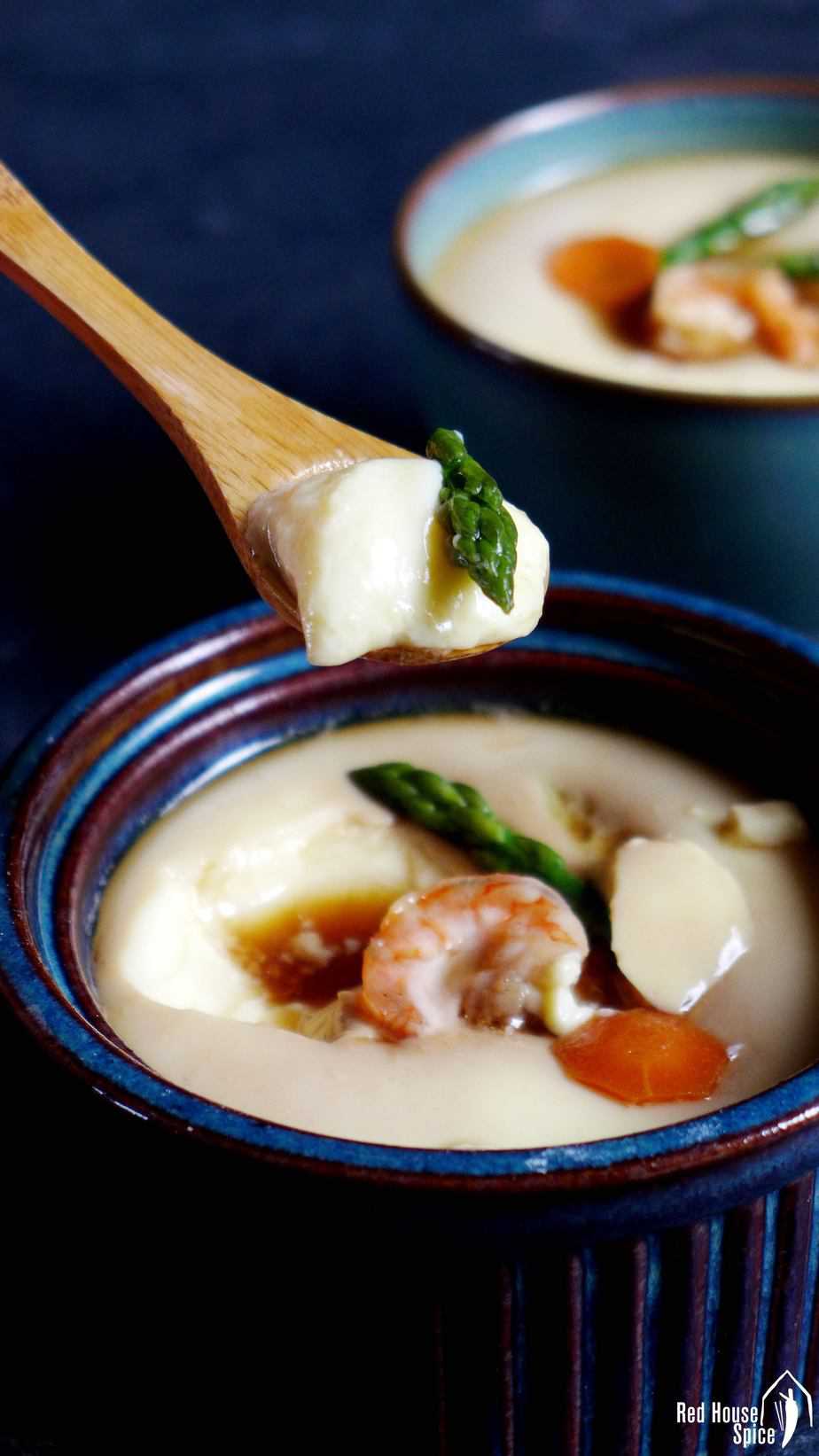
I consider myself a perfectionist especially when it comes to cooking, so I’d love to share my tricks on how to produce a bowl of flawless Chinese steamed eggs.
The perfect egg water ratio
The ideal egg water ratio should be around 1:2 in volume. Too much egg will result in a hard curd, whereas too much water will make it impossible to turn the mixture into a solid form.
For example, I normally use medium-sized eggs which measure about 50ml each. So I add 100ml of water. If you wish, replace water with chicken stock for a fuller taste.
The ideal water temperature
Warm water works best for Chinese steamed eggs. The right temperature helps the beaten egg and the water to combine. I would suggest around 45°C (113°F). But don’t rush to buy a thermometer! I have a simple trick: boil some water, then pour it into the same amount of tap water.
Avoid lumps and bubbles
In order to make the steamed egg super smooth, you need to remove any lumps and bubbles in the egg water mixture prior to steaming. If possible, use a sieve to filter when pouring the mixture into steaming bowl(s).
Steamer set-ups
When it comes to steaming, I’ve got two options for you:
- Use a regular steamer if you have one;
- Use an ordinary pot that is wide enough to place your bowl(s). Sit the bowls directly in the boiling water. Make sure the water level is right: low enough not to splash into the egg bowl and high enough to complete 10 minutes steaming without drying out the pot.
Avoid dripping water
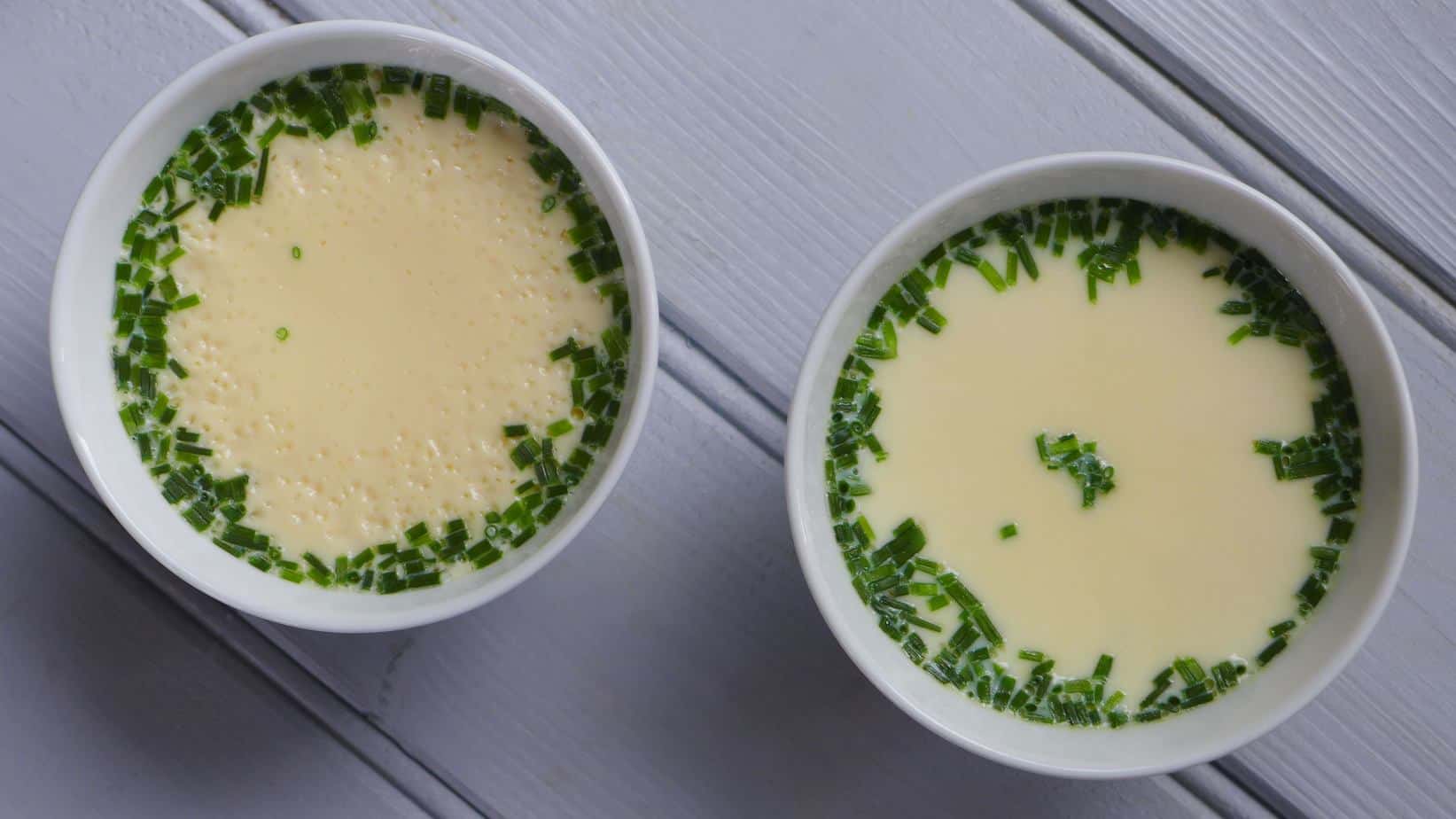
Unless using a traditional bamboo steamer which allows the steam to escape from the lid, I suggest you cover the bowls with cling film (pierce a couple of times). This is to prevent the condensation on the lid from dripping onto the smooth surface of the egg curd. See the image above: the bowl on the left wasn’t covered by cling film thus has an uneven surface.
Seasoning: less is more
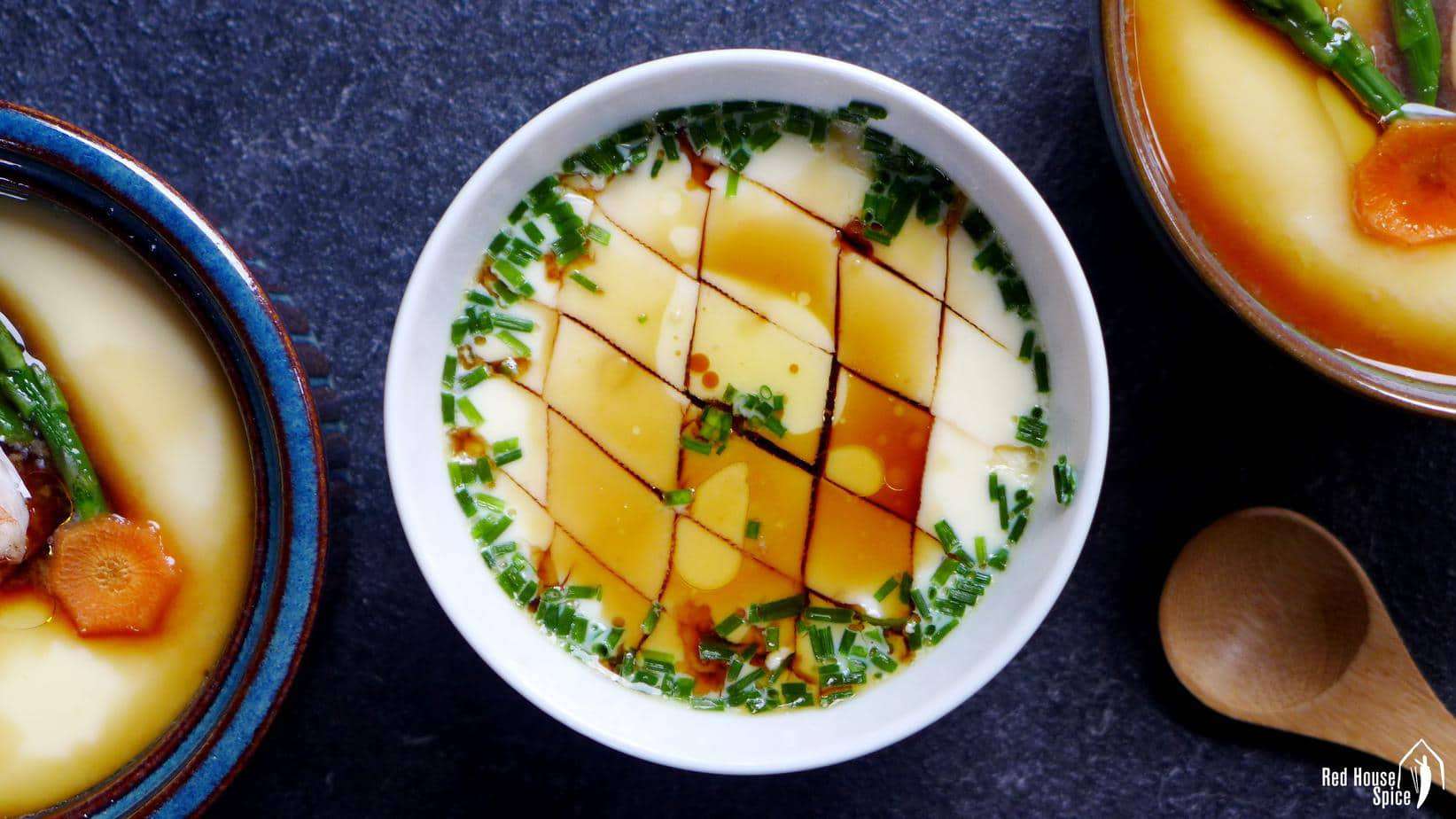
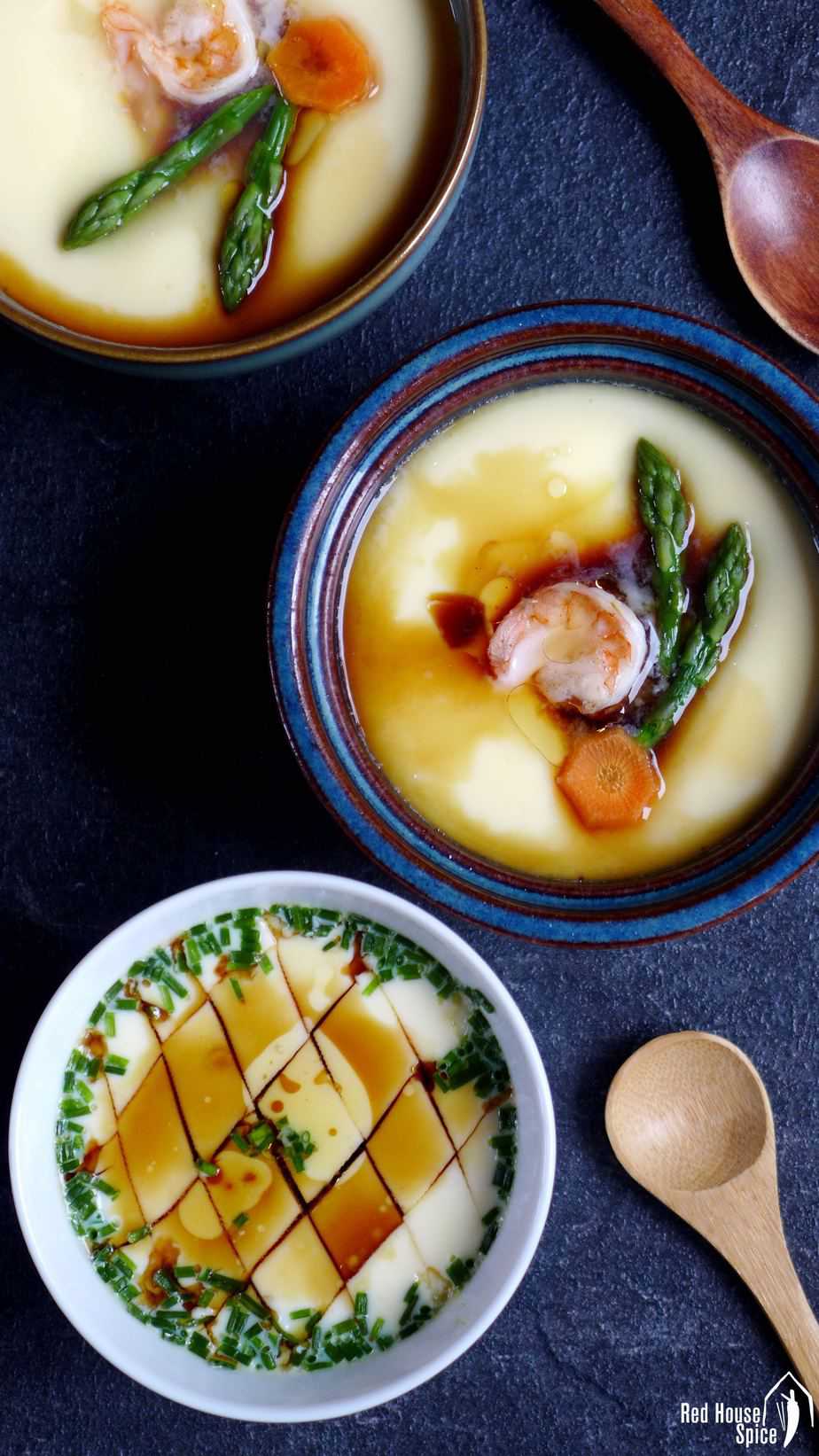
Chinese steamed eggs doesn’t need sophisticated seasoning to impress your palate. Exactly like how my mum serves this dish, I only add a little light soy sauce and sesame oil, then cut through the curd several times to let the sauce penetrate. Simply delicious!
Optional garnish
Sometimes, I garnish the steamed eggs with prawns and vegetables like asparagus, carrot, etc. In this case, you need to steam the eggs as usual for 7 minutes, then place in the garnish and steam for a further 3 minutes.
Other egg recipes
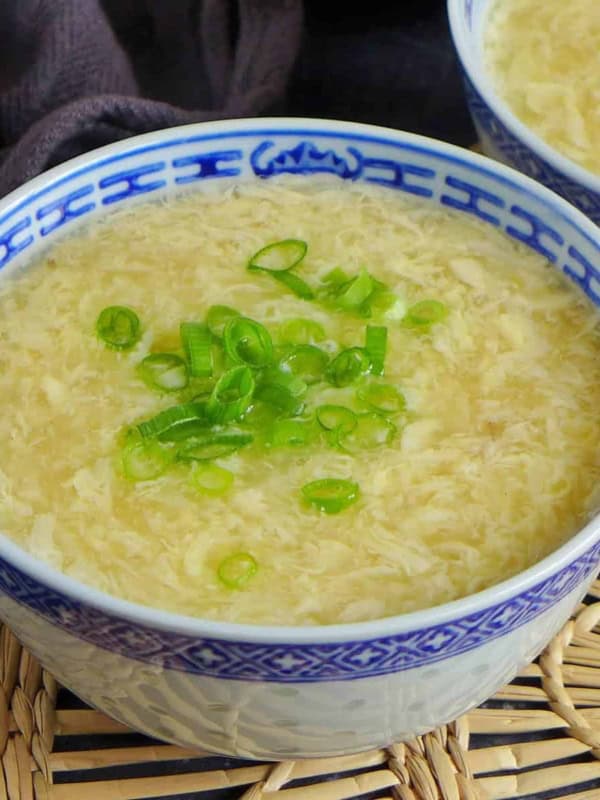
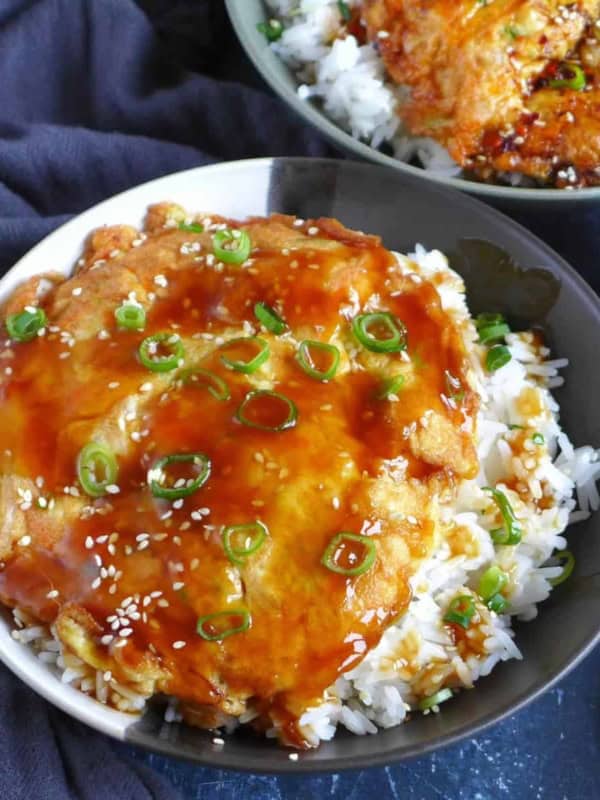
Looking for more ways to cook delicious egg dishes? Try these popular recipes:

📋 Recipe card
Love this recipe? Please leave a 🌟🌟🌟🌟🌟 rating and a comment. Thank you!

Chinese steamed eggs (蒸蛋羹)

Video
Ingredients
- 2 eggs, beaten
- Warm water, double volume of the beaten eggs (see note 1 & 2)
- 1 pinch salt
- 1 teaspoon chive, finely chopped (optional)
- 2 teaspoon light soy sauce
- 2 drop sesame oil
Extra garnish (optional)
- Prawns, peeled and deveined
- Asparagus & carrot
Instructions
- Pour warm water into the beaten eggs. Add salt then stir well.
- Through a sieve, pour the mixture into 2 small serving bowls. Sprinkle chive over if using.
- Cover the bowls with cling film. Pierce to allow the steam to escape.
- Steam for 10-12 minutes over a gentle heat (place the bowls in when the water starts to boil).
- If using extra garnish: Steam the egg as usual for 7 minutes, then place in prawns and vegetables. Steam for a further 3 minutes.
Notes
Your Recipe Notes
Nutrition
Nutrition information is automatically calculated, so should only be used as an approximation.
Hope you find this “perfectionist’s guide” useful. Check out other scrumptious recipes using eggs as the main ingredient: Marbled tea eggs, Egg fried rice noodles, Tomato & egg stir fry.












Oh my goodness! I was a bit intimidated – not knowing the weight of my large eggs; however, the steamed egg was PERFECT. Both my husband and I took one bite and the taste was reminicent of our trip to China. Another simple recipe with outstanding results! thank you Wei!
I’m so glad to hear that, Ellen! It’s wonderful my recipe brought back memories of your trip to China. Thank you for giving the recipe a try and sharing such kind feedback!
Amazing thank you for the recipe the ratio turned out perfect! Never would have thought that asparagus would taste soo delicious with the egg.
So happy to hear that Diane! Glad you enjoy the consistency and the asparagus addition.
I Diane. I saw your comment about not realizing how good asparagus would taste with eggs and I just wanted to share something. I used to work in a market research company and they had a kitchen to prepare and serve meals to their clients. They served an egg salad sandwich on white bread with the crust cut off and then they added blanched asparagus tips to it and it’s absolutely delicious. I too, when I first tasted that recipe, couldn’t believe how good asparagus and eggs tasted together.
Good and simple recipe. Tq
This sounds tasty apart from the clingfilm. I will give it a try but, no plastic, better to use natural materials like dye free muslin cloth to cover food (cassava or banana leaves when cooking fish etc). I have bamboo steamer baskets so luckily it’s a problem that I seldom have. Where as a metal dandan steamer pot can sometimes get a little wet under certain circumstances.
Tip: Medium size eggs range from about 53g to 63g in Britain.
I often weigh the individual eggs from a carton because various recipes that I use require egg% precision (tip: chicken eggshells on average weigh about 9% of the whole egg weight).
When weighing them, I use a pencil to write the weight on the individual eggshells.
It speeds up kitchen projects in the long run if I can instantly see the individual egg weights in the carton. Less waste or leftover egg that way.
I never use cling film (plastic wrap) or metal foil because it contaminates the flavour and it’s very toxic to our long term health, look up “endocrine disrupters”.
It has been known by scientific studies, since the mid 1950’s, that cling film (plastic wrap) causes cancer in rats.
I prefer to use natural materials because all crude oil based materials are not safe and they mess with flavour (including toxic “coal tar” food dye). eg Plastic carton milk is not as tasty as glass bottle milk, it’s a massive difference between them.
The shiny side of tinfoil also has a coating of plastic, to keep it shiny on one side. That means you are eating plastic and aluminium. Aluminium in of itself causes irreversible brain damage because it’s a neurotoxin (causes dementia in later life).
Food tastes much better when we only use natural materials, eg stone, wood, glass, stainless steel, well seasoned cast iron cookware. It also does less harm to our health and ecosystem. Plastic is a horrendous pollutant found in every corner of our planet, and now it’s on the Moon and Mars too!
The old London “pea soup” smog is a breeze of fresh air compared to the plastic pollution that we now have.
Avoid nonstick, it’s extremely toxic. An American company was recently sued several billion dollars for lying about how “safe” nonstick coatings were for the past 40+ years. “Nonstick” is a scam, you still need to use cooking oil to stop food sticking to it so, why bother with overpriced toxic gimmicks?
I love high quality food and I really appreciate the high quality of your information. I will be trying several of your great recipes over the next few months. Loved your milk curd recipe, it worked first time.
Thanks so much for sharing your thoughts and tips—it’s always great to hear different perspectives! I’m really glad the Ginger Milk Curd recipe worked well for you, and I hope you enjoy trying more.
My egg custard was not smooth all. it was crumbly and pomarked.. otherwise the taste was rater nice. I am not sure what I did because of which the custard was not smooth.
Thanks for trying the recipe, Manisha! If the texture wasn’t smooth, it could be due to the egg-to-water ratio or not mixing them thoroughly. If those are right, it should turn out silky. Hope it goes better next time!
Excellent recipe. I will say the ‘boil half, add half tap water’ trick didn’t work for me, only got me to 144°f. That would have probably been bad, and my tap water was on the cold side. Don’t know why that wouldn’t have worked for me, but it was obvious that the water was too hot, and so I just kept adding and re-temping it until I got to about 117°f. After confirming with the thermometer, I’m pretty sure I now know what roughly 113° feels like, and I’d be comfortable temping it with a finger in the future.
I steamed it in an Anova precision oven (countertop steam oven), 200°f with 100% steam, uncovered. There was a little pooling of water, barely noticeable after adding soy sauce and scoring. Didn’t produce pitting, but I’d definitely call it undesirable. That was on me, I just wanted to see what would happen.
Minor issues aside, I feel like just about everything including the texture came out mostly as depicted. I’ll be making this frequently from now on, a great way to stretch your eggs.
Love the attention to detail and experimentation! Sounds like you really fine-tuned the process to get it just right. Glad you enjoyed the recipe and found a method that works for you!
Would the cling film not melt when steamed? I think this was an in an episode of last season’s Masterchef UK. Is there an alternative?
Heat-proof cling film is designed to withstand steaming without melting, so I suggest checking if yours is labeled heat-proof. If not, feel free to skip it, as it won’t make a big difference to the taste or texture. Happy cooking, Victoria!
I followed the recipe exactly and the eggs turned out perfectly! This is now my favorite way to have eggs for breakfast.
I’m so glad you loved it, Samantha! Knowing it’s your new favorite makes my day!
Came out perfectly the first try! I topped mine with soy sauce, sesame oil, and a little chili crunch oil. Thank you!!
My pleasure to share, Jenevieve! Glad it turned out well for you.
I’ve saved this recipe and find myself always returning back to it when I need something simple and comforting (sick, bad day, or just to wind down).
The instructions are so simple and the result hits the spot every time! Thank you❤️
Very happy you like this simple, nourishing dish!