

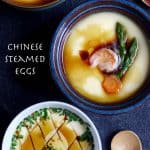
Smooth, slippery and heavenly soft, Chinese steamed eggs requires minimum ingredients yet delivers a delicate look and flavour. Learn how to make it flawlessly.
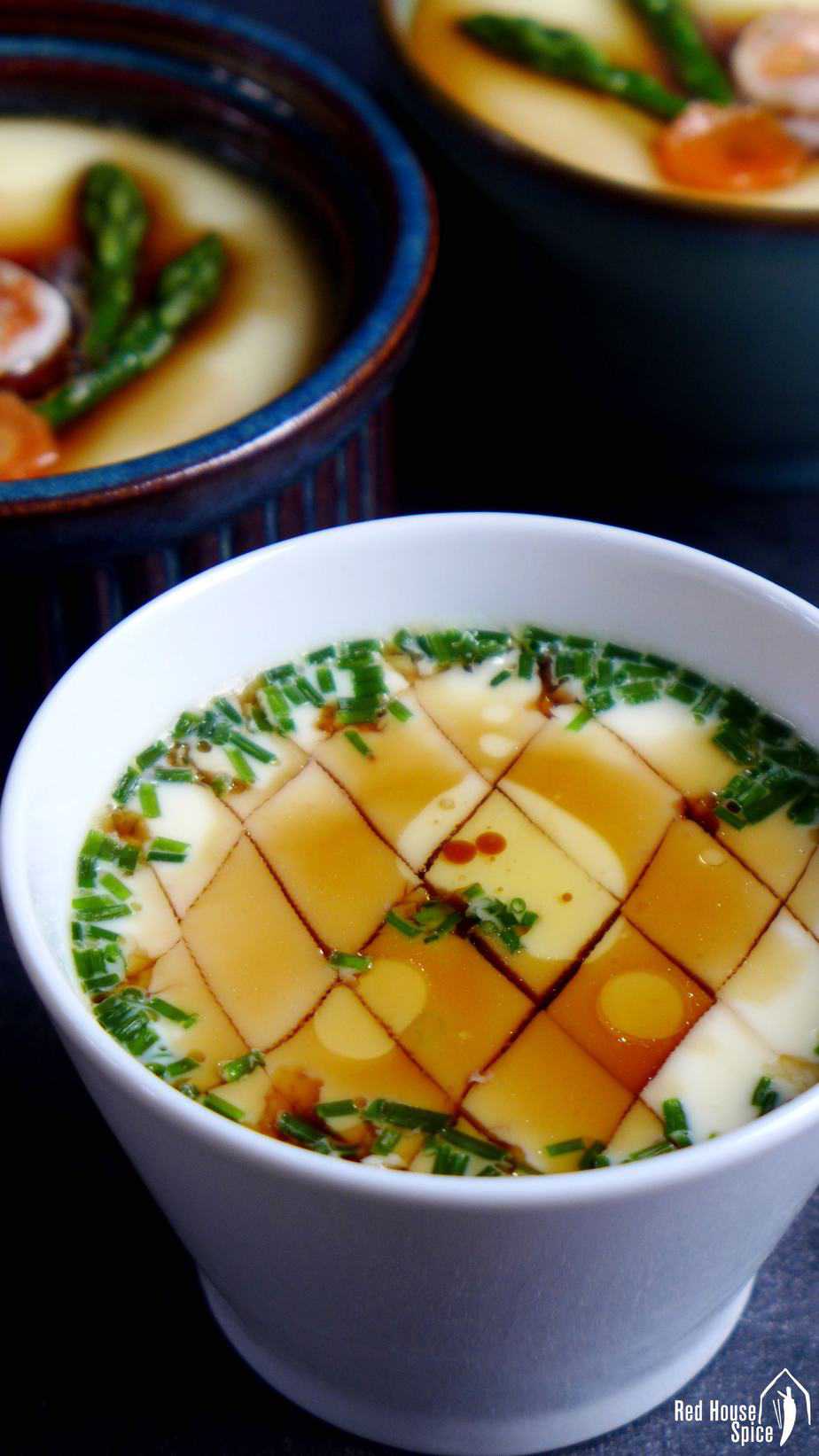
Pin this now to find it later!
Pin ItWhat are steamed eggs
I’m very lucky to have had a childhood full of sweet memories and many of them are food-related. My family didn’t have any sophisticated ingredients but every single dish my mum & dad prepared was so satisfying and delicious.
Today, I’m sharing a super simple dish that always reminds me of my dear mum (now it has become my own children’s favourite dish): Chinese steamed eggs (蒸蛋羹), also know as water egg or egg custard.
It couldn’t be simpler to make Chinese steamed eggs: beat the eggs, add water then steam. Voilà, all done! However, it does require a bit of attention to detail to achieve the perfect texture: smooth, slippery and heavenly soft.
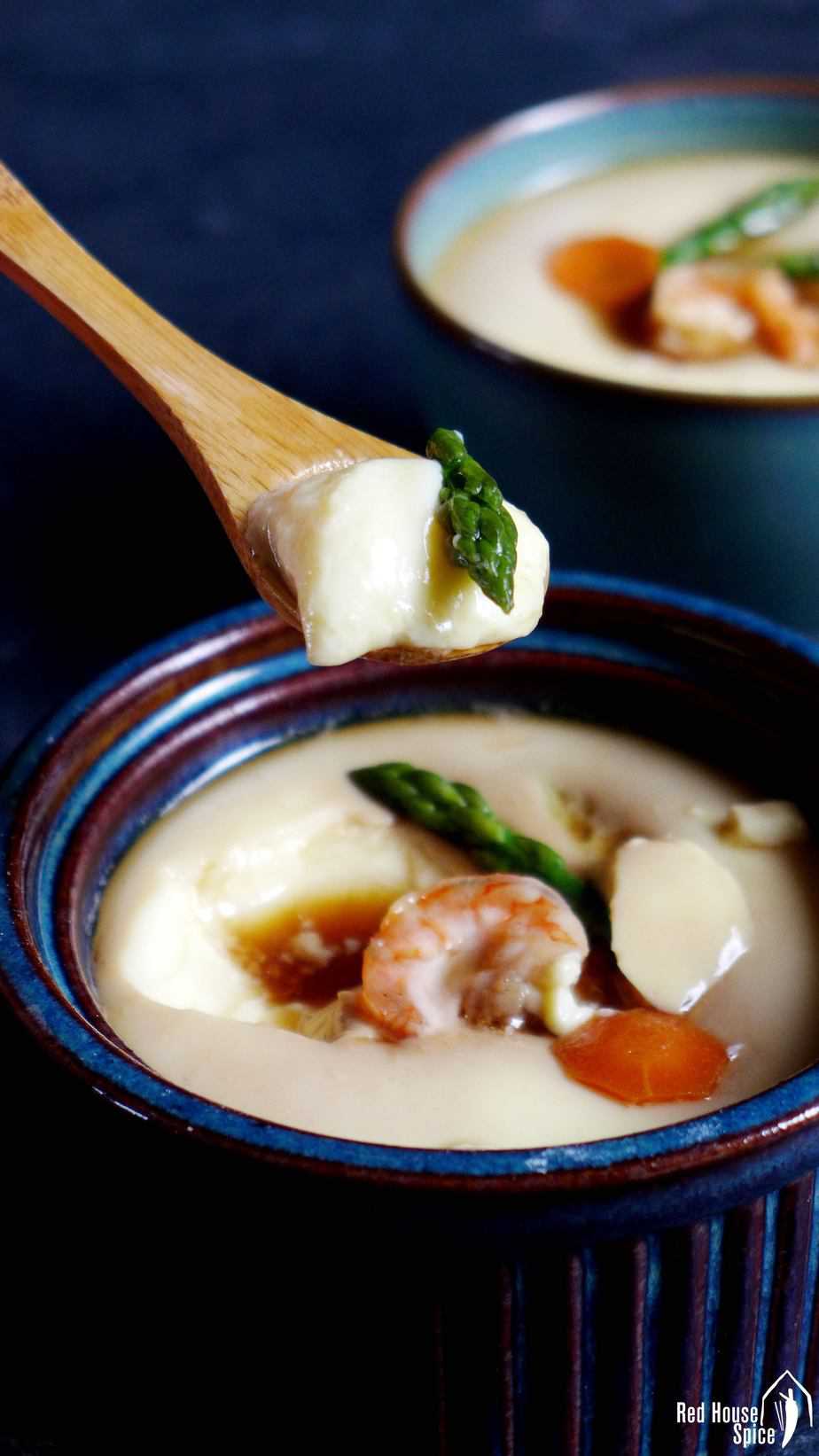
I consider myself a perfectionist especially when it comes to cooking, so I’d love to share my tricks on how to produce a bowl of flawless Chinese steamed eggs.
The perfect egg water ratio
The ideal egg water ratio should be around 1:2 in volume. Too much egg will result in a hard curd, whereas too much water will make it impossible to turn the mixture into a solid form.
For example, I normally use medium-sized eggs which measure about 50ml each. So I add 100ml of water. If you wish, replace water with chicken stock for a fuller taste.
The ideal water temperature
Warm water works best for Chinese steamed eggs. The right temperature helps the beaten egg and the water to combine. I would suggest around 45°C (113°F). But don’t rush to buy a thermometer! I have a simple trick: boil some water, then pour it into the same amount of tap water.
Avoid lumps and bubbles
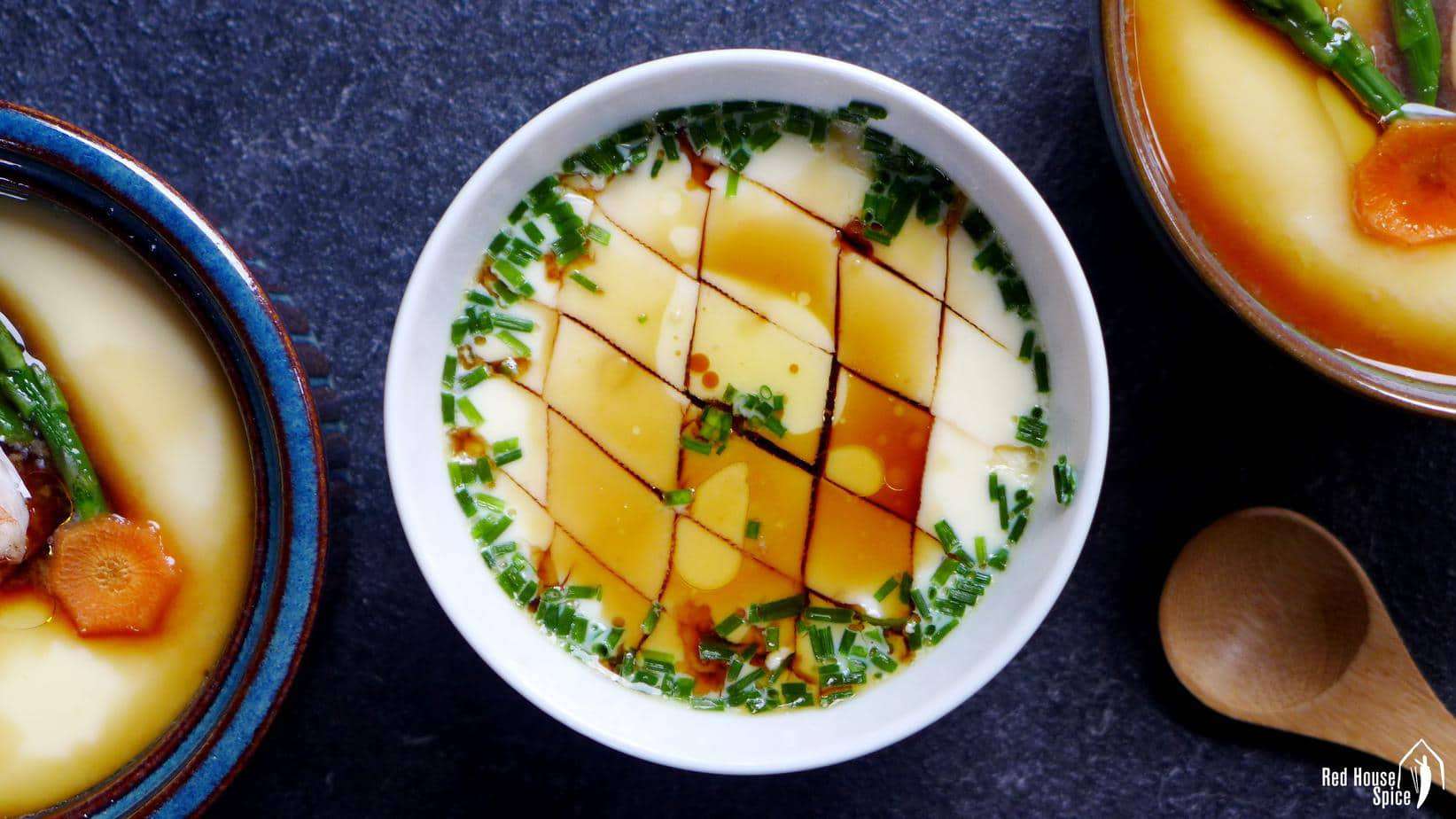
In order to make the steamed egg super smooth, you need to remove any lumps and bubbles in the egg water mixture prior to steaming. If possible, use a sieve to filter when pouring the mixture into steaming bowl(s).
Steamer set-ups
When it comes to steaming, I’ve got two options for you:
- Use a regular steamer if you have one;
- Use an ordinary pot that is wide enough to place your bowl(s). Sit the bowls directly in the boiling water. Make sure the water level is right: low enough not to splash into the egg bowl and high enough to complete 10 minutes steaming without drying out the pot.
Avoid dripping water
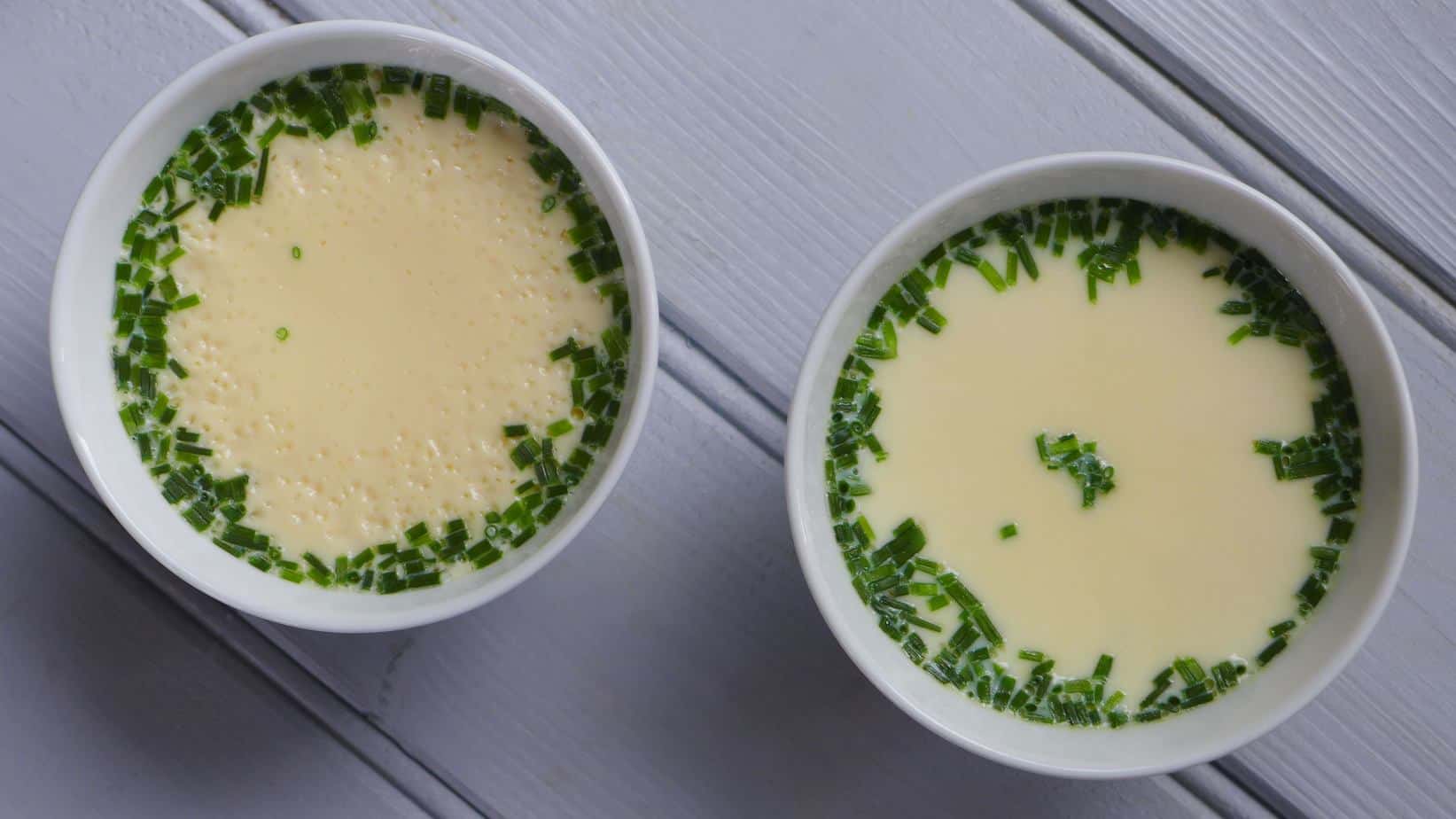
Unless using a traditional bamboo steamer which allows the steam to escape from the lid, I suggest you cover the bowls with cling film (pierce a couple of times). This is to prevent the condensation on the lid from dripping onto the smooth surface of the egg curd. See the image above: the bowl on the left wasn’t covered by cling film thus has an uneven surface.
Seasoning: less is more
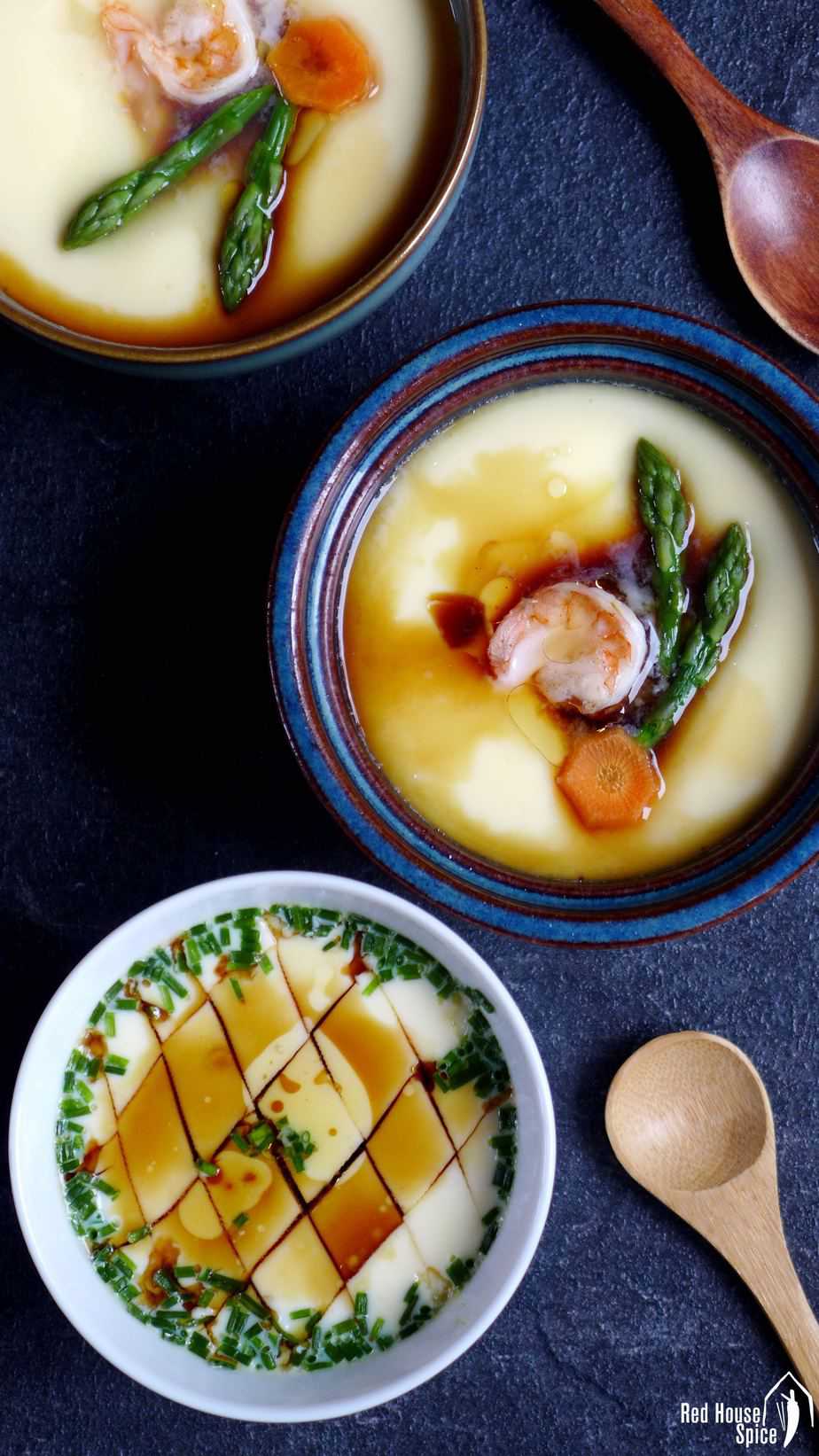
Chinese steamed eggs doesn’t need sophisticated seasoning to impress your palate. Exactly like how my mum serves this dish, I only add a little light soy sauce and sesame oil, then cut through the curd several times to let the sauce penetrate. Simply delicious!
Optional garnish
Sometimes, I garnish the steamed eggs with prawns and vegetables like asparagus, carrot, etc. In this case, you need to steam the eggs as usual for 7 minutes, then place in the garnish and steam for a further 3 minutes.
Other egg recipes
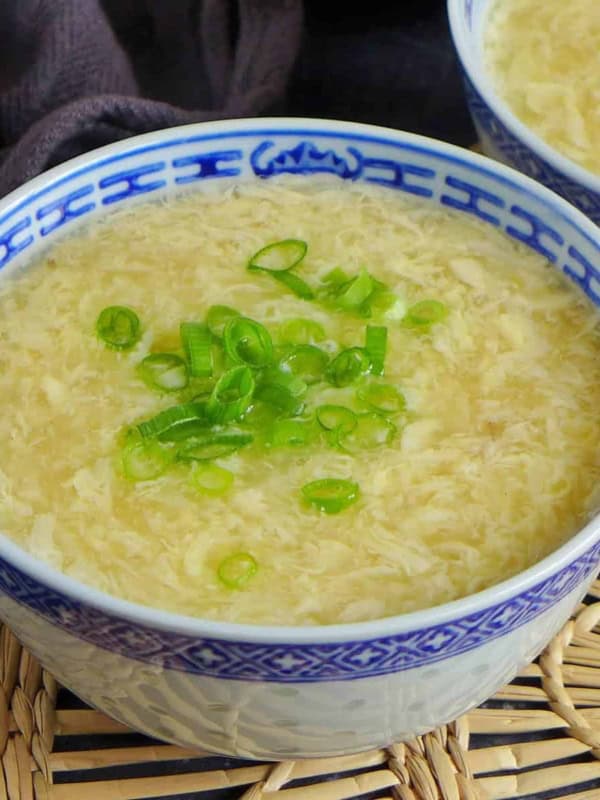
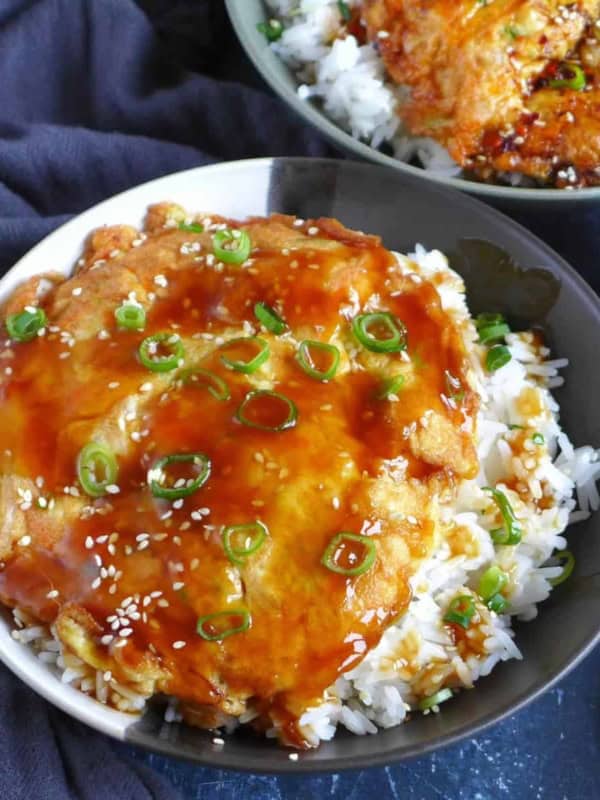
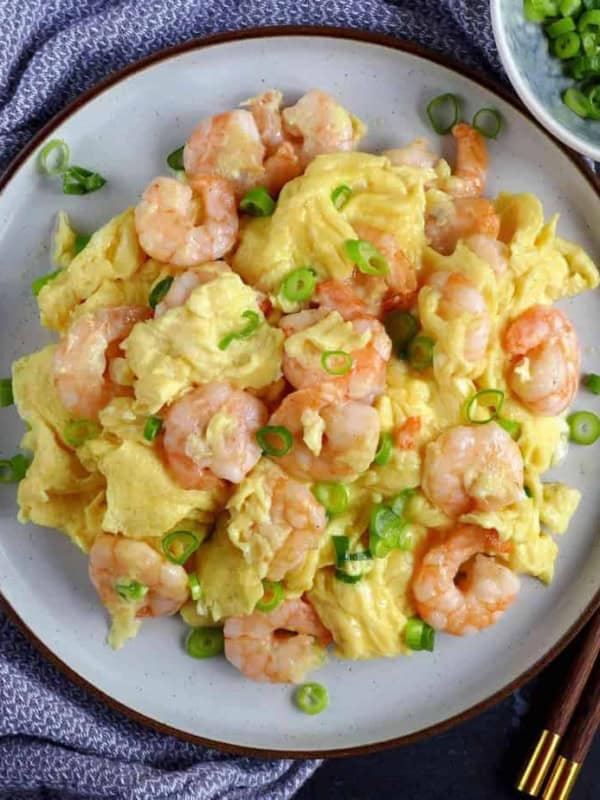
Looking for more ways to cook delicious egg dishes? Try these popular recipes:

📋 Recipe card
Love this recipe? Please leave a 🌟🌟🌟🌟🌟 rating and a comment. Thank you!

Chinese steamed eggs (蒸蛋羹)

Video
Ingredients
- 2 eggs, beaten
- Warm water, double volume of the beaten eggs (see note 1 & 2)
- 1 pinch salt
- 1 teaspoon chive, finely chopped (optional)
- 2 teaspoon light soy sauce
- 2 drop sesame oil
Extra garnish (optional)
- Prawns, peeled and deveined
- Asparagus & carrot
Instructions
- Pour warm water into the beaten eggs. Add salt then stir well.
- Through a sieve, pour the mixture into 2 small serving bowls. Sprinkle chive over if using.
- Cover the bowls with cling film. Pierce to allow the steam to escape.
- Steam for 10-12 minutes over a gentle heat (place the bowls in when the water starts to boil).
- If using extra garnish: Steam the egg as usual for 7 minutes, then place in prawns and vegetables. Steam for a further 3 minutes.
Notes
Your Recipe Notes
Nutrition
Nutrition information is automatically calculated, so should only be used as an approximation.
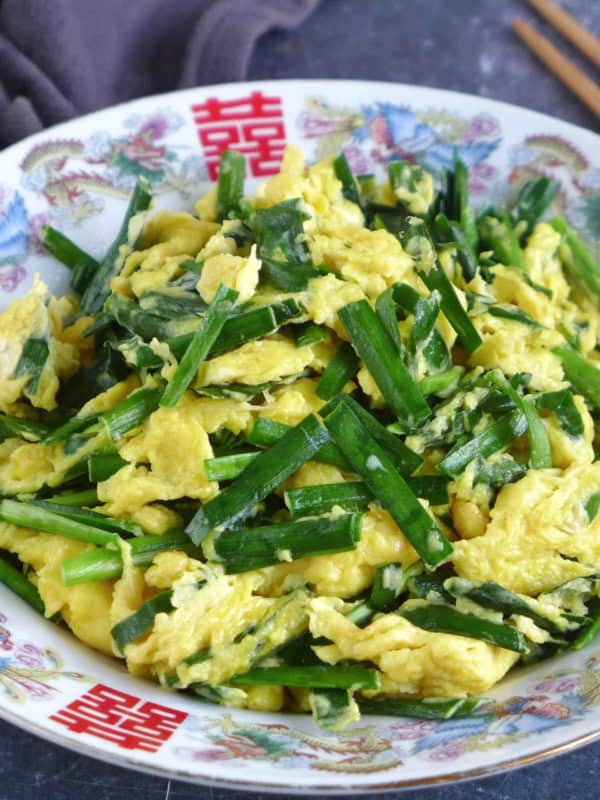
Hope you find this “perfectionist’s guide” useful. Check out other scrumptious recipes using eggs as the main ingredient: Marbled tea eggs, Egg fried rice noodles, Tomato & egg stir fry.












First time trying this recipe and it turned out perfect! Egg cooked perfectly and lots of flavor.
Delighted to hear your feedback Kennedy!
Thank you for this delicious recipe! We aren’t Chinese, but my husband and I both adore Chinese home cooking. These eggs have become one of our favourite breakfasts, especially in wintertime. They are so good topped with a bit of sesame oil and chili crisp!
I have it for breakfast very often too. So happy that you enjoy my recipe!
Can’t wait to try this recipe! One quick question though: what temperature should the tap water be when mixing it with boiled water? I’m guessing room temperature, but please correct me.if I’m wrong. Thank you!
Mix boiling water with tap water directly as it comes out of the tap, regardless of its initial temperature. The exact temperature of the tap water doesn’t make much difference. Happy cooking!
I’ve never used a strainer before and the eggs came out supersmooth! thanks for the pro tip!
So happy to know my tip helped!
Thank you for this simple, no fuss and easy to understand egg dish. I tried it and followed the recipe to the T. It worked out beautifully – just silky smooth. I really like the way you explain the recipes – everything makes sense and not too complicated. The end results are amazing! By the way I made one portion of 2 eggs with 200 ml of warm water. Steaming time was 10 mins. Perfect!
These were delicious. It was quite a surprise to me that they had that lovely texture given how much water was in them! My partner and kids both liked them as well. I will make it again forsure. In fact I just bought some asparagus today to try them again tomorrow with the vegetables on top this time.
Since our trip to China in 2018 we love the real Chinese kitchen. This steamed egg was so delicious and your tips were perfect. I steamed it in my little ricecooker and they came out perfect. This is comfort food! Thank you so much for your recipes, they are great.
You’re welcome Diana. Glad you enjoyed this simple yet comforting dish.
Great instructions and what a lovely soothing recipe. Thanks for the tip on getting the water temperature rigth and cutting diamonds into the eggs – did not see that in any other recipe. First time I ever ate it (who thought that a wisdom tooth extraction would have a silver lining)
Great guide. To avoid using or heating wrap, lift the lid as the water boils, this will have more or less the same effect as using a bamboo steamer and prevent pressure build-up/condensation, whatever the true cause for bubbles is.
Thank you Yifu for sharing the trick!
I like the idea of using shrimp on top! My mom usually used ground beef or pork. Where is your little white bowl from? If I use a bamboo steamer, do I need to use saran wrap? I want to try to avoid heating saran wrap. Thank you for sharing such wonderful recipes and teaching us!
Hi Sharon! Like I mentioned in the post, if using a bamboo steamer, you don’t need to cover the bowl with cling film as there is little condensation this way. I bought those white bowls years ago so I don’t remember where I found them. Happy cooking!