

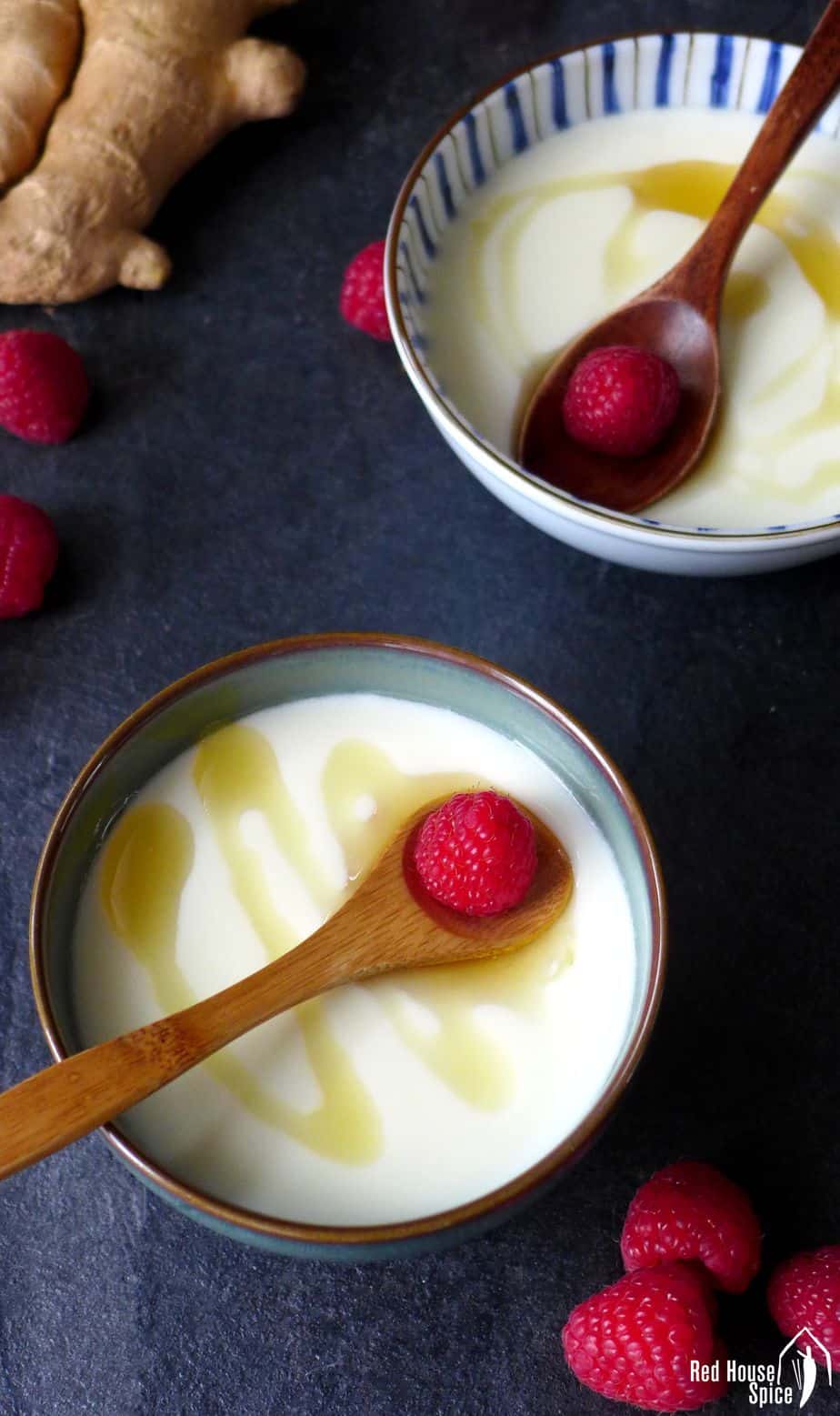
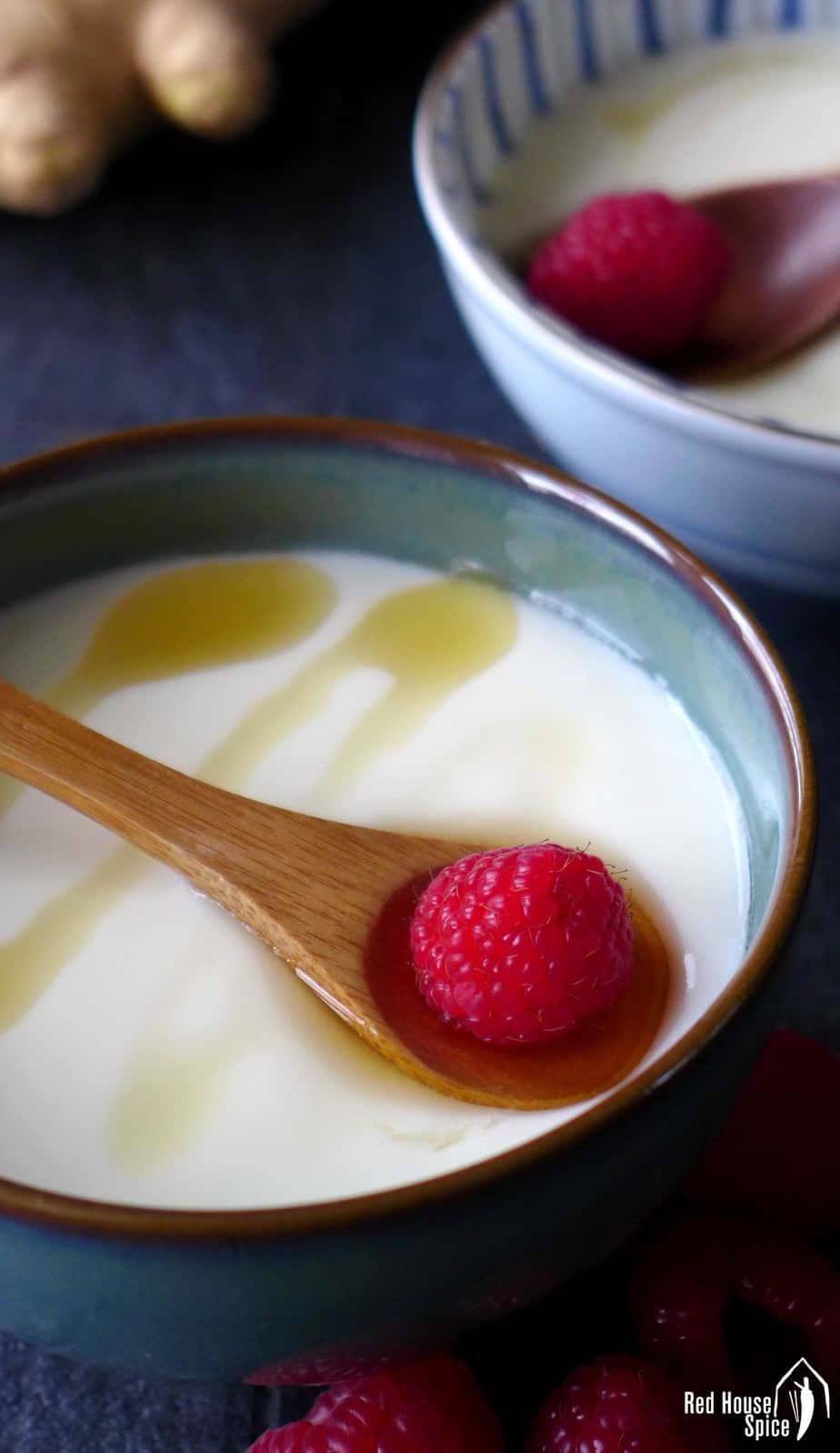
A tried and tested recipe for making perfect ginger milk curd, a popular Cantonese dessert with an interesting flavour and silky texture.
Pin this now to find it later!
Pin ItA dessert with unusual flavour
I fell in love with ginger milk curd “at first taste” years ago. Its unusual flavour combination and the silky, slippery texture was a new experience on my palate. I didn’t realize back then that it was so simple to make.
You only need ginger, milk and sugar, without using any curdling agent or any sophisticated culinary technique.
However, producing a curd with the right texture is a tricky business. Through trial and error, I’ve finally found a formula to make the perfect ginger milk curd.
A “magical” curdling process
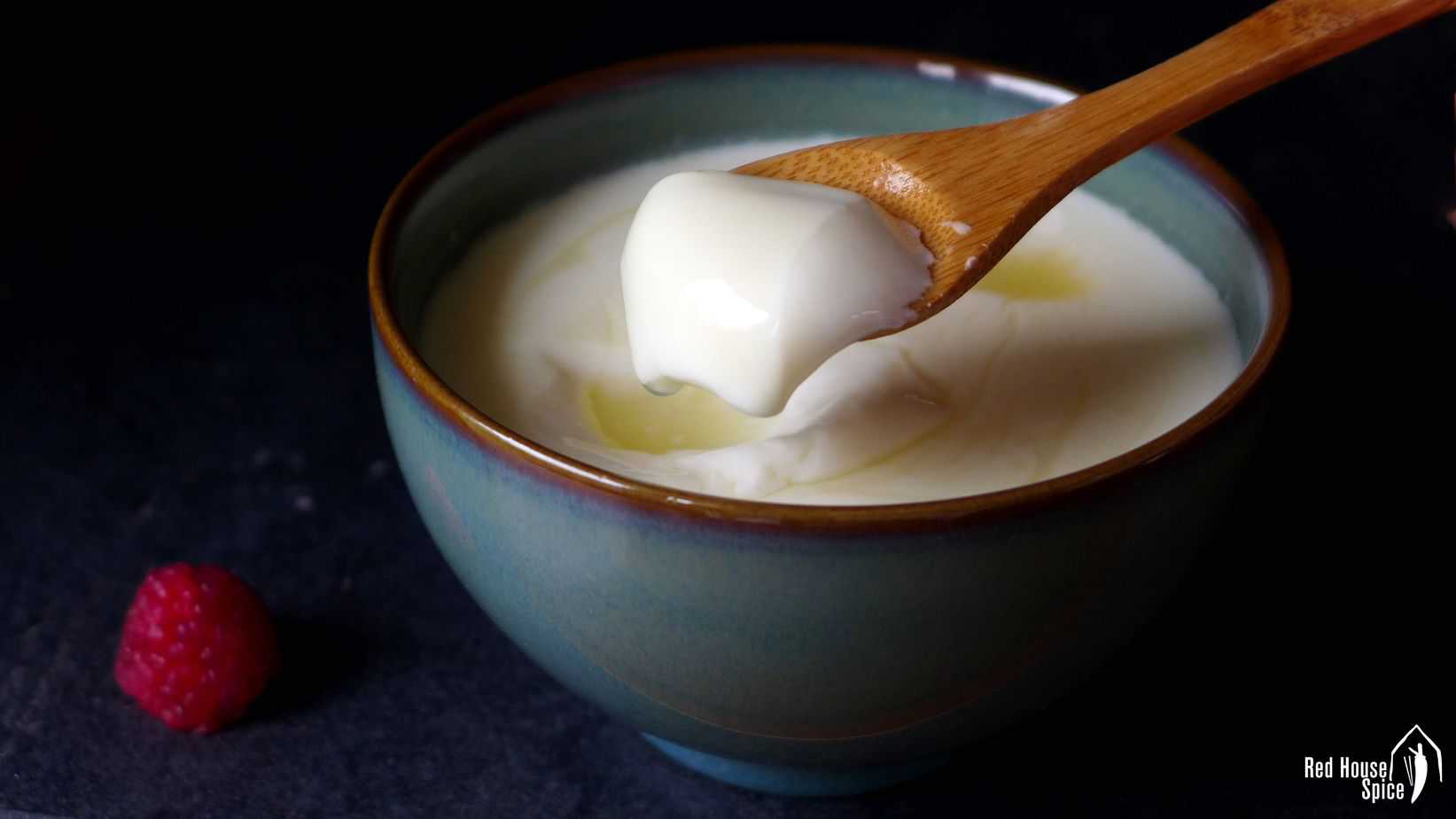
Originating in Shawan town, Guangdong province in China, ginger milk curd (姜汁撞奶) is one of the most popular desserts in Cantonese cuisine. The literal meaning of its Chinese name is “ginger juice bumping into milk”. As the name suggests, you simply pour hot milk onto ginger juice, then you’ll have a bowl of curd. It’s rather magical, isn’t it? This is how Wikipedia explains its biochemical principle:
“Ginger contains the protease zingipain. When milk is added to ginger juice, this protease catalyses denaturation of the protein in the milk, changing it from a water-soluble form to a water-insoluble form, and leads to the formation of milk curd. ”
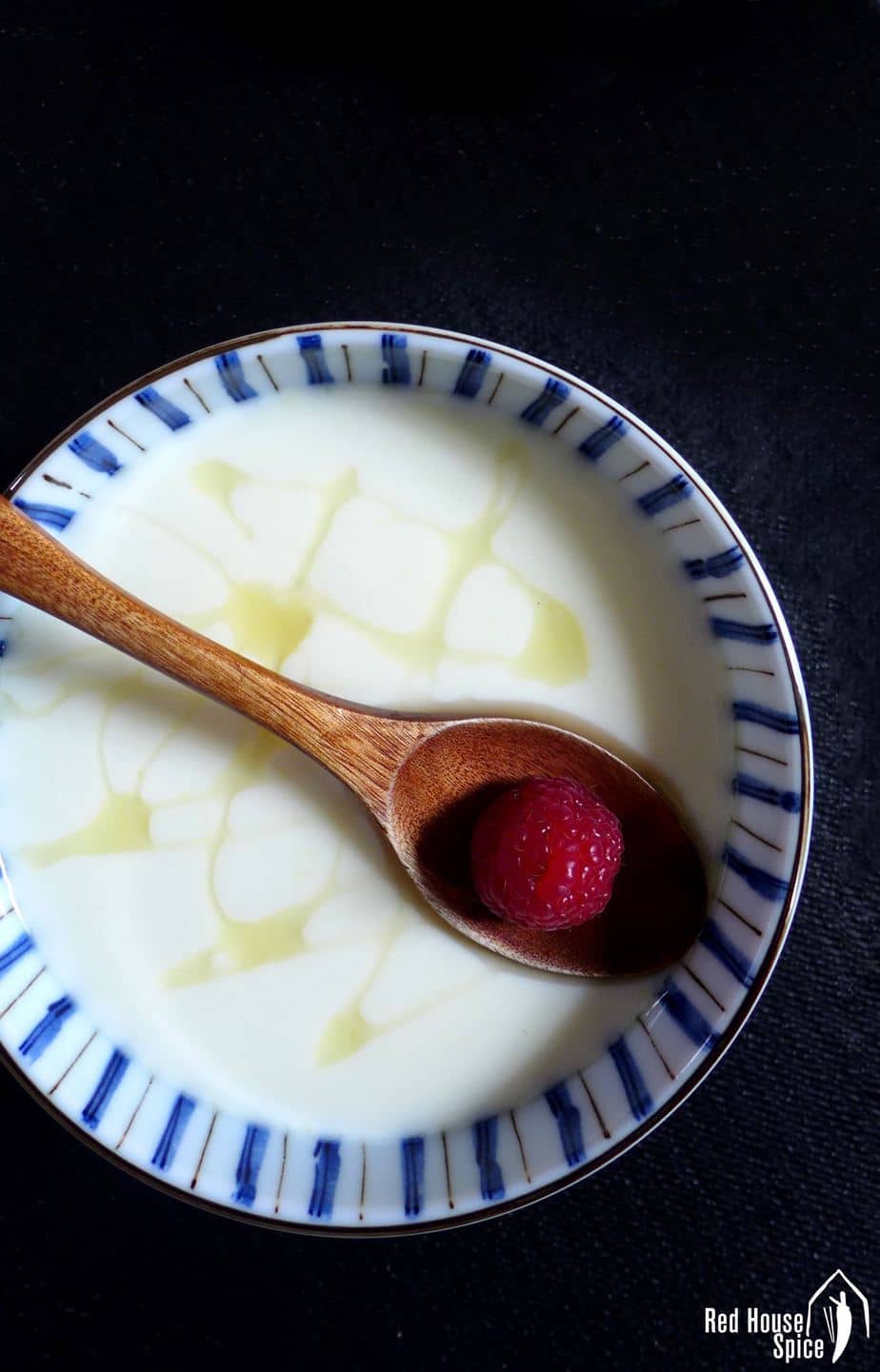
It was purely out of curiosity that I first tried to make this dessert. Unfortunately, I soon realized that I couldn’t always guarantee success. Sometimes I would end up with a bowl of lumpy milk or even just liquid. In order to find a fail-proof formula, I’ve done lots of research and kitchen experiments. Finally, I’ve found the solutions.
The best ratio of ginger juice, milk and sugar
Too much ginger juice will make the dessert too spicy to enjoy, then you will need quite a bit of sugar to balance the flavour. If the ginger juice is not enough, the curdling process won’t be triggered.
In my recipe, I use 1 tablespoon of ginger juice for 200ml milk. This way the curd is firm enough and the spiciness is compensated with 2 teaspoons of sugar.
It creates an ideal taste for me personally (like most Chinese, I don’t have a sweet tooth). If you like it sweeter, I suggest pouring a little honey over the curd as ginger and honey is a classic flavour combination.
The optimum temperature for the milk
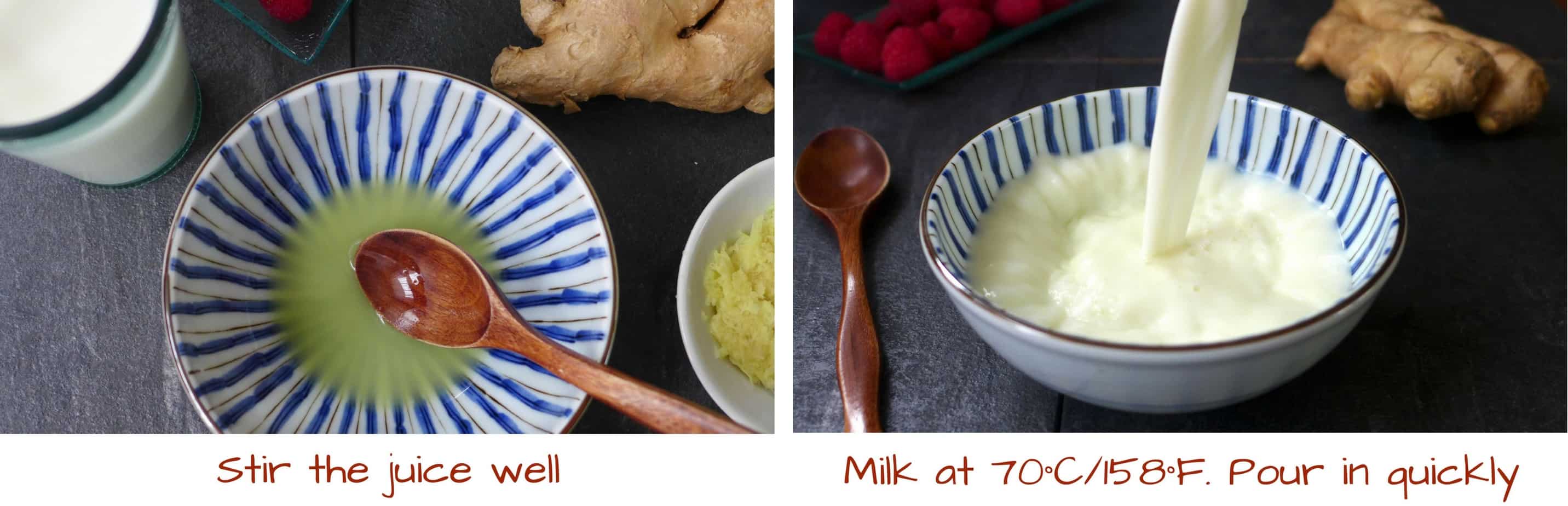
I’ve found many recipes with vague instructions: “the milk is hot to touch with your tongue but won’t burn you”, “heat up the milk until it almost boils”, “the milk should be at 70-80°C”, etc. It doesn’t always work when following those recipes. Eventually, I bought a kitchen thermometer (that was £2.99 well spent) to experiment. 70°C/158°F appeared to be the right answer.
Apart from heating the milk on a stove, I also tried using a microwave. For an 800-watt microwave like mine, you need 1 minute and 40 seconds to heat the milk (chilled) to an ideal temperature (add the sugar halfway through). If your microwave has a different wattage, please see the conversion suggestion in recipe note.
Volià! That’s it! To me, cooking is an art. However, my ginger milk curd experiments remind me that it’s also a scientific endeavour.
Fail-proof ginger milk curd (姜汁撞奶)

Ingredients
- 1 tablespoon ginger juice, from about 30g ginger
- 200 ml fresh milk, see note 1
- 2 teaspoon sugar
- Honey and fresh berries, optional
Instructions
Prepare the ginger juice
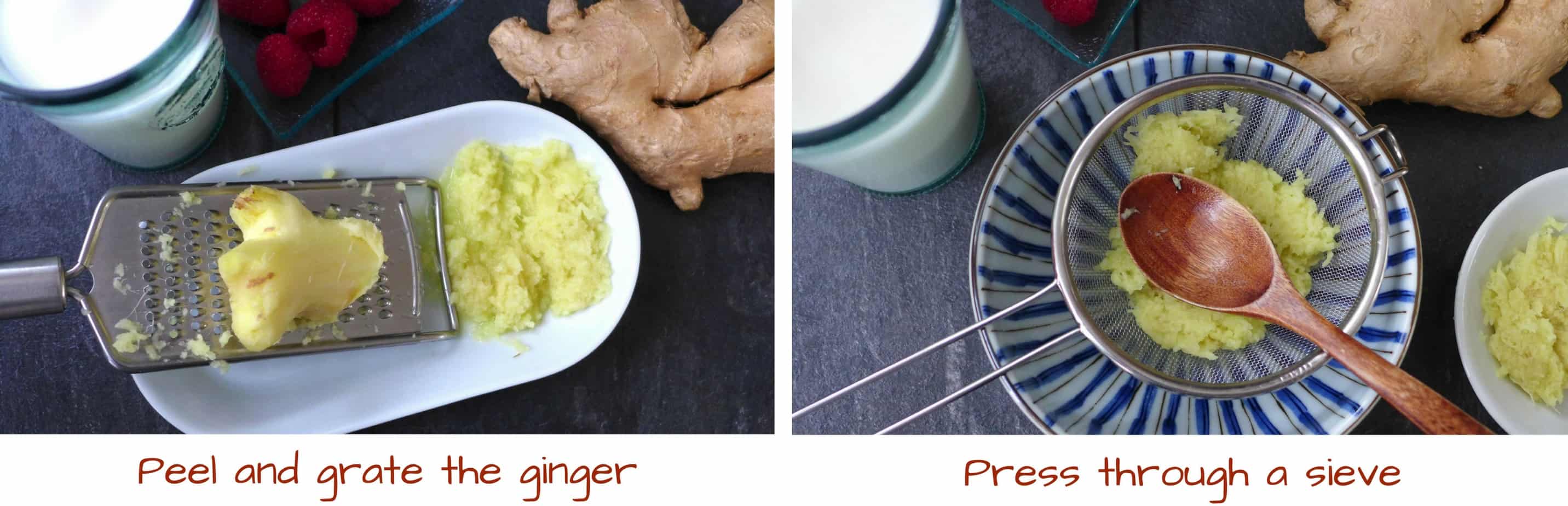
- Peel and finely grate the ginger. Press grated ginger through a sieve placed on top of a small bowl. You need to get about 1 tablespoon of ginger juice.
Heat up the milk
- Option A: If you have a kitchen thermometerHeat the milk in a saucepan. Stir in sugar when milk is warm. Closely observe the temperature on the thermometer. When it reaches 70°C/158°F, remove the pan from the heat.
- Option B: If you have a microwaveHeat chilled milk (out of the fridge right before using) in a container on full power (800-watt, see note 2 for power conversion) for 1 minute. Take it out and stir in the sugar. Then microwave for a further 40 seconds.
Make the curd
- When the milk is ready, stir the ginger juice with a spoon. Pour the milk quickly onto the juice.
- Leave to set. Do not move the bowl or stir the milk. The curd will be fully set in about 10 minutes.
Serve the curd
- You may serve it warm (traditional way) or cold (what I prefer). If you wish, pour a little honey on top and decorate with fresh berries before serving.
Notes
Your Recipe Notes
Nutrition
Nutrition information is automatically calculated, so should only be used as an approximation.












I have tried 4 times recently and not able to get it to set. I might have got it to work once long ago.
When it fail, what are the possible reasons?
If the curd doesn’t set, the ginger is often the main reason. This dessert relies on enzymes in fresh ginger juice to set the milk. If the ginger is old or fibrous, the enzyme activity may be too weak for the milk to coagulate. Other factors can include milk that isn’t hot enough or milk with reduced protein.
Love this recipe! Amazing recipe and worked so well this was my first time trying this out and I was scared it would fail but it didn’t and was so nice
Thank you for trying my recipe, Cassy! I’m really glad it worked out for you.
Rating this 3 stars because I don’t know if this recipe is off or I’m doing it wrong.
I’ve tried it 2x now with all exact measurements and temperature and it did not set
Thank you for giving the recipe a try, Andy. If the temperature and measurements were correct and the milk used hasn’t had its protein reduced, the issue may be the ginger. This dessert relies on enzymes in fresh ginger juice to set the milk. If the ginger is old or fibrous, the enzyme activity can be weaker and the curd may not form properly.
Hello thanks for the recipe it looks great but can this be made w soy milk or any other plant based milk?
Plant-based milks won’t work for this recipe because their proteins don’t react with the enzymes in fresh ginger.
Thank you for this easy recipe. After several tries I finally unlocked the secret to success! My digital thermometer came in handy and I increased the quantity of ginger juice for a more gingery flavour.
I also use a disposable biodegradable tea bag style spice bag for squeezing out my grated ginger and it works brilliantly.
So happy to hear that and thank you for sharing your experience, Jennifer! Great idea using a thermometer and spice bag, and extra ginger sounds perfect for a bold flavor!
After I overheated the milk on my first try, It worked the second time. I need to buy a thermometer. Does anybody know how long this keeps in the fridge or if frozen ginger will still work? It would be nice to be able to make a bigger batch of ginger (maybe even in the blender?) and either keep a few servings in containers in the fridge for a few days or to freeze the ginger pulp or juice in serving sizes to defrost when I need it.
I haven’t tried to freeze the ginger juice. It would be so convenient!
This dessert was so easy to make and so deliciously rewarding. Will definitely become a staple in my home 🙂
So happy to hear that! Thanks for trying my recipe.
I’ve never heard of this dish, I’ve come across this recipe by accident and just so happened to have ginger juice in the fridge. I liked the result, but mine needed more than 10 min of resting. In my experience, juicing ginger with a juicer works great, but it can jam the machine, though, if I squeeze other fruit first there hasn’t been a problem (so far)
Thanks for giving the recipe a try! And great tip about the juicer.
I love this dessert! I had it at a place in Hong Kong once that only served ginger milk pudding and I’ve always wanted to know how to make it. Thanks you for this delicious, actually foolproof recipe!
So happy to hear this brought back fond memories! Ginger milk curd is indeed a classic—glad you found the recipe foolproof and delicious. Enjoy!
1st time making this, and it came out perfect
That’s wonderful to hear, Safina!