
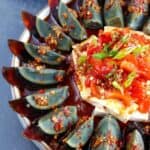
Have you ever tasted century eggs? Read this post which dispels the myths and learn a classic salad recipe that showcases this delicacy.
Pin this now to find it later!
Pin ItWhat are century eggs?
Although a delicacy loved by Chinese for hundreds of years, century eggs, for those who aren’t familiar with them, is considered a mysterious, questionable food item that takes some courage to try. Before talking about today’s century egg salad recipe, let me first explain some of the facts that you might find interesting.
Are century eggs a hundred years old?
Although called century egg, hundred-year egg or thousand-year egg in English, its Chinese names, such as Pi Dan (皮蛋), Bian Dan (变蛋), Song Hua Dan (松花蛋), etc., don’t indicate time, year or age.
I have no idea where those English names come from, but they’re surely responsible for the misconception of century eggs being exceptionally old. In fact, it takes only a few weeks to produce them from scratch.
How are century eggs made?
The most common type of century eggs are made from duck eggs. However, other types, such as chicken eggs, goose eggs and quail eggs can be preserved the same way.
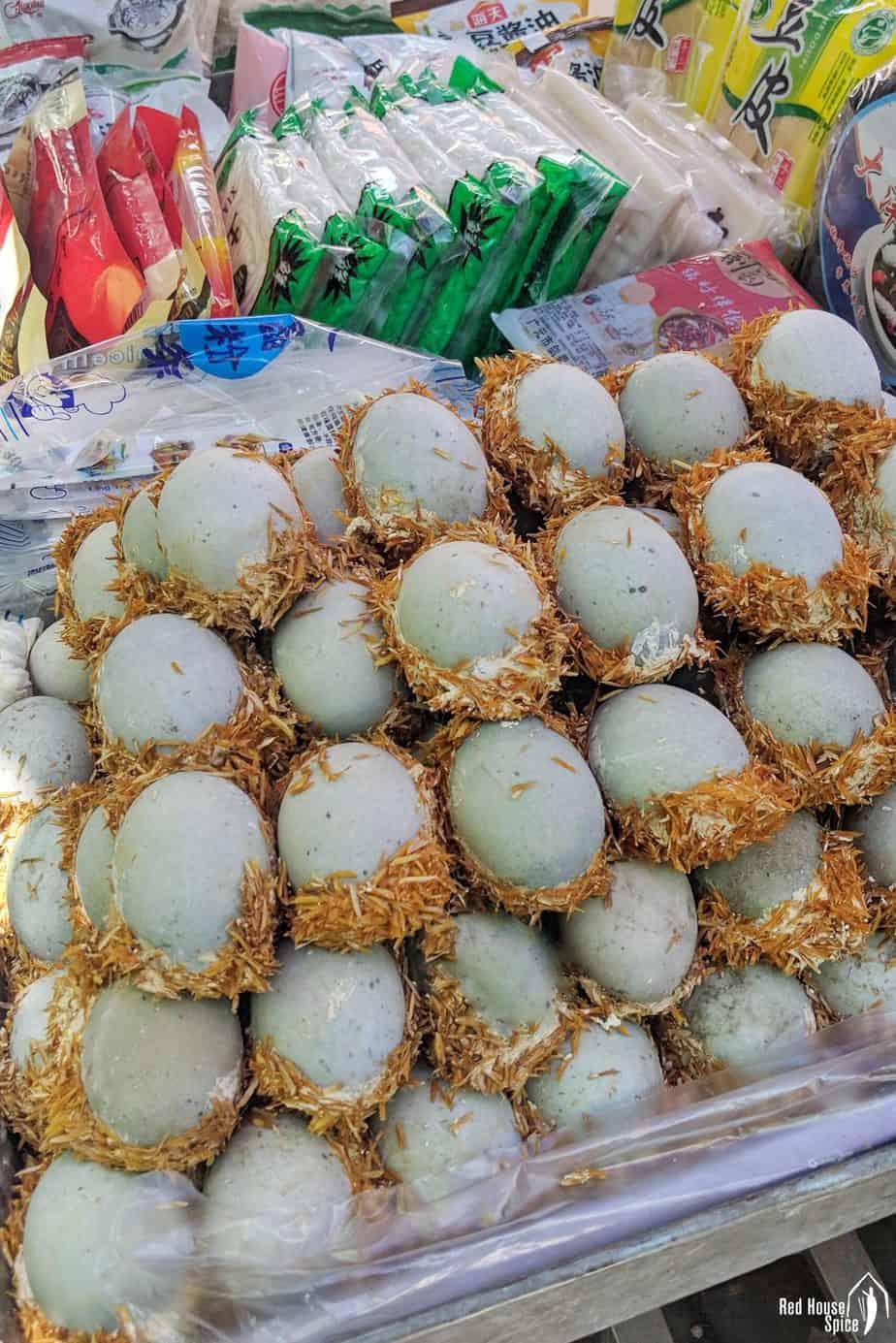
The traditional method involves the following procedure (I used to watch my mum preparing them when I was a child):
- Mixture clay, ash, salt, quicklime and water.
- Apply a thick layer of the mixture to cover raw eggs completely.
- Roll the eggs in grain husks to prevent them from sticking to each other.
- Store in an airtight container. Leave to preserve in a dark, dry place for several weeks until the egg white and yolk solidifies.
Modern mass production methods use a liquid solution to speed up the process. But the end result is very similar.
What do they look & taste like?
During the curing process, the pH of the egg raises gradually. According to Wikipedia, “This chemical process breaks down some of the complex, flavourless proteins and fats, which produces a variety of smaller flavourful compounds.“
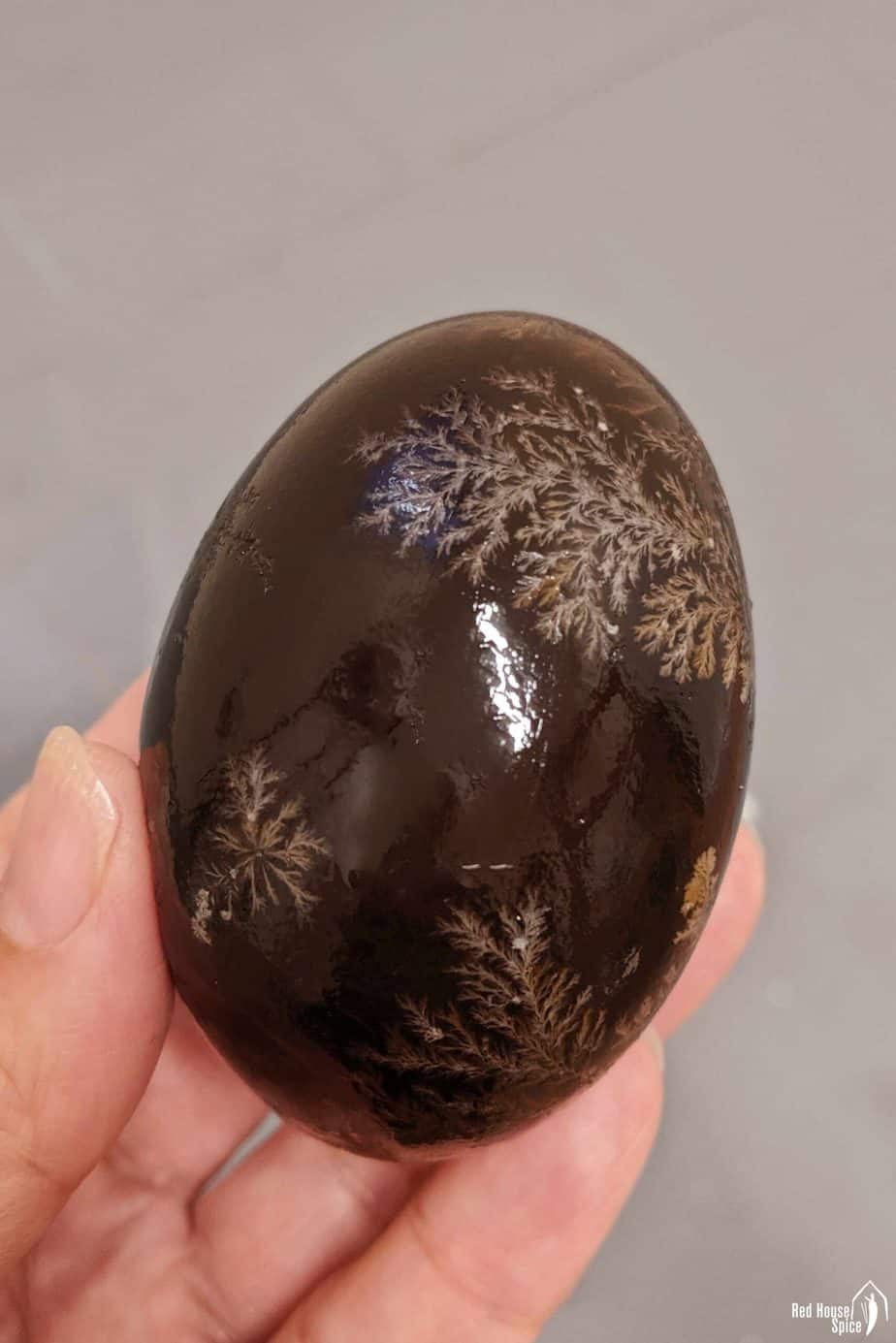
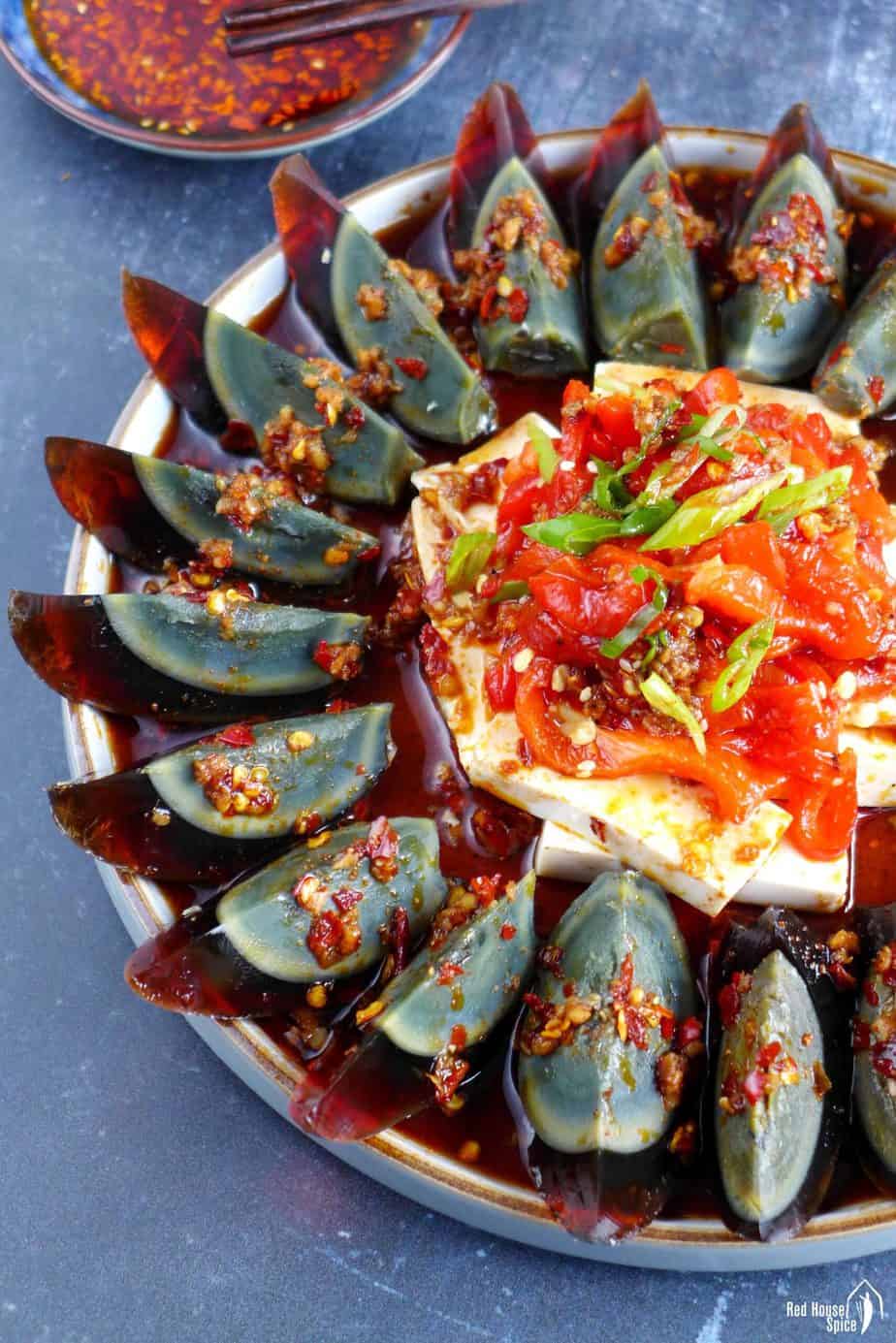
Eventually, the egg white turns into a dark amber, translucent jelly, whereas the yolk gains a greyish green colour and a soft, creamy texture (sometimes runny and gooey in the middle). Another interesting feature is the pine branch (or snowflake) pattern on the surface of the egg white (You might see century eggs with a yellow appearance. They are preserved chicken eggs rather than duck eggs).
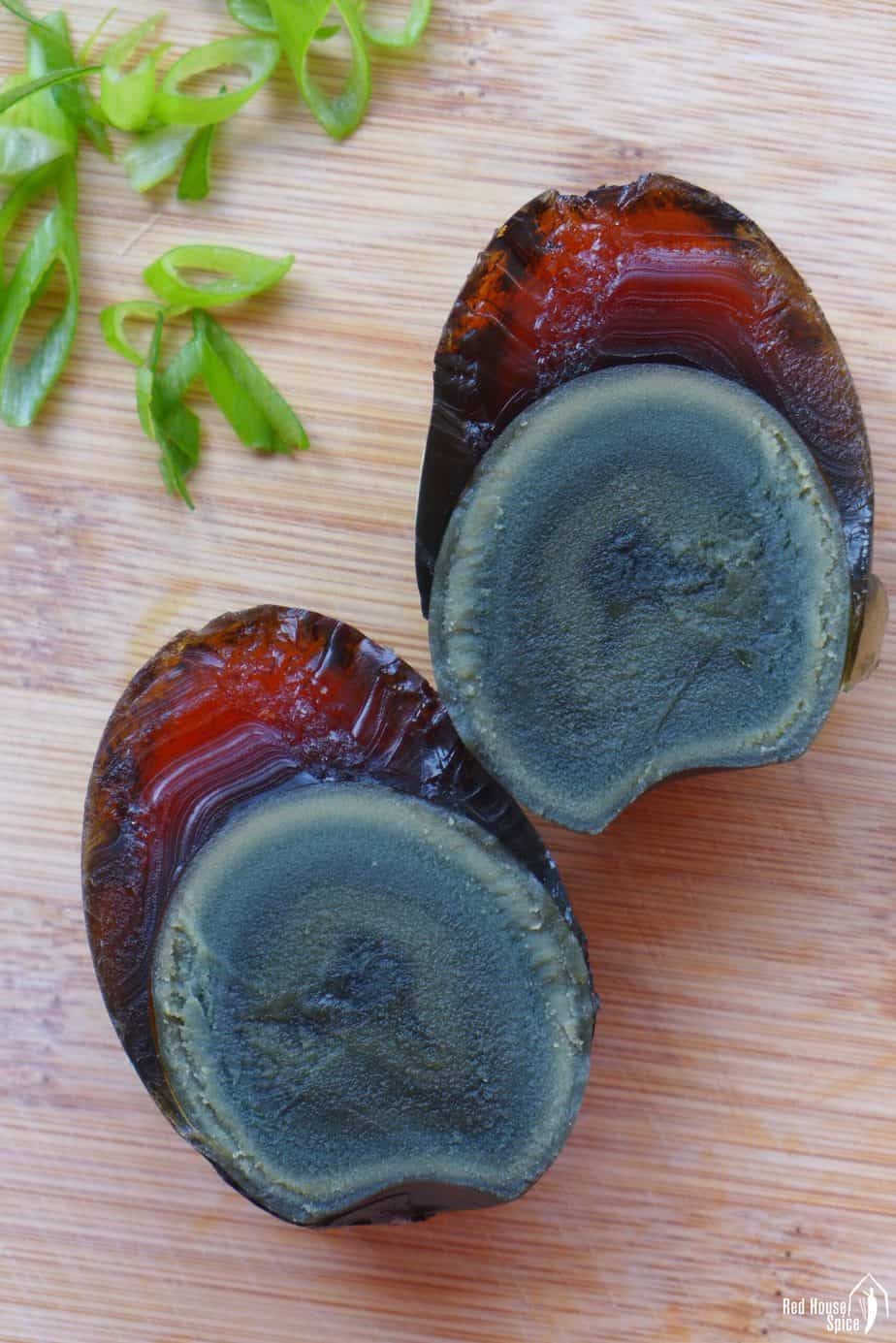
There is no doubt that century eggs are an acquired taste (like many other sophisticated delicacies). While the egg white offers a mild flavour, the yolk tastes like rich, mature cheese with a hint of ammonia.
Do you need to cook century eggs?
The curing process makes century eggs edible as it is. So no further preparation is required. You can peel them and use directly in salad dishes like today’s recipe. Also, they can be found in cooked dishes, such as in Cantonese style congee (rice porridge) or stir-fries.
Where can I find century eggs?
Century eggs are commonly available in Chinese stores, usually in the chilled section. You might find them covered with a brown mixture of clay and grain husks, or just like regular duck eggs with a slightly darker shell. Check carefully to avoid the ones with cracked shells.
A combination of two classic salads
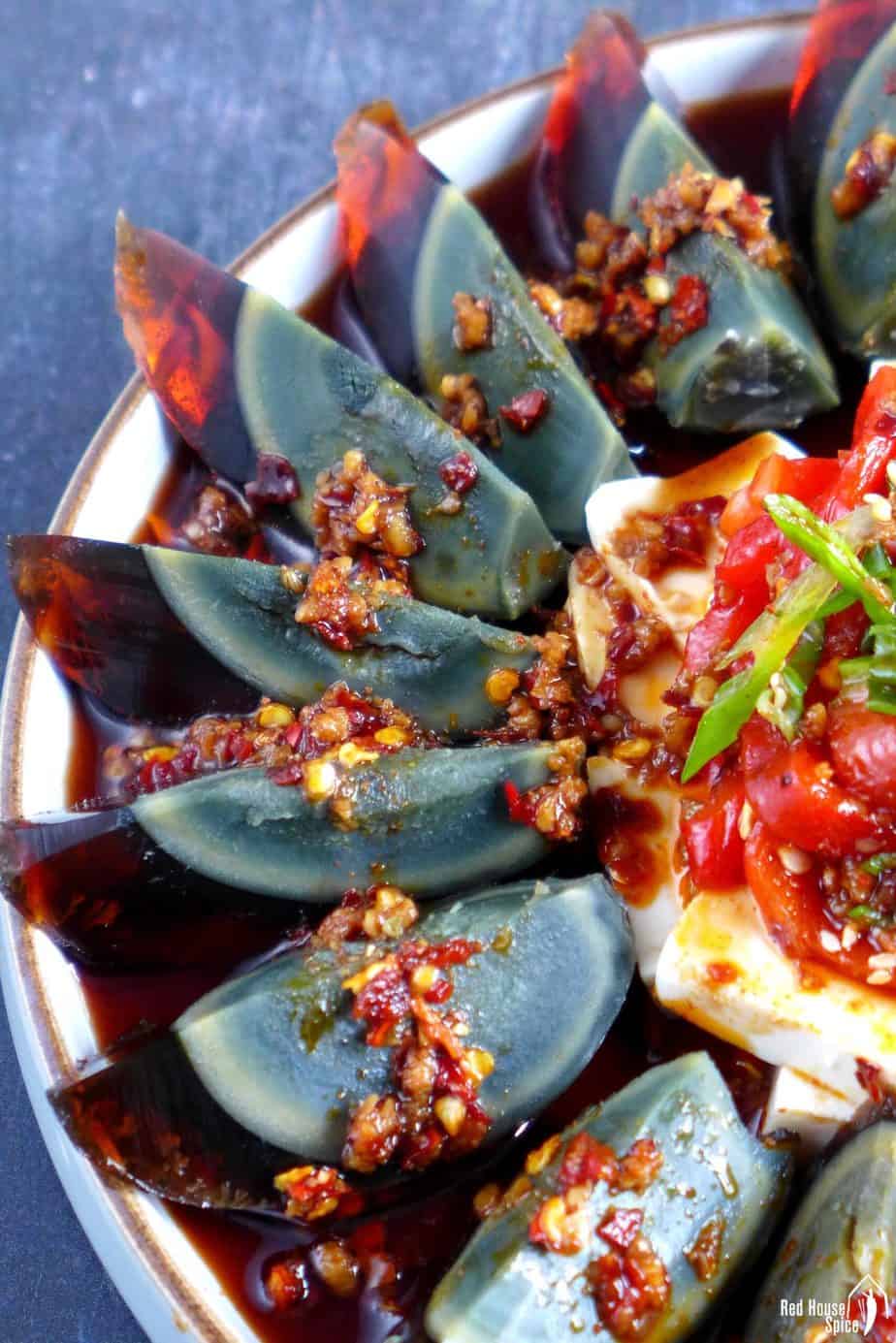
Today’s recipe is a combination of two classic century egg salads that I really adore. One is served with roasted pepper (Shao Jiao Pi Dan/烧椒皮蛋), whereas the other is made with silken tofu (Pi Dan Dou Fu皮蛋豆腐). I combine both of these elements with century egg and serve the dish with a Sichuan style dressing.
Slice the eggs into wedges
As I mentioned earlier, century eggs are ready to eat so no cooking is required. Simply peel off the shell and rinse briefly under running water. Cut it into equal-sized wedges. Sometimes the yolk can be gooey thus sticks to the knife easily. In this case, wet the knife a little beforehand.
Roast the pepper
Roasted pepper adds a pleasantly smoky flavour to the dish. You can produce it using any of the following methods:
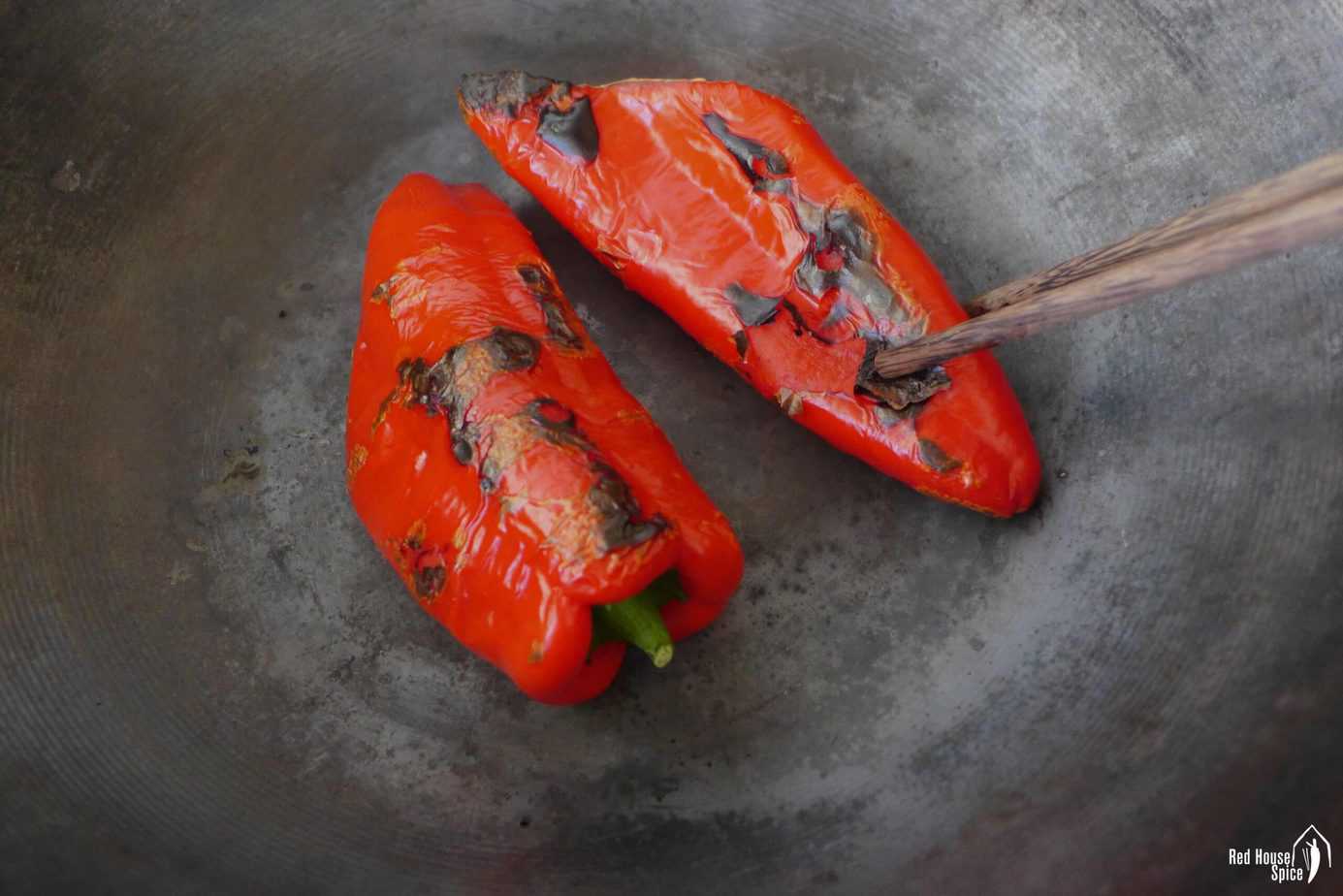
- Roast it in an empty pan/wok over high heat (Do not use non-stick cookware)
- Roast it directly over a gas burner or on a grill pan
- Roast it in the oven at 400°F/200 °C
Depending on the size of your pepper and the method, the roasting time varies. It’s ready when you notice the skin becomes wrinkly, black charred spots appears and the flesh yields easily when squeezed. Use a spoon to scrape off the skin then cut the flesh into thin strips.
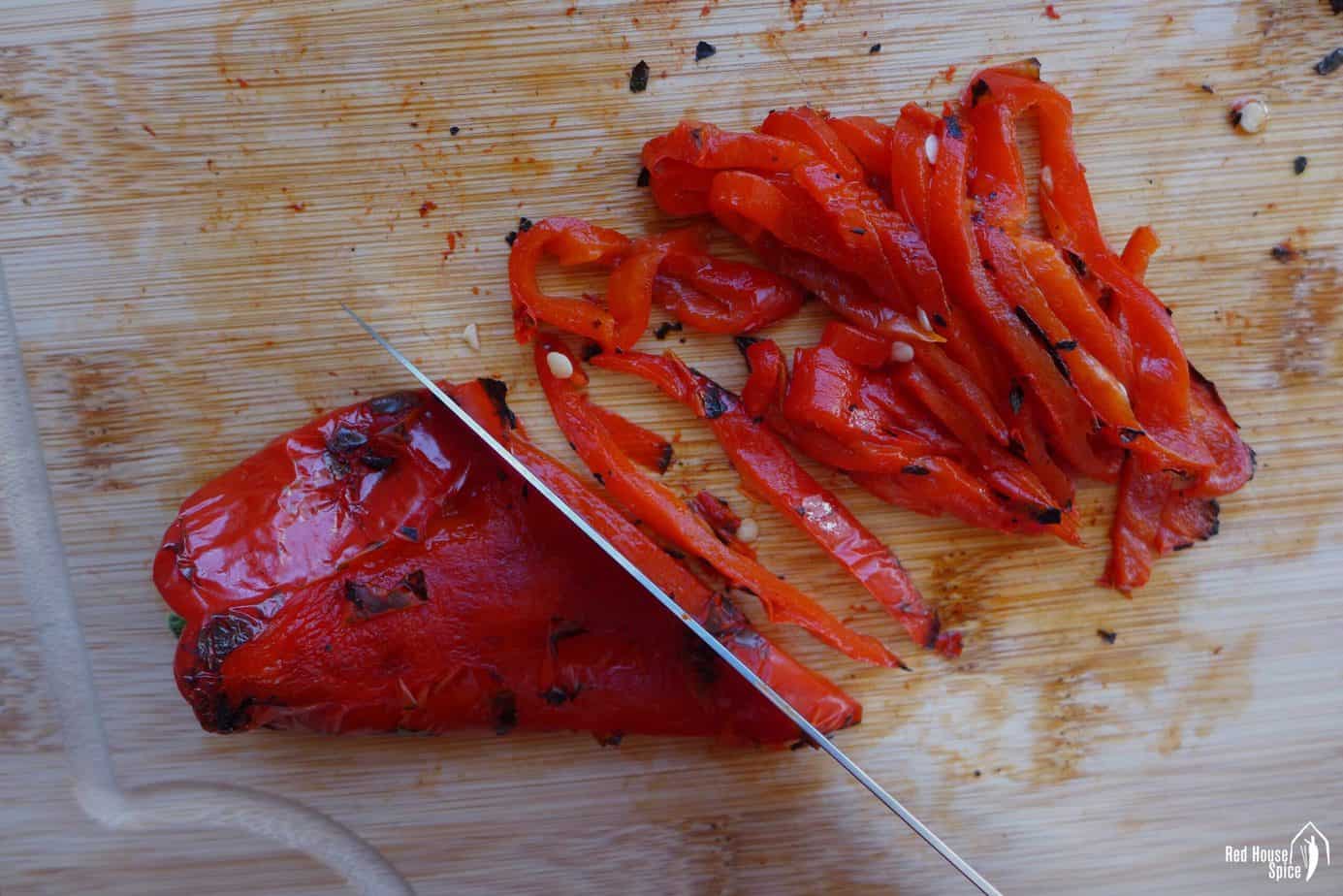
I use the first method since Chinese home cooks tend to handle most tasks with one single wok. Food blogger Tori Avey has a great guide on how to roast peppers using the other two methods.
Use the softest type of tofu
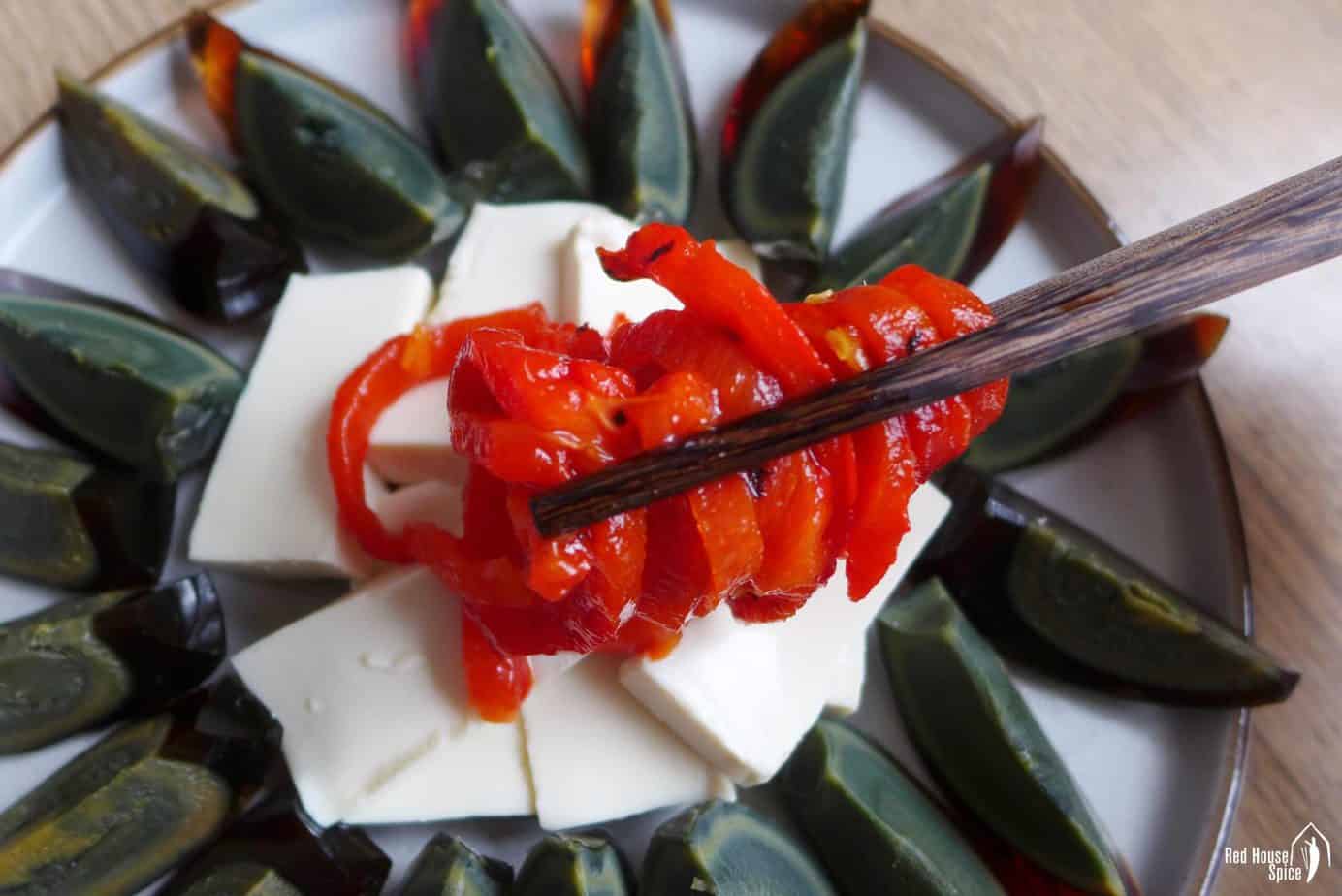
Choose the softest type of tofu that’s nice to eat without further preparation. I like the Japanese style silken tofu (Juan Dou Fu/绢豆腐) which almost melts in your mouth. As it’s very fragile, handle gently when slicing. An alternative way is to put a whole block of tofu onto the serving plate, then use a spoon to break it into bite-sized pieces.
Make a tasty dressing
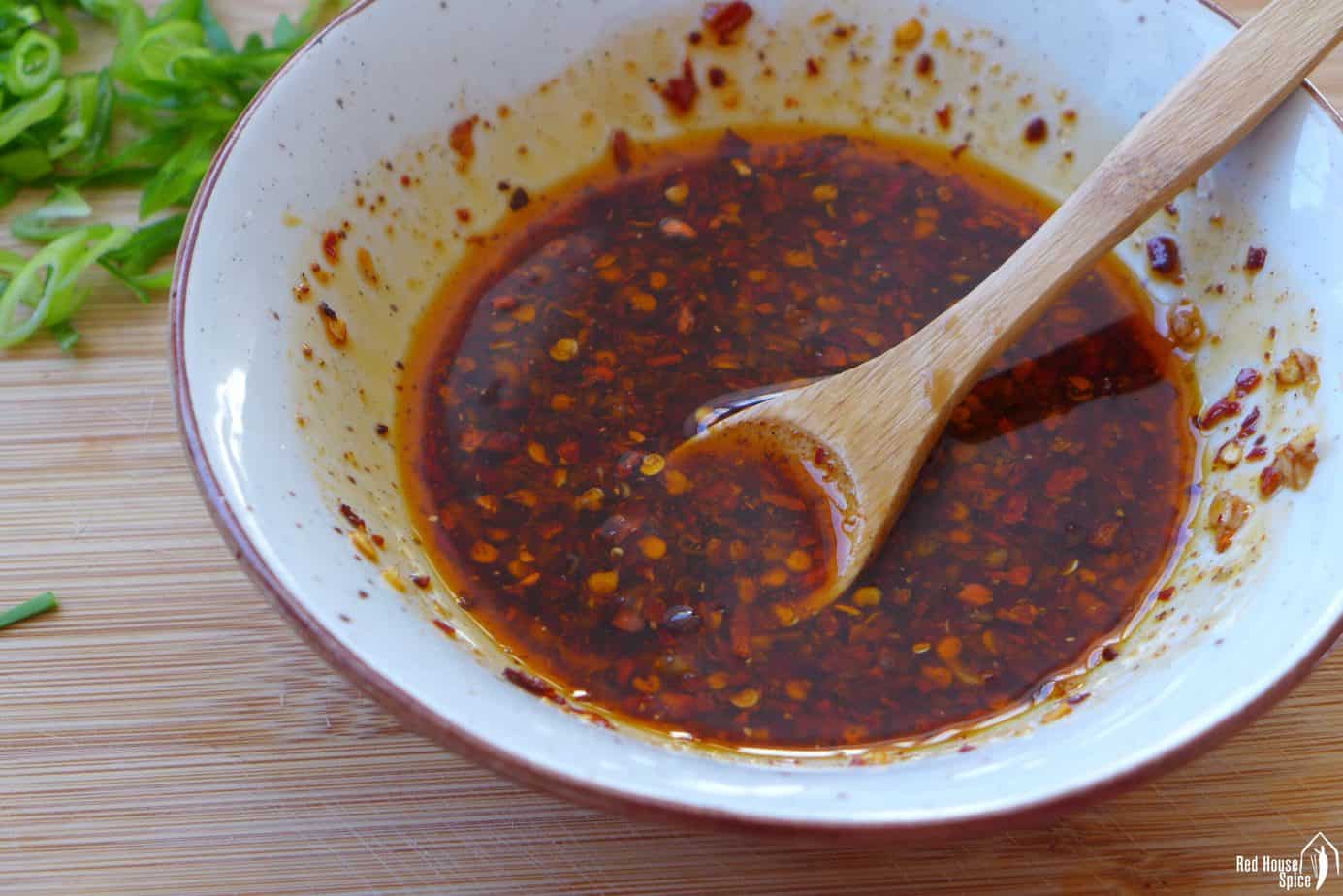
After placing three main ingredients on a serving plate, you can start making the simple dressing which elevates the overall flavour of the dish.
The first step is to pour hot oil over aromatics (minced ginger and garlic) and spices (chili flakes, ground Sichuan pepper) to effectively release their aroma. Then add light soy sauce and black rice vinegar.
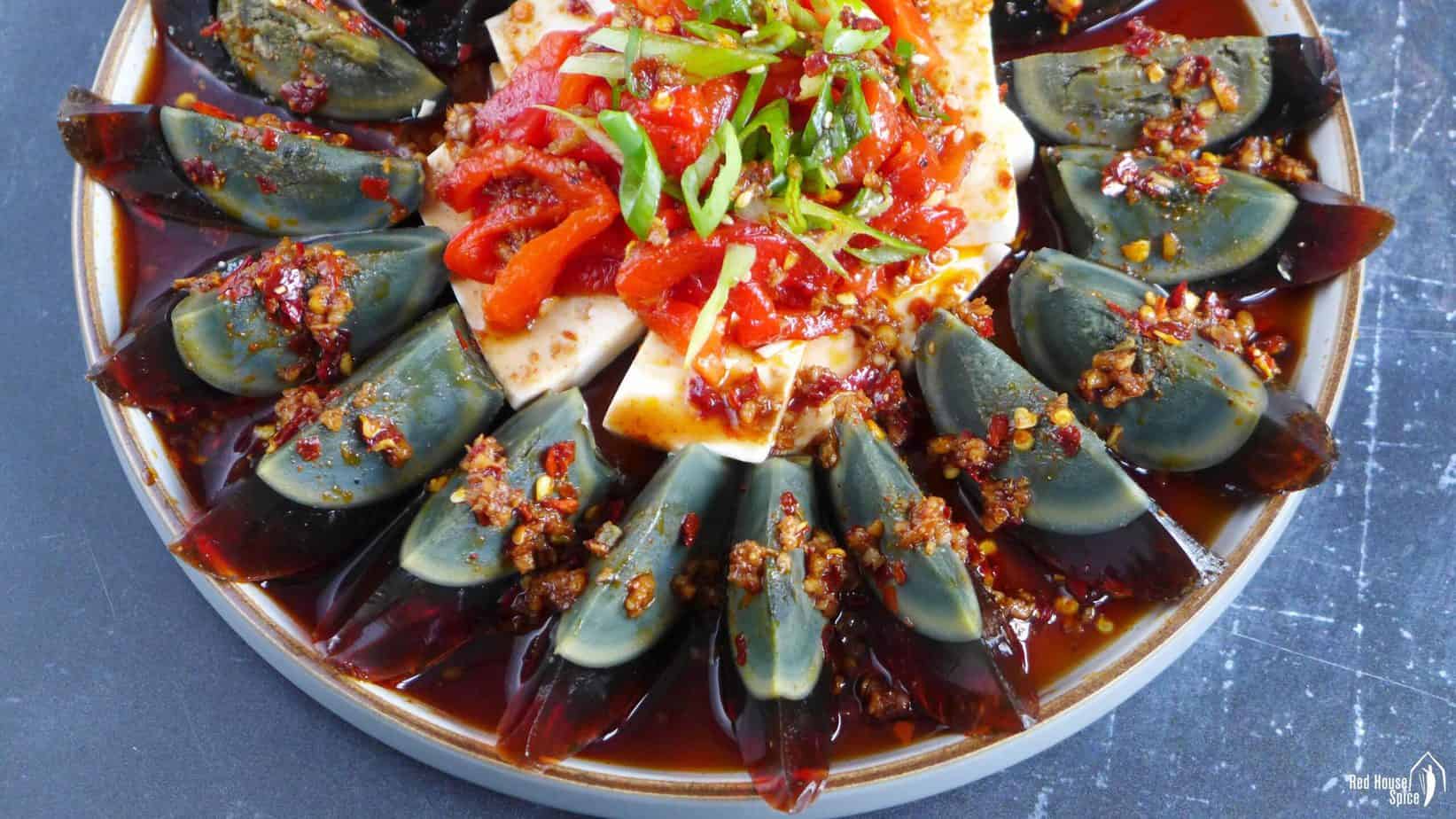
If you’re not up to spicy flavour, make an alternative dressing using just three ingredients: soy sauce, sesame oil and salt.
Try century egg in congee
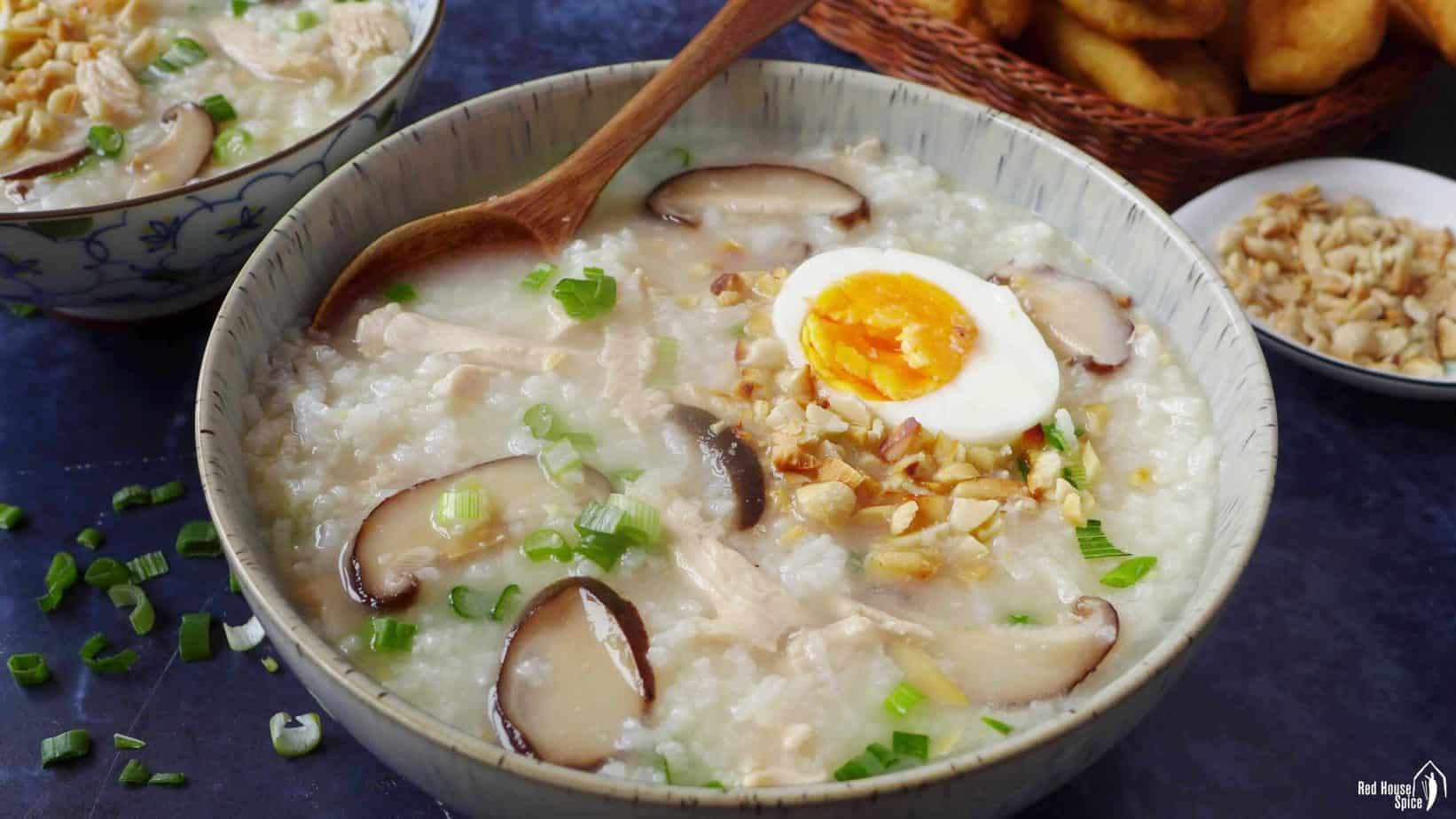
Another classic way to enjoy century egg is to add it to Cantonese style congee. You can follow my Easy 15-min Chicken Congee recipe and put in chopped century egg along with the meat.
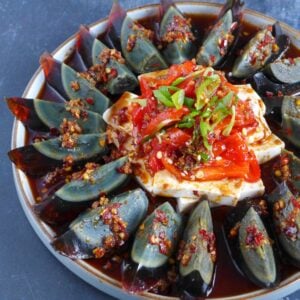
Century Eggs, the Myths and Recipe (Pi Dan, 皮蛋)

Ingredients
- 1 sweet pointed pepper, see note 1
- 3 century eggs
- 100 g silken tofu, see note 2
- 1 stalk scallions, finely chopped
For the sauce
- 1 teaspoon minced ginger
- 2 cloves garlic, minced
- ½ tablespoon chili flakes
- ¼ teaspoon ground Sichuan pepper, see note 3
- 1 tablespoon neutral oil
- 1½ tablespoon light soy sauce
- 1½ tablespoon black rice vinegar
Instructions
- Roast pepper in an empty pan/wok (Do not use non-stick cookware) over high heat. Flip from time to time until the skin wrinkles and charred spots appear (see note 4 for alternative methods). Scrape off the skin with a spoon. Slice the flesh of the pepper into thin strips.
- Peel century eggs then rinse briefly under running water. Cut into wedges. Place on a serving plate.
- Slice silken tofu into chunks then add to the plate. Top it with the pepper and scallions.
- Put ginger, garlic, chili flakes, Sichuan pepper in a bowl. Heat up oil then pour it over the spices. Add light soy sauce and black rice vinegar. Mix well.
- Pour the sauce over the egg, tofu and pepper. Serve as a salad for a multi-course meal with plain steamed rice.
Notes
Your Recipe Notes
Nutrition
Nutrition information is automatically calculated, so should only be used as an approximation.
If you haven’t tasted century eggs before, I hope you find this post inspiring and give it a try!












Looks so delicious! Thanks for sharing the recipe❣️ Love your website and all your recipes💕
Thanks Christina! So happy to know you find my recipes helpful.
Thank you for recipe. Reminds me of my ma’s cooking. Soul food for this girl who is missing mom’s cooking and traditional Chinese food
So glad it brought back warm memories for you, Susan! Nothing beats the comfort of mom’s cooking.
These look very interesting. I found your site while trying to learn more about century eggs and more specifically what they taste like! I had to mention that in the photo of the egg sliced in half it looks like a duck silhouette in the yolk!
You’re very observant Melissa. I did see the duck in the yolk!
I used to buy pi dan in China, with my friends. They were so popular I’d have to fight for my share 非常好吃!
Haha! I used to fight for my share with my brother. Yes, they’re delicious!
Hi, this sounds lovely. I love century eggs. Two questions:
1. Is there an exact (and simple) recipe for making my own century eggs?
2. Are century eggs safe for dogs? I get both duck and chicken century eggs from the shop near us.
Hi Shai! I haven’t tried making century eggs from scratch myself so I’m not able to provide you a recipe for the moment. And I have no idea if they are safe for dogs. Sorry that I’m not helpful on these matters.