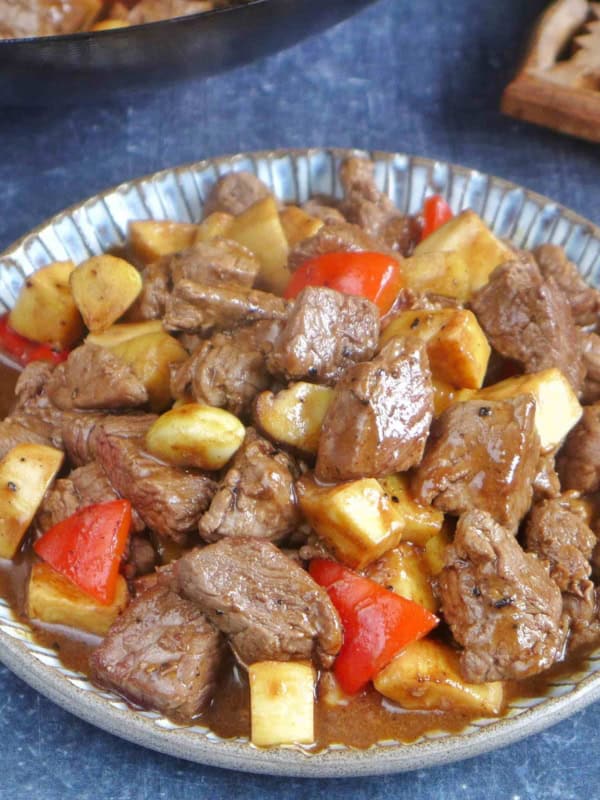


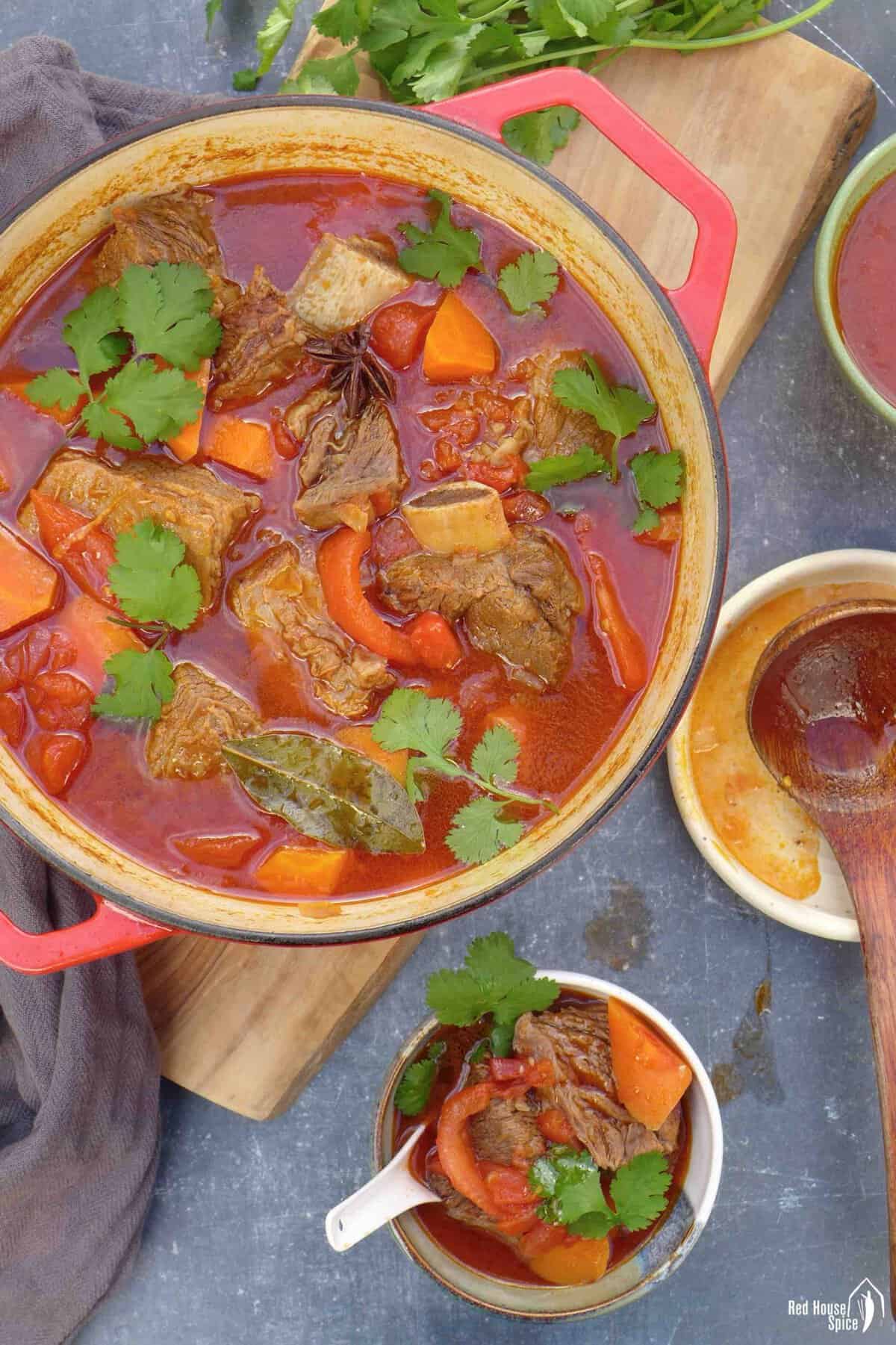
Tender, succulent beef short ribs braised in a rich tomato broth. This comforting dish brings out the best in two everyday ingredients.
Pin this now to find it later!
Pin ItWhy beef and tomato?
Last week, I bought some beef short ribs from my local butcher and wondered how to cook them. Having already shared my recipes for Beef Stew with Potatoes and Braised Beef with Daikon, I fancied trying something different. With autumn in full swing, tomatoes came to mind. As I wrote in the autumn chapter of my cookbook Three Meals Four Seasons, Mama used to preserve tomatoes every autumn when I was little.
Tomatoes might not be the ingredient many of you associate with Chinese cooking. Originally introduced to China during the Ming dynasty, they are known as 西红柿 xī hóng shì or 番茄 fān qié, literally meaning ‘Western red persimmon’ and ‘foreign eggplant’ respectively. Over time, they’ve become an unmissable part of home cooking. Think of Tomato Egg Stir Fry, arguably one of China’s most beloved everyday dishes. The pairing of tomato and beef is also a classic combination, appearing in various popular dishes.
Ingredients
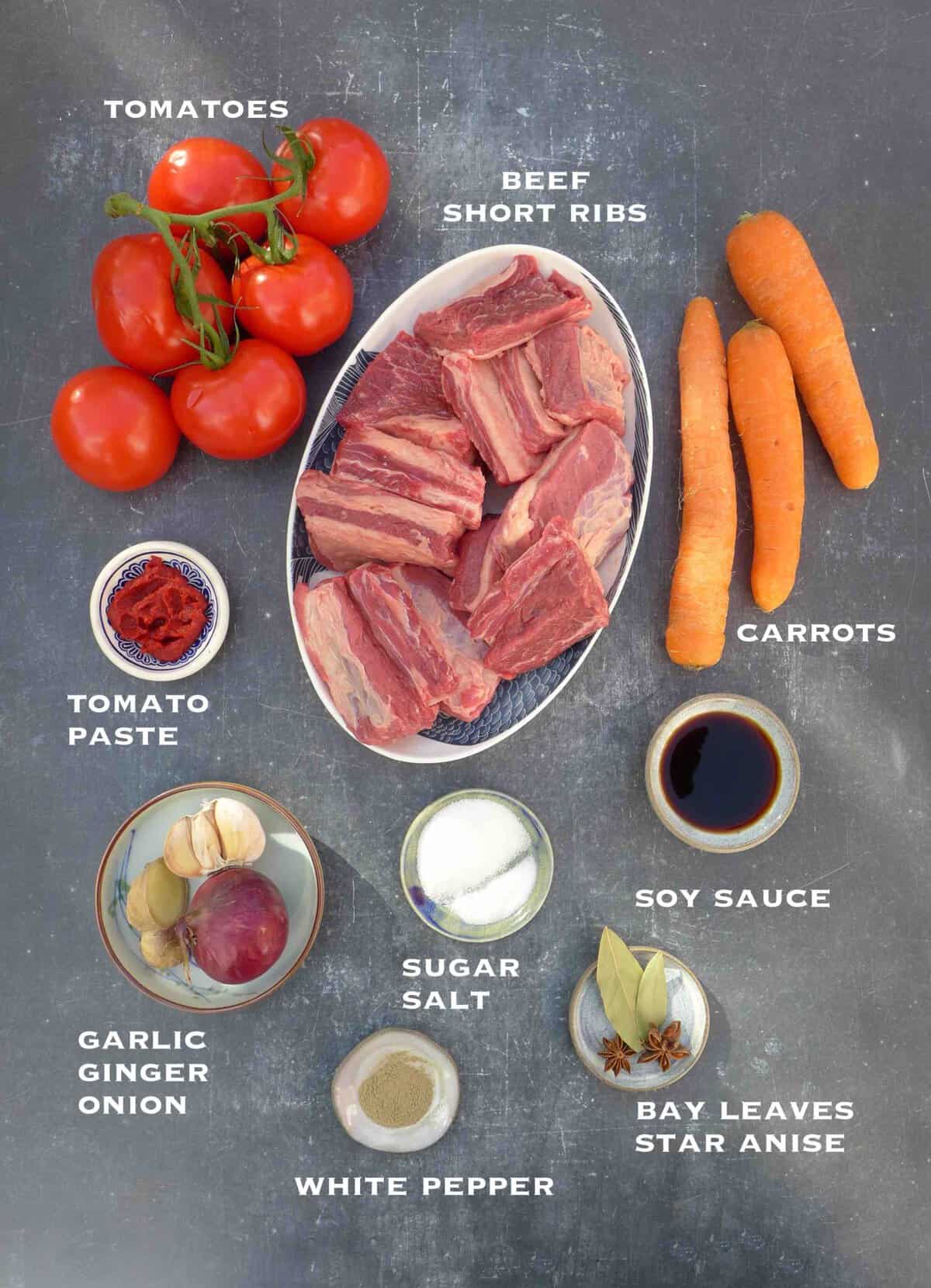
Here are the ingredients you need for this dish:
- Beef short ribs. See below for other cut options.
- Fresh tomatoes. Choose ripe, flavorful ones.
- Tomato paste, to enhance the tomato flavor.
- Carrots
- Aromatics: onion, garlic and ginger
- Spices: star anise and bay leaves
- Seasonings: light soy sauce, sugar, salt and ground white pepper
- Cilantro (coriander), for garnishing
Alternative beef cuts
Beef short ribs have a good balance of meat, fat and connective tissue. The collagen in the connective tissue gradually softens while cooking, giving the beef a slightly gelatinous texture. This is particularly appreciated in Chinese cooking as textures are often as important as flavors.
Other cuts, such as beef shank (shin), brisket or oxtail, work well too. The key is to choose a cut with some fat and connective tissue rather than very lean meat.
About tomatoes
Ripe, flavorful tomatoes make a noticeable difference to this dish. They provide a pleasant balance of acidity and natural sweetness. Tomatoes are also rich in glutamate, the compound responsible for umami, which adds extra savory depth to the dish. A little tomato paste is also used to intensify the flavor.
Cooking process
Step 1: Prepare the tomatoes
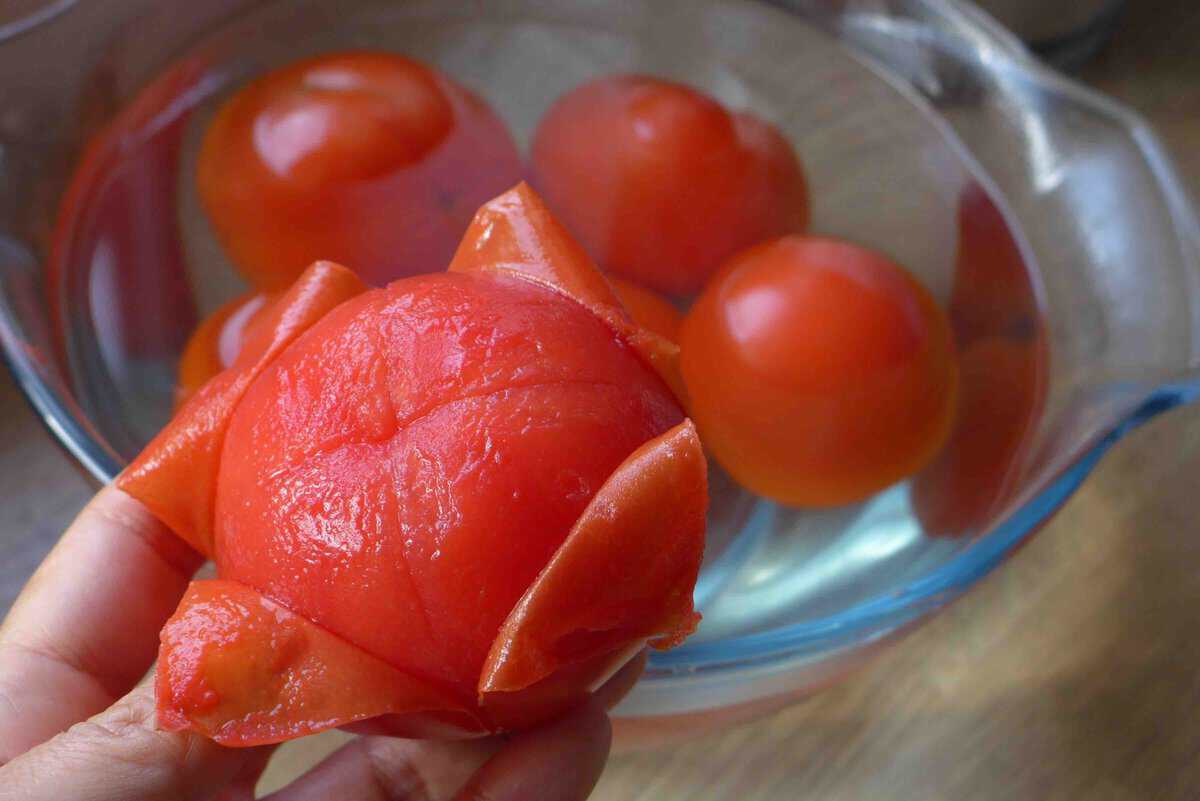
Start by scoring a shallow cross on the bottom of each tomato. Immerse them in just boiled water for 1 to 2 minutes, then peel off the loosened skins.
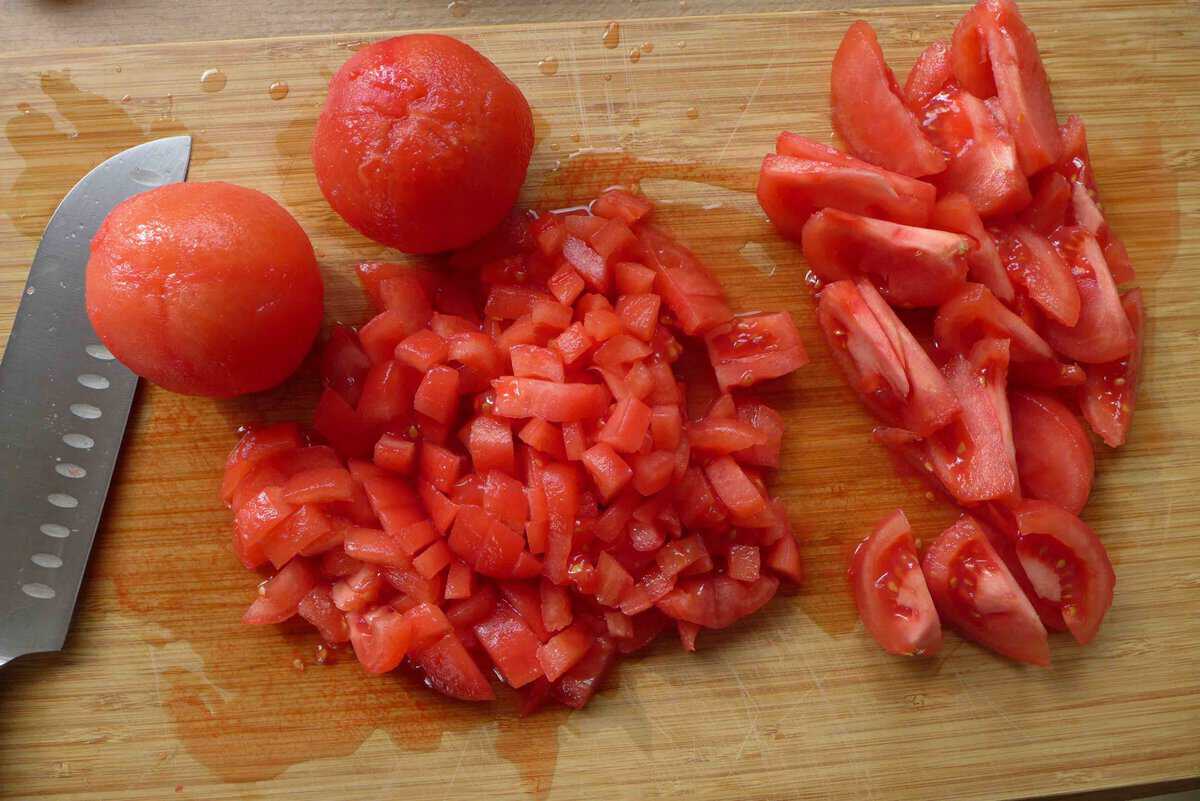
Finely dice about two thirds of the tomatoes and cut the rest into wedges. The diced tomato will break down into the sauce during braising, while the wedges are added towards the end to retain more of their shape and freshness.
💡Tip: Peeling the tomatoes isn’t essential, but I recommend making the extra effort. Removing the skin gives the finished dish a smoother, more pleasant mouthfeel.
Step 2: Blanch the beef
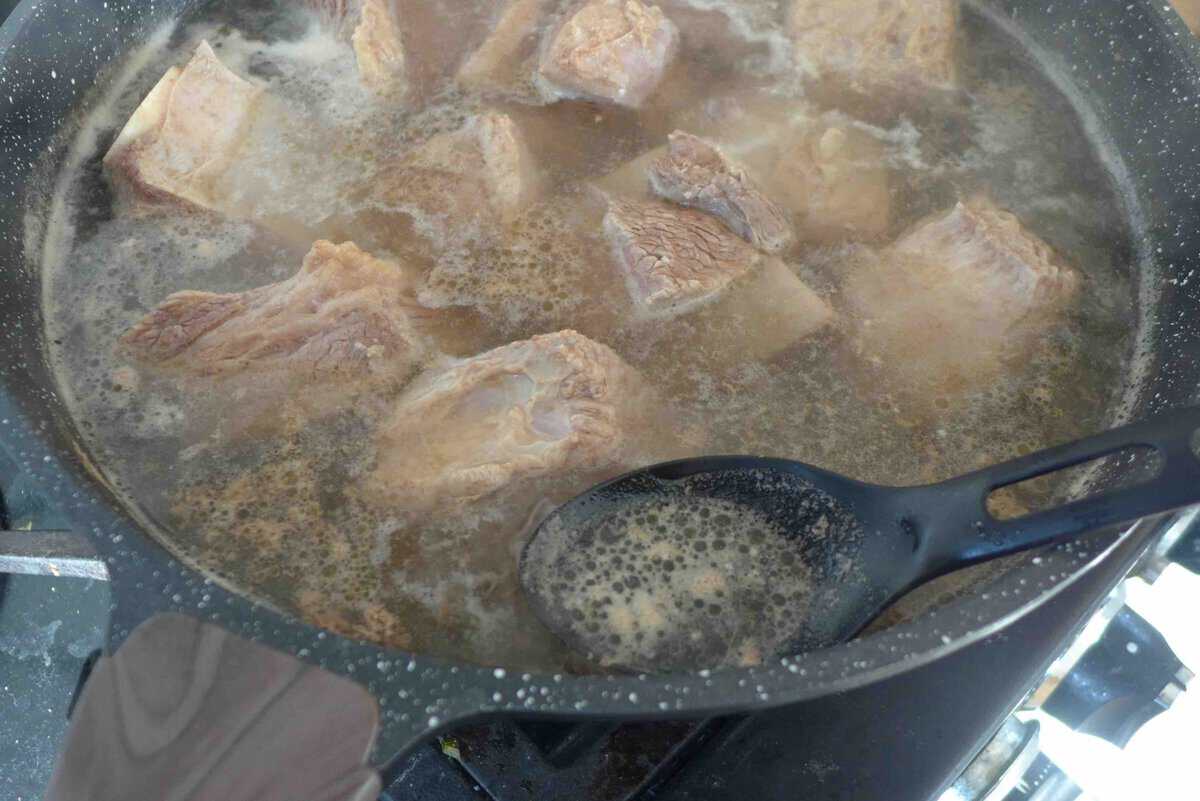
The short ribs I bought were labeled “beef short rib ends.” They came in large, squarish chunks, some of which I found too thick, so I halved them. For those with bones, I cut through the meat parallel to the bone.
Put the beef into a pot and cover them with plenty of cold water. Bring to a full boil, then simmer for about 3 minutes, skimming off any foam floating on the surface. Drain well before the next step.
💡Tip: Blanching meat, known as 焯水 chāo shuǐ in Chinese, is a common preparation technique for braised meat. It helps remove impurities and strong odors, resulting in a cleaner tasting broth.
Step 3: Sear the beef
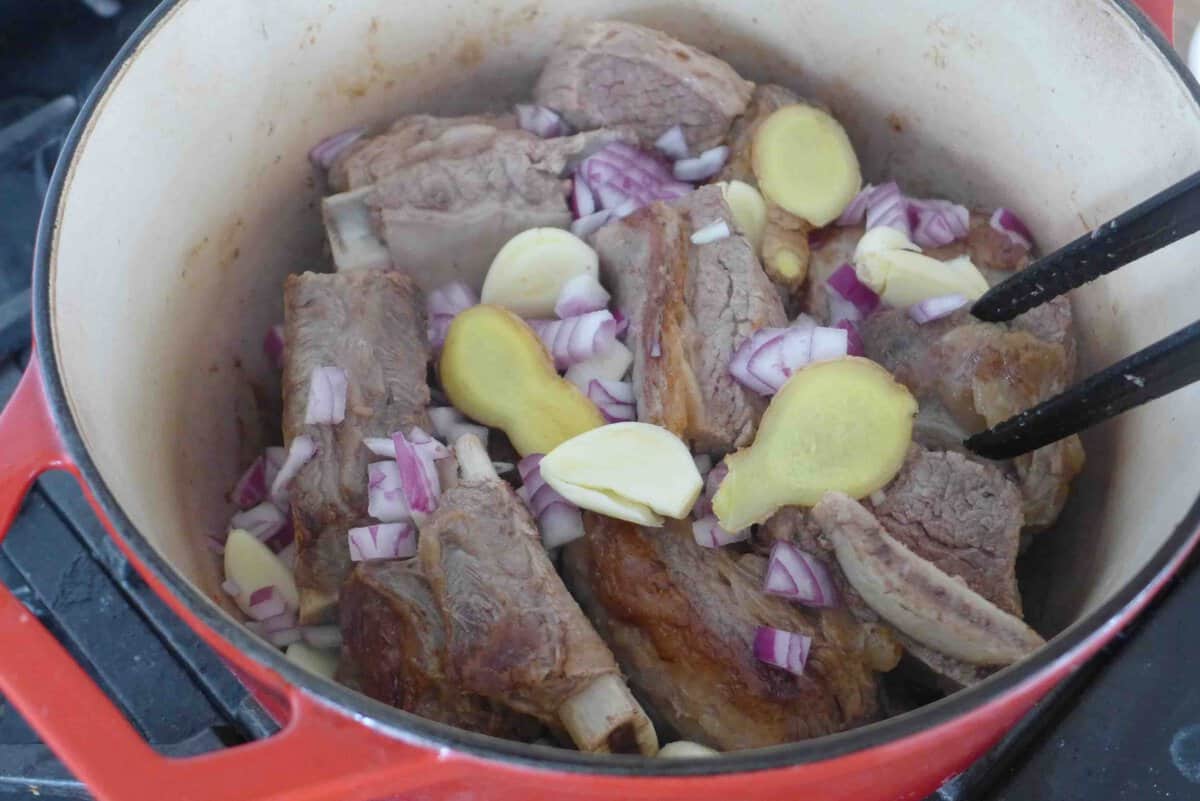
Heat a little oil in a pot with a thick base. Add the blanched beef and sear until lightly browned (do so in batches if necessary). Stir in onion, garlic and ginger, fry briefly to release their fragrance.
💡Tip: Allow the beef to sit undisturbed for a while before turning it. This helps the surface brown more effectively and develop extra flavor.
Step 4: Braise until tender
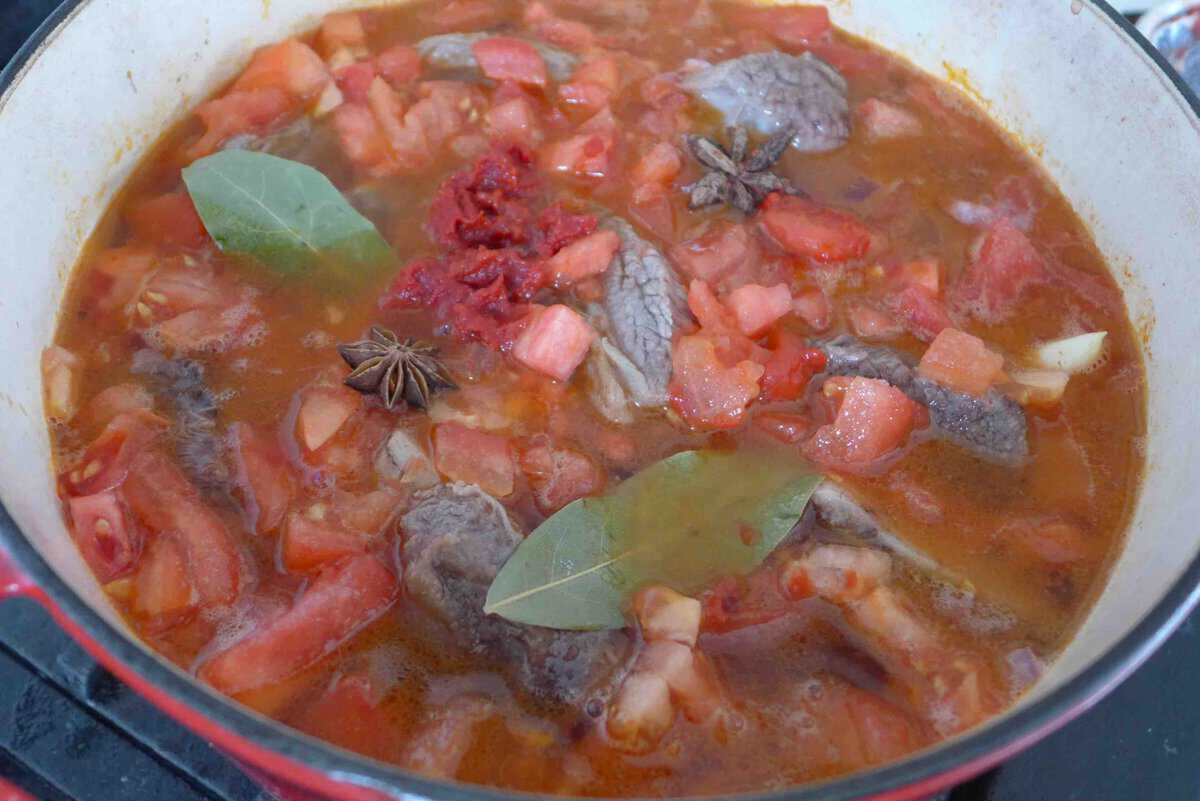
Pour in enough hot water to just cover the beef. Add the diced tomatoes, tomato paste, bay leaves, star anise, light soy sauce, sugar and salt. Bring to a boil, then cover and simmer over low heat for 1½ to 2 hours, until the beef becomes tender.
💡Tip: The cooking time may vary depending on the size of the beef pieces, the type of pot and the heat level of your stove. Adjust as needed, and check the liquid level occasionally to prevent it from drying out.
Step 5: Finish with vegetables
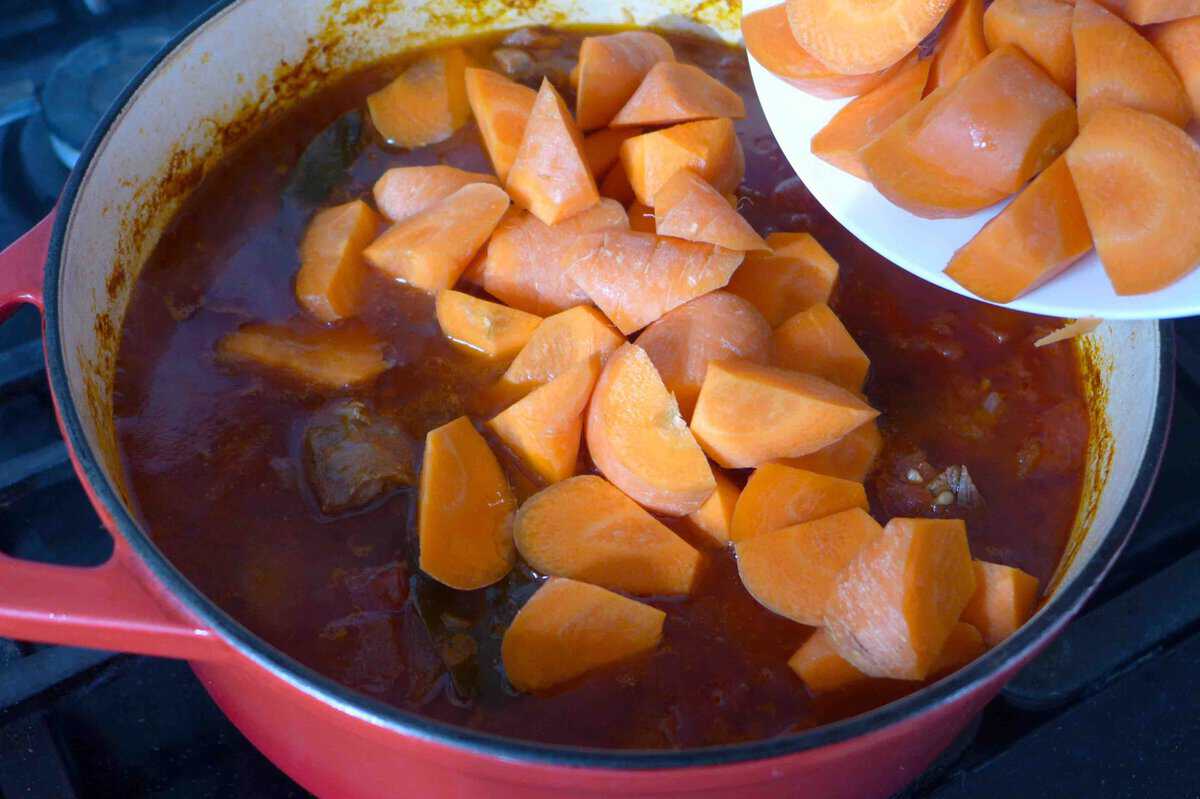
Add the carrot chunks and cook with the lid on for 5 minutes over high heat. Then stir in the remaining tomato wedges and cook uncovered for another 3 minutes to slightly reduce the broth.
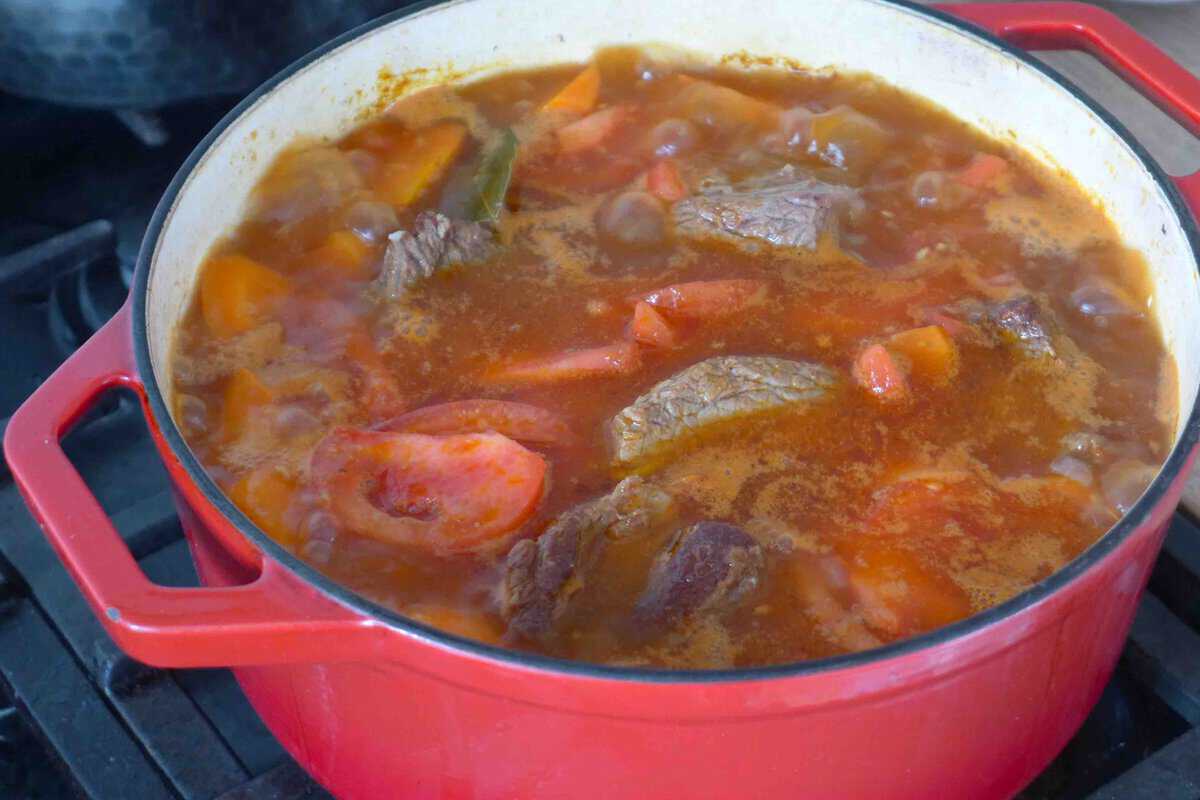
Seasoning with ground white pepper and adjust the taste with extra salt if needed.
💡Tip: Feel free to add other vegetables for extra variety. Potatoes, celery and leeks are all good options. Adjust the cooking time according to the vegetables you choose.
Instant Pot method
After Step 3, transfer the beef and aromatics to an Instant Pot. Add the braising ingredients from Step 4, using a little less water. Cook on high pressure for 35 minutes, followed by 10 minutes of natural pressure release. After manually release any remaining pressure, continue with Step 5 using the Sauté function.
Serving ideas
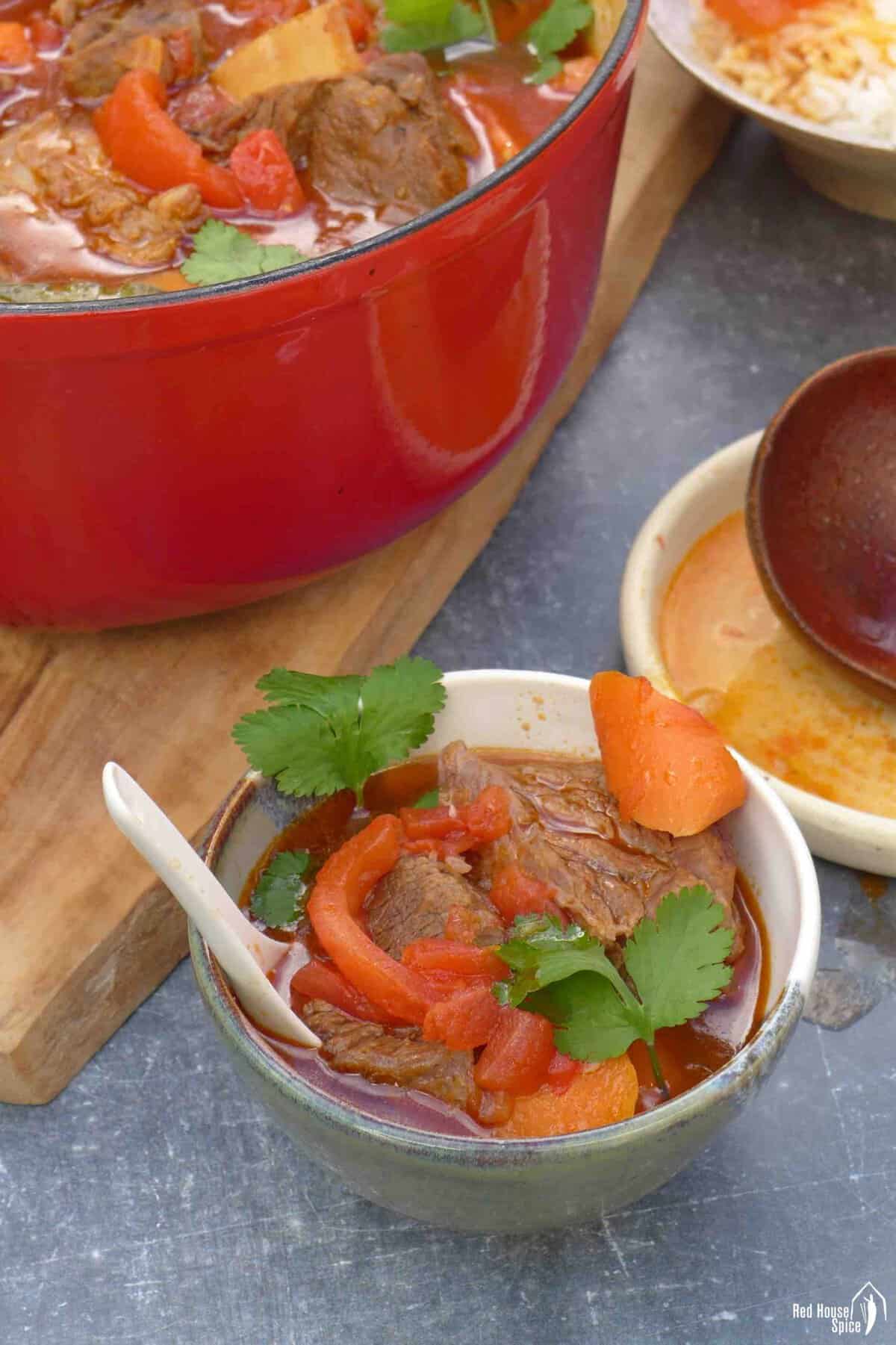
The simplest way to enjoy this tomato braised beef is laddling it over freshly steamed rice. This makes a satisfying, all-in-one meal. It’s a great dish to prepare in a large batch when feeding a crowd. Alternatively, serve it as the centerpiece of a Chinese meal, accompanied by lighter dishes such as Smashed Cucumber Salad or Napa Cabbage Salad.
It also works beautifully with noodles, much like my recipe for Taiwanese Beef Noodle Soup. Simply increase the amount of water during braising and adjust the seasoning accordingly, so you have enough broth to serve with cooked noodles.
📋 Recipe card
Love this recipe? Please leave a 🌟🌟🌟🌟🌟 rating and a comment. Thank you!
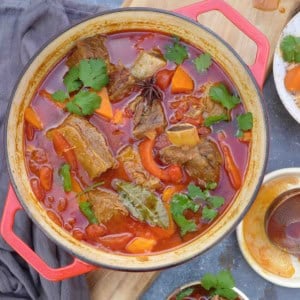
Tomato Braised Beef Short Ribs (番茄炖牛小排)

Ingredients
- 2 lb ripe tomatoes
- 3 lb beef short ribs, or chunks of other well-marbled cuts of beef
- 1 tbsp neutral cooking oil
- 1 medium onion, finely chopped
- 6 cloves garlic, lightly crushed and kept whole
- 6 slices ginger
- 2 bay leaves
- 2 star anise
- 1 tbsp tomato paste, see note 1
- 2 tbsp light soy sauce
- 1 tbsp sugar
- 1 tsp salt
- 3 medium carrots, about 1 lb (450g), cut into chunks
- ½ tsp ground white pepper
- cilantro, aka coriander, to garnish (optional)
Instructions
Prepare the tomatoes
- Score a shallow cross on the bottom of each tomato. Submerge them in just boiled water for 1 to 2 minutes, until the skin starts to lift around the cuts. Peel off and discard the skin.
- Finely dice about two thirds of the tomatoes. Cut the rest into wedges.
Blanch the beef
- If the beef short ribs are very thick, halve them into thinner pieces. For pieces with bones, cut through the meat parallel to the bone, creating one piece with bone and another without.
- Put the them into a pot. Add plenty of cold water to cover them fully. Bring to a full boil, then simmer for 3 minutes, skimming off any foam that rises to the surface. Drain the beef and shake off any excess water.
Sear the beef
- Heat oil in a pot with a thick bottom. Add the blanched beef and sear over high heat until lightly browned. Add onion, garlic and ginger. Stir fry for about 2 minutes.
Braised the beef (see note 2 for Instant Pot method )
- Pour in enough hot water to just cover the beef. Add the diced tomatoes, tomato paste, bay leaves, star anise, light soy sauce, sugar and salt. Stir to combine.
- Bring to a full boil, then reduce the heat to the lowest setting. Cover with a tight lid and leave to simmer for 1½ to 2 hours, until the beef becomes tender (see note 2).
Finish with vegetables
- Stir in the carrot. Cover and cook for another 5 minutes over high heat.
- Uncover and add the tomato wedges. Cook for a further 3 minutes until the carrot softens and the braising liquid is slightly reduced.
- Season with ground white pepper. Taste and add more salt if needed. Garnish with cilantro and serve warm.
Notes
Your Recipe Notes
Nutrition
Nutrition information is automatically calculated, so should only be used as an approximation.