
Learn what Shaoxing rice wine is, how it’s used in Chinese cooking, how to choose the right bottle, and avoid common buying mistakes.
Pin this now to find it later!
Pin ItWhat Is Shaoxing Rice Wine?
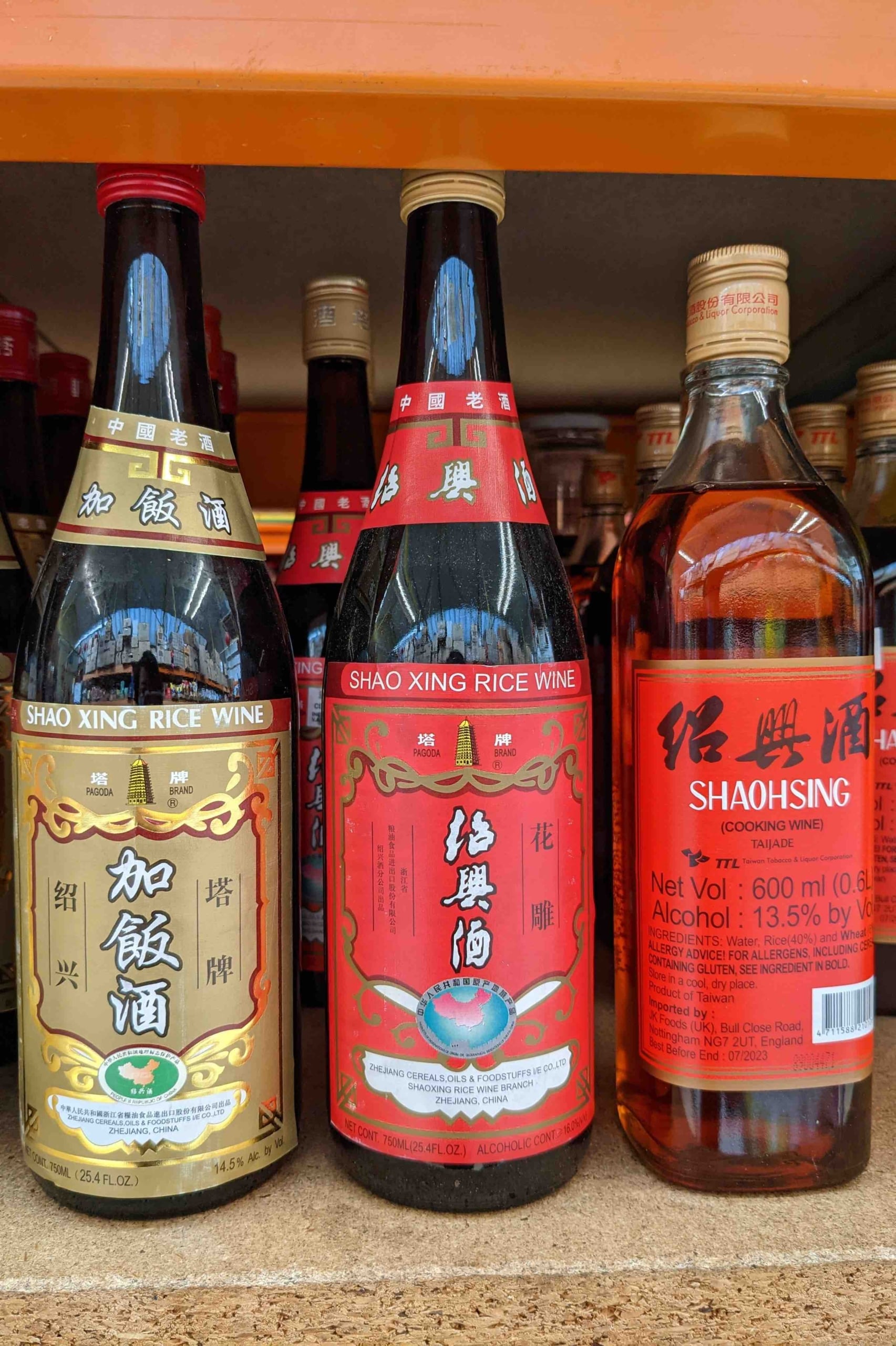
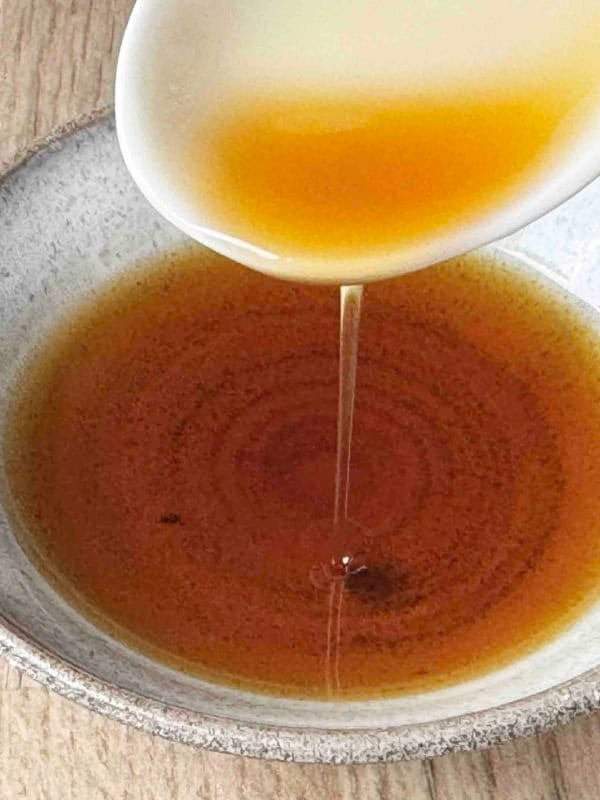
Shaoxing (Shaohsing) rice wine (绍兴酒), often simply called Shaoxing wine, is one of the most commonly used cooking wines in Chinese cuisine. Made from fermented glutinous rice and named after the city of Shaoxing in Zhejiang Province, it has been used in Chinese kitchens for centuries.
It belongs to the broader category of Chinese rice wines (米酒, mijiu) and is one of the best-known types of Chinese yellow wine (黄酒, huangjiu). Its amber color and complex flavor set it apart from many lighter-colored, milder rice wines.
A splash of Shaoxing wine can add subtle aroma and depth to a dish. While it’s a staple in many savory recipes, its role is mostly supportive rather than dominant. In China, it’s also enjoyed as a warm alcolholic drink, often simmered with dried plum, tangerine peel and rock sugar.
Wei’s Pro Tip
Key Things To Know
- Typically contains around 14% alcohol.
- Usually contains wheat, so it’s not gluten-free.
- Commonly used in savory Chinese dishes, but rarely in uncooked dishes.
- I strongly recommend choosing a low-sodium product whenever possible (learn why in the section below).
What Does it Do In Cooking?

In most recipes, Shaoxing wine contributes a subtle aroma rather than a strong flavor. Like many Chinese home cooks, I mainly use it as part of a flavor-building process, alongside ingredients such as soy sauce, oyster sauce, ginger, scallions, and spices.
It’s commonly used in stir-fries, braises, stews and meat-based fillings for dumplingsand wontons. It’s particularly popular in dishes starring meat, poultry, or fish, as it’s traditionally believed to help reduce unwanted meaty or fishy odors.
You can add Shaoxing wine to marinades before cooking or mix it with other seasonings to make a sauce. In these situations, a teaspoon or two, or occasionally a tablespoon, is usually enough.
There are also a few classic dishes that use Shaoxing wine much more generously. Examples include appetizers such as Drunken Chicken and braised dishes like Red-Cooked Pork Belly and Three Cup Chicken. In these recipes, the flavor of the wine becomes much more noticeable.
My Buying Tip: Check the Salt Content
When buying Shaoxing rice wine, I pay much more attention to the salt content than the brand. Traditionally, it contains very little salt, and that’s the type I recommend.
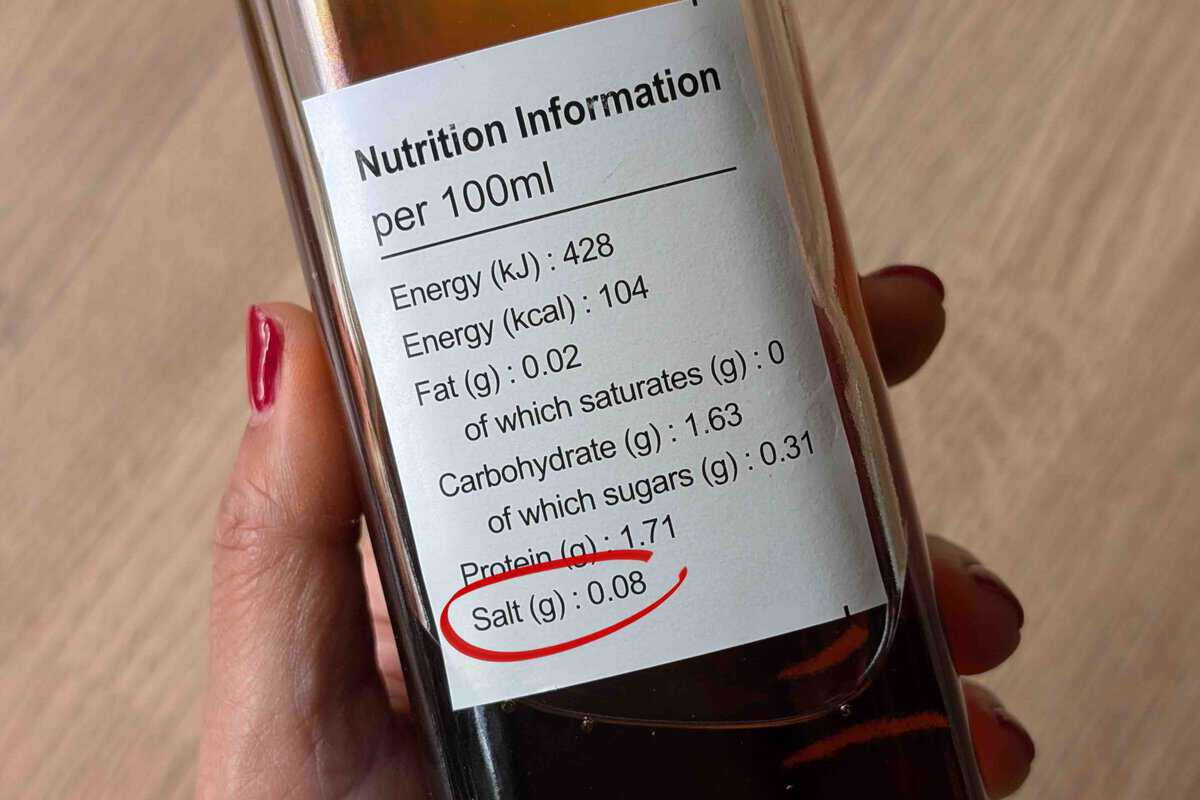
The bottle I usually use contains just 0.08g salt per 100ml (see image above), but I’ve seen others containing 0.51g per 100ml or even more. That’s a significant difference.
I’ve noticed that products sold in North America are more likely to be labelled “Shaoxing Cooking Wine” and contain added salt. From what I’ve read, this allows them to be sold as a cooking ingredient rather than an alcoholic product.
My advice is simple: check the nutrition label and choose a low-sodium product whenever possible. You may also come across Huadiao wine (花雕酒), a premium variety of Shaoxing wine that is often low in salt.
If a recipe calls for only a small amount of Shaoxing wine, a higher-sodium product is usually workable. You can also leave it out altogether. Personally, I wouldn’t buy a bottle of high-sodium cooking wine just for recipes that use a small amount.
Substitution
When a recipe calls for only a small amount of Shaoxing wine, I usually suggest leaving it out rather than buying a bottle specifically for that recipe.
- If you’d prefer a substitute, dry sherry is generally considered a good match.
- For dishes that rely heavily on the flavor of Shaoxing wine, such as Drunken Chicken, there is no true substitute.
FAQs
No. Shaoxing rice wine is an alcoholic product that can be used in cooking, while rice vinegar is a sour, acidic seasoning. They have completely different flavors and uses, and should not be used interchangeably.
No. Although it’s made primarily from glutinous rice, most Shaoxing rice wine also contains wheat.
No. Once opened, keep it tightly sealed in a cool, dark place. It will keep well for many months.











Hello! I found this web page just recently, and it is amazing! I am eager to try out some of these recipes 🙂
I can get “Kuaijishan Shaoxing Rice Wine 5 Years” where I live, is this a good brand to use in cooking?
Thanks in advance!
Thank you for the kind words, I’m glad you found my blog helpful.
That brand can be used, but it’s best to check the nutrition label and make sure it doesn’t have a high salt content. For example, the one I use has about 0.08 g salt per 100 ml, while I’ve seen other brands with as much as 0.51 g salt per 100 ml.
Hi, this is such good information. I just checked the Shaoxing bottle I was finally able to find at T&T Supermarket. (I’d been looking at stores to find it for a long time.) It tastes vile to me. The label says its salt content is 1.5% or 149 mg/30ml. I’m not a math whiz, so is this good or bad? Thank you for a reply!
p.s. I love your recipes and all the detailed information I find on your website.
A salt level of 1.5% is relatively high. It works fine in dishes that only require a small amount of Shaoxing rice wine, such as 1 tablespoon. However, it would be far too salty when used in larger quantities, for example in Three-Cup Chicken or my rice-wine braised pork belly recipe. Hope this helps!
I love your articles. I read them all the time. Regarding Shaoxing rice wine. Most American markets don’t carry any except for “cooking” wine. This is usually cheap super salty nasty stuff I won’t put on weeds. Is it the same for Shaoxing rice wine? It is not cheap in my local market like $13 vs $5-6 for cooking sherry. Shouldn’t it have alcohol in it? Thank you. Pete
P
Thank you for visiting my blog and for your thoughtful question. The “Shaoxing cooking wine” sold in many American markets is not the Shaoxing rice wine I recommend. It contains a very high amount of salt so it can be sold as a cooking condiment rather than an alcoholic product. Because of that, I don’t suggest using it. If a recipe only calls for a small amount and you can’t find proper Shaoxing wine, it’s completely fine to omit it.
Online, I can only find TTL Taijade Shaohsing Rice Wine, 600 ML. Can I use this instead of Shaohsing Chinese Cooking Rice wine? The online retailer doesn’t state/show the salt content. Thank you!
Although I haven’t seen the exact bottle you’re referring to, I assume it should work fine. I’m currently using TTL Taijade Shaoxing wine as well. Give it a taste—it should only have a very subtle saltiness. Happy cooking!